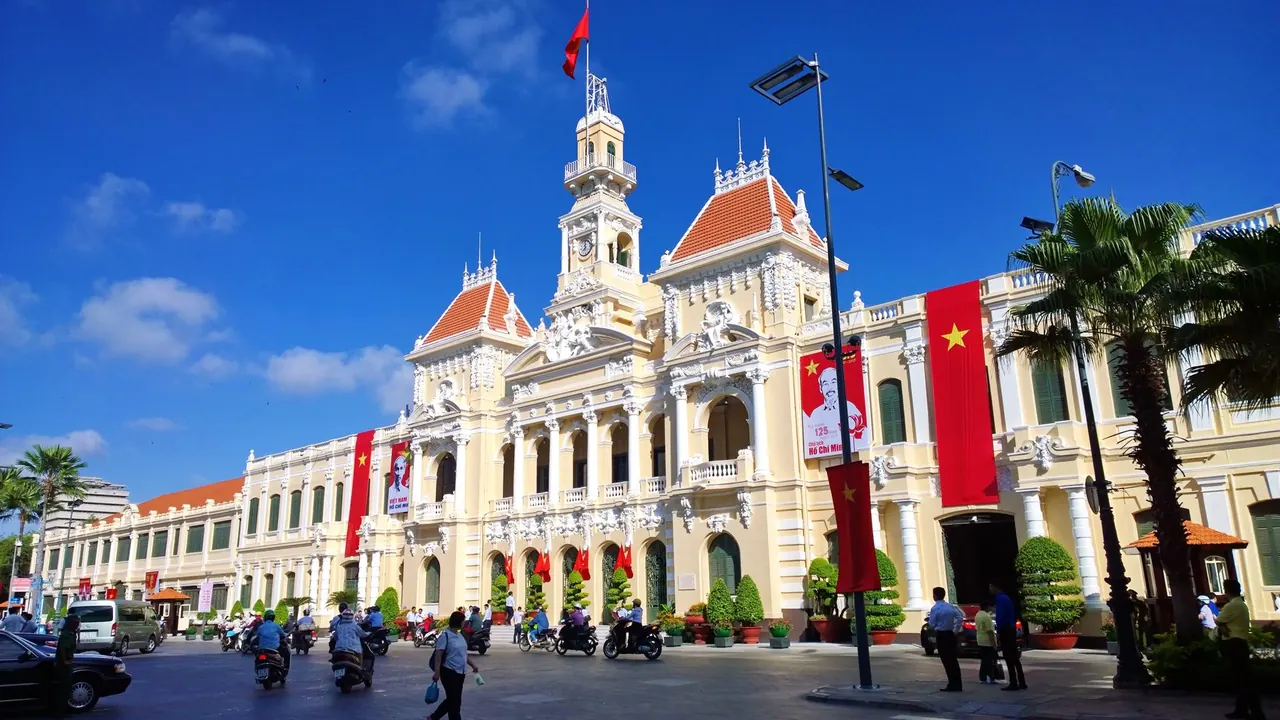
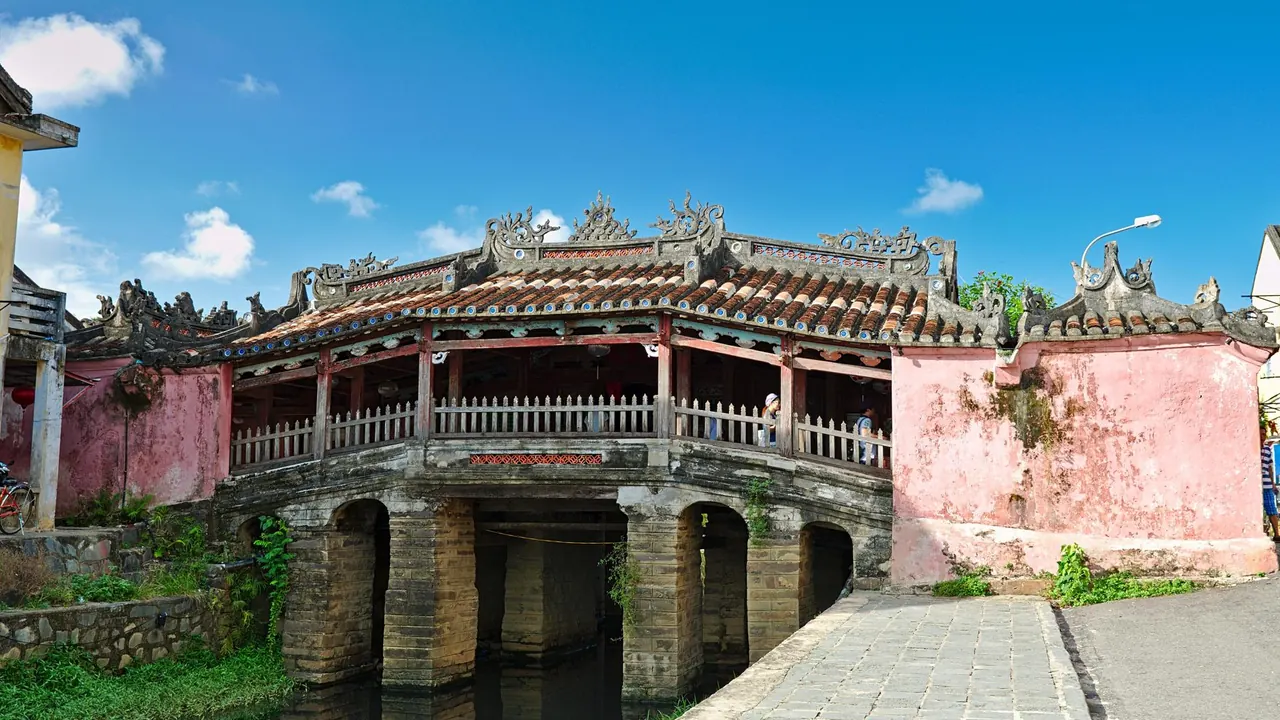
Photos: Ho Chi Minh City by trungydang, CC BY 3.0, cropped; Hoi An by François Guerraz, CC BY-SA 3.0, cropped.
Ho Chi Minh City or Hoi An?
Our verdict in twelve categories, each scored against the same fixed benchmark cities, and the climate month by month, so you can choose for your trip.
Choose Ho Chi Minh City for
- nightlife
- food and drink
- live music and the arts
Ho Chi Minh City is the choice for travellers who want a big Asian city to eat and drink their way through. The street food runs from broken-rice plates to snail stalls and the Chinese-Vietnamese cooking of Cholon. Coffee alone can fill your days, and evenings move from pavement beer to rooftop bars and clubs. It suits a trip built around appetite and energy, with the wartime history of the War Remnants Museum, the Reunification Palace and the Cu Chi tunnels, rather than one built around sand or quiet.
Choose Hoi An for
- beaches
- nature and the outdoors
- families
Travellers after a slower, prettier stay will be happier in Hoi An. Its lantern-lit old town of merchant houses is a more complete piece of heritage than anything in Saigon. A pale sand beach is a bike ride away through rice fields, and the Cham Islands and My Son are close. Families and anyone who wants to cycle, swim and sleep early get the most from it. Those who want late nights and a wide choice of restaurants will find it thin.
Scoreboard
Twelve categories on one fixed scale from 0 to 100. The shaded stretch is the gap between the two.
Your match
Pick a travel style or drag the sliders, and both match scores follow your weighting.
Wins on nightlife and food and drink with your weighting.
Wins on beaches and nature and the outdoors with your weighting.
What matters to you?
Category by category
What the scores mean for a trip.
Beaches & swimming
Ho Chi Minh City has no beach of its own. The nearest shore is the muddy mangrove edge of Can Gio, so swimming means a hotel pool or a two-hour trip to the often cloudy, crowded water at Vung Tau.
Hoi An is the opposite case. The pale sand at An Bang is about 5km away through rice fields, and the coast runs almost unbroken toward Da Nang, so a quiet stretch is easy to find. The catch is autumn, when monsoon waves bring out the red flags.
Food & drink
Both are cheap places to eat on plastic stools, but Ho Chi Minh City has far greater range. It has southern broken-rice plates, banh xeo, whole streets of snail stalls after dark and the Chinese-Vietnamese cooking of Cholon. On top of that come a deep coffee culture and a serious tier of modern Vietnamese and French restaurants.
Hoi An's strength is a short list of dishes found nowhere else, led by cao lau, white rose dumplings and its stuffed banh mi, plus cooking classes that start at the market. A week of eating there starts to repeat itself in a way Saigon never does.
Culture & sights
Hoi An's old town is a single, intact ensemble of wooden merchant houses, Chinese assembly halls and the covered Japanese Bridge. It holds centuries of trading-port history and is best walked at dawn or under the lanterns.
Ho Chi Minh City's sights are scattered and mostly from the twentieth century: the War Remnants Museum, the Reunification Palace, the colonial landmarks around Dong Khoi and the temples of Cholon. They are powerful for anyone interested in the war, but the city around them is modern rather than historic.
Nightlife
Ho Chi Minh City is the place for a night out. Bui Vien becomes a loud neon street every evening, rooftop bars and cocktail bars up old stairwells cluster around Nguyen Hue, and the clubs keep going into the small hours.
Hoi An's evenings are for lanterns, candles floated on the river and a quiet drink. A few backpacker bars on An Hoi islet and beach bars at An Bang stay open later, but there are no clubs. For a big night you would need a ride to Da Nang.
Nature & outdoors
Hoi An has the countryside on its doorstep. Cycling lanes run past paddies and water buffalo, basket boats go through the Cam Thanh nipa palms, and you can snorkel over coral at the Cham Islands. The Marble Mountains, the Son Tra peninsula and the Hai Van Pass add bigger scenery.
From Ho Chi Minh City, nature means the flat, watery kind: the Can Gio mangroves with their macaques and the canals of the Mekong Delta. There are no hills within reach, and the city's parks are small.
Day trips
Ho Chi Minh City has the wider choice of outings. You can pair the Cu Chi tunnels with the Cao Dai Holy See at Tay Ninh, take a boat through the Mekong canals at My Tho and Ben Tre, or go to Vung Tau by the sea.
Hoi An offers fewer trips, though the Cham temples of My Son and the Cham sculpture museum in Da Nang carry real weight. Beyond those the list runs short, and Hue is too far for a comfortable day.
Good for families
Hoi An is the easier place with children. The old town is small and largely walkable, and lantern-making, basket boats and cycling suit young children well. The sandy beach is gentle in the calm season.
Ho Chi Minh City is just as warm toward children and has Dam Sen's rides and water park and the eccentric Suoi Tien. But motorbike traffic, blocked pavements and heat make every outing hard work, so families rely on ride-hailing cars and the hotel pool.
Getting around
Ho Chi Minh City's metro is clean and easy to use, but it reaches only a small part of a huge city, and the buses are hard for a visitor to read. Beyond the walkable core around Dong Khoi and the Opera House, most journeys are by ride-hailing car or motorbike taxi, and phones are best kept away from the kerb because of bag snatching.
Hoi An is easier to manage day to day. The old town is closed to motor traffic for much of the day, and borrowed bicycles reach the beach and the villages along flat lanes. There is no public transport worth using, though, so Da Nang, the airport or My Son still mean a car.
Shopping & style
Both are good for tailoring and crafts, with a different emphasis. Hoi An's hundreds of workshops make suits, dresses, shoes and bags to measure within a day or two, alongside lanterns and ceramics, but there is little else and many shops sell the same stock.
Ho Chi Minh City has markets with real local life, such as Binh Tay in Cholon, plus lacquerware and Song Be ceramics. It also has malls with international labels around Le Loi and small design shops in Thao Dien.
Affordability
In Ho Chi Minh City the real gap is between the street and the skyline. Pavement meals, drip coffee, draught beer and motorbike taxis barely register, while the international hotels, rooftop bars and imported wine of the business capital charge close to Western prices.
Hoi An's extra costs are fewer and easier to avoid. A small hotel or homestay with a pool and a free bicycle keeps daily spending low. The money goes on the old town's heritage entry fee, the restaurants facing the river and the beachfront resorts.
Live music & performing arts
Ho Chi Minh City has more to see on stage. The French-built Opera House hosts the ballet, the symphony orchestra and acrobatic shows, and water puppetry, cai luong opera and small jazz rooms fill other evenings.
Hoi An has bai choi folk singing games in the old town, a small traditional arts house and an outdoor historical show on the river, but no theatre or concert hall.
Wellness & relaxation
Both cities make massage an everyday pleasure, so the difference lies in what surrounds it. Ho Chi Minh City's speciality is the long reclining hair-wash with scalp and face massage. Outside, though, there is traffic and heat, and calm comes in pockets such as Thao Dien or the parks at dawn.
Hoi An adds yoga classes and resorts among the paddies and by the sea that are built for doing nothing, so rest is easier to find. It works best if you stay away from the evening crowds of the old town.
When should you go?
Pick your month. The climate figures are measured averages, not a forecast.
Ho Chi Minh City in July
Hoi An in July
Daytime high, °C
Rainfall in the month, mm
Where the figures come from
Ho Chi Minh City has no rain gauge within 25 km of the centre, so its rainfall comes from a gridded climate dataset read at the city rather than from a gauge further away.
Temperature and rainfall are climate normals, averaged over the years shown. Ho Chi Minh City: 1991-2020 normals, Ho Chi Minh (6 km from centre). Hoi An: 1991-2020 normals, Da Nang (23.5 km from centre).
Ho Chi Minh City is hot in every month, with daytime highs between 32°C and 35°C, so the thing to plan around is rain rather than temperature. December to April is the dry season, and February is almost rainless. From May to October heavy rain brings around 280mm a month. Walking the streets is hardest in April and May, when the heat peaks just as the wet season begins.
Hoi An runs to a different calendar. Winter is noticeably milder, around 25°C in January, and February to April is dry and pleasant for walking. From May to August it is hot and sunny and the sea is warm and calm, which makes these the best beach months. The rains arrive in September and peak in October with over 700mm, when storms and rough seas close the beach, and the wet weather lasts into December. February to April is dry in both cities, so it is the easiest time to visit the two on one trip.
Which traveller are you?
On a beach and sun trip, Hoi An wins easily. An Bang and the long sandy coast toward Da Nang are a short ride from town, with calm warm water in spring and summer. From Ho Chi Minh City the nearest swimmable beach is two hours away.
For a food and nightlife trip, Ho Chi Minh City is the stronger choice. Its street stalls, Cholon markets, coffee culture and modern restaurants offer far more range, and nights run from Bui Vien's neon bars to rooftop cocktails. Hoi An is quiet well before midnight.
On an outdoors trip, Hoi An is the better base. It has flat cycling lanes through the paddies, basket boats in the Cam Thanh palms, coral around the Cham Islands and the Hai Van Pass within reach. Saigon offers the Can Gio mangroves and the Mekong Delta, but no hills.
Before you go
| Measure | Ho Chi Minh City | Hoi An |
|---|---|---|
| Official language | Vietnamese | Vietnamese |
| Currency | Dong (VND) | Dong (VND) |
| Sockets | ACFG220 V, 50 Hz | ACFG220 V, 50 Hz |
| Driving side | Right | Right |
| Time zone | UTC+7 | UTC+7 |
| Emergency number | Police 113, ambulance 115, fire 114 | Police 113, ambulance 115, fire 114 |
| Elevation | 13 m | 13 m |
| Main airport | Tan Son Nhat International Airport (SGN)7 km from centre90 non-stop destinations | Da Nang International Airport (DAD)23 km from centre47 non-stop destinations |
By the numbers
| Measure | Ho Chi Minh City | Hoi An |
|---|---|---|
| City population | 14,002,598 | 121,716 |
| People per km² | 2,068 | - |
| Museums within 10 km | 9 | 5 |
| UNESCO World Heritage sites within 50 km | 0 | 2 |
| Swim season, months above 21 °C | 12 months | 12 months |
Where else could you go?
Every comparison below shares a destination with this one, so you can follow Ho Chi Minh City or Hoi An somewhere new.