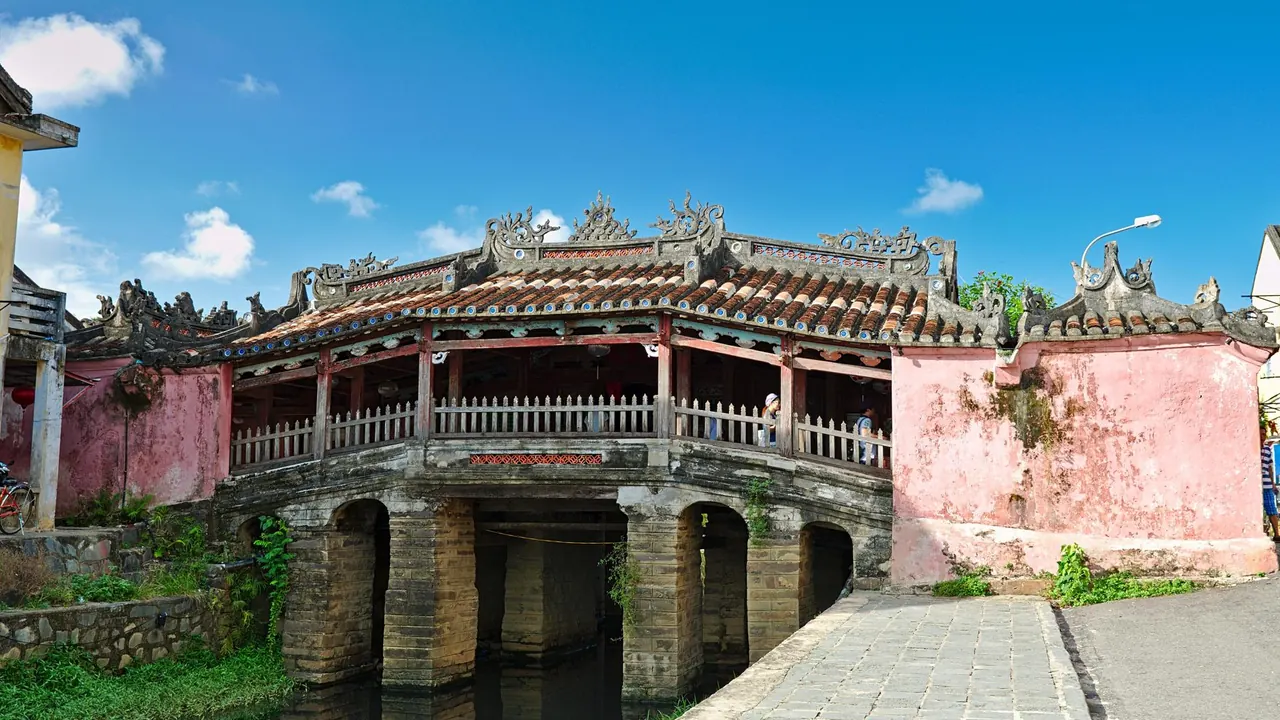
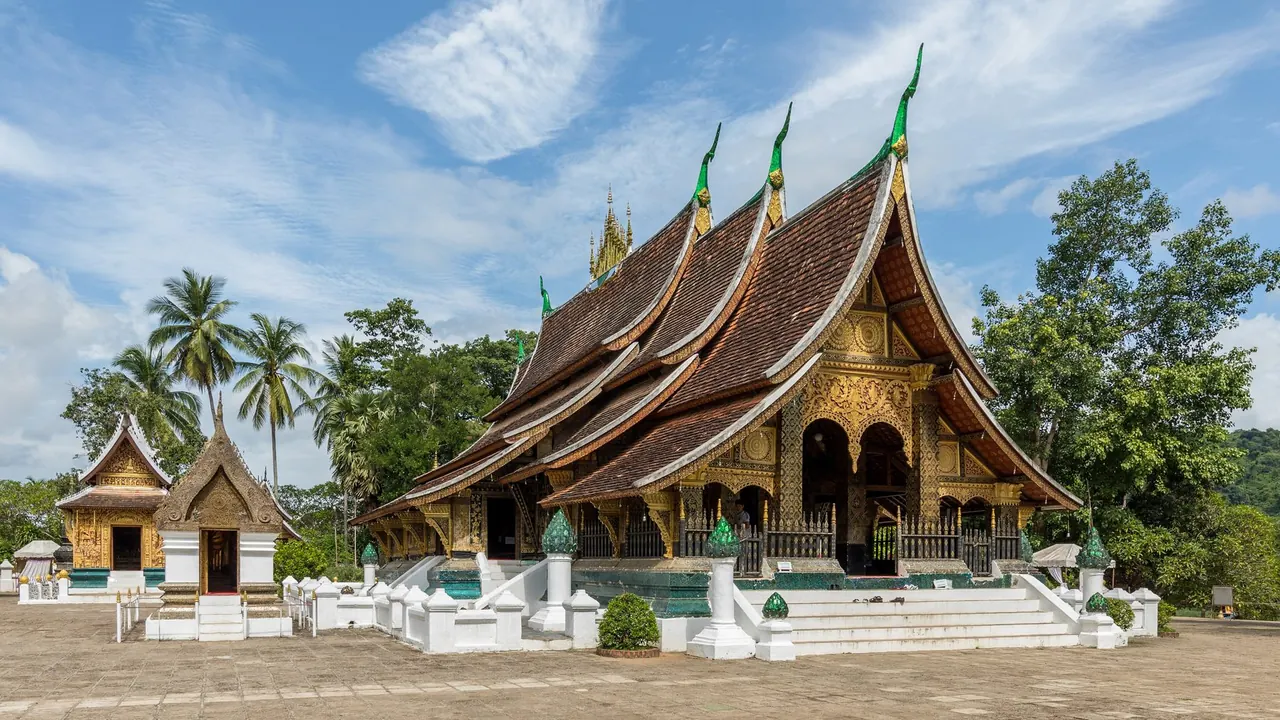
Photos: Hoi An by François Guerraz, CC BY-SA 3.0, cropped; Luang Prabang by Basile Morin, CC BY-SA 4.0, cropped.
Hoi An or Luang Prabang?
Our verdict in twelve categories, each scored against the same fixed benchmark cities, and the climate month by month, so you can choose for your trip.
Choose Hoi An for
- beaches
- food and drink
- nightlife
Hoi An suits a trip that mixes heritage with the sea. You can spend mornings and evenings in a lantern-lit merchant town and the hours in between on An Bang's sand. Its cooking has dishes found nowhere else, it is the easier choice with children, it is the place to have clothes made to measure, and it is slightly kinder on the budget. Avoid the autumn storms, which close the beach.
Choose Luang Prabang for
- nature and the outdoors
- getting around
Travellers after a slower, more inward stay will find it in Luang Prabang. Monasteries, the dawn alms round and the steep green hills around the peninsula give it a quieter, more spiritual feel. Waterfall pools and treks to hill villages take the place of a coast. Expect early nights and a narrower choice of food, and go for the calm rather than the variety.
Scoreboard
Twelve categories on one fixed scale from 0 to 100. The shaded stretch is the gap between the two.
Your match
Pick a travel style or drag the sliders, and both match scores follow your weighting.
Wins on beaches and food and drink with your weighting.
Wins on nature and the outdoors and getting around with your weighting.
What matters to you?
Category by category
What the scores mean for a trip.
Beaches & swimming
This is where the two differ most. Hoi An has a proper coastline. An Bang is about 5km away by bicycle through rice fields, and the pale sand runs almost unbroken toward Da Nang, with warm, calm water from spring to late summer.
Luang Prabang has no sea, and nobody swims in its fast brown rivers. The turquoise pools below Kuang Si make a lovely half-day dip, but for everyday swimming you depend on a hotel pool.
Food & drink
Both towns have dishes of their own, but Hoi An's are the stronger reason to travel. Cao lau, white rose dumplings, chicken rice and its well-stuffed banh mi are eaten at market counters and on plastic stools. Its cooking classes begin at the river market or in the Tra Que gardens.
Luang Prabang cooks Lao food: peppery or lam, smoky jeow bong and crisp kaipen with a beer, plus baguettes and strong coffee left by the French. It is good for a few days, but the same menus come round sooner. Neither town is a place for fine dining.
Culture & sights
Both old towns sit on rivers, are World Heritage townscapes best seen on foot, and have only small museums. Hoi An's is a former trading port, with wooden merchant houses, Chinese assembly halls and the covered Japanese Bridge. Its Chinese, Japanese and Vietnamese layers show in the architecture, and its streets are lit by lanterns after dark.
Luang Prabang's heritage is religious and still practised. More than thirty monasteries stand among colonial shophouses, with Wat Xieng Thong and the former Royal Palace at the top of the list. Novices walk the streets, and the alms round passes at dawn. Choose Hoi An for trade history, Luang Prabang for temples and ritual.
Nightlife
Neither town is made for a big night, but Hoi An gives a little more. You can have drinks on the lantern-lit riverbank or go to the backpacker bars on An Hoi islet, which stay open later. There are relaxed beach bars at An Bang, and Da Nang is close enough for clubs.
Luang Prabang winds down earlier still. A curfew closes its garden bars and river terraces around midnight, and after that the streets are dark and silent.
Nature & outdoors
The two landscapes could hardly be more different. Hoi An's countryside is flat: paddies and vegetable gardens for cycling, nipa palm waterways at Cam Thanh, and coral to snorkel around the Cham Islands. The Hai Van Pass and the Son Tra peninsula add drama further out.
Luang Prabang's setting is the bolder of the two. Steep forested hills rise right at the edge of town, and the tiered Kuang Si falls have a bear sanctuary at their foot. Kayaking, mountain biking and hill-village treks are easy to arrange. Hoi An gives you the sea, Luang Prabang the mountains.
Day trips
Hoi An has two outings of real weight. The Cham temple ruins of My Son lie an hour inland. Da Nang has the finest collection of Cham sculpture, and the cave shrines of the Marble Mountains are on the way.
Luang Prabang's classic day out is the boat up the Mekong to the Buddha-filled Pak Ou caves, and the silk-weaving villages lie closer to town. The railway brings Vang Vieng and Vientiane within reach, but beyond those the surroundings are countryside rather than further sights.
Good for families
Hoi An is much the easier place with children. Lantern making, basket-boat rides, market cooking classes, resorts with pools and a sandy shore for young swimmers fill the calm months. There is also a theme park with a safari park along the coast.
Luang Prabang has Kuang Si, Mekong boat rides and quiet streets to cycle together, but little else is aimed at families. With limited medical care and unpaved village roads, it works better with older children than with toddlers.
Getting around
The basics are much the same: a compact old core you walk, a bicycle for anything further, and no public transport for visitors. The difference lies beyond the centre.
From Hoi An a flat ride reaches the beach and the rice fields, but outside the pedestrian streets the motorbike traffic is heavy. Luang Prabang's roads are quieter. Its outings rely on tuk-tuks and minivans, with fares agreed beforehand, and on boats along the Mekong.
Shopping & style
Hoi An has the more rewarding shopping, chiefly because of its tailors. They make suits, dresses, shoes and bags to measure within a couple of days, though you should allow time for fittings. Lanterns, ceramics and the An Hoi night market fill in the rest.
Luang Prabang sells crafts and little else. There is the long nightly market on the main street, and better quality in the weaving studios in town and in Ban Phanom, where silk and cotton are dyed with natural colours. Neither town has fashion or department stores.
Affordability
Both are cheap, and Hoi An is a little cheaper. Homestays with pools, street food that costs almost nothing and bicycles often lent free keep a stay there very cheap. Only the riverfront restaurants and the beach resorts push the bill up.
Luang Prabang's guesthouses, market meals and massages cost little too, but it is the dearest stop in Laos. Its boutique colonial hotels, restaurants with wine lists and imported goods add up faster.
Live music & performing arts
Hoi An's evening performances are ones you can take part in. Bai choi, the central Vietnamese game of sung verses and cards, is played in the old town and visitors are welcome to join. Short folk music and dance shows and a large outdoor spectacle about the town's history, staged on a river island, give it slightly more choice.
Luang Prabang's set piece is one you watch rather than join. The Phralak Phralam, the Lao Ramayana, is danced in masks to a traditional ensemble in the Royal Palace grounds. A few folk evenings and temple drums at dusk complete the list. Concerts and theatre are missing in both towns, though from Hoi An, Da Nang is close enough to fill the gap.
Wellness & relaxation
In Hoi An you have to leave the old town to find calm, because its streets fill up in the evenings. The restful stay is in a resort out among the paddies or by the sea. Rest there means pools, yoga and massage, from simple foot-massage parlours to full resort treatment rooms, but there is no bathing tradition.
Luang Prabang is restful within the town itself, with little traffic and no high-rise. It also has the bathing tradition that Hoi An lacks: wooden herbal saunas scented with lemongrass. Lao massage is gentler than Vietnamese styles, and boutique hotels add garden spas and yoga by the river.
When should you go?
Pick your month. The climate figures are measured averages, not a forecast.
Hoi An in July
Luang Prabang in July
Daytime high, °C
Rainfall in the month, mm
Temperature and rainfall are climate normals, averaged over the years shown. Hoi An: 1991-2020 normals, Da Nang (23.5 km from centre). Luang Prabang: 1991-2020 normals, Luang-Prabang (0.8 km from centre).
Hoi An is at its best from February to April, when it is dry, sunny and still comfortable for walking the old town. From May to August highs reach about 35°C and the sea is at its warmest for long swims, though midday sightseeing is hard going. Rain builds from September and peaks in October at over 700mm. Storms end the beach season and last into December.
Luang Prabang runs almost the opposite calendar. November to February is dry and clear, with January highs near 28°C, so it is the natural pick while Hoi An is at its wettest. March and April are the hottest months, at around 36°C. The monsoon follows from May to September and is heaviest in August, when trails turn muddy but the hills are at their greenest.
Which traveller are you?
On a beach and sun trip, Hoi An is the only real choice. An Bang and the long sand running toward Da Nang give warm, calm swimming from spring to late summer. Luang Prabang lies far inland and offers forest pools rather than a shore.
On a family trip with children, Hoi An has more to fill the days: lantern making, basket boats, cycling through rice fields, resort pools and a gentle sandy beach. Luang Prabang delights children at Kuang Si, but beyond that its sights are mostly temples.
For an outdoors trip, Luang Prabang edges ahead. Treks to Hmong and Khmu villages, kayaking on the Nam Khan and Mekong boat journeys all start close to town. Hoi An's countryside is flat and gentle, and its autumn storms limit much of it.
Before you go
| Measure | Hoi An | Luang Prabang |
|---|---|---|
| Official language | Vietnamese | Lao |
| Currency | Dong (VND) | Lao Kip (LAK) |
| Sockets | ACFG220 V, 50 Hz | ABCEF230 V, 50 Hz |
| Driving side | Right | Right |
| Time zone | UTC+7 | UTC+7 |
| Emergency number | Police 113, ambulance 115, fire 114 | Police 191, ambulance 195, fire 190 |
| Elevation | 13 m | 305 m |
| Main airport | Da Nang International Airport (DAD)23 km from centre47 non-stop destinations | Luang Phabang International Airport (LPQ)4 km from centre7 non-stop destinations |
By the numbers
| Measure | Hoi An | Luang Prabang |
|---|---|---|
| City population | 121,716 | 53,792 |
| Museums within 10 km | 5 | 0 |
| UNESCO World Heritage sites within 50 km | 2 | 1 |
| Swim season, months above 21 °C | 12 months | - |
Where else could you go?
Every comparison below shares a destination with this one, so you can follow Hoi An or Luang Prabang somewhere new.