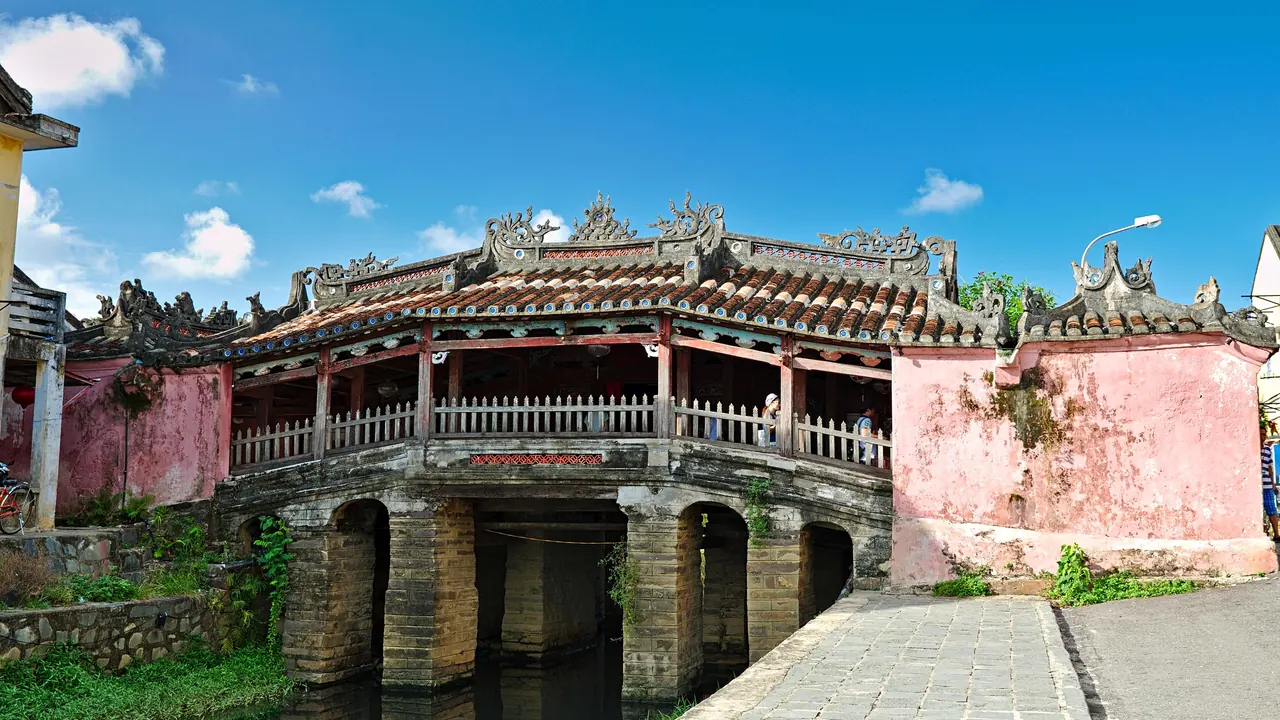
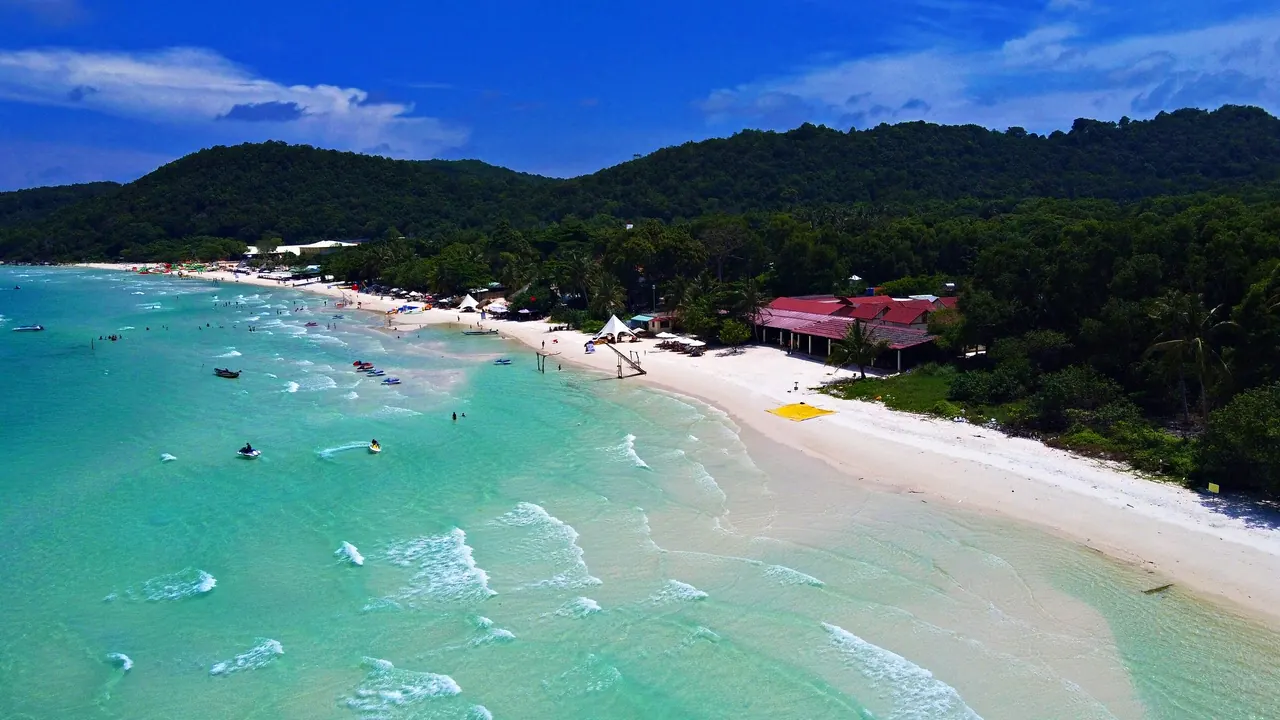
Photos: Hoi An by François Guerraz, CC BY-SA 3.0, cropped; Phu Quoc by Trantuonglam, CC BY-SA 4.0, cropped.
Hoi An or Phu Quoc?
Our verdict in twelve categories, each scored against the same fixed benchmark cities, and the climate month by month, so you can choose for your trip.
Choose Hoi An for
- culture and sights
- shopping
- day trips
Hoi An suits travellers who want a place to explore slowly on foot and by bicycle. It is an old riverside trading town of merchant houses and assembly halls, with a local cooking found nowhere else, tailors and lantern makers, and My Son and Da Nang close enough for days out. The beach is a short ride away rather than the whole point, and a stay costs less.
Choose Phu Quoc for
- families
- beaches
- nightlife
Phu Quoc is the one to pick when the sea is the plan. Its beaches are longer and whiter and the water is warm all year, and the resorts, safari park and theme parks make it the easier choice with children. What you give up is nearly everything else: there is little heritage, hardly anywhere to go for a day out, and almost every outing needs a ride.
Scoreboard
Twelve categories on one fixed scale from 0 to 100. The shaded stretch is the gap between the two.
Your match
Pick a travel style or drag the sliders, and both match scores follow your weighting.
Wins on culture and sights and shopping with your weighting.
Wins on families and beaches with your weighting.
What matters to you?
Category by category
What the scores mean for a trip.
Beaches & swimming
Hoi An's beach is a side trip from town. You cycle through the rice fields to An Bang or to the quieter sand running north towards Da Nang. Swimming there is good from spring to late summer, but the autumn monsoon brings red flags and the sea is then for looking at.
Phu Quoc is built around its coast, and the beaches are better. Long Beach runs for around 20km of sunsets on the west side, and Sao and Khem in the southeast have softer white sand and paler water. Because there are two coasts, you can move to the sheltered side when the wet-season waves hit the west, something Hoi An's single shoreline cannot offer.
Food & drink
Hoi An eats better, mostly because it has dishes found nowhere else: cao lau noodles, white rose dumplings, its chicken rice and its well-stuffed banh mi, eaten at market counters and family shopfronts. A cooking class that starts at the riverside market or in the Tra Que gardens is part of many visits.
Phu Quoc's food is mostly seafood: squid, scallops and crab grilled by the shore, herring salad rolled in rice paper, and meals at the stilted restaurants of Ham Ninh. You can also tour its fish sauce houses and pepper farms. Neither place has much international range, but Hoi An gives the more varied week of eating.
Culture & sights
This is where the two differ most. Hoi An's whole old town is the attraction: a former port of tiled merchant houses, family chapels, the covered Japanese Bridge and the Fujian and Cantonese assembly halls, lit by lanterns after dark.
Phu Quoc has a few separate stops rather than a place to wander. The most important is the wartime prison museum near An Thoi, which is sobering. The others are the Dinh Cau shrine on its rocks at Duong Dong and Ho Quoc Pagoda above the east coast. The copies of European streets in its resort districts are entertaining but have no history behind them.
Nightlife
Neither place is for a big night out, and neither has real clubs. In Hoi An the evening is a lantern-lit walk by the river and a drink, with a few loud backpacker bars on An Hoi islet. Phu Quoc has more staged after-dark entertainment, with sundowners on Long Beach, light shows in the resort districts and a casino in the north, though it goes quiet outside the dry season.
Nature & outdoors
Hoi An's countryside is gentle and close at hand: rice paddies and buffalo on flat cycling lanes, basket boats in the nipa palms at Cam Thanh, and coral around the protected Cham Islands. Within about an hour and a half you reach the Marble Mountains, the monkeys of the Son Tra peninsula and the mountain road over the Hai Van Pass, which gives it more variety.
Phu Quoc's outdoor life is mostly on the water: snorkelling and diving trips from An Thoi to modest reefs, kayaking, squid fishing at night, and the long cable car to Hon Thom. The forested national park in the north has only a few trails, and the interior is pepper farmland. The wet seasons limit both places, Hoi An in autumn and Phu Quoc from May to October.
Day trips
From Hoi An you can fill several days out. The Cham temple valley of My Son is an hour inland, and Da Nang has the finest collection of Cham sculpture, with the cave shrines of the Marble Mountains on the way. Hue is close enough for an overnight trip.
Phu Quoc offers little beyond its own shores. Island-hopping boats visit the An Thoi archipelago, and the only mainland outing is the ferry to the quiet border town of Ha Tien. Most people simply stay on the island.
Good for families
Phu Quoc is the easier place for children, with big attractions designed for them: the drive-through safari park and the theme park in the north, a water park at the end of the Hon Thom cable car, and resorts with kids' clubs on shallow, calm water in the dry season. The catch is that every one of these is a taxi ride away.
Hoi An's appeal is smaller in scale and more hands-on: making a lantern, spinning in a basket boat, cycling to the beach. It also has a theme park and safari park down the coast. Motorbikes outside the pedestrian centre and broken pavements make it harder going with a pushchair.
Getting around
Hoi An is easier to get around because the centre is compact. The old town is largely closed to motor traffic, and bicycles, often lent free by hotels, reach the beach and the villages on flat lanes. Longer trips to Da Nang or My Son mean a driver or a ride-hailing app.
Phu Quoc is a spread-out island about 50km long. Electric buses serve the main run from the airport past Long Beach to the northern resorts, but the southeast beaches, the safari park and the cable car each take half an hour or more by road. Little of it is pleasant on foot.
Shopping & style
Hoi An is a shopping destination for one reason: its tailors. They will make a suit, dress, shoes or a bag to measure within days, provided you leave time for fittings. Silk lanterns, ceramics and embroidery fill the old town around this trade.
Phu Quoc offers food souvenirs and pearls: black pepper, dried seafood and the famous fish sauce, which airlines may refuse, plus cultured pearls from the island's farms. Its resort districts have rows of shops but nothing made to order.
Affordability
Both are cheap by international standards, but Hoi An goes further on a modest budget. Homestays with pools, almost nominal street food and free bicycles keep daily costs low, and only the beachfront resorts and the restaurants facing the river push them up.
Phu Quoc costs more than the mainland because it is a resort island. Its main attractions, including the theme parks, the cable car and the boat trips, add up quickly, and prices peak in the dry season around the turn of the year. Guesthouses and market seafood near Duong Dong still keep a careful trip cheap.
Live music & performing arts
Neither has a theatre or a music scene, but Hoi An's evening shows have more local character. Visitors can join a round of bai choi, a sung card game, catch short folk music and dance sets at the old town's performance house, or watch the large history spectacle on the river. Phu Quoc's offer is grand staged shows by the sea, with fireworks, drones and water, which are polished but made for the resorts.
Wellness & relaxation
Both suit an unhurried stay built on massage and pools rather than any bathing tradition. In Hoi An the calm comes from the countryside: rooms among the paddies or between town and the sea, spas at every level, and yoga classes, with the old town's evening crowds best avoided.
Phu Quoc's version is a beach resort with herbal baths, a hammock in the shade and the sea in front of you. The quieter bases are Ong Lang in the north or Khem in the southeast, away from Long Beach.
When should you go?
Pick your month. The climate figures are measured averages, not a forecast.
Hoi An in July
Phu Quoc in July
Daytime high, °C
Rainfall in the month, mm
Temperature and rainfall are climate normals, averaged over the years shown. Hoi An: 1991-2020 normals, Da Nang (23.5 km from centre). Phu Quoc: 1991-2020 normals, Phu Quoc (0.7 km from centre).
Hoi An is at its best from February to April, when it is dry, sunny and warm without being punishing, which is ideal for walking the old town. From May to August the sea is warm and the sun is at its strongest, but daytime highs reach 35°C, so lanes and markets are best early or late. Then the monsoon arrives. September to December is very wet, with October bringing around 726mm, and the sea turns rough. January is mild and fairly dry but often grey.
Around Long Beach and Duong Dong on Phu Quoc's west coast, it is hot every month, with highs rarely far from 31°C and the sea warm all year. The seasons are about rain. December to March is dry, with January at around 21mm, and the wet season runs from May to October, peaking in September at around 521mm. Each place has its best season in a different part of the year: Phu Quoc is at its best in midwinter, when Hoi An is still wet, and both are reliable from February to April.
Which traveller are you?
On a beach and sun trip, Phu Quoc is the place. The sea is the centre of every day rather than a bike ride away, and swimming stays good long after Hoi An's shore turns rough. In return you get little heritage and few days out.
For a culture and arts trip, Hoi An wins easily. A walk to breakfast passes through centuries of trading history, and you can spend slow mornings and lantern-lit evenings in the old town, with a temple valley and Da Nang's museum within reach. Phu Quoc offers an afternoon's sightseeing at most.
On a family trip with children, Phu Quoc makes life easier. Big set-piece days out and resorts built around children mean less planning, though each outing costs a taxi ride. Hoi An suits families who are happy with simpler, hands-on days and a slower pace.
Before you go
| Measure | Hoi An | Phu Quoc |
|---|---|---|
| Official language | Vietnamese | Vietnamese |
| Currency | Dong (VND) | Dong (VND) |
| Sockets | ACFG220 V, 50 Hz | ACFG220 V, 50 Hz |
| Driving side | Right | Right |
| Time zone | UTC+7 | UTC+7 |
| Emergency number | Police 113, ambulance 115, fire 114 | Police 113, ambulance 115, fire 114 |
| Elevation | 13 m | - |
| Main airport | Da Nang International Airport (DAD)23 km from centre47 non-stop destinations | Phú Quốc International Airport (PQC)36 non-stop destinations |
By the numbers
| Measure | Hoi An | Phu Quoc |
|---|---|---|
| Population | 121,716 | 179,480 |
| People per km² | - | 305 |
| Museums within 10 km | 5 | - |
| UNESCO World Heritage sites within 50 km | 2 | - |
| Swim season, months above 21 °C | 12 months | 12 months |
Where else could you go?
Every comparison below shares a destination with this one, so you can follow Hoi An or Phu Quoc somewhere new.
- Da Nangvs Hoi An
- Koh Rongvs Phu Quoc
- Huevs Hoi An
- Mekong Deltavs Phu Quoc
- Koh Koodvs Phu Quoc
- Koh Changvs Phu Quoc