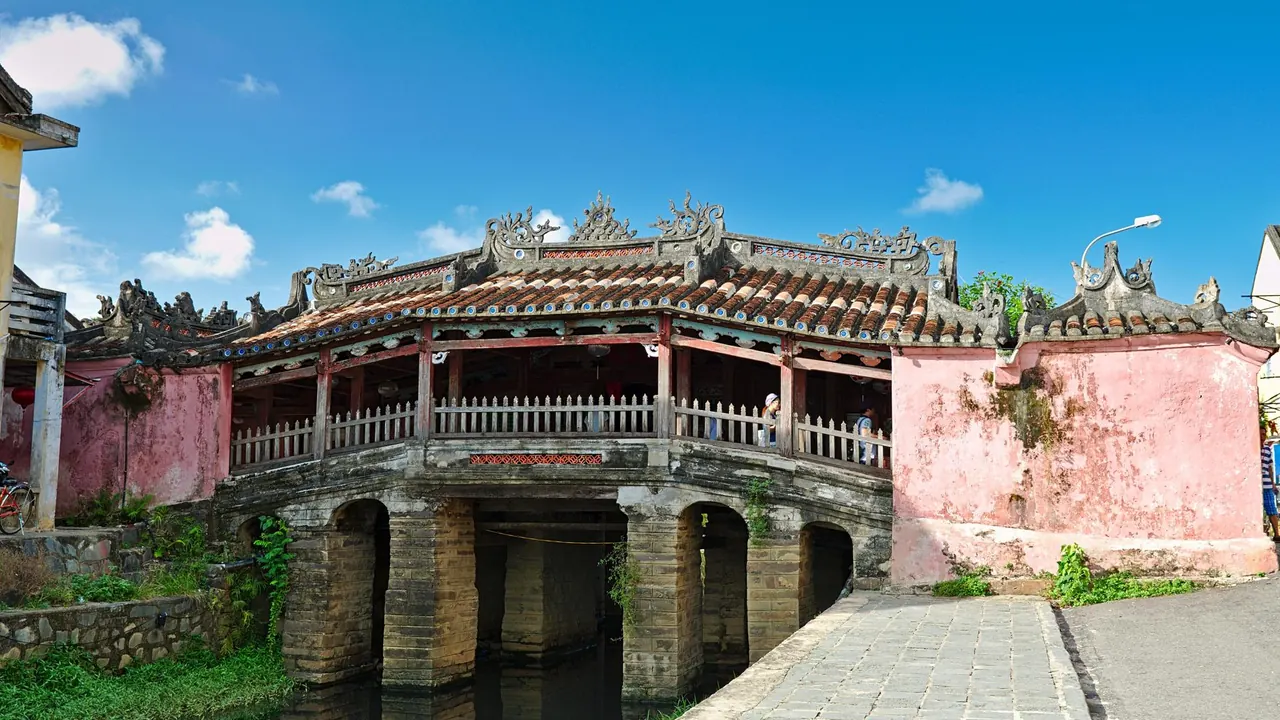
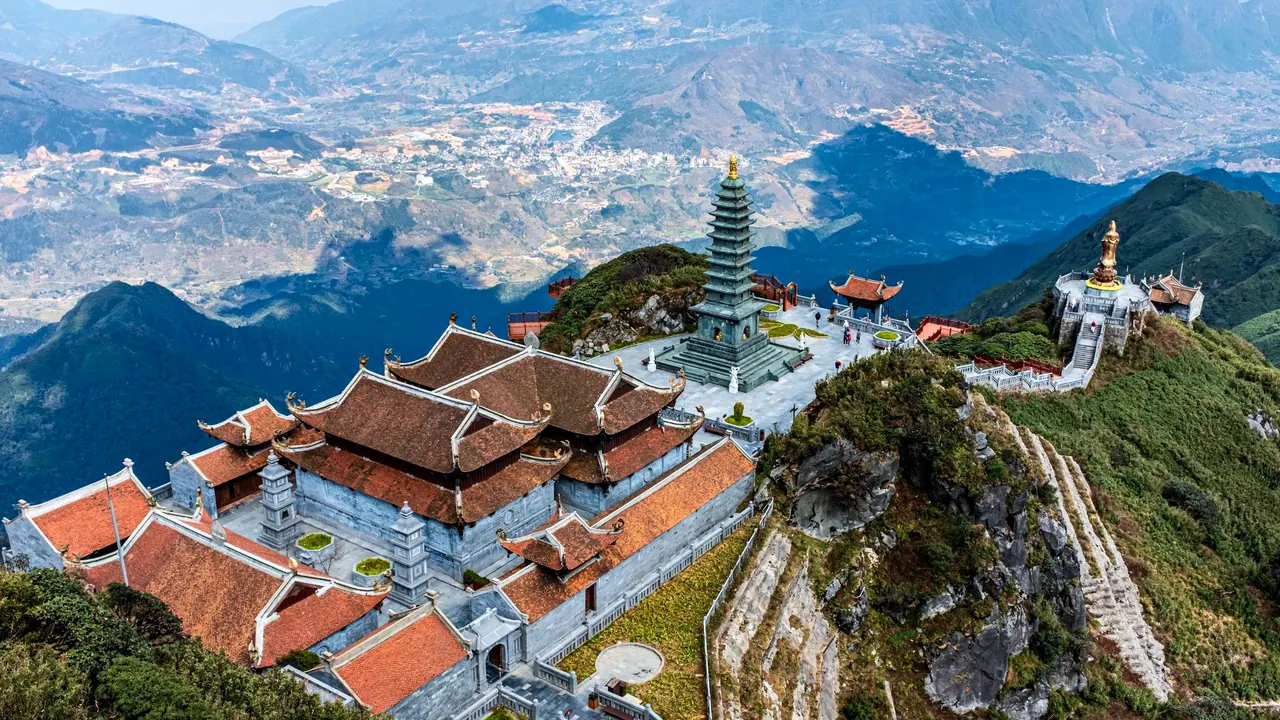
Photos: Hoi An by François Guerraz, CC BY-SA 3.0, cropped; Sapa by Kirandeep Singh Walia, Pexels License.
Hoi An or Sapa?
Our verdict in twelve categories, each scored against the same fixed benchmark cities, and the climate month by month, so you can choose for your trip.
Choose Hoi An for
- beaches
- culture and sights
- food and drink
Hoi An suits travellers who want an easy, warm, varied trip in one base: a lantern-lit merchant town to wander, a cooking style found nowhere else, tailors to visit, and a long sandy beach a bicycle ride away. It is the better choice for couples and families who want sightseeing, swimming and a slow pace in the same week, and for anyone who would rather walk old streets than mountain trails.
Choose Sapa for
- nature and the outdoors
- prices
Sapa is for people who come for the landscape and are happy to work for it. The Muong Hoa valley terraces, village trails through Hmong and Dao communities and the climb or cable car up Fansipan give it an outdoor pull that Hoi An cannot match. Expect cool air, simple food and quiet evenings. It rewards walkers and older children, and offers little to anyone who wants a beach, museums or a lively town.
Scoreboard
Twelve categories on one fixed scale from 0 to 100. The shaded stretch is the gap between the two.
Your match
Pick a travel style or drag the sliders, and both match scores follow your weighting.
Wins on beaches and culture and sights with your weighting.
Wins on nature and the outdoors and prices with your weighting.
What matters to you?
Category by category
What the scores mean for a trip.
Beaches & swimming
Hoi An has a real beach and Sapa has none. An Bang lies about 5km from the old town through rice fields, and the pale sand runs almost unbroken north towards Da Nang, with warm, calm water from spring to late summer and rough monsoon surf in autumn.
Sapa sits on a mountain ridge with only cold, shallow streams and waterfalls. A trip that pairs the two would use Hoi An for the sea and Sapa for the hills.
Food & drink
Hoi An is the better place to eat. It has a short list of dishes of its own, cao lau above all, plus white rose dumplings, chicken rice and its stuffed banh mi, eaten at market counters and plastic stools. Cooking classes that start in the central market or at Tra Que are a reason to come in themselves.
Sapa's cooking is mountain fare: salmon and sturgeon hotpots, lakeside charcoal grills, and Hmong dishes such as thang co with corn wine. It is warming after a long walk, but the centre leans on traveller cafés serving standard menus.
Culture & sights
Hoi An's old town is a sight in its own right: wooden merchant houses, the covered Japanese Bridge and Fujian and Cantonese assembly halls, with Chinese, Japanese and Vietnamese influences layered through narrow streets. It takes a day or two of slow walking, best early or under the lanterns at night.
Sapa has little to visit as such, apart from its French-era stone church and a small ethnic museum. Its culture is met on the trails, in Black Hmong, Red Dao, Tay and Giay villages, where the further you walk past Cat Cat, the less staged it feels.
Nightlife
Neither is a place for a big night, though Hoi An offers a bit more. Its evenings mean riverside strolls, floating paper candles and a few late backpacker bars on An Hoi islet, with beach bars at An Bang. In Sapa the day ends with hotpot by a fire, a handful of pool-table bars and an early night before trekking.
Nature & outdoors
Sapa is the place for landscape. The Muong Hoa valley's terraces drop away below the town at about 1,500m, trails lead straight out to villages for walks of one to three days, and Fansipan rises to 3,143m, reachable on foot or by cable car.
Hoi An's countryside is flat and gentle: paddies and water buffalo by bicycle, basket boats in the Cam Thanh palm waterways and coral at the Cham Islands. Its grander scenery, the Hai Van Pass and Son Tra peninsula, is a drive away.
Day trips
Hoi An has the stronger day trips. My Son's ruined Cham temples lie about an hour inland, and Da Nang's Museum of Cham Sculpture and the Marble Mountains make a second full day, with the Cham Islands as a sea outing.
Sapa's best excursion is the Sunday market at Bac Ha, about two hours away, with smaller weekly markets at Can Cau and Coc Ly. Beyond those, most outings are walks into the mountains rather than visits to other places.
Good for families
Hoi An is the easier family choice. The walkable old town, lantern-making, basket boats, cycling through paddies, resort pools and a gentle sandy shore in the calm season all suit young children, though midday heat and motorbikes need watching.
Sapa works mainly with older children who can walk: village treks, buffalo in the paddies and the Fansipan cable car. Steep, uneven streets, muddy trails, cold rooms in winter and persistent vendors make it hard work with toddlers.
Getting around
Hoi An is simpler once you are there. Its old town is largely closed to motor traffic, and the beach, villages and rice fields are a flat bicycle ride away, often on a hotel's free bike, though Da Nang and My Son still need a taxi or driver.
Sapa's steep centre is walkable with effort, and beyond it you rely on trekking trails, hired drivers or motorbike taxis. Getting there takes longer too: five to six hours by road from Hanoi, or an overnight train to Lao Cai and a drive up the mountain.
Shopping & style
Made-to-measure tailoring is what brings shoppers to Hoi An. Hundreds of workshops will cut a suit, dress or coat, or make leather shoes and bags, within a day or two, with fittings in between, so order early rather than on the last day. Silk lanterns, ceramics, carvings and the An Hoi night market add to it, though much of the stock repeats from shop to shop.
Sapa sells handicrafts and little else. Hmong and Dao women offer embroidery, indigo cloth, batik and silver in the market, on the streets and in the villages, but machine-made copies are common and sellers can be insistent. It suits buying one good textile, ideally at a market like Bac Ha, rather than a whole shopping trip.
Affordability
Both are very cheap, and the difference lies in where the money goes. In Hoi An, homestays with pools and market meals cost little, while the old town entry fee, riverfront restaurants and beachfront resorts are the costlier exceptions. In Sapa, guesthouses, homestays and guided treks are inexpensive, and the Fansipan cable car is the one notable outlay.
Live music & performing arts
Neither town has a theatre or concert life, but Hoi An gives a little more to watch. Visitors can join a bai choi game of sung verses in the old town, catch folk music and dance at a traditional arts house or see a large outdoor show on the river. Sapa offers short weekend performances of Hmong and Dao pan pipes and dance in the town square and a few villages.
Wellness & relaxation
Resort pools, massage rooms on every street and yoga classes give Hoi An an easy kind of rest. The resorts between the town and the sea are built for idle days, and the paddies and palm groves just outside the old town are quieter than its crowded evenings.
Sapa has the more unusual treatment: the Red Dao herbal bath, a hot soak in wooden tubs steeped with forest plants, which feels earned after a day on the trails. Apart from that and foot massage there is little else, and real calm means a valley homestay, because the town is noisy with traffic and selling.
When should you go?
Pick your month. The climate figures are measured averages, not a forecast.
Hoi An in July
Sapa in July
Daytime high, °C
Rainfall in the month, mm
Where the figures come from
Sapa has no weather station within reach, so its figures come from a gridded climate model rather than a measured record, and read a broad area rather than the city itself.
Temperature and rainfall are climate normals, averaged over the years shown. Hoi An: 1991-2020 normals, Da Nang (23.5 km from centre). Sapa: 1991-2020 normals, TerraClimate 4 km grid at the town, no weather station within 90 km.
Hoi An is at its most comfortable from February to April, when it is dry and warm without being oppressive. May to August is beach season: the sea warms to around 29°C and the sunshine is at its strongest, but daytime highs near 35°C make midday walking in the old town hard going. From September the monsoon arrives, peaking in October with around 726mm of rain, rough seas and a beach that is better for walking than swimming. It stays wet into December.
Sapa runs on almost the opposite pattern. Its summer is cool, with highs around 25°C, but very wet, with about 433mm in July, so trails turn muddy and the views come and go. October and November are the driest pleasant months for trekking, and late September catches the terraces turning gold. December and January are dry but cold, with highs of only about 15°C and chilly nights. Taken together, spring works for both, and Sapa's dry autumn falls just when Hoi An is at its wettest.
Which traveller are you?
On a beach and sun trip, Hoi An is the only real option. An Bang and the long sandy coast towards Da Nang give warm, calm swimming from spring to late summer, while Sapa is a mountain town far from any sea.
For an outdoors trip, Sapa is the stronger pick. Multi-day treks through rice terraces and bamboo forest, village homestays and Fansipan, the highest peak in Indochina, beat Hoi An's gentle bicycle rides, basket boats and Cham Islands snorkelling.
On a culture and arts trip, Hoi An gives far more. Its old town of merchant houses, Chinese assembly halls and the Japanese Bridge, with My Son's Cham temples nearby, outweighs Sapa's one stone church, where the interest lies in village life.
Before you go
| Measure | Hoi An | Sapa |
|---|---|---|
| Official language | Vietnamese | Vietnamese |
| Currency | Dong (VND) | Dong (VND) |
| Sockets | ACFG220 V, 50 Hz | ACFG220 V, 50 Hz |
| Driving side | Right | Right |
| Time zone | UTC+7 | UTC+7 |
| Emergency number | Police 113, ambulance 115, fire 114 | Police 113, ambulance 115, fire 114 |
| Elevation | 13 m | 1,544 m |
| Main airport | Da Nang International Airport (DAD)23 km from centre47 non-stop destinations | Noi Bai International Airport (HAN)238 km from centre91 non-stop destinations |
By the numbers
| Measure | Hoi An | Sapa |
|---|---|---|
| City population | 121,716 | 70,663 |
| People per km² | - | 103 |
| Museums within 10 km | 5 | 0 |
| UNESCO World Heritage sites within 50 km | 2 | 0 |
| Swim season, months above 21 °C | 12 months | - |
Where else could you go?
Every comparison below shares a destination with this one, so you can follow Hoi An or Sapa somewhere new.