Photos: Huatulco by Gzzz, CC BY-SA 4.0, cropped; Zihuatanejo by AlejandroLinaresGarcia, CC BY-SA 4.0, cropped.
Huatulco or Zihuatanejo?
Our verdict in twelve categories, each scored against the same fixed benchmark cities, and the climate month by month, so you can choose for your trip.
Choose Huatulco for
- day trips
- nature and the outdoors
- wellness
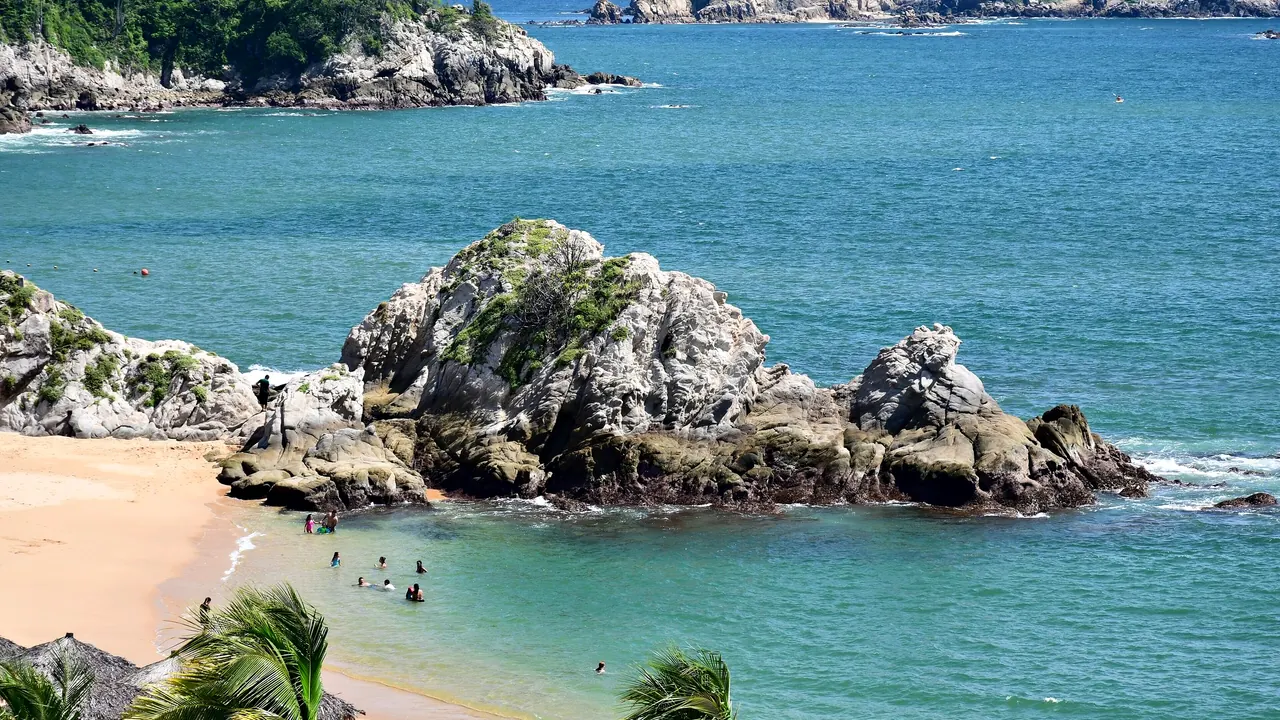
Huatulco is the better pick if you want the beach plus things to do around it. Much of its coast is a national park of dry forest, cliffs and coral coves, boats run to bays with no road, the Copalita River offers rafting, and the coffee hills and the Mazunte and Zipolite coast are close enough for easy outings. In return you get a planned resort spread across several bays, where taxis do most of the work.
Choose Zihuatanejo for
- getting around
- food and drink
- prices
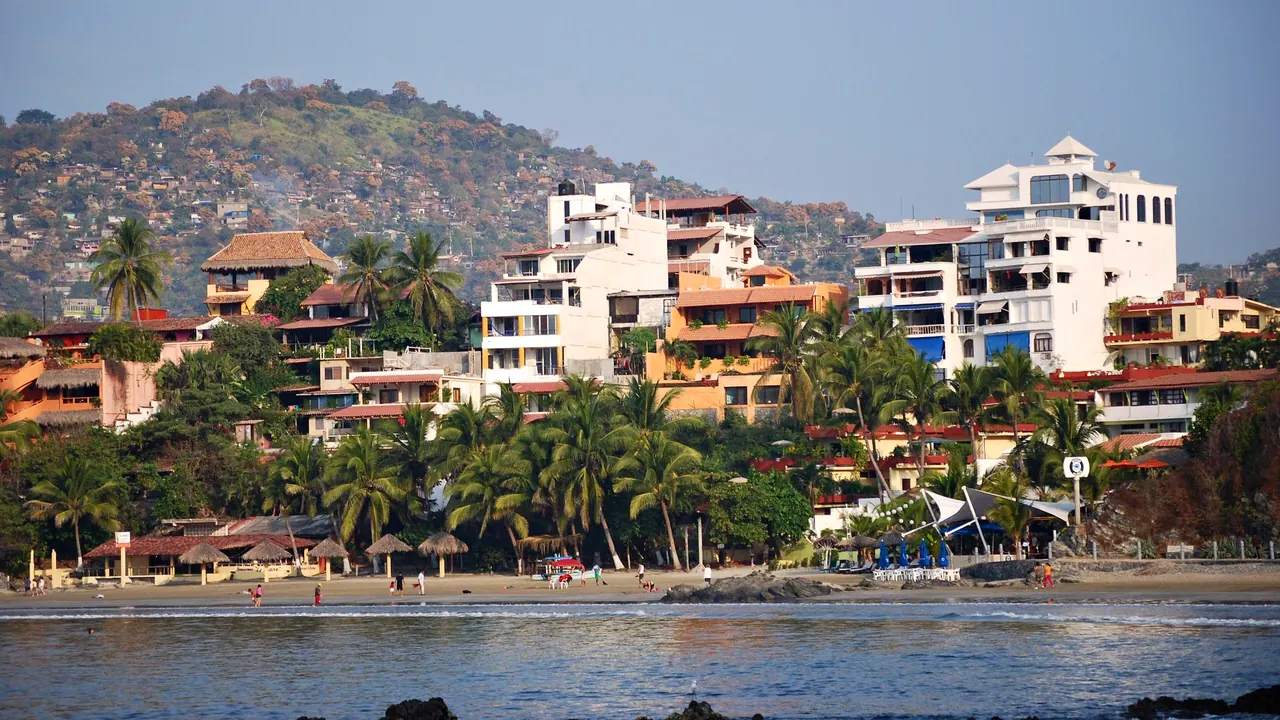
Travellers who would rather settle into one bay and stay put will be happier in Zihuatanejo. It is a working fishing town with a centre you can walk, buses and colectivos out to La Ropa and Ixtapa, slightly lower everyday costs and fish cooking that has the edge on Huatulco's. There is less to explore beyond the bay, so it suits a slow stay of swimming, reading and long lunches more than an active one.
Scoreboard
Twelve categories on one fixed scale from 0 to 100. The shaded stretch is the gap between the two.
Your match
Pick a travel style or drag the sliders, and both match scores follow your weighting.
Too close to call, level with your weighting
Wins on day trips and nature and the outdoors with your weighting.
Wins on getting around and food and drink with your weighting.
What matters to you?
Category by category
What the scores mean for a trip.
Beaches & swimming
The two are evenly matched on beaches, but the layout is different. Huatulco gives you nine bays along about 35km of coast, mostly small golden coves between rocky headlands. Boats hop between them in a morning, and Cacaluta and El Órgano have no road at all, so a beach day often means a boat trip.
Zihuatanejo is one deep bay. Most people base themselves on the long, calm crescent of La Ropa and take a water taxi to Las Gatas, where the old stone reef keeps the water flat for snorkelling. Ixtapa adds long open beaches and the calm coves of Isla Ixtapa. In both places the open-ocean beaches have rough surf.
Food & drink
Neither is a place to book for the food, but Zihuatanejo eats slightly better and is more firmly about the sea. Fish comes as tiritas cured in lime or split and grilled at the palapas on La Ropa and Las Gatas, and on Thursdays the whole town sits down to pozole.
Huatulco's appeal is Oaxacan cooking brought to the coast: mole, tlayudas, tamales in banana leaf, with mezcal and coffee from the hills. For the best of it, go to La Crucecita's market and the fondas around the square, not the resort buffets in Tangolunda.
Culture & sights
Sights are thin in both, and either can be covered in a morning. Huatulco's are scattered: the Virgin painted across the dome of La Crucecita's church, and the Copalita park, where a small ceremonial site leads on to a forest walk to a clifftop. In Zihuatanejo the culture is mostly the fishing town itself, its whitewashed grid and pier, plus a small coastal archaeology museum on the waterfront.
Nightlife
Both are quiet places at night, and Zihuatanejo has only a little more going on. Its town evenings are sunset drinks and small bars full of locals and long-stay visitors, but Ixtapa up the road has louder beach bars and a few clubs that fill up in high season.
Huatulco's evenings centre on La Crucecita's plaza and its mezcal bars, with a few marina bars in Santa Cruz. Most nights the town is asleep by midnight. People who want to party go up the coast to Zipolite.
Nature & outdoors
Huatulco has the stronger natural setting. A national park protects the coast from dry forest down to the coral patches, and boat trips pass blowholes and sea arches. Inland there is rafting on the Copalita, waterfalls at Llano Grande and shade-grown coffee farms around Pluma Hidalgo.
Zihuatanejo's outdoor life is mostly on the water: sport fishing for sailfish and marlin, snorkelling at Las Gatas and Isla Ixtapa, and paddling in the calm bay. On land, the lagoon at Barra de Potosí is full of herons and spoonbills and there are crocodiles in the mangroves, but hiking is limited. You can watch for humpback whales in winter from either town.
Day trips
Huatulco has much better day trips. About an hour west lies a string of very different villages: Mazunte with its turtle centre, laid-back San Agustinillo, the fishing harbour at Puerto Ángel and bohemian Zipolite. The surf town of Puerto Escondido is within reach, and the coffee villages make a slow half day.
From Zihuatanejo the outings are smaller: a beach day in the surf village of Troncones, lunch on the sand at Barra de Potosí, or the ball court at Xihuacan. Neither town is close enough to a big city for a day out. Oaxaca and Acapulco both need an overnight stay.
Good for families
Families will find the two much alike: calm coves, resorts with kids' clubs, small towns that are easy to manage, and nothing like a zoo or theme park. Huatulco's highlight is La Entrega, where children can snorkel over coral close to shore. Zihuatanejo has more small outings for when the beach gets dull: crocodile spotting in the lagoons, turtle releases in season and the boat ride to Isla Ixtapa.
Getting around
Zihuatanejo is easier to get around. The centre is walkable, a waterfront path leads to Playa Madera, and local buses and colectivos run to La Ropa and Ixtapa, so most visitors never need a car. The hills between beaches are steep and often have no pavement, though.
Huatulco is spread across several bays. You can walk from La Crucecita down to Santa Cruz, but Tangolunda, Chahué and Maguey usually mean a taxi, the remoter coves need a boat, and a hire car is worth having for the coast villages and the coffee hills.
Shopping & style
Shopping is minor in both, enough for souvenirs and little more, but the crafts differ. Huatulco's stalls sell Oaxacan crafts, such as embroidered blouses, black pottery and alebrijes, along with mezcal and local coffee. Zihuatanejo's artisans' market brings in silver from Taxco and lacquerware from Olinalá, and a few boutiques and Ixtapa's small plaza give it a slight edge for resort wear.
Affordability
Zihuatanejo is the cheaper of the two, mainly because daily life there costs so little. If you stay in town, eat at taquerías and palapas and take the bus, your money lasts well. Prices rise in the boutique hotels above La Ropa and in Ixtapa.
Huatulco can also be cheap if you base yourself in La Crucecita and eat at the market. Because the bays are spread out, though, you pay more often for taxis and boat tours, and the all-inclusive resorts in Tangolunda push costs up.
Live music & performing arts
Neither town is somewhere to plan evenings around performances, though Zihuatanejo has a little more. Its long-running international guitar festival brings concerts to the beach once a year, and in high season trova singers and mariachis play in restaurants. In Huatulco there are folk dance shows at the resorts and music on the plaza during local festivals.
Wellness & relaxation
Both are good places to slow down, and in both the slow pace does most of the work. Huatulco has the more established spa offer: full spas at the Tangolunda and Conejos resorts, and the temazcal steam bath run with herbs and a guide at several eco-centres. In Zihuatanejo, rest mostly means reading in the shade between swims. Its spas are in the hotels on the hills above La Ropa, and yoga is a bit easier to find than in Huatulco.
When should you go?
Pick your month. The climate figures are measured averages, not a forecast.
Huatulco in July
Zihuatanejo in July
Daytime high, °C
Rainfall in the month, mm
Where the figures come from
Huatulco's temperatures are measured 42 km from the centre, at Puerto Angel, Oax..
Huatulco's station stands 177 m below the city centre, so the centre is likely a little cooler than the figures say.
Huatulco has no rain gauge within 25 km of the centre, so its rainfall comes from a gridded climate dataset read at the city rather than from a gauge further away.
Zihuatanejo has no weather station within reach, so its figures come from a gridded climate model rather than a measured record, and read a broad area rather than the city itself.
Temperature and rainfall are climate normals, averaged over the years shown. Huatulco: 1991-2020 normals, Puerto Angel, Oax. (42.2 km from centre). Zihuatanejo: 1991-2020 normals, TerraClimate 4 km grid at the town, no weather station within 90 km.
Both towns are hot all year, with daytime highs of 31°C to 33°C every month, so you walk the streets in the morning or evening whatever the season. The sea is always warm enough for a long swim. What really separates the seasons is rain. Huatulco is dry from November to April, with the sunniest weather of the year in winter. The wet season starts in May and peaks in June and September at over 250mm, and the sunshine drops off noticeably in those months.
Zihuatanejo stays dry a little longer, through May, with almost no rain from February to April. Its wet season runs from June to October and is heaviest in September at 285mm. For a beach trip to either, December to April is the safest stretch. Zihuatanejo also gives you a dependable May, when the rains have already started in Huatulco.
Which traveller are you?
For an outdoors trip, Huatulco is clearly better. Its national park joins forest walks with snorkelling over coral, boat trips pass sea arches and blowholes, and the Copalita River and the waterfalls of the Sierra Sur give you whole days away from the sand.
On a trip on a tight budget, Zihuatanejo goes further. Market breakfasts, taquerías and palapa lunches cost little, and buses and colectivos reach La Ropa and Ixtapa, so you need fewer taxis than in Huatulco, where the bays are spread out.
For a food and nightlife trip, Zihuatanejo has a slight edge. You get morning-caught fish as tiritas or grilled over coals, sunset drinks on the bay, and Ixtapa's beach bars and clubs nearby, while Huatulco is mostly quiet by midnight.
Before you go
| Measure | Huatulco | Zihuatanejo |
|---|---|---|
| Official language | Spanish, Nahuatl, Yucatec Maya | Spanish, Nahuatl, Yucatec Maya |
| Currency | Mexican Peso (MXN) | Mexican Peso (MXN) |
| Sockets | AB127 V, 60 Hz | AB127 V, 60 Hz |
| Driving side | Right | Right |
| Time zone | UTC-6 | UTC-6 |
| Emergency number | 911 | 911 |
| Elevation | 220 m | 13 m |
| Main airport | Bahías de Huatulco International Airport (HUX)15 km from centre13 non-stop destinations | Ixtapa-Zihuatanejo International Airport (ZIH)11 km from centre17 non-stop destinations |
| Public holidays this year | 9 days | 9 days |
By the numbers
| Measure | Huatulco | Zihuatanejo |
|---|---|---|
| City population | 7,409 | 70,760 |
| Museums within 10 km | 0 | 1 |
| UNESCO World Heritage sites within 50 km | 0 | 0 |
| Swim season, months above 21 °C | 12 months | 12 months |
Where else could you go?
Every comparison below shares a destination with this one, so you can follow Huatulco or Zihuatanejo somewhere new.
- Puerto Escondidovs Huatulco
- Oaxacavs Huatulco
- Acapulcovs Zihuatanejo
- Mexico Cityvs Zihuatanejo
- San Miguel de Allendevs Zihuatanejo
- Guanajuatovs Zihuatanejo