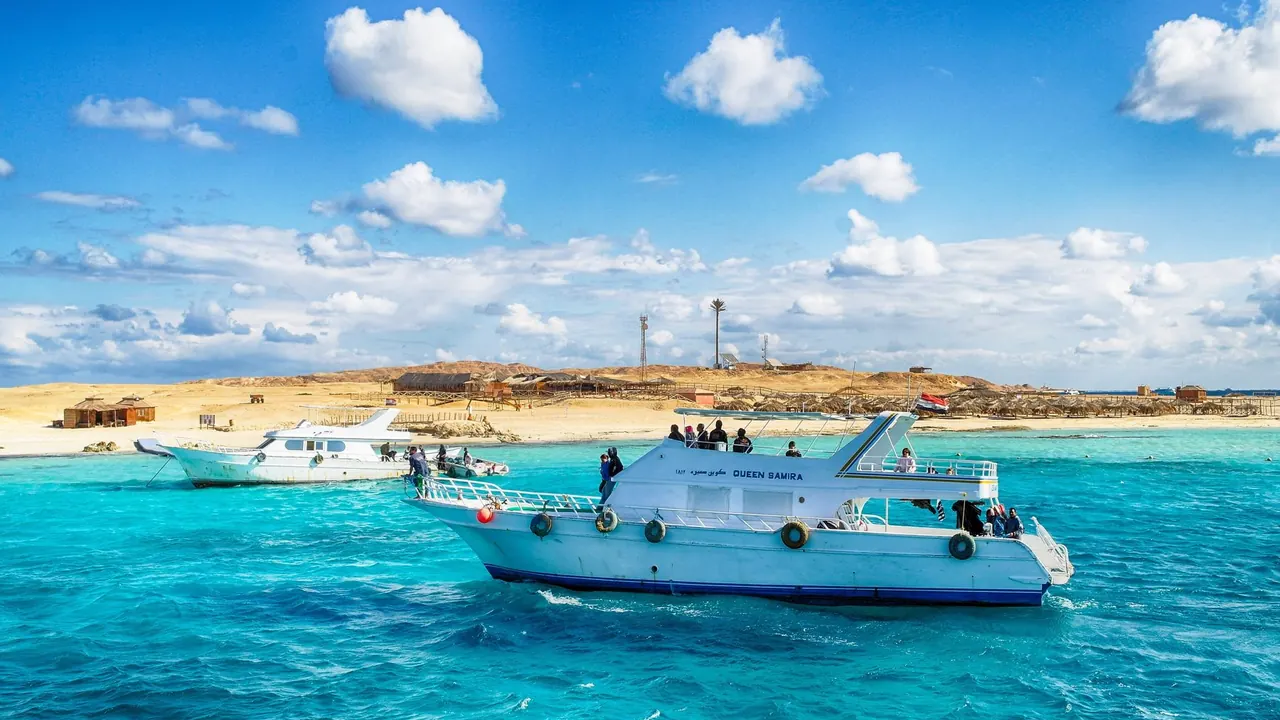
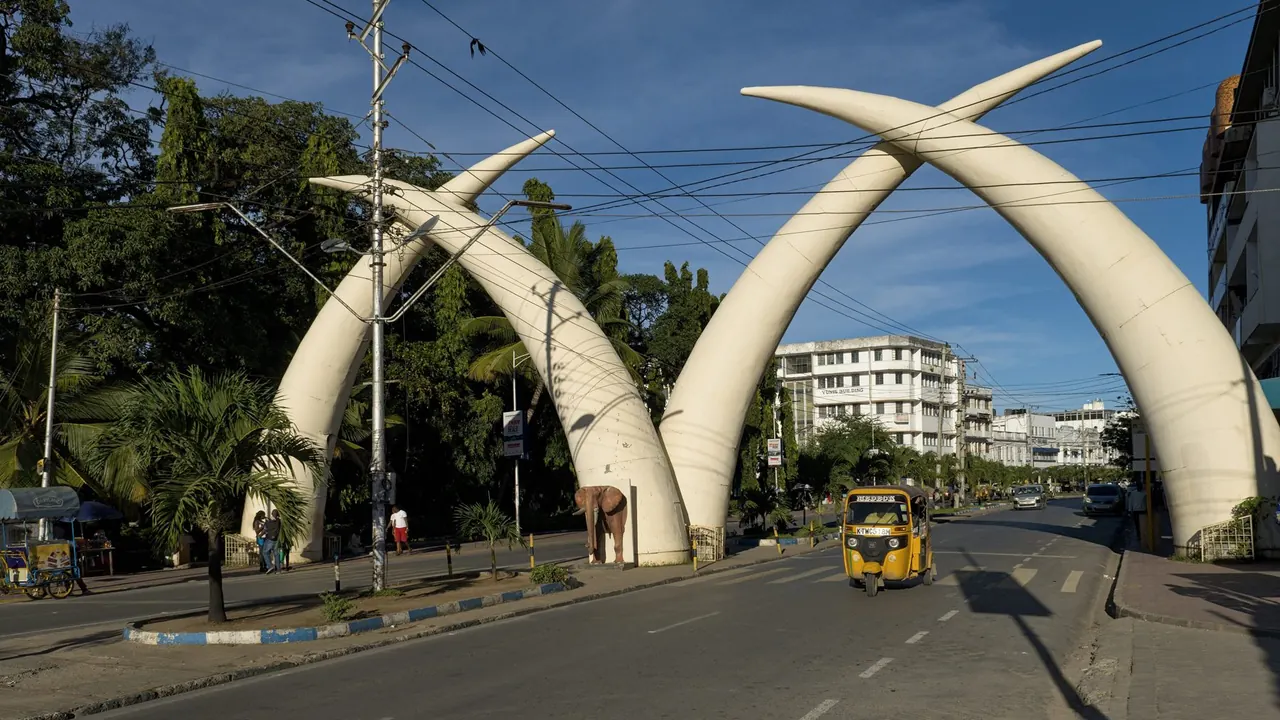
Photos: Hurghada by Andrey Korchagin, CC BY-SA 2.0, cropped; Mombasa by Rob Oo, CC BY 2.0, cropped.
Hurghada or Mombasa?
Our verdict in twelve categories, each scored against the same fixed benchmark cities, and the climate month by month, so you can choose for your trip.
Choose Hurghada for
- families
- prices
- wellness
Hurghada suits travellers who want a simple, good-value resort week by warm, clear water: families who will spend most of their days at the hotel pool and the beach, divers and snorkellers heading for the Giftun reefs, and anyone happy to book one package and plan nothing more. It is the easier place with young children and the cheaper of the two, but there is little to see or eat beyond the resort strip.
Choose Mombasa for
- culture and sights
- food and drink
- day trips
Choose Mombasa if the beach is the base and you want a real place behind it. Fort Jesus and the Swahili Old Town, coconut-and-spice cooking from street grills, medieval ruins up the coast and a safari day in Tsavo give it far more depth. The price is more effort: slower roads, malaria precautions and a town that takes some getting used to.
Scoreboard
Twelve categories on one fixed scale from 0 to 100. The shaded stretch is the gap between the two.
Your match
Pick a travel style or drag the sliders, and both match scores follow your weighting.
Wins on families and prices with your weighting.
Wins on culture and sights and food and drink with your weighting.
What matters to you?
Category by category
What the scores mean for a trip.
Beaches & swimming
Both are first-rate beach destinations, and the difference lies in the kind of beach. Hurghada's sand is mostly hotel-owned, often with reef flats that mean swimming from a jetty, and the finest sand needs a boat out to the Giftun islands.
Mombasa has long open stretches of white coral sand at Nyali and Bamburi, with Diani to the south as the showpiece. There the tide sets the rhythm, with rock pools at low water but little depth for swimming, and seaweed in the middle months of the year.
Food & drink
Mombasa is far the better place to eat. Its Swahili cooking, shaped by Arab and Indian trade, fills the Old Town and market streets with pilau, coconut fish, mahamri with spiced tea and charcoal grills at night, and the Indian community adds thalis and sweet shops.
In Hurghada most meals come from the hotel buffet. A plate of koshary in El Dahar or fish chosen from the ice at the harbour is worth seeking out, but these are a few good meals rather than a reason to come.
Culture & sights
This is where Mombasa pulls well ahead. Fort Jesus, a Portuguese fortress fought over by Omanis and the British, anchors a lived-in Old Town of Swahili doors, merchant houses and old mosques, with Hindu and Jain temples nearby, enough for a rewarding day or two.
Hurghada grew out of a fishing village and has little history to show. The Hurghada Museum and a stroll through El Dahar fill an afternoon, and anything of ancient Egypt means a long trip inland.
Nightlife
Mombasa has the slightly livelier night out, and it feels more local: Afrobeats and bongo flava in the Nyali and Bamburi bars, and Mtwapa running until dawn at weekends, though it can feel rough to first-timers. Hurghada's evenings are made for tourists, with foam parties and beach clubs on Sheraton Road and the marina, and drinking mostly limited to tourist venues.
Nature & outdoors
Both are at their best under water, with reefs, turtles and dolphins and good kitesurfing on each coast. Hurghada adds famous Red Sea wrecks and walls for divers, and on land the bare mountains and desert give quad-bike rides and stargazing at Bedouin camps.
Mombasa's land side is green and wild: elephants and sable antelope in the forested Shimba Hills, mangrove creeks by dhow or kayak, and Tsavo East close enough for a safari, something Hurghada cannot match.
Day trips
Mombasa has the better range of outings within a day's reach. The Swahili ruins at Jumba la Mtwana, Kilifi and Gede, the coast at Malindi and a dhow trip to Wasini make a short but varied list, even if the roads are slow.
Hurghada has El Gouna's lagoons and a guided trip to Roman quarries nearby. Its great prize, Luxor's temples and the Valley of the Kings, sits about four hours away and works better with a night there.
Good for families
Hurghada is the more straightforward choice with children. Many resorts are designed around them, with water parks and shallow beaches, and the semi-submarine trips and aquarium round things off, as long as you avoid the summer midday heat.
Mombasa's resorts and Haller Park, with its giraffes and hippos, work well for children too, but malaria precautions, care with food and water and chaotic town traffic make it harder work beyond the hotel.
Getting around
Neither is easy to get around, but Mombasa is a little less awkward. Its Old Town and Fort Jesus can be explored on foot, and tuk-tuks and ride-hailing apps make short hops simple, though the Likoni ferry and Nyali bridge can slow everything down. Hurghada is a single long coast road with few pavements, where you agree taxi fares in advance or rely on hotel shuttles and excursion transfers.
Shopping & style
Mombasa offers more worth carrying home: printed kangas and kikois from the cloth merchants of Biashara Street, carved Swahili chests and Akamba woodcarvings. Hurghada's bazaars in El Dahar stick to souvenirs such as papyrus, alabaster and spices, sold with insistent haggling. Neither has designer shopping, and both rely on malls for everyday needs.
Affordability
Hurghada is the cheaper trip for most people, because the all-inclusive package covers rooms, meals and many drinks, and diving and boat trips cost little by reef-coast standards. Hotel-sold excursions and marina restaurants are where money leaks away.
Mombasa can be very cheap if you eat Swahili street food and stay in town guesthouses, but beach hotels, safaris and park fees for foreigners come closer to international levels.
Live music & performing arts
Neither city is a place for live performance, but Mombasa has a real musical tradition in taarab, sung Swahili poetry, and weekend bands on the north coast playing benga and rumba. Hurghada's shows are staged for visitors, such as belly dancing and spinning tanoura dancers at folklore nights.
Wellness & relaxation
Relaxation looks much the same in both: resort spas, sunbeds and a calm that stops at the hotel gate. Hurghada's spas lean on hammams and Red Sea salt rituals at low prices. Mombasa's treatment rooms are often open-air pavilions facing the sea, with yoga around Diani and the unhurried coastal pace the Kenyans call pole pole.
When should you go?
Pick your month. The climate figures are measured averages, not a forecast.
Hurghada in July
Mombasa in July
Daytime high, °C
Rainfall in the month, mm
Where the figures come from
Mombasa has no rain gauge within 25 km of the centre, so its rainfall comes from a gridded climate dataset read at the city rather than from a gauge further away.
Temperature and rainfall are climate normals, averaged over the years shown. Hurghada: 1991-2020 normals, Hurguada (15.2 km from centre). Mombasa: 1991-2020 normals, Mombasa (5.8 km from centre).
Hurghada is almost rainless all year, so heat decides the season. From May to September the days reach 34-37°C, too hot for anything but the beach and the pool, with outings pushed to early morning. March, April, October and November are the best months, warm enough to swim and still pleasant on land. Midwinter is mild for sightseeing, though the sea cools to about 22°C, which feels fresh to many swimmers.
Mombasa is hot and humid all year and the sea stays warm, so the rains matter more. The long rains peak in April and May, when May alone brings around 290mm, and the short rains return in October and November. December to March is the dry, sunny window with the calmest sea, which is exactly when Hurghada is at its coolest, so the two cities largely take turns being at their best.
Which traveller are you?
On a family trip with young children, Hurghada is the easier pick. Its resorts are built around children, with splash pools, water parks and sheltered beaches, and it avoids the malaria precautions and food care that Mombasa demands.
For a culture and arts trip, Mombasa is clearly the better choice. Fort Jesus, the carved doors of the Swahili Old Town and the ruined towns along the coast offer real history, while Hurghada has little beyond one museum.
On a food and nightlife trip, Mombasa wins on the food: Swahili biryani, coconut fish curries and street grills after dark. Its nights in Nyali and Mtwapa also feel more local than Hurghada's tourist bar strip on Sheraton Road.
Before you go
| Measure | Hurghada | Mombasa |
|---|---|---|
| Official language | Arabic | English, Swahili |
| Currency | Egyptian Pound (EGP) | Kenyan Shilling (KES) |
| Sockets | CF220 V, 50 Hz | G240 V, 50 Hz |
| Driving side | Right | Left |
| Time zone | UTC+2, UTC+3 in summer | UTC+3 |
| Emergency number | Police 122, ambulance 123, fire 180 | Police 112/999, ambulance 112/999, fire 112/999 |
| Elevation | 11 m | 50 m |
| Main airport | Hurghada International Airport (HRG)9 km from centre111 non-stop destinations | Moi International Airport (MBA)8 km from centre22 non-stop destinations |
| Public holidays this year | 15 days | 10 days |
By the numbers
| Measure | Hurghada | Mombasa |
|---|---|---|
| City population | 214,247 | 1,208,333 |
| People per km² | - | 4,100 |
| Museums within 10 km | 1 | 0 |
| UNESCO World Heritage sites within 50 km | 0 | 2 |
| Swim season, months above 21 °C | 12 months | 12 months |
Where else could you go?
Every comparison below shares a destination with this one, so you can follow Hurghada or Mombasa somewhere new.