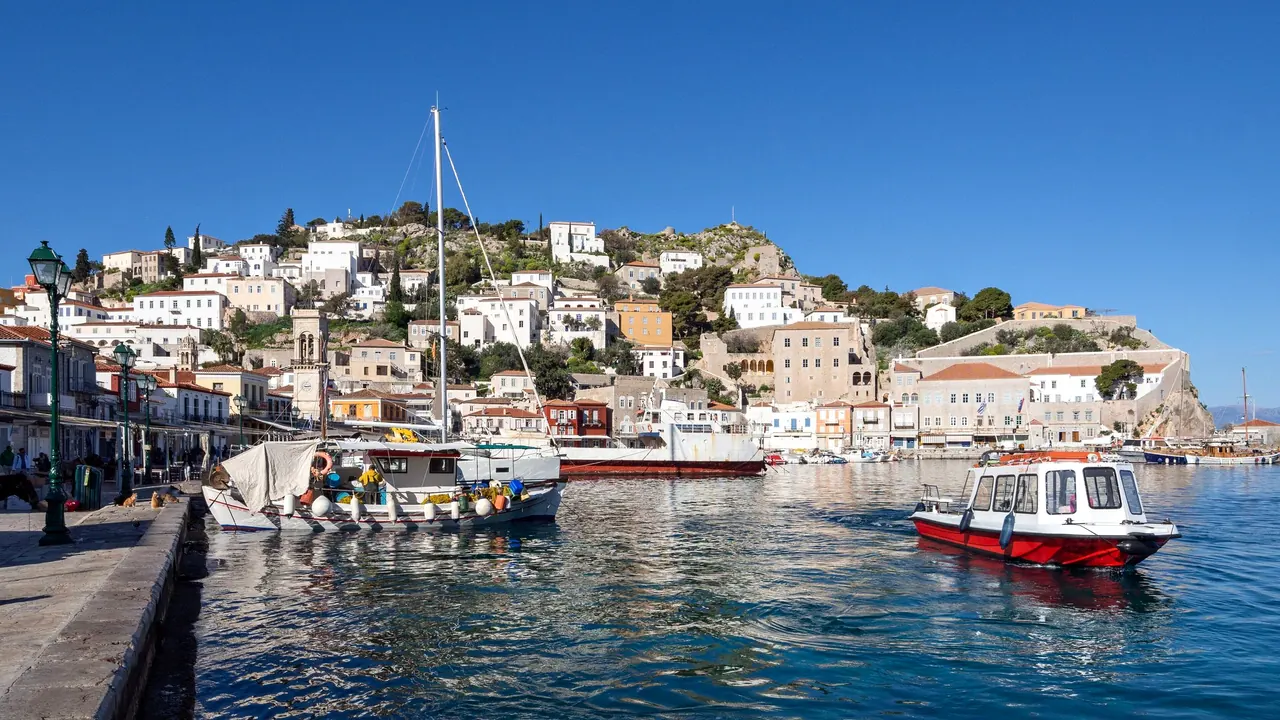
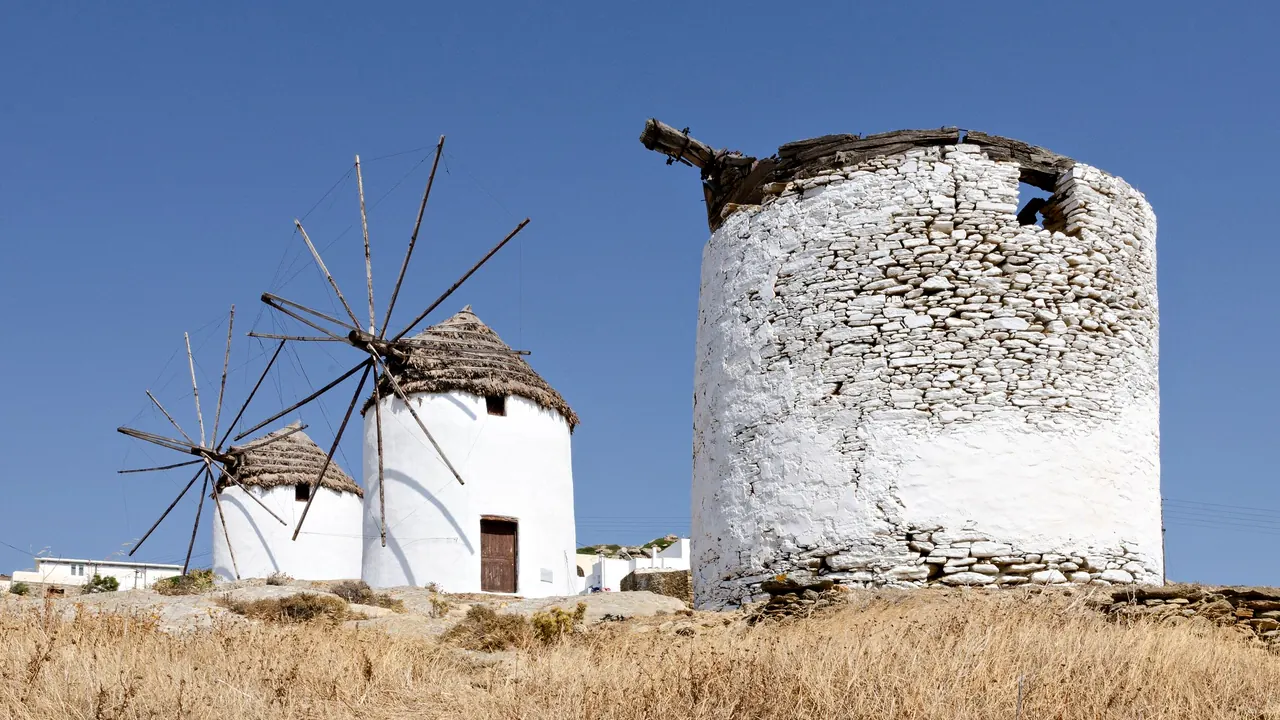
Photos: Hydra by C messier, CC BY-SA 4.0, cropped; Ios by NorbertNagel, CC BY-SA 4.0, cropped.
Hydra or Ios?
Our verdict in twelve categories, each scored against the same fixed benchmark cities, and the climate month by month, so you can choose for your trip.
Choose Hydra for
- wellness
- culture and sights
- shopping
Hydra suits a slower, more grown-up trip. It is a car-free harbour town of shipowners' stone mansions, where you swim off rocks into deep, clear water, walk for hours on old mule paths and spend the evening over a drink beside the boats. It is the better choice for couples, walkers and anyone who wants calm and a sense of place more than sand, and who is willing to pay for a room in a converted mansion to get it.
Choose Ios for
- nightlife
- beaches
- prices
Come to Ios for the beach and the night. Long sandy bays such as Mylopotas and the shallow coves at Manganari beat Hydra's pebbles and ladders, and from June to September the lanes of Chora become one of the Aegean's great party scenes. Ios is cheaper, younger and louder, with easy ferry hops to Santorini and Naxos, but it gives up Hydra's history and its peace.
Scoreboard
Twelve categories on one fixed scale from 0 to 100. The shaded stretch is the gap between the two.
Your match
Pick a travel style or drag the sliders, and both match scores follow your weighting.
Wins on wellness and culture and sights with your weighting.
Wins on nightlife and beaches with your weighting.
What matters to you?
Category by category
What the scores mean for a trip.
Beaches & swimming
On Hydra you swim from rocks and concrete platforms west of the port, climbing down ladders into deep, glass-clear water. There are also small pebble coves at Kamini and Vlychos, and pine-backed coves such as Bisti that you reach by water taxi. It is lovely for a swim but less suited to a whole day stretched out on a towel.
Ios has what Hydra lacks, which is sand. Mylopotas is a long golden bay with sunbeds and water sports, Manganari has shallow, sheltered coves, and the bays on the east coast are wilder and emptier. For a beach vacation Ios is the clear pick, and the south coast is the place to go when the wind hits the north.
Food & drink
Neither island is a food destination, and both serve the same taverna menu of grilled fish, octopus and slow-cooked meat. The differences are in the setting and the extras. Hydra's best meals are eaten by the water at Kamini and Vlychos, and its local sweet is amygdalota, made with almonds and rosewater.
Ios has its tangy skotyri cheese, but in summer it also has a lot of gyros and pizza aimed at the night crowd. Hydra's range is narrow but polished, while on Ios you have to look past the late-night snacks to find careful cooking.
Culture & sights
Hydra has the stronger story. Shipowners built its stone mansions, and their fleet fought in the War of Independence. The whole harbour town is protected and free of cars, and the Monastery of the Dormition, the Historical Archives Museum, the Koundouriotis house and the old cannon batteries fill two good days.
Ios gives you a pleasant few hours instead. There are the whitewashed lanes and windmills of Chora, the Early Cycladic walls at Skarkos with their finds in the small town museum, and the tomb of Homer at Plakotos, which is held to be his by tradition and is more a viewpoint than a ruin.
Nightlife
This is where the two islands differ most. A night out on Hydra means a long cocktail on the harbour among Athenians and yachting visitors. A few bars play music late, and there are no clubs at all.
Ios is a true party island. Dozens of bars and several larger clubs are packed into the lanes of Chora, the crowds move between them until dawn, and the afternoon parties at Mylopotas roll on into the evening. The scene is young, loud and cheap rather than stylish, and on both islands the nights fade once summer ends.
Nature & outdoors
Both are bare, rocky islands crossed by old mule paths, and both are best walked in spring and autumn. Hydra's car-free paths climb through pine to the monasteries of Profitis Ilias and Agia Efpraxia and on up Mount Eros, and its cliffs suit snorkelling and sea kayaking. Ios rises a little higher, to just over 700m, and offers terraced hillsides, boat trips to sea caves and windsurfing at Mylopotas.
Day trips
Ios is better placed for day trips, since it sits in the middle of the Cyclades. Santorini, with its caldera villages and the Bronze Age town at Akrotiri, is about an hour away by fast boat, and Naxos, Sikinos and Folegandros are within reach. That only works while the summer timetables run.
Hydra's outings are gentler. Spetses and Poros are each under an hour by boat and Aegina a little further, while Epidaurus and Nafplio, across the strait, need a car or a tour and some planning.
Good for families
Neither island is made for children, and both have steep, stepped towns where a pushchair is useless. The real difference is the water. Hydra's swimming is mostly off rocks into deep sea, which suits older children who swim well, while the shallow sandy coves at Manganari on Ios suit toddlers.
Against that, the party noise on Ios in July and August carries late into the night, and quiet, car-free Hydra has nothing like it. Families on Ios do best in June or September, staying near Manganari.
Getting around
Both islands can only be reached by ferry and both have car-free, stepped towns, but getting around works differently. Hydra has no cars anywhere, so you walk, put your luggage on a donkey or take a water taxi to the far coves. The fast boats from Piraeus take around two hours and can be cancelled in strong wind.
On Ios, a summer bus links Yialos, Chora and Mylopotas, which covers what most visitors need. The eastern and northern bays, though, mean hiring a car, scooter or quad and driving winding roads.
Shopping & style
Hydra has the better shopping, though by a modest margin. The lanes behind its harbour have jewellery workshops, galleries showing the work of resident artists, and linen boutiques, all a step above the usual island port. On Ios the shops in Chora sell mostly beachwear, sandals and souvenirs, and stay open late for the party crowd. On either island, serious shopping has to wait for Athens.
Affordability
Ios is the cheaper island. It has a long backpacker tradition of hostels, campsites and simple rooms near Mylopotas, and its bars run drinks offers. Hydra has few rooms, mostly boutique guesthouses and converted mansions, and they are expensive in summer, as are the harbour-front cafés and the water taxis.
Each island has ways to keep costs down. On Hydra there are the tavernas in the back lanes and free swimming off the rocks, and on Ios gyros and grill food. On both, June and September are easier on the budget than July and August.
Live music & performing arts
There is little to go and see on either island. Hydra has a slight edge, with occasional summer recitals, Greek music in tavernas late at night and the Miaoulia festival in June, when a fireship is burned in the harbour. Ios has the open-air Odysseas Elytis theatre by the windmills, which hosts occasional events, and village festivals on saints' days, but most of its music comes from the bars.
Wellness & relaxation
Hydra is the place to slow down. With no cars or motorbikes, all you hear is donkeys, bells and the sea, and the days fall into a pattern of a swim, a long lunch and a nap. The midday crowds from the excursion boats are gone by evening.
In July and August Ios runs on late nights, and you have to go looking for calm, at boutique hotels near Mylopotas or in the quiet coves around Manganari, ideally in June or September.
When should you go?
Pick your month. The climate figures are measured averages, not a forecast.
Hydra in July
Ios in July
Daytime high, °C
Rainfall in the month, mm
Where the figures come from
Hydra's temperatures are measured 66 km from the centre, at Athinai Airport.
Hydra has no rain gauge within 25 km of the centre, so its rainfall comes from a gridded climate dataset read at the destination rather than from a gauge further away.
Ios's temperatures are measured 41 km from the centre, at Santorini Island / Monólithos.
Ios has no rain gauge within 25 km of the centre, so its rainfall comes from a gridded climate dataset read at the destination rather than from a gauge further away.
Temperature and rainfall are climate normals, averaged over the years shown. Hydra: 1991-2020 normals, Athinai Airport (65.5 km from centre). Ios: 2000-2025, 12 years observed (rainfall 1991-2020) normals, Santorini Island / Monólithos (40.9 km from centre).
Both islands follow the Aegean pattern of dry summers and wet winters, and on both the sea is warm enough to swim from June to early October. Hydra lies closer to the mainland and runs hotter, reaching 33°C in July and August, with long, cloudless days. That makes the stepped lanes and shadeless paths hard work at midday, though the sea is a little warmer too, at about 26°C in August. Ios peaks nearer 30°C and its sea stays a degree or two cooler.
May and late September into October suit both for walking, when it is cool enough for the hills and, by September, still warm enough to swim. Ios stays almost completely dry until October. Hydra gets a few showers in September, and from November the rain comes in earnest, around 89mm a month, and the days turn short and grey.
Which traveller are you?
For a food and nightlife trip, Ios is the obvious choice. All summer, Chora's packed lanes of bars and clubs keep going until dawn, with afternoon parties at Mylopotas, while on Hydra the evening ends with a cocktail on the harbour. On both islands the food is plain taverna cooking.
On a relaxing and wellness trip, choose Hydra. The car-free island is quiet from morning to night, the upper town and Kamini make peaceful bases, and walking and swimming from the rocks fit a slow routine. In peak summer, Ios is built around partying.
On a beach and sun trip, Ios wins because it has sand. Mylopotas is a long golden bay with sunbeds and water sports, and Manganari has shallow, sheltered coves. Hydra's water is superb and very clear, but its shore is rocks, ladders and small pebble coves.
Before you go
| Measure | Hydra | Ios |
|---|---|---|
| Official language | Greek | Greek |
| Currency | Euro (EUR) | Euro (EUR) |
| Sockets | CF230 V, 50 Hz | CF230 V, 50 Hz |
| Driving side | Right | Right |
| Time zone | UTC+2, UTC+3 in summer | UTC+2, UTC+3 in summer |
| Emergency number | 112 | 112 |
| Main airport | Athens Eleftherios Venizelos International Airport (ATH)176 non-stop destinations | Santorini International Airport (JTR)60 non-stop destinations |
| Public holidays this year | 15 days | 15 days |
By the numbers
| Measure | Hydra | Ios |
|---|---|---|
| Population | 1,966 | - |
| People per km² | 40 | - |
| Swim season, months above 21 °C | 5 months | 5 months |
Where else could you go?
Every comparison below shares a destination with this one, so you can follow Hydra or Ios somewhere new.