Indonesia
Yogyakarta
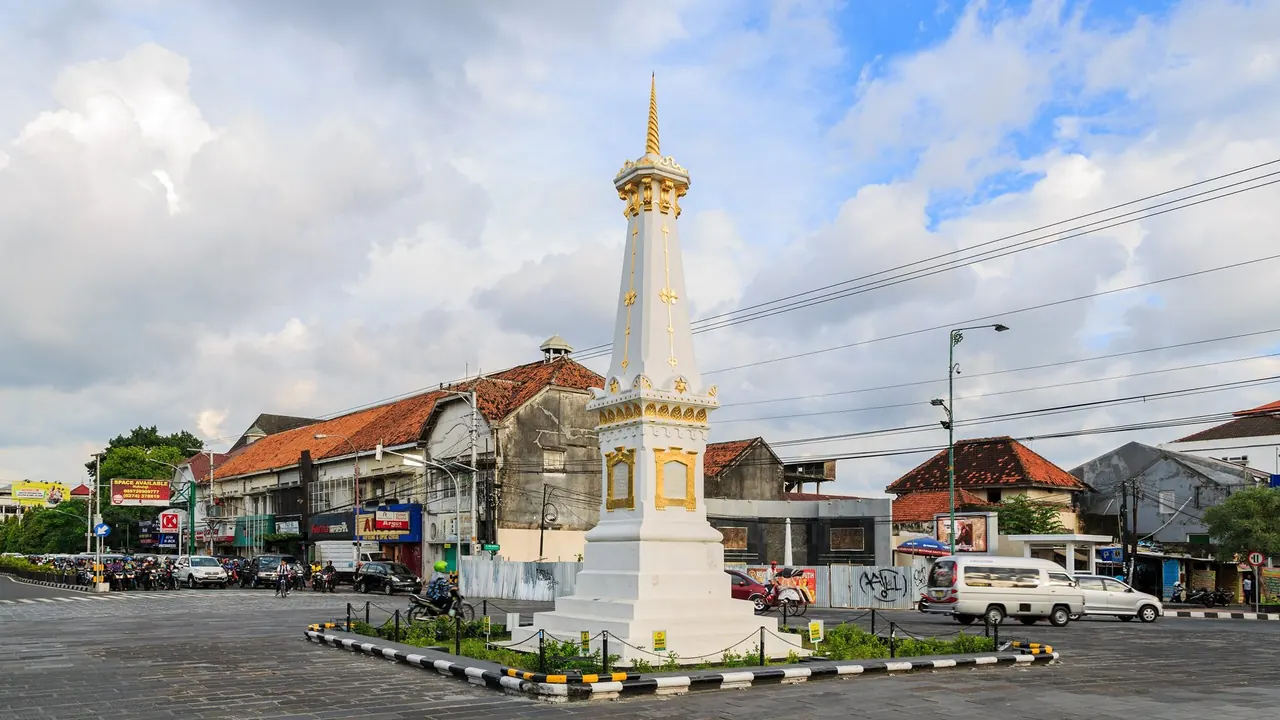
The Tugu monument in the centre of Yogyakarta
- Affordable cities92
- Day trips78
- Nature & outdoors72
Photo: CEphoto, Uwe Aranas, CC BY-SA 3.0, cropped
Match
55
Every category weighted equally
- Beach & sun53
- Culture & arts58
- Food & nightlife53
- Family trip56
- Outdoors61
- Relax & unwind55
- Shopping & style54
- On a budget59
Yogyakarta in twelve categories
Our verdict on each, scored 0 to 100 against the same fixed benchmark cities, so a score means the same thing on every page.
Beaches & swimming. Scores 22 out of 100.
Food & drink. Scores 62 out of 100.
Culture & sights. Scores 68 out of 100.
Nightlife. Scores 32 out of 100.
Nature & outdoors. Scores 72 out of 100.
Day trips. Scores 78 out of 100.
Good for families. Scores 40 out of 100.
Getting around. Scores 35 out of 100.
Shopping & style. Scores 52 out of 100.
Affordability. Scores 92 out of 100.
Live music & performing arts. Scores 58 out of 100.
Wellness & relaxation. Scores 50 out of 100.
Yogyakarta category by category
Beaches & swimming
22Yogyakarta is an inland city, and its nearest coast is the Indian Ocean about an hour south. Parangtritis and the neighbouring beaches have long stretches of dark volcanic sand, dunes and big surf. They are great for a sunset walk or a horse-cart ride along the shore, but strong waves and rip currents make swimming dangerous. Local people go to look at the sea, not to swim in it.
Further east, the limestone coast of Gunungkidul has smaller white-sand coves between headlands, and a few of them have reef-sheltered pools where you can paddle. They take around two hours by road and get crowded at weekends. A beach day here is an outing, not a reason to base yourself in the city.
Food & drink
62Javanese cooking here leans sweet, and the dish most tied to the city is gudeg: young jackfruit stewed for hours in palm sugar and coconut milk, served with chicken, egg and a fiery stew of crisp buffalo skin. The heart of local eating is the angkringan, a humble roadside cart with rice parcels, satay skewers and fried snacks, where people sit on mats late into the night. Many of them serve kopi joss, coffee with a glowing lump of charcoal dropped into the glass.
Along Malioboro, lesehan stalls open in the evening for fried chicken and fish eaten on the floor. Beringharjo market sells jamu herbal tonics and snacks, and the Pathuk area is where the city's bakpia pastries come from. The Prawirotaman area adds cafés and Western menus for travellers. Fine dining and international range are thin, and alcohol plays little part in the local food culture.
Culture & sights
68Yogyakarta is still a sultanate, and the Kraton, the sultan's walled palace compound, is the core of the old city. It has open pavilions, a collection of court heirlooms and palace guards in traditional dress. Close by stand the ruins of Taman Sari, the former royal water garden, with bathing pools and underground passages. The kampung around it is a warren of lanes painted with murals.
The Sonobudoyo Museum holds a fine collection of Javanese wayang puppets, krises and textiles. The Vredeburg fort recalls the Dutch colonial period, and the old capital of Kotagede has a royal cemetery, an early mosque and traditional silversmith houses. The city's sights take two or three days. The great temples lie outside it and make up most of what people come to Yogyakarta to see.
Nightlife
32Evenings in Yogyakarta are busy without much drinking. The city's large student population fills the roadside carts and coffee stalls late into the night. On Alun-Alun Kidul, the southern square behind the Kraton, families and groups of friends pedal light-covered pedal cars round the square after dark. Locals also try to walk blindfold between its two old banyan trees. Much of this goes on until late, over tea and coffee rather than beer.
For bars, travellers head to Prawirotaman, where a cluster of guesthouse bars and small venues serve beer and cocktails. A few clubs are scattered around the city. The scene is relaxed and friendly but small, and anyone after a serious night out will find the city quiet.
Nature & outdoors
72Mount Merapi, one of the most active volcanoes on earth, rises north of the city and shapes the whole landscape. Jeep tours run across its slopes to lava fields and villages buried by the eruption of 2010. In clear early mornings the peak and its neighbour Merbabu stand above the rice fields. Merbabu, a gentler mountain, is a popular overnight climb with a view across to Merapi at dawn.
To the south and east, the limestone hills of Gunungkidul hold caves. At Jomblang you go down a rope into a vertical shaft where a beam of light falls through the opening, and at Goa Pindul you float through a river cave on a tube. The pine forests and viewpoints at Mangunan are good for sunrise above the mist. The dry season, roughly from May to October, is the best time to be outdoors.
Day trips
78This is the main reason most people come. Borobudur, the largest Buddhist monument in the world, is about an hour and a half north by road. Its terraces of carved reliefs and stupas look out over palm-covered plains and volcanoes, and it is best seen early in the morning. Prambanan, a soaring complex of ninth-century Hindu temples, is less than an hour east. A string of smaller temples sits close to it: the vast Buddhist Sewu complex, the twin Plaosan temples and the hilltop Ratu Boko site.
Solo, the other royal city of Central Java, is about an hour away by train. It has two palaces, batik markets and a gentler pace. Beyond Solo are the Sangiran early-human site and the terraced mountain temples of Sukuh and Cetho.
Good for families
40Children are welcomed warmly everywhere, and local families are a big part of the city's street life. Gembira Loka zoo, the Taman Pintar science park near Malioboro and a handful of water parks can fill a morning. Jeep rides on Merapi's slopes, cave tubing and the pedal cars on the square by the Kraton are easy wins with older children.
The hard part is the logistics. Humid heat, heavy scooter traffic and broken or missing pavements make walking with small children tiring, and the big temples involve early starts, long drives and a lot of steps in the sun. A hotel with a pool makes a real difference here.
Getting around
35The centre around Malioboro, the Kraton and Taman Sari is compact enough to walk, though the heat, the scooters and the uneven pavements make it slow going. Becak cycle-rickshaws and horse carts work the tourist streets. Ride-hailing cars and motorbike taxis are the easiest way to get anywhere further.
The city has no metro, and the bus network is hard for visitors to use. The commuter train to Solo is simple and comfortable. Borobudur, Merapi and the southern coast are usually reached with a hired car and driver, which is how most visitors handle the day trips.
Shopping & style
52Yogyakarta is one of Java's main craft cities, and that is what a visitor shops for. Batik is everywhere: hand-drawn pieces in workshops and galleries, cheaper printed cloth in the long arcades of Beringharjo market and along Malioboro. Kotagede is the silver quarter, where filigree jewellery is still made in family workshops. Kasongan, south of the city, is a village of potters.
Leather puppets for wayang theatre, wooden masks and handmade leather goods round out the list. Malioboro itself is a long street of stalls and souvenir shops where bargaining is expected. Beyond crafts there are ordinary malls and little in the way of fashion or luxury.
Affordability
92Yogyakarta is one of the cheapest places to travel in Southeast Asia. A meal from an angkringan cart or a street stall costs very little, comfortable guesthouses and good mid-range hotels are inexpensive, and ride-hailing, becak rides and a car with driver for the day are all easy on the budget. Spa treatments and craft shopping are also cheap.
The main expense is the big temples. Borobudur and Prambanan charge foreign visitors far more than locals, and these entry fees can be the largest single cost of a stay. Alcohol and international hotels cost more, but almost everything else stays cheap.
Live music & performing arts
58Yogyakarta is the centre of Javanese classical performing arts, and much of it is put on for visitors. The best known is the Ramayana ballet, performed on an open-air stage with the floodlit towers of Prambanan behind it. It tells the epic through dance and a full gamelan orchestra. Inside the Kraton, the palace pavilions host gamelan playing, court dance and readings of classical poetry. Wayang kulit shadow-puppet shows, which traditionally run all night, are staged in shorter versions at the Sonobudoyo Museum.
The city's arts institute and student population support a contemporary music and theatre scene, mostly in Indonesian. Opera, symphony concerts and international touring productions are essentially missing.
Wellness & relaxation
50The Javanese royal courts gave rise to a tradition of beauty and healing that lives on in the city's spas. Lulur is a body scrub of turmeric, rice and spices, traditionally given to brides, and it is often followed by a flower bath. Jamu herbal tonics are sold from market stalls and by women carrying baskets of bottles. Simple massage parlours and more polished day spas are easy to find and gentle on the budget.
The centre is hot and noisy with scooters, so for real calm people head north towards Merapi, where resorts and villas look out over rice fields and the air is cooler. There is no hot-spring or bathhouse culture to speak of.
When should you go?
Pick a month to see what it is like. The climate figures are measured averages, not a forecast.
Yogyakarta in July
Daytime high, °C
Rainfall in the month, mm
The whole year
Shaded against this city’s own year: the deepest cell is its best month for that figure and the palest its weakest.
Where the figures come from
Yogyakarta has no weather station within reach, so its figures come from a gridded climate model rather than a measured record, and read a broad area rather than the city itself.
Temperature and rainfall are climate normals, averaged over the years shown. Yogyakarta: 2001-2020 normals, NASA POWER reanalysis grid, no weather station within 90 km.
Before you go
| Measure | Yogyakarta |
|---|---|
| Official language | Indonesian |
| Currency | Rupiah (IDR) |
| Sockets | CF50 Hz |
| Driving side | Left |
| Time zone | UTC+7 |
| Emergency number | 112 |
| Elevation | 113 m |
| Main airport | Yogyakarta International Airport (YIA)39 km from centre20 non-stop destinations |
By the numbers
| Measure | Yogyakarta |
|---|---|
| City population | 422,732 |
| People per km² | 13,007 |
| Museums within 10 km | 38 |
| UNESCO World Heritage sites within 50 km | 3 |
| Swim season, months above 21 °C | 12 months |
Compare Yogyakarta with
Every comparison with a written verdict behind it.