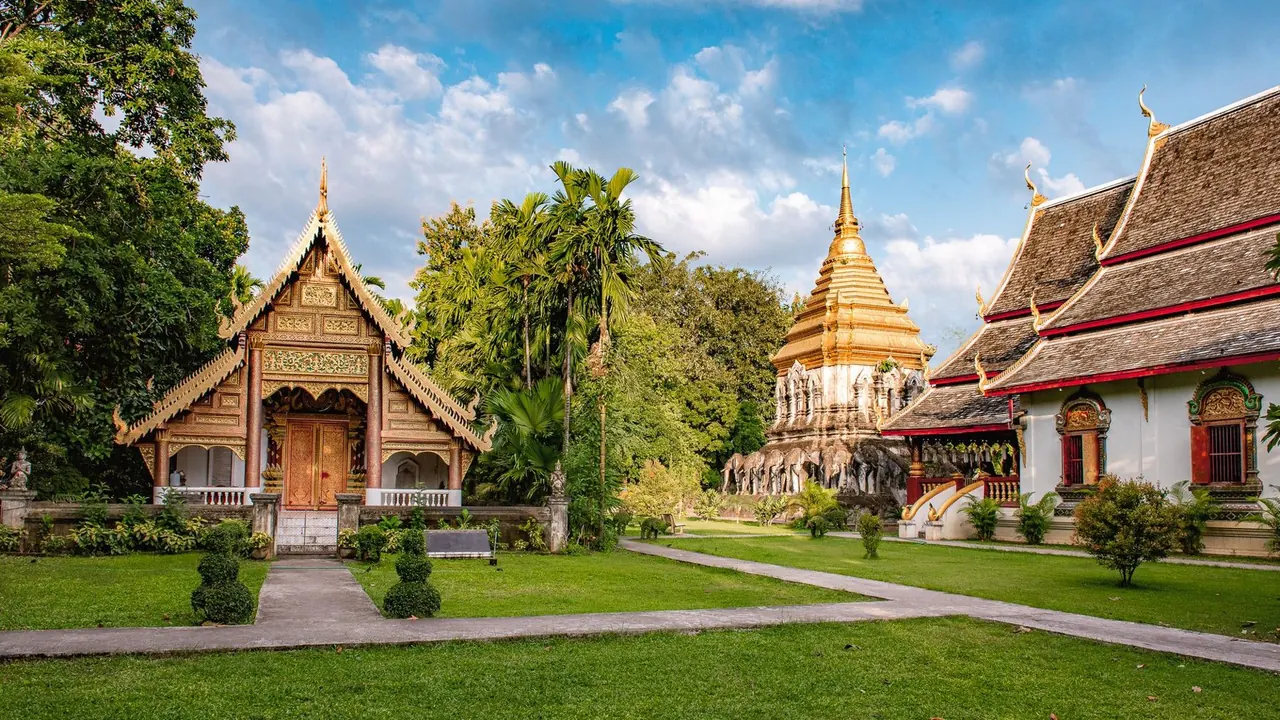
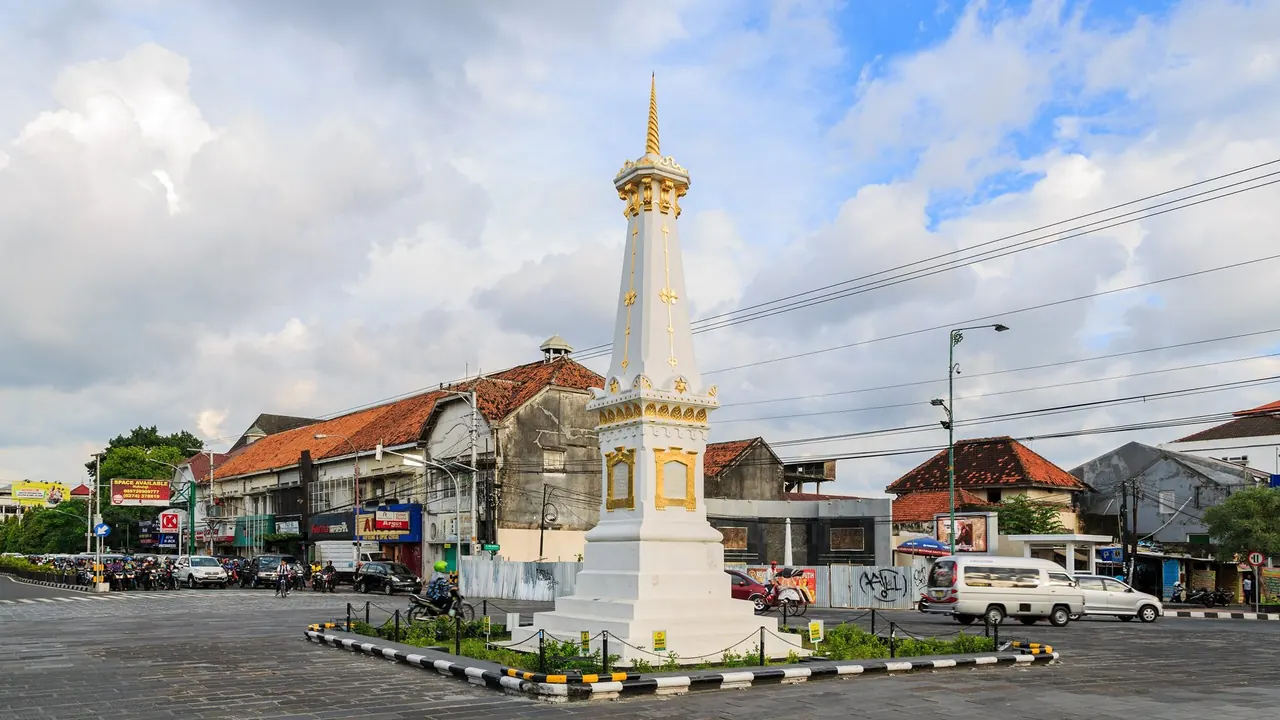
Photos: Chiang Mai by Gije Cho, Pexels License; Yogyakarta by CEphoto, Uwe Aranas, CC BY-SA 3.0, cropped.
Chiang Mai or Yogyakarta?
Our verdict in twelve categories, each scored against the same fixed benchmark cities, and the climate month by month, so you can choose for your trip.
Choose Chiang Mai for
- wellness
- food and drink
- families
Chiang Mai suits a slower, longer stay where the city itself is the point: temple walks inside the moat, northern Thai cooking from market stalls, a massage most afternoons and the forested slopes of Doi Suthep at the edge of town. It is the easier of the two with children and the better place for an evening drink. Choose it if food and unwinding matter more to you than famous monuments.
Choose Yogyakarta for
- day trips
- live music and the arts
- beaches
If you want to see some of the great monuments of Asia, Yogyakarta is the stronger base. Borobudur and Prambanan are within easy reach, the Kraton keeps a living court culture of gamelan and dance, and the slopes of Merapi make for a wilder kind of outing. In return, expect early starts, hired drivers and quiet evenings with little alcohol.
Scoreboard
Twelve categories on one fixed scale from 0 to 100. The shaded stretch is the gap between the two.
Your match
Pick a travel style or drag the sliders, and both match scores follow your weighting.
Too close to call, 1 point apart
Wins on wellness and food and drink with your weighting.
Wins on day trips and live music and the arts with your weighting.
What matters to you?
Category by category
What the scores mean for a trip.
Beaches & swimming
Neither city is a beach destination, but Yogyakarta at least has a coast within reach. Parangtritis, about an hour south, has black volcanic sand, dunes and sunsets, though the surf is too rough for swimming. The white coves of Gunungkidul have sheltered pools for paddling.
Chiang Mai is a long day's travel from any sea. Swimming means a hotel pool, the Huay Tung Tao reservoir or the quarry lakes on the edge of town, and a proper beach means a flight south.
Food & drink
Chiang Mai is the better place to eat. Northern Thai cooking has more range and more punch, from khao soi and herb-heavy sai ua sausage to chilli dips eaten with sticky rice. Coffee from the surrounding hills supports a café culture that runs from Nimmanhaemin out to garden cafés near the mountains.
Yogyakarta's food is sweeter and narrower. It centres on gudeg and on the late-night angkringan carts, which serve their kopi joss with a lump of glowing charcoal in the glass. It is memorable eating, but the choice runs out sooner, and alcohol is barely part of the local table.
Culture & sights
Both cities have two or three days of sights in town, but of different kinds. Chiang Mai's are religious and spread across its lanes: dozens of Lanna temples inside the moat, with Wat Chedi Luang and Wat Phra Singh at the centre and Doi Suthep looking down from above.
Yogyakarta's are courtly. The sultan's Kraton is still in use, the Taman Sari water palace is nearby, and the Sonobudoyo Museum's puppets, krises and textiles make it the better city for museums. Its biggest monuments, though, are outside town.
Nightlife
Chiang Mai has more of a night out. Nimmanhaemin has cocktail bars and craft beer, the streets around Tha Phae Gate have backpacker bars and rooftop terraces, and Loi Kroh Road is a brasher strip, though most places close around midnight.
Yogyakarta's evenings are lively but mostly sober. Students gather at coffee carts and families pedal lit-up cars around Alun-Alun Kidul. Drinking is limited to a small cluster of bars in Prawirotaman.
Nature & outdoors
Mountains frame both cities, but they feel quite different. Chiang Mai's are green and forested: Doi Suthep-Pui begins at the edge of town, Doi Inthanon has cloud forest and birdlife, and the valleys offer rafting, ziplines and treks to hill villages.
Yogyakarta's landscape is volcanic and limestone. Jeep tours cross Merapi's lava fields, Merbabu makes an overnight climb, and in Gunungkidul you can drop on a rope into the Jomblang shaft or float through a river cave at Goa Pindul.
Day trips
This is where Yogyakarta pulls clearly ahead. Borobudur and Prambanan are world-class sites within easy driving distance, the Sewu, Plaosan and Ratu Boko temples cluster near Prambanan, and the royal city of Solo is a comfortable train ride away.
Chiang Mai's outings are smaller in scale: the gilded chedi at Lamphun, Lampang's horse-drawn carriages and teak mansions, and the craft villages of Bo Sang and San Kamphaeng. Chiang Rai and Pai are too far for a comfortable day trip.
Good for families
Chiang Mai is the easier of the two with children. Elephant sanctuaries where families feed and walk with the animals, the zoo, the Night Safari and the quarry swimming parks fill several days, and the city is calmer to move around.
Yogyakarta has the Gembira Loka zoo, Taman Pintar and cave tubing, but its main draw, the temples, means early starts, long drives and many steps in humid heat. In either city, children are welcomed warmly and broken pavements make pushchairs hard work.
Getting around
Neither city has a metro. In both you walk the compact centre and use ride-hailing apps for anything further.
The local transport is what differs. Chiang Mai has red songthaew pickups, tuk-tuks and, for confident riders, a hired scooter for the hills. Yogyakarta has becak rickshaws, horse carts and an easy commuter train to Solo. In both cities the big excursions usually mean a car and driver.
Shopping & style
Both are craft cities, but Chiang Mai offers more in one place. The Sunday Walking Street, the Saturday market on Wualai Road and the Night Bazaar every evening bring together textiles, carved wood, celadon, lacquerware and hill-tribe embroidery, and Nimmanhaemin adds small design studios.
Yogyakarta's range is narrower but deep in its specialities: hand-drawn batik, Kotagede filigree silver, Kasongan pottery and wayang puppets. Expect to bargain along Malioboro and in Beringharjo market.
Affordability
Both are very cheap, and a modest budget goes a long way in either. What differs is where the money goes. In Chiang Mai the temples are free or nearly so, and the costs that add up are sanctuary visits, treks and cooking classes. In Yogyakarta the foreigners' entry fees at Borobudur and Prambanan can be the largest single cost of the stay.
Live music & performing arts
Yogyakarta has far more to watch. It is the home of Javanese classical arts, with the Ramayana ballet performed in front of the floodlit towers of Prambanan, gamelan and court dance in the Kraton pavilions, and shortened wayang kulit shows at Sonobudoyo.
Chiang Mai offers live music rather than staged art. There are jazz and blues jams near the north gate and bands in Nimmanhaemin, and visitors also go to khantoke dinners with Lanna dance and to Muay Thai fight nights.
Wellness & relaxation
Chiang Mai is made for slowing down. Thai massage is part of daily life and taught at long-established schools, Wat Umong and Wat Suan Dok run meditation retreats, and the San Kamphaeng hot springs are close by.
Yogyakarta's offer is more about pampering: lulur spice scrubs and flower baths from the court tradition, jamu tonics from market stalls, and villa resorts on the cooler slopes towards Merapi. The centre itself is too hot and noisy to be restful, and there are no hot springs.
When should you go?
Pick your month. The climate figures are measured averages, not a forecast.
Chiang Mai in July
Yogyakarta in July
Daytime high, °C
Rainfall in the month, mm
Where the figures come from
Yogyakarta has no weather station within reach, so its figures come from a gridded climate model rather than a measured record, and read a broad area rather than the city itself.
Temperature and rainfall are climate normals, averaged over the years shown. Chiang Mai: 1991-2020 normals, Chiang Mai (0.6 km from centre). Yogyakarta: 2001-2020 normals, NASA POWER reanalysis grid, no weather station within 90 km.
Chiang Mai is at its best from November to January. These months are dry and sunny, with afternoons warm rather than punishing at around 30°C. From March the heat builds to about 37°C in April, which makes long temple walks hard going after mid-morning. The rains arrive in May and are heaviest in August and September, when there is far less sunshine than in winter.
Yogyakarta's temperature barely changes and stays in the high twenties all year, so the seasons are set by rain alone. The wet months run from November to April, peaking in January at about 346mm. June to September is the dry window, and August is the driest month at around 31mm. The Indian Ocean stays warm all year and is slightly cooler in the middle of the year, but the surf makes the coast a place to look at rather than swim. The two calendars clash: Chiang Mai's best months are Yogyakarta's wettest, and Yogyakarta's dry season falls in Chiang Mai's rains.
Which traveller are you?
On a relaxing and wellness trip, Chiang Mai lets the days find their own rhythm: morning yoga, a herbal steam room in an old teak house, unhurried walks through the green lanes of the old city, then quiet nights at a Mae Rim valley resort.
On a culture and arts trip, Yogyakarta easily fills a week. Spend the mornings at the great temples outside town, the afternoons among Kotagede's royal cemetery, early mosque and silversmith houses, and the evenings watching court dance or a wayang performance.
On a family trip with children, Chiang Mai is the gentler choice. Easy waterfall walks and ziplines fill the days, the weekend walking streets turn an evening into snacks and stalls, and only the hazy months from February to April are best avoided.
Before you go
| Measure | Chiang Mai | Yogyakarta |
|---|---|---|
| Official language | Thai | Indonesian |
| Currency | Baht (THB) | Rupiah (IDR) |
| Sockets | ABCF220 V, 50 Hz | CF50 Hz |
| Driving side | Left | Left |
| Time zone | UTC+7 | UTC+7 |
| Emergency number | Police 191, ambulance 1669, fire 199 | 112 |
| Elevation | 310 m | 113 m |
| Main airport | Chiang Mai International Airport (CNX)3 km from centre28 non-stop destinations | Yogyakarta International Airport (YIA)39 km from centre20 non-stop destinations |
By the numbers
| Measure | Chiang Mai | Yogyakarta |
|---|---|---|
| City population | 1,198,000 | 422,732 |
| People per km² | 2,958 | 13,007 |
| Museums within 10 km | 6 | 38 |
| UNESCO World Heritage sites within 50 km | 0 | 3 |
| Swim season, months above 21 °C | - | 12 months |
Where else could you go?
Every comparison below shares a destination with this one, so you can follow Chiang Mai or Yogyakarta somewhere new.