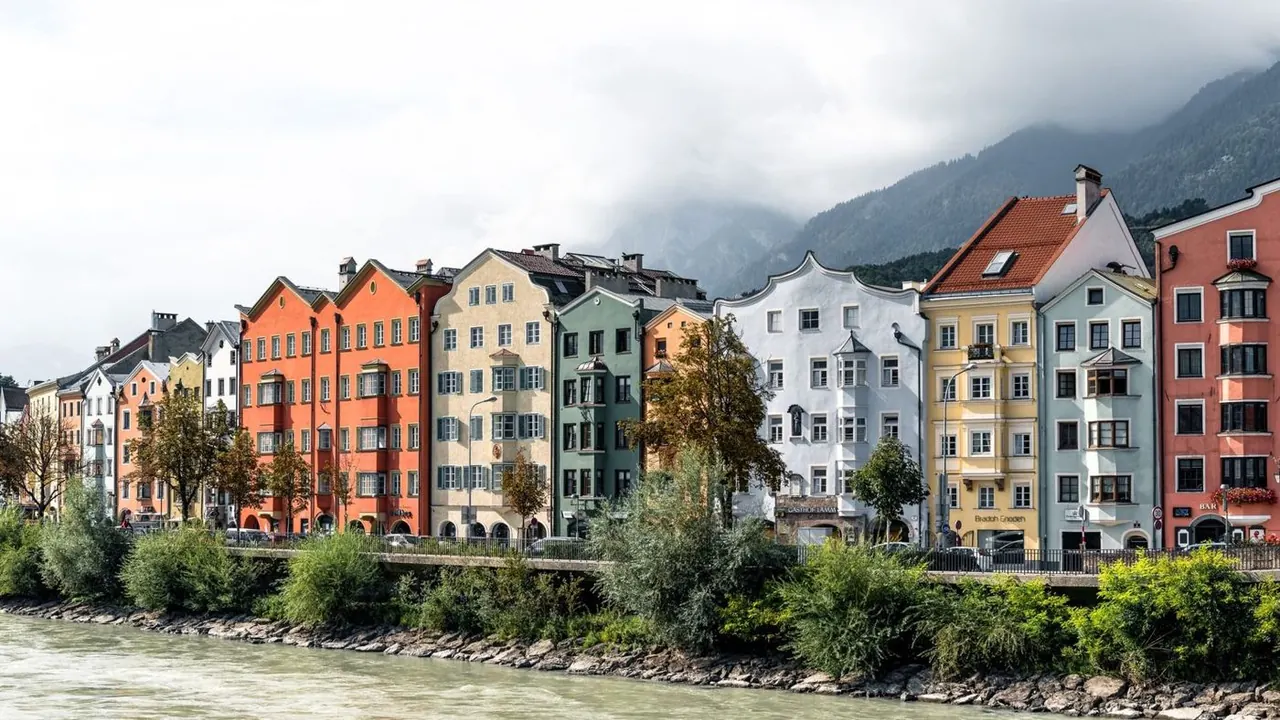
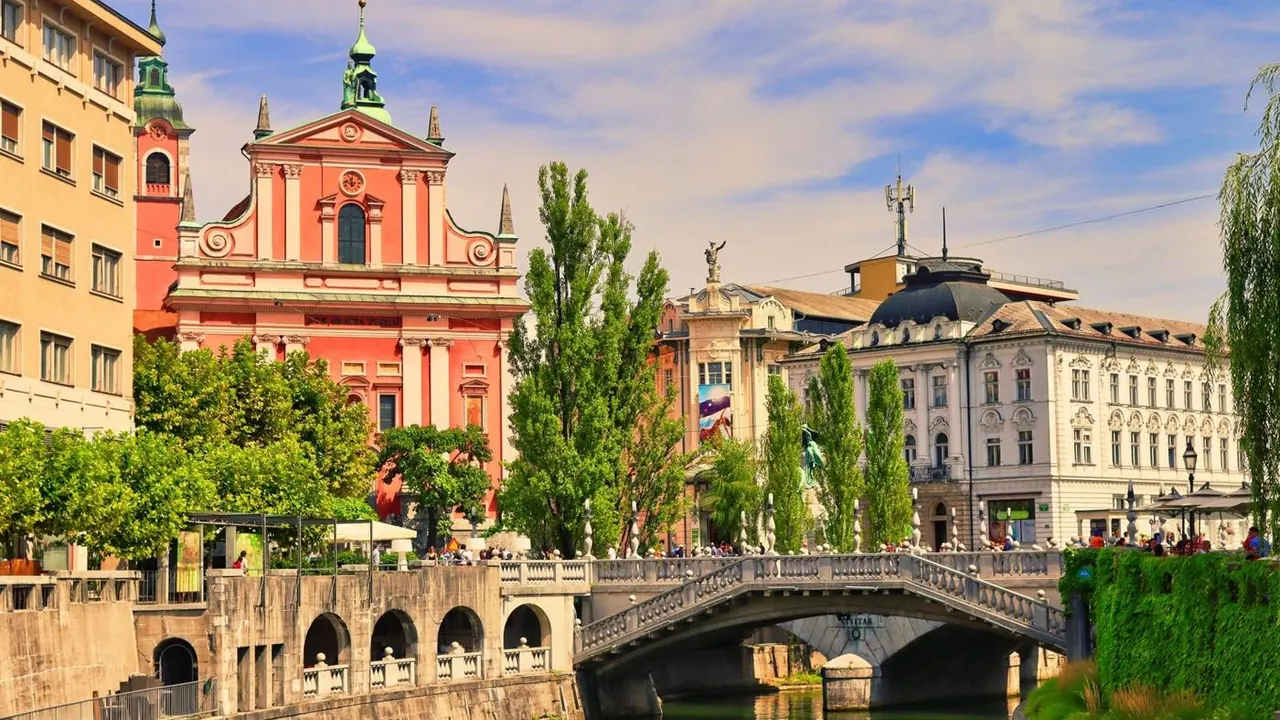
Photos: Innsbruck by Wolfgang Weiser, Pexels License; Ljubljana by detait, Pexels License.
Innsbruck or Ljubljana?
Our verdict in twelve categories, each scored against the same fixed benchmark cities, and the climate month by month, so you can choose for your trip.
Choose Innsbruck for
- nature and the outdoors
- families
- shopping
Innsbruck is the pick for anyone who wants the mountains at the centre of the trip. The Nordkette rises right above the old town, the Karwendel starts behind it, and the ski areas and the Stubai Glacier are close by, so hikers, skiers and families who like being outdoors get the most from it. In exchange, the food is mostly hearty hut cooking and the bills are higher.
Choose Ljubljana for
- prices
- food and drink
- day trips
Ljubljana makes more sense for a slower, cheaper trip that gives you more on the plate. The Central Market, the riverside wine bars and their Slovenian orange wines give it a better table. Your money also goes further, and because the city sits in the middle of a small country, Bled, the karst caves and the coast at Piran all make easy days out. The Alps are an hour away rather than at the end of the street.
Scoreboard
Twelve categories on one fixed scale from 0 to 100. The shaded stretch is the gap between the two.
Your match
Pick a travel style or drag the sliders, and both match scores follow your weighting.
Too close to call, level with your weighting
Wins on nature and the outdoors and families with your weighting.
Wins on prices and food and drink with your weighting.
What matters to you?
Category by category
What the scores mean for a trip.
Beaches & swimming
Neither city is a place for a beach trip, and swimming in both is a summer afternoon out of town. Innsbruck has small plateau lakes such as the Lanser See and the Natterer See, which get pleasantly warm, and the beautiful but chilly Achensee.
Ljubljana's options are the Sava, warm Lake Bled about an hour away, and the real sea at Piran and Izola about an hour and a half away. At the coast you swim from concrete platforms and pebbles rather than sand.
Food & drink
Ljubljana has the more rewarding table. In Innsbruck the best eating is often up a mountain: Gröstl, Kaspressknödel and Kaiserschmarrn at a hut after a walk, with coffee houses and old inns in town. There is little market culture, though, and the restaurants by the Golden Roof are aimed at tour groups.
Ljubljana has what Innsbruck lacks: an open-air Central Market under Plečnik's colonnades, a weekly street-food gathering in summer, and a real wine culture, with Vipava, Brda and orange wines poured by the glass along the river. Neither will fill more than a week of meals, but Ljubljana keeps you interested for longer.
Culture & sights
Both cities have a compact old town you can cover in two or three days, but they show you different things. Innsbruck's draw is Habsburg history in individual great pieces: the Golden Roof, the Hofburg, Maximilian's tomb with its bronze figures in the Hofkirche, and the cabinet of curiosities at Ambras Castle.
Ljubljana is more about the whole townscape than any single sight. Plečnik's bridges, embankments and library, the baroque and Secession streets and the castle on its hill work as one ensemble, and the murals of Metelkova add an alternative edge that Innsbruck does not have.
Nightlife
Both are small university cities that are livelier after dark than their size suggests, and neither is a reason to go. Innsbruck's late nights happen in the bars and small clubs under the railway viaduct arches, and in winter much of the partying moves out to après-ski in the resorts. Ljubljana's evenings are spent outdoors on the riverside terraces, with Metelkova's scruffy clubs for later at weekends.
Nature & outdoors
Innsbruck has the edge here, and it comes from how close the mountains are. A funicular from the edge of the old town connects to cable cars onto the Nordkette, the Karwendel nature park lies just behind it, and glaciers, via ferratas and a whole cluster of ski areas surround the city. Skiing on the Stubai Glacier for most of the year has no match near Ljubljana.
Ljubljana is still unusually green for a capital. You can climb Šmarna Gora or cycle the marshes without leaving the city. The serious country is a drive away, though: the Kamnik-Savinja Alps, Triglav National Park, the Soča for rafting, and the Postojna and Škocjan caves, which add an underground world Innsbruck lacks.
Day trips
Ljubljana has more variety close by, because so much of Slovenia lies within an hour or two: Bled, Škofja Loka, Predjama Castle built into its cliff, the Lipizzaners at Lipica, Piran on the coast and the wine villages of Brda. You can be in Trieste or Zagreb in about two hours.
Innsbruck is a strong rail base in its own right. Hall in Tirol and Rattenberg are close, Munich and Salzburg are each just under two hours away, and across the Brenner, Bolzano and Merano bring Italy into reach. The Bavarian castles around Füssen make a longer outing by car.
Good for families
Innsbruck gives children more to do, mostly because the mountains are so easy to reach. The funicular stops at the Alpenzoo, with its ibex, bears and wolves, on the way to the Nordkette. Summer brings adventure trails, playgrounds by the huts and warm plateau lakes, and in winter there are ski schools on gentle slopes.
Ljubljana is easy rather than exciting for children. The flat, largely car-free centre suits pushchairs, the castle funicular and the Dragon Bridge go down well, and the puppet theatre works without the language. Its small zoo and science centre fill only two or three days.
Getting around
Both cities have a small, flat centre you can walk, and in both you rarely need a car. Innsbruck has trams and buses and a funicular to the mountains, plus ski buses and valley trains, so the countryside is easy to reach without driving. Ljubljana has no tram or metro, but its centre is mostly pedestrianised, with bike-share and electric shuttles. A hired car helps more there for the mountain valleys, because the rail network is slow.
Shopping & style
Neither city is somewhere to shop seriously, and what is worth buying is local in both. In Innsbruck that means loden jackets, dirndls, woodcarvings, Speck and schnapps, and its outdoor and ski shops are excellent. Ljubljana leans towards edible and handmade gifts, such as market honey, coastal salt, pumpkin-seed oil and Idrija lace, with a few design boutiques on Trubarjeva and a Sunday flea market on the embankment.
Affordability
Ljubljana is the easier city on your budget. Set lunch menus at the inns, fairly priced local wine, cheap entry to sights and a centre you cross on foot all keep costs down. The one exception is old-town hotels in July and August.
Innsbruck adds an Alpine resort premium to Western European prices. Ski season and the Christmas markets push hotel rates up, and an active trip quickly fills up with cable car tickets. The guest and city cards help, and spring and autumn are noticeably cheaper.
Live music & performing arts
The two are close, both offering a solid provincial programme worth checking against your dates. Innsbruck's standout is its summer Festival of Early Music in historic rooms such as the Spanish Hall at Ambras, along with folk evenings of yodelling and brass. Ljubljana has a slightly broader range, with the Slovenian Philharmonic, the National Opera and Ballet, Cankarjev dom, and the open-air Ljubljana Festival in Plečnik's Križanke courtyard. Most of its theatre is in Slovene, though.
Wellness & relaxation
Neither city has its own thermal baths, so in both, relaxing means calm streets with the bigger spas a short trip out. In Innsbruck that means saunas with mountain views in the hotels of Igls and the plateau villages, with the large spa complexes of the Ötztal and Zillertal about an hour away. Ljubljana offers a water park sauna complex and slow afternoons at riverside cafés, and Slovenia's string of thermal spa towns lies within a similar drive.
When should you go?
Pick your month. The climate figures are measured averages, not a forecast.
Innsbruck in July
Ljubljana in July
Daytime high, °C
Rainfall in the month, mm
Temperature and rainfall are climate normals, averaged over the years shown. Innsbruck: 1991-2020 normals, Innsbruck-Flughafen (3.3 km from centre). Ljubljana: 1991-2020 normals, Ljubljana / Bezigrad (1.9 km from centre).
The two cities follow almost the same curve of temperature. Both are cold from December to February, mild in April and October, and warm from June to August. Ljubljana runs a little hotter in high summer, about 28°C against 26°C in Innsbruck, so it can feel close for long walks in July and August. Both are best for a lake swim in those two months. For walking the streets, May, June and September are the most comfortable months in either city.
The real difference is rain and light. Innsbruck's rain falls mainly in summer and peaks in August with about 144mm, which often means afternoon storms in the mountains, while its winters are fairly dry and get more sun. Ljubljana has its wettest weather in autumn, with about 159mm in September, and from November to January it is noticeably greyer. But its summers are much sunnier than Innsbruck's. That makes Innsbruck the better winter city and Ljubljana the brighter choice from May to August.
Which traveller are you?
For an outdoors trip, Innsbruck wins clearly. You can ride from the old town to a ridge at 2,300m, in summer the same mountains offer hut-to-hut hiking, via ferratas and paragliding, and in winter a whole cluster of ski areas shares one pass.
On a food and nightlife trip, Ljubljana gives you more. Innsbruck offers dumplings and Speck. Ljubljana has its open-air market, summer street food and riverside wine bars pouring Slovenian orange wines, and evenings on the terraces end late at Metelkova.
On a trip on a tight budget, Ljubljana is the better bet. Book a room a short walk outside the old town, come in June or September rather than high summer, and take intercity buses to Bled and the caves. Innsbruck is never a cheap place to sleep.
Before you go
| Measure | Innsbruck | Ljubljana |
|---|---|---|
| Official language | German, Austrian Sign Language | Slovene |
| Currency | Euro (EUR) | Euro (EUR) |
| Sockets | CF230 V, 50 Hz | CF230 V, 50 Hz |
| Driving side | Right | Right |
| Time zone | UTC+1, UTC+2 in summer | UTC+1, UTC+2 in summer |
| Emergency number | 112 | 112 |
| Elevation | 574 m | 309 m |
| Main airport | Innsbruck Airport (INN)4 km from centre40 non-stop destinations | Ljubljana Jože Pučnik Airport (LJU)20 km from centre32 non-stop destinations |
| Public holidays this year | 16 days | 21 days |
By the numbers
| Measure | Innsbruck | Ljubljana |
|---|---|---|
| City population | 132,499 | 284,293 |
| People per km² | 1,263 | 1,736 |
| Museums within 10 km | 28 | 14 |
| UNESCO World Heritage sites within 50 km | 1 | 3 |
Where else could you go?
Every comparison below shares a destination with this one, so you can follow Innsbruck or Ljubljana somewhere new.