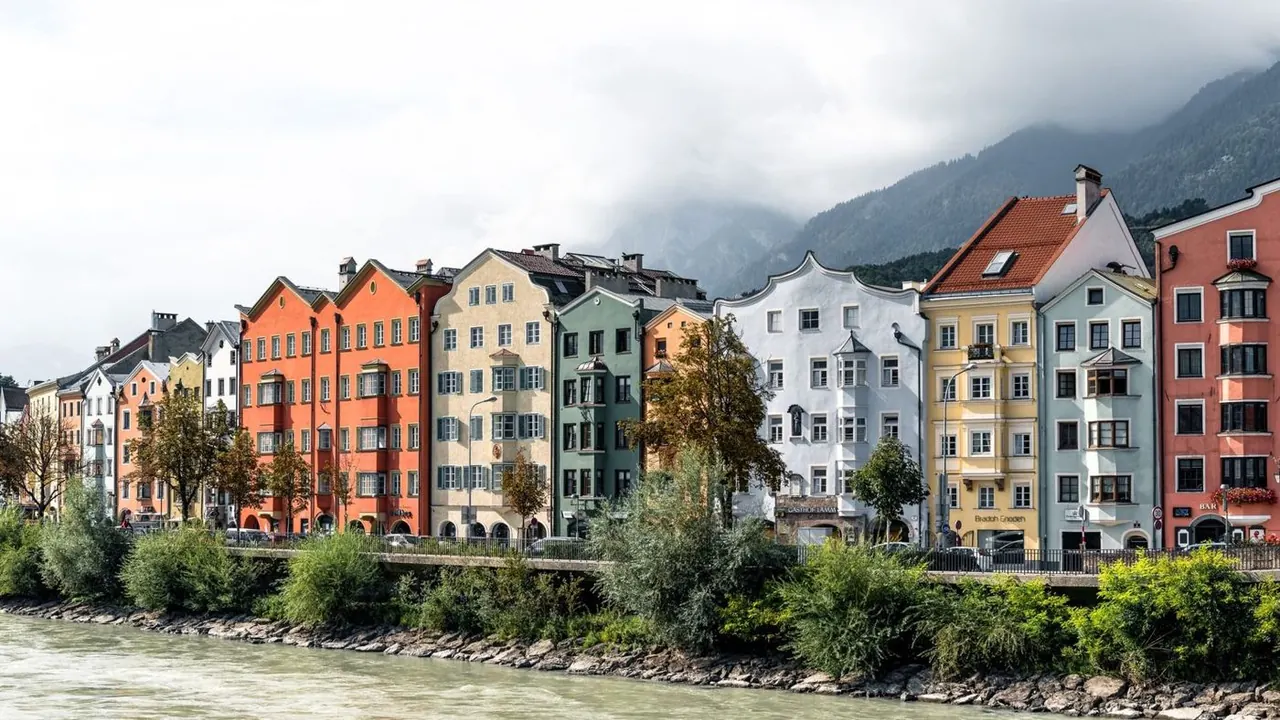
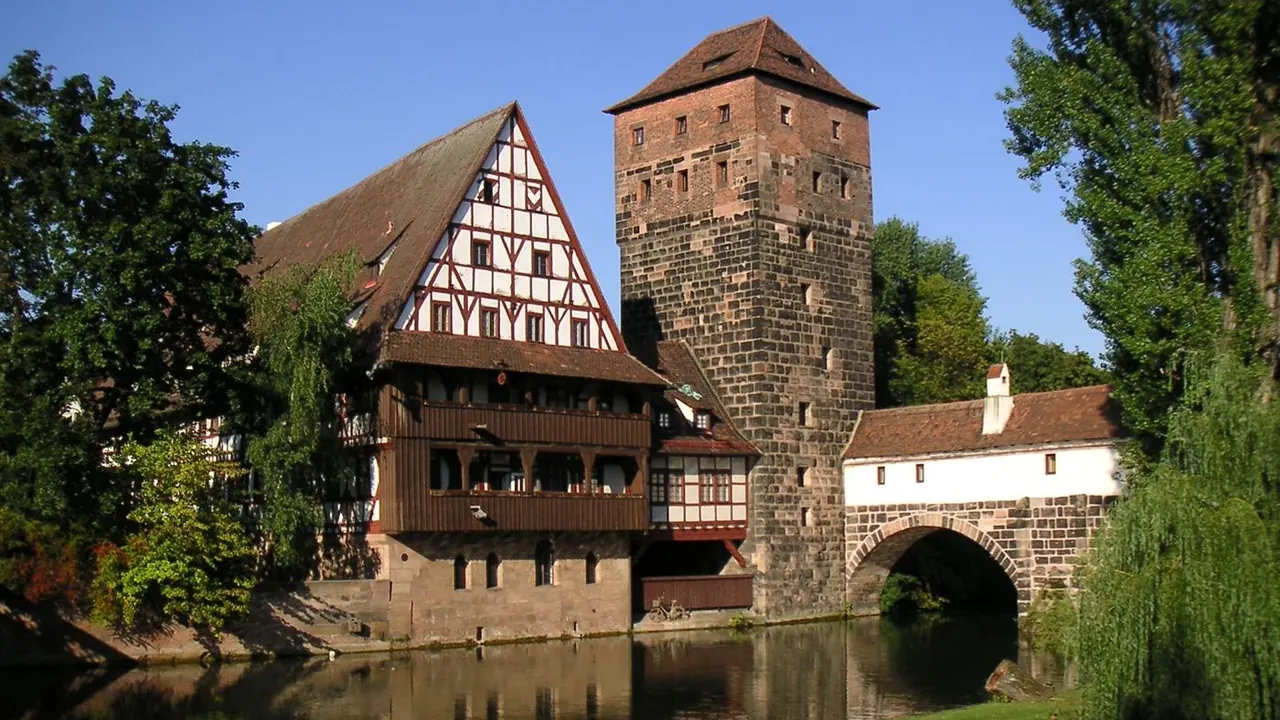
Photos: Innsbruck by Wolfgang Weiser, Pexels License; Nuremberg by Horst Gutmann, CC BY 2.0, cropped.
Innsbruck or Nuremberg?
Our verdict in twelve categories, each scored against the same fixed benchmark cities, and the climate month by month, so you can choose for your trip.
Choose Innsbruck for
- nature and the outdoors
- beaches
Innsbruck is for travellers who want the mountains to be the main event. The Nordkette cable cars start almost at the old town's edge, the Karwendel lies just behind the ridge, and in winter several ski areas and a glacier are within easy reach. The Habsburg old town is lovely but small, so this suits an active trip of hiking, skiing or biking with a couple of days of sights around it, for people happy to pay Alpine prices.
Choose Nuremberg for
- food and drink
- prices
- culture and sights
Nuremberg rewards the curious city visitor more. Its walled old town, imperial castle, great national museum and the sobering twentieth-century sites give it more depth, and Bamberg, Regensburg, Würzburg and Rothenburg are all close by train. The bratwurst, Franconian breweries and beer gardens are more of a draw at the table, and an ordinary stay costs noticeably less, as long as you avoid the trade fair weeks and Advent.
Scoreboard
Twelve categories on one fixed scale from 0 to 100. The shaded stretch is the gap between the two.
Your match
Pick a travel style or drag the sliders, and both match scores follow your weighting.
Too close to call, 1 point apart
Wins on nature and the outdoors and beaches with your weighting.
Wins on food and drink and prices with your weighting.
What matters to you?
Category by category
What the scores mean for a trip.
Beaches & swimming
Neither city is a swimming destination, but Innsbruck makes a summer dip easier. The Lanser See and Natterer See sit on the plateaus just above town and warm up in high summer, with the clear but chilly Achensee further out.
Nuremberg's equivalent is the Franconian Lake District, about an hour south, where the Brombachsee has grassy shores and small sandy strips. It works for a hot day with children, but it is a proper outing rather than an afternoon by the city.
Food & drink
Both kitchens are hearty and filling, but Nuremberg's has more character of its own. Beechwood-grilled finger bratwurst, Schäufele with crackling and centuries-old Lebkuchen give it real signature dishes, and Franconia's many small breweries, with their smoky Kellerbier and riverside beer gardens, make drinking a reason to come.
Innsbruck's Gröstl, Kaspressknödel and Kaiserschmarrn taste best at a mountain hut after a walk, which is its great asset. In town the choice is narrower, with coffee houses, traditional inns and tour-group restaurants around the Golden Roof.
Culture & sights
Nuremberg has more to see and more layers to it. Inside its near-complete walls are the Kaiserburg, St Sebaldus and St Lorenz, and Dürer's house, while the Germanisches Nationalmuseum can take a whole day. The Rally Grounds documentation centre and Courtroom 600 add a sobering chapter of the twentieth century that few cities can match.
Innsbruck's Habsburg heritage is smaller in scale but very fine. Maximilian's tomb in the Hofkirche, the Golden Roof and the curiosities at Ambras Castle cover two or three days well.
Nightlife
Both make for a good evening out rather than a reason to travel, and both owe much of their energy to students. Innsbruck's nights gather under the railway viaduct, where bars and small clubs in the brick arches stay open late at weekends, and in winter much of the partying moves to après-ski in the resorts. Nuremberg is more about bars, with the alternative spots in Gostenhof and summer crowds on the squares and riverbanks.
Nature & outdoors
This is the biggest gap between the two. Innsbruck has high Alpine country on its doorstep: the Nordkette ridge reached by funicular and cable car, the Karwendel nature park behind it, and the Stubai glacier and valleys across the Inn. Skiing in winter and hiking, biking, rafting and paragliding in summer are all part of an ordinary day.
Nuremberg's outdoors is gentle by comparison. The Reichswald suits easy walks and cycling, and Franconian Switzerland, an hour away, has limestone towers, caves and fine rock climbing, but there are no mountains to speak of.
Day trips
Nuremberg has the denser ring of rewarding towns. Bamberg is under an hour by train, Regensburg and Würzburg about an hour, and the walled towns of Rothenburg and Dinkelsbühl a little further, so you could spend a week on old towns alone.
Innsbruck's trips reach further and cross borders. Hall in Tirol and Rattenberg are close, Munich and Salzburg just under two hours by train, and over the Brenner lie Bolzano, Merano and Ötzi the Iceman, a change of country and cuisine within the day.
Good for families
Both work well with children, in different ways. Innsbruck's appeal is the mountains: the Alpenzoo of ibex and lynx on the funicular route, adventure trails and hut playgrounds, and ski schools in winter, though rainy days take planning. Nuremberg plays on its toy-making past, with the Toy Museum, full-size locomotives at the railway museum, the zoo in former quarries and a children's Christmas market in Advent, which gives it more to do indoors.
Getting around
Both centres are compact and easy to walk, with the main station right by the old town. Innsbruck's special asset is how quickly public transport lifts you into the mountains, with the funicular starting at the old town's edge and ski buses in winter, though a car helps for remote valleys. Nuremberg has the fuller city network, with U-Bahn lines, trams and S-Bahn on one ticket reaching the Rally Grounds, the zoo and Fürth.
Shopping & style
Nuremberg gives shoppers a bit more to take home. Lebkuchen in tins, wooden toys and tin figures and the Handwerkerhof's workshops are distinctive, and the Christkindlesmarkt in Advent is one of Germany's most famous Christmas markets.
Innsbruck's shopping is narrower, centred on Maria-Theresien-Strasse and the old town arcades. Its strengths are loden jackets, dirndls, Speck and schnapps, and excellent outdoor and ski shops for anyone kitting out for the mountains.
Affordability
Nuremberg is the cheaper stay. Beer and tavern meals are inexpensive, transport and sights are modestly priced, and hotels are fair outside the trade fair weeks and Advent.
Innsbruck adds an Alpine premium, especially in ski season and at Christmas, and cable car tickets mount up on an active trip. Spring and autumn and the city cards that bundle lifts with transport soften the bill.
Live music & performing arts
Nuremberg's programme is a little fuller. The Staatstheater runs opera, ballet and drama in its Art Nouveau house, two orchestras play, including a big open-air summer concert in the Luitpoldhain, and the Bardentreffen fills the squares with free folk music.
Innsbruck's standout is the summer Festival of Early Music in settings such as the Spanish Hall at Ambras, alongside the Landestheater and evenings of yodelling and brass.
Wellness & relaxation
Neither city has historic baths, and relaxation looks much the same in both: saunas and slow days. Innsbruck's version is Alpine, with mountain-view hotel spas in Igls and the plateau villages and big thermal complexes in the Ötztal and Zillertal an hour away. Nuremberg offers the large thermal spa in Fürth a short U-Bahn ride off, nude mixed saunas in the German manner, and saline pools at Bad Windsheim.
When should you go?
Pick your month. The climate figures are measured averages, not a forecast.
Innsbruck in July
Nuremberg in July
Daytime high, °C
Rainfall in the month, mm
Temperature and rainfall are climate normals, averaged over the years shown. Innsbruck: 1991-2020 normals, Innsbruck-Flughafen (3.3 km from centre). Nuremberg: 1991-2020 normals, Nuernberg (5.5 km from centre).
The two share a similar temperature curve, with cold winters near 4°C and summer highs in the mid twenties, Innsbruck being a touch warmer at about 26°C in July. Both are comfortable for walking from May to September, and only July and August are warm enough for a lake swim. The real difference is rain. Innsbruck's summers are much wetter, with August bringing about 144mm, often as afternoon storms over the mountains, while Nuremberg never goes much above 77mm in any month.
Winter is better in Innsbruck: it is the ski season, and the valley gets noticeably more sun in the dark months than Nuremberg, which is grey from November to January. For sightseeing without the summer showers, Nuremberg in May, June or September is a safe choice, while Innsbruck in September offers settled hiking weather after the wettest weeks.
Which traveller are you?
For an outdoors trip, Innsbruck is in another league. You can ride from the old town up to a 2,300m ridge in under half an hour, then go hut-to-hut hiking, try a via ferrata or paraglide, and in winter ski on a shared pass.
On a culture and arts trip, Nuremberg offers more. The imperial castle, Gothic churches, Dürer's house and the vast Germanisches Nationalmuseum fill several days, and the Staatstheater's opera and ballet give the evenings a little more weight.
On a trip on a tight budget, Nuremberg is easier. Tavern meals and local beer are inexpensive and transport costs little, while Innsbruck adds an Alpine resort premium and cable car tickets that soon add up.
Before you go
| Measure | Innsbruck | Nuremberg |
|---|---|---|
| Official language | German, Austrian Sign Language | German |
| Currency | Euro (EUR) | Euro (EUR) |
| Sockets | CF230 V, 50 Hz | CF230 V, 50 Hz |
| Driving side | Right | Right |
| Time zone | UTC+1, UTC+2 in summer | UTC+1, UTC+2 in summer |
| Emergency number | 112 | 112 |
| Elevation | 574 m | 209 m |
| Main airport | Innsbruck Airport (INN)4 km from centre40 non-stop destinations | Nuremberg Airport (NUE)5 km from centre56 non-stop destinations |
| Public holidays this year | 16 days | 12 days |
By the numbers
| Measure | Innsbruck | Nuremberg |
|---|---|---|
| City population | 132,499 | 531,159 |
| People per km² | 1,263 | 2,848 |
| Museums within 10 km | 28 | 50 |
| UNESCO World Heritage sites within 50 km | 1 | 1 |
Where else could you go?
Every comparison below shares a destination with this one, so you can follow Innsbruck or Nuremberg somewhere new.