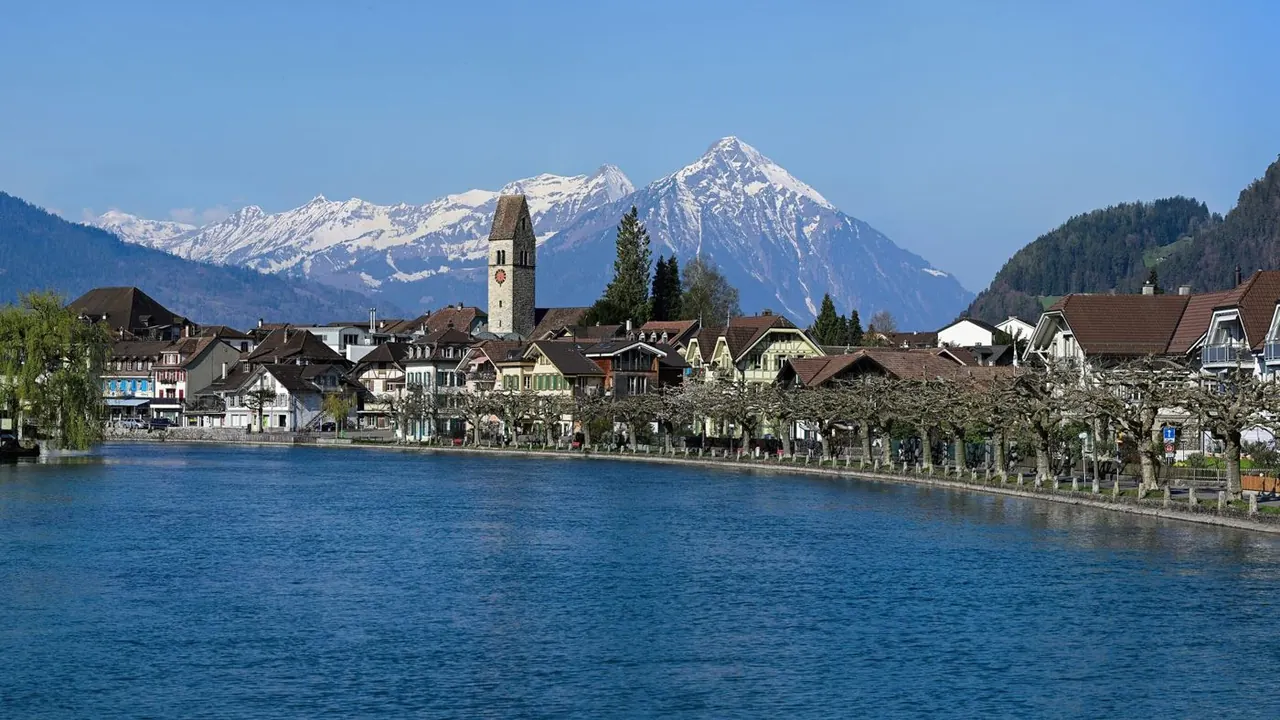
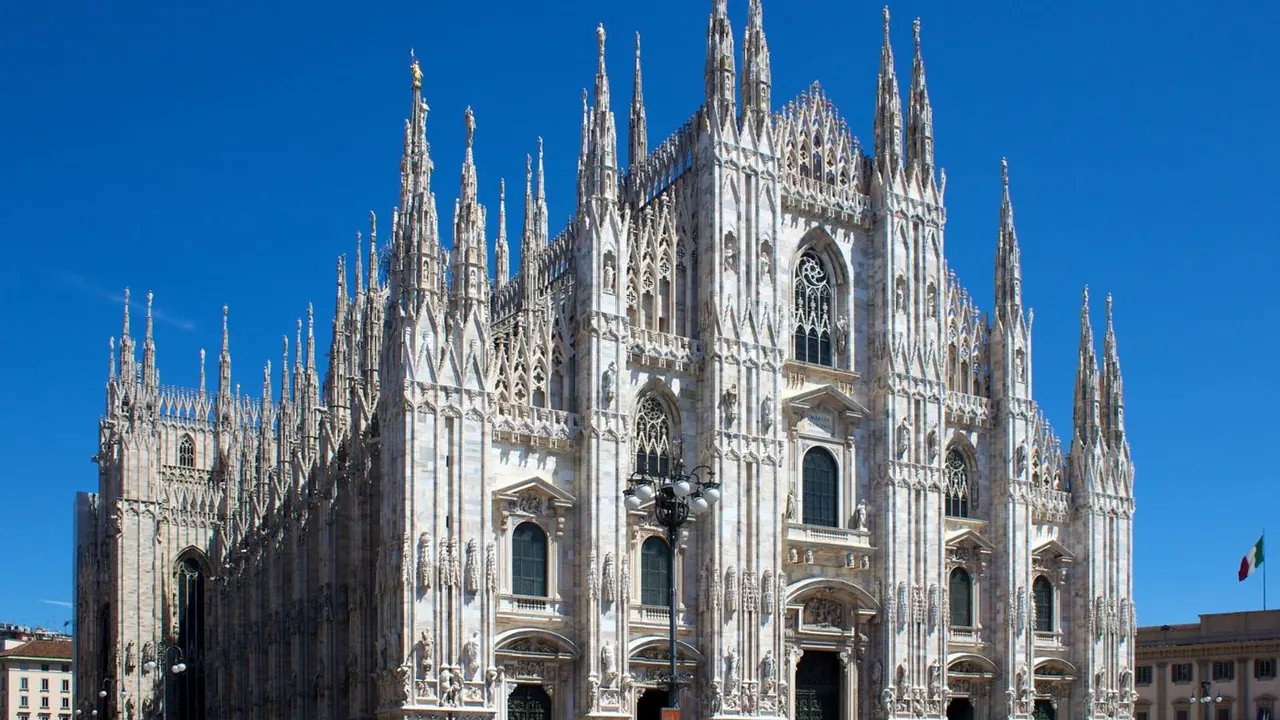
Photos: Interlaken by Roy Egloff, CC BY-SA 4.0, cropped; Milan by Jiuguang Wang, CC BY-SA 3.0, cropped.
Interlaken or Milan?
Our verdict in twelve categories, each scored against the same fixed benchmark cities, and the climate month by month, so you can choose for your trip.
Choose Interlaken for
- nature and the outdoors
- families
- beaches
Interlaken is for travellers who come for the mountains themselves. Trains and cable cars take you up into the Jungfrau region, and the days go on high trails, paragliding and lake steamers. The town is quiet by mid-evening and asks little of you after dark. It suits active couples and families with children old enough to enjoy gondolas and summit playgrounds, as long as the budget can take full Swiss prices.
Choose Milan for
- culture and sights
- shopping
- live music and the arts
Pick Milan if you would rather end the day at La Scala or with an aperitivo by the Navigli canals than on a hut terrace. Its strengths are fashion and design shopping, a short list of first-rank sights from the Duomo to the Last Supper, serious food, and fast trains that put Verona, Bergamo and Lake Como within a day's reach. It costs noticeably less than Interlaken, though it is no bargain by Italian standards.
Scoreboard
Twelve categories on one fixed scale from 0 to 100. The shaded stretch is the gap between the two.
Your match
Pick a travel style or drag the sliders, and both match scores follow your weighting.
Wins on nature and the outdoors and families with your weighting.
Wins on culture and sights and shopping with your weighting.
What matters to you?
Category by category
What the scores mean for a trip.
Beaches & swimming
Neither city is a beach destination, but Interlaken has its water right at hand. Lake Thun and Lake Brienz lie on either side of town, with lidos at Neuhaus and Bönigen for a swim after a day on the trails. The season is only July and August, and the water stays cool.
Milan has only the Idroscalo basin and its open-air pools, so a proper swim means an hour on the train to Como or Maggiore. Those lakes are a little warmer, but going there is a planned day out, not a quick dip.
Food & drink
Milan is by far the better place to eat. Saffron risotto, ossobuco and cotoletta, cooking from every Italian region, fine dining and the aperitivo ritual around the Navigli and Isola make meals a highlight of the trip.
Interlaken feeds hungry hikers with fondue, rösti and international standbys, which are reliable but forgettable. Its best food is up the mountain: cheese from Alpine dairies, a meal on a hut terrace above Mürren, white wine from Lake Thun, and a good many supermarket picnics.
Culture & sights
Here the gap is wide. Milan has the Duomo with its rooftop spires, Leonardo's Last Supper, the paintings at the Brera and Michelangelo's Rondanini Pietà in the Castello Sforzesco. That is enough for several full days, even though the old buildings come in clusters rather than one continuous old town.
Interlaken's sights amount to the grand hotels and the Kursaal on the Höheweg and a few timber houses in Unterseen. For history, take the train to Bern or Thun.
Nightlife
Milan has a real night out. Aperitivo carries on along the Navigli towpaths, Brera has quieter bars, the streets of Porta Venezia are relaxed and at the centre of the gay scene, and there are dressy clubs around Corso Como. Expect style rather than wild nights, and a thinner scene in August.
Interlaken goes to bed early. A few backpacker pubs, a couple of basement clubs and the casino in the Kursaal are all there is, which suits people catching the first train up the mountain.
Nature & outdoors
Interlaken is one of the great Alpine bases. The Eiger, Mönch and Jungfrau and the waterfalls of the Lauterbrunnen valley are all within an hour, and a longer climb by cog railway reaches the Jungfraujoch at 3,454m, looking over the Aletsch glacier. Lifts take you straight onto high trails, and paragliding, canyoning and winter skiing are all run from town.
Milan sits on the flat Po plain, with a few parks and the canal towpaths. Its outdoors begins an hour to the north at Como, Maggiore and the Grigne ridges. They are very fine, but each visit is an outing, not the view from your window.
Day trips
Both cities make good bases thanks to excellent railways, but Milan reaches further and offers more. High-speed trains put Verona, Turin and Bologna within easy range, and Bergamo, Lake Como and the Certosa di Pavia are closer still. Mantua's Gonzaga palaces, Cremona's violin-making heritage and Parma's food culture make longer but rewarding days. Few cities have so many art towns within a day's reach.
Interlaken's outings are gentler: Bern's arcades in under an hour, the castles of Thun, Spiez and Oberhofen by paddle steamer, the open-air museum at Ballenberg, and Lucerne over the Brünig Pass.
Good for families
Interlaken is the easier choice with children. Rack railways, gondolas and steamers are adventures in themselves, and the summit stations have playgrounds, toboggan runs and short walks. The St Beatus caves and the farm animals at Ballenberg are good backups. Its weak points are wet days and the highest summits, which can trouble very young children.
Milan does better on a rainy day, with the submarine and trains at the science museum and the aquarium by Parco Sempione. Older children may want a day at Gardaland or Leolandia. But summer humidity is tiring, and most of the big sights are for adults.
Getting around
Both are easy without a car, in different ways. Interlaken is a small, flat town whose strength is the network of narrow-gauge trains, cog railways, gondolas and steamers linking the whole Jungfrau region, though the most popular trains get crowded in summer.
Milan runs as a city system. It has five metro lines with contactless gates, old orange trams through the centre and a walkable core from the Duomo to Brera. The drawbacks are hot platforms in summer and the long transfer from Malpensa airport.
Shopping & style
Milan is one of the world's fashion capitals. It has the flagship stores of the great houses in the Quadrilatero, the Galleria and La Rinascente beside the Duomo, design showrooms, vintage shops in Porta Ticinese and antique markets on the Navigli.
Interlaken's Höheweg sells watches, army knives, cuckoo clocks and outdoor gear to passing tour groups. Carved wood from Brienz is the only thing with real local character.
Affordability
Neither is cheap, but Interlaken is harder on the wallet. Rooms and meals cost full Swiss prices, and the mountain railways and lifts add up fast, the Jungfraujoch above all. Beyond hostels, picnics and transport passes there is little room to save.
Milan is expensive for Italy, especially during trade fairs and fashion weeks, but it gives you more ways round the cost. Public transport is fairly priced, aperitivo snacks can replace supper, and lunch menus for office workers are good value.
Live music & performing arts
Milan has La Scala, whose season of opera, ballet and concerts opens each December on the feast of Sant'Ambrogio. Around it are the Piccolo Teatro, a fine symphony orchestra, jazz clubs and big summer concerts at San Siro.
Interlaken has the open-air William Tell in the woods each summer, occasional concerts in the Kursaal and folklore evenings with alphorns. It is charming but slight, and serious music means a trip to Bern.
Wellness & relaxation
Interlaken's calm comes from its setting rather than its facilities. The grand hotels on the Höheweg have sizeable spas and there is a public wellness area, but the real rest is an early morning on the lakeshore, a slow steamer crossing or a night up in Wengen or Mürren, away from the coach groups in the centre.
Milan has what Interlaken lacks: a thermal spa complex in the city with outdoor pools and saunas, and in summer the restored 1930s pools of the Bagni Misteriosi. Yet the city is busy and work-minded, so most people head to the lakes to slow down.
When should you go?
Pick your month. The climate figures are measured averages, not a forecast.
Interlaken in July
Milan in July
Daytime high, °C
Rainfall in the month, mm
Where the figures come from
Interlaken has no rain gauge within 25 km of the centre, so its rainfall comes from a gridded climate dataset read at the city rather than from a gauge further away.
Milan has no rain gauge within 25 km of the centre, so its rainfall comes from a gridded climate dataset read at the city rather than from a gauge further away.
Milan's sunshine is measured 41 km from the centre, at Novara / Cameri.
Temperature and rainfall are climate normals, averaged over the years shown. Interlaken: 2005-2020 (rainfall 1991-2020) normals, Meiringen / Unterbach (19.3 km from centre). Milan: 1991-2020 normals, Milano / Linate (8 km from centre).
Interlaken has one real window, from June to early September. Highs reach the low twenties then, around 24°C in July, and Lake Thun is warm enough for a swim. Rain falls across the year with no true dry season, though summer is the heaviest, and July and August are among the wetter months, so allow spare days in case cloud hides the peaks. From December to February highs stay only a few degrees above freezing, which suits skiers and few others, and March and November are still cold.
Milan is warmer all year round. April and early June are the best months for walking the streets, with mild to warm days and long spells of sunshine, while May is pleasant but noticeably wetter. July and August reach about 30°C with heavy humidity: they are the sunniest weeks but tiring on foot. From September to November the rain sets in, peaking at around 128mm in November with short grey days. Winter is cool but rarely as cold as in the Bernese Oberland. In short, high summer favours the Alps, and late spring and early summer favour Milan.
Which traveller are you?
For an outdoors trip, Interlaken is the clear choice. Trains and cable cars reach high trails below the Eiger and Jungfrau within an hour, and paragliding, canyoning and rafting all start from town. In Milan you need a train ride before any walk or climb begins.
On a culture and arts trip, Milan wins easily. The Duomo roof, the Last Supper, the Brera gallery and an evening at La Scala fill several days. Interlaken has a row of grand hotels and a small museum, and sends you to Bern for anything more.
For a shopping trip, Milan is in another league. The fashion houses around Via Montenapoleone, the design showrooms and Brera's boutiques are a reason to come in themselves. Interlaken's Höheweg sells watches, army knives and chocolate to tour groups, and Brienz woodcarving is its one local craft.
Before you go
| Measure | Interlaken | Milan |
|---|---|---|
| Official language | French, German, Italian, Romansh | Italian |
| Currency | Swiss Franc (CHF) | Euro (EUR) |
| Sockets | CJ230 V, 50 Hz | CFL230 V, 50 Hz |
| Driving side | Right | Right |
| Time zone | UTC+1, UTC+2 in summer | UTC+1, UTC+2 in summer |
| Emergency number | 112 | 112 |
| Elevation | 571 m | 138 m |
| Main airport | Zürich Airport (ZRH)100 km from centre226 non-stop destinations | Milan Malpensa International Airport (MXP)40 km from centre208 non-stop destinations |
| Public holidays this year | 10 days | 13 days |
By the numbers
| Measure | Interlaken | Milan |
|---|---|---|
| City population | 6,123 | 1,354,196 |
| People per km² | 1,424 | 7,453 |
| Museums within 10 km | 3 | 88 |
| UNESCO World Heritage sites within 50 km | 2 | 4 |
Where else could you go?
Every comparison below shares a destination with this one, so you can follow Interlaken or Milan somewhere new.