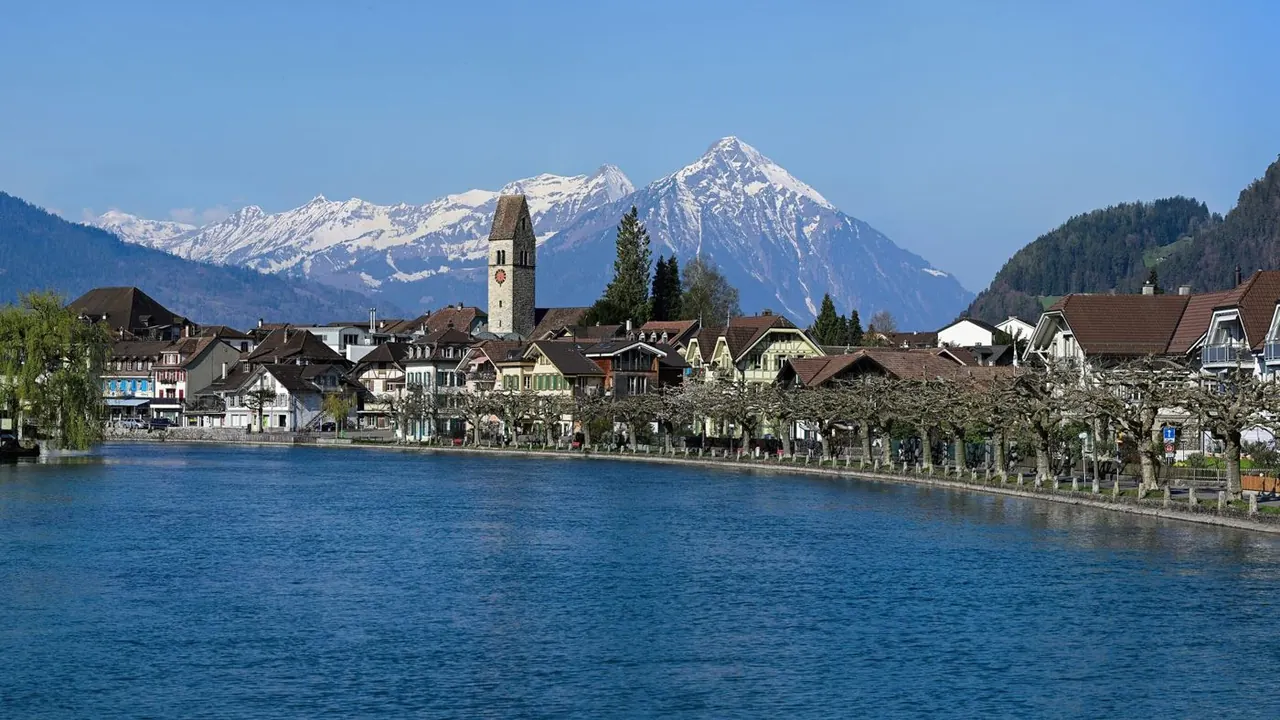
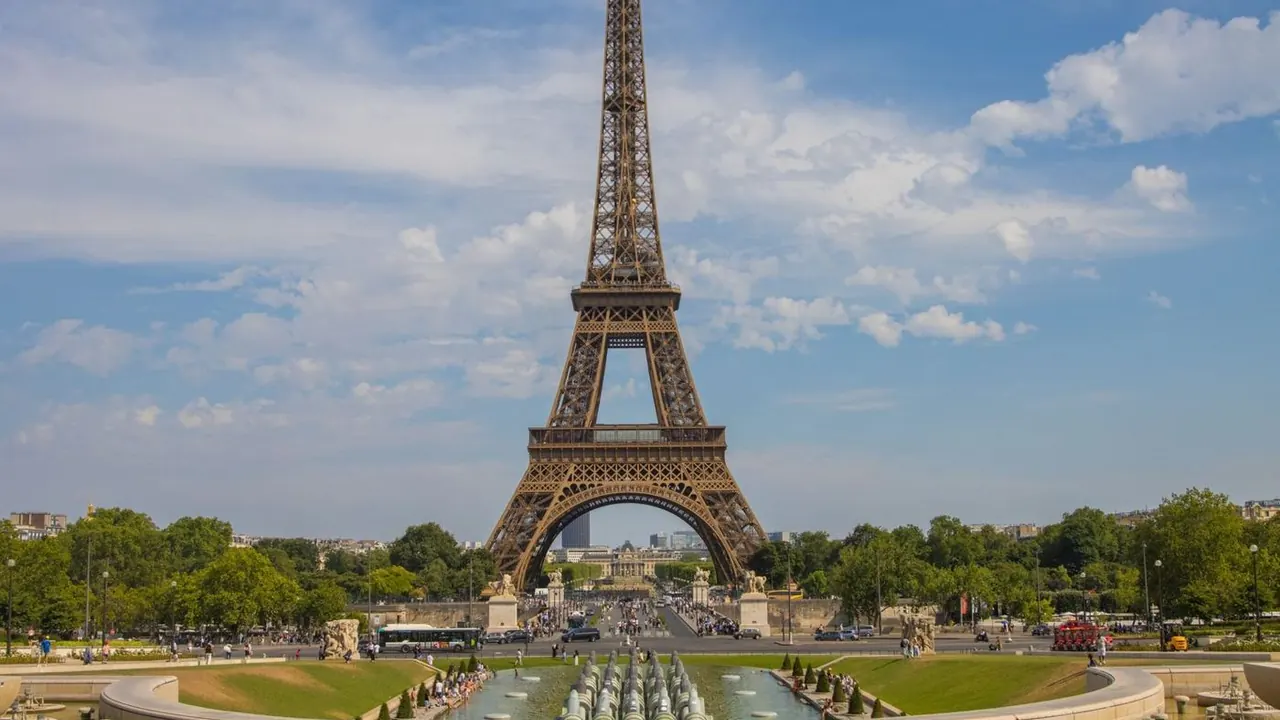
Photos: Interlaken by Roy Egloff, CC BY-SA 4.0, cropped; Paris by Efrem Efre, Pexels License.
Interlaken or Paris?
Our verdict in twelve categories, each scored against the same fixed benchmark cities, and the climate month by month, so you can choose for your trip.
Choose Interlaken for
- nature and the outdoors
- beaches
Interlaken is the choice when the mountains are the reason for the trip. The Eiger, the Lauterbrunnen valley and the railway to the Jungfraujoch are all within an hour of your hotel. Paragliding, canyoning, lake paddling and winter skiing all start from the town, and trains make Bern and Lucerne easy outings. In return, expect plain food, quiet evenings and almost nothing to see in the town itself.
Choose Paris for
- culture and sights
- shopping
- live music and the arts
Travellers who want the city itself to be the destination will be happier in Paris. Its museums, Gothic churches and boulevards, its bistros and markets, its opera, jazz and late bars, and its shops, from the couture houses to the Saint-Ouen flea market, have a depth Interlaken never tries to match. Nature here means formal gardens and forests on the edge of town, not peaks.
Scoreboard
Twelve categories on one fixed scale from 0 to 100. The shaded stretch is the gap between the two.
Your match
Pick a travel style or drag the sliders, and both match scores follow your weighting.
Wins on nature and the outdoors and beaches with your weighting.
Wins on culture and sights and shopping with your weighting.
What matters to you?
Category by category
What the scores mean for a trip.
Beaches & swimming
Neither city is a beach destination, but Interlaken at least has real open water. In July and August Lake Thun is warm enough for a swim from the lidos at Neuhaus or the shingle shore towards Spiez. The turquoise water of Lake Brienz at Bönigen is colder but beautiful beneath the snow peaks.
Paris has only the summer sand laid along the Seine, the bathing spots at La Villette and its Art Deco pools. The nearest sea is the cool Channel at Deauville, two hours away by train.
Food & drink
Paris is one of the world's great places to eat, while Interlaken is a place to refuel. In Paris the pleasure is part of everyday life: the neighbourhood boulangerie, the Aligre market, zinc-counter bistros, natural wine bars, and the North African and Vietnamese kitchens of Belleville and the 13th.
Interlaken's restaurants serve reliable fondue, rösti and raclette and not much else. The best meals are up in the mountains, on a hut terrace above Mürren or with cheese from an alpine dairy, and many visitors get by on supermarket picnics.
Culture & sights
On culture, the two cities are as far apart as they could be. In Interlaken there are the grand hotels on the Höheweg, the Kursaal and a few timber houses in Unterseen, and an hour covers it all. The town was built for looking at the mountains, not for being looked at.
Paris could keep a museum lover busy for weeks with the Louvre, the Orsay and the Orangerie, and Notre-Dame, the Sainte-Chapelle and the townhouses of the Marais fill the gaps between them. Book the big names ahead to avoid the queues.
Nightlife
Interlaken goes to bed early because its visitors have trains and paragliding flights to catch in the morning. Apart from a few backpacker pubs, a couple of basement clubs and the casino, a night out means a drink on the Höheweg.
Paris has a whole eastern side of the city for going out. Bars fill Oberkampf, Belleville and the canal banks, South Pigalle has the cocktail bars and the Marais its gay scene, and house and techno clubs keep going until dawn.
Nature & outdoors
In Interlaken the outdoors comes on an Alpine scale. Paths climb from green pasture to rock and ice, and the Aletsch, the longest glacier in the Alps, lies below the Jungfraujoch at 3,454m. A keen walker could spend a week on trails between the Schilthorn and the Schynige Platte ridge without walking the same route twice.
Paris offers green space for an afternoon rather than a day. You can row on the lake in the Bois de Boulogne, climb the small hill of the Buttes-Chaumont or cycle the flat canal paths on a shared bike, and even the forests of Chantilly and Rambouillet have no climb worth the name.
Day trips
Both make good bases, but Paris has the longer and richer list. Versailles, Chartres, Giverny and Fontainebleau are an hour or less away. Fast trains put the Champagne houses of Reims, Rouen, the Loire châteaux and Brussels within an easy day.
Interlaken has fewer trips, but they are lovely. Arcaded Bern is under an hour away, paddle steamers stop at the castles of Thun, Spiez and Oberhofen, Ballenberg has its open-air museum, and Lucerne lies across the Brünig Pass.
Good for families
Paris has more to keep children busy: Disneyland and Parc Astérix, the Cité des Sciences, a zoo, an aquarium and the skeletons in the galleries at the Jardin des Plantes, plus carousels and toy boats in the Luxembourg. The downsides are metro stations with only stairs and small hotel rooms.
Interlaken is simpler and calmer. The cog railways, gondolas and steamers are the entertainment, along with summit playgrounds, toboggan runs, the St Beatus caves and the farm animals at Ballenberg. Wet days are hard to fill, and the highest summits are no place for very young children.
Getting around
Both are easy without a car, but Paris has the edge because almost everything you want is inside the city. You can walk along the river from the Louvre to the Eiffel Tower, and a metro station is never far away. Stairs, rush-hour crowds and pickpockets are the drawbacks.
Interlaken itself is a flat twenty-minute walk from one station to the other. Its strength is the regional network of trains, cog railways, gondolas and steamers that links the whole Jungfrau region, although the popular lines get crowded in summer.
Shopping & style
Paris is worth the trip for shopping alone. There are the couture flagships on Avenue Montaigne, Galeries Lafayette and Le Bon Marché, designers and vintage in the Marais, the covered passages, the Saint-Ouen flea market and the bouquinistes along the Seine.
Interlaken sells watches, army knives, cuckoo clocks and chocolate to tour groups along the Höheweg, plus outdoor gear. Woodcarving from Brienz is the one thing worth seeking out.
Affordability
Neither is cheap, but Interlaken is harder on the wallet. Hotels and meals cost full Swiss prices, and the mountain railways, above all the one to the Jungfraujoch, and the adventure sports are the main reason for a stay and also its biggest cost.
In Paris, walking costs nothing, public transport is reasonably priced, and the permanent collections of the city's own museums are free. A bakery lunch or a picnic by the river keeps meals cheap. Rooms are still expensive, so staying in the outer arrondissements helps.
Live music & performing arts
Interlaken's main stage event is the summer William Tell, played by local amateurs in the woods, alongside folklore evenings of yodelling and alphorns. For an orchestra, you need to go to Bern.
Paris has the Palais Garnier and the Opéra Bastille, the Philharmonie, chamber concerts in the Sainte-Chapelle, jazz cellars on the rue des Lombards and cabaret in Pigalle. Most of the theatre is in French, but the music needs no translation.
Wellness & relaxation
Neither city has a bathing tradition, and each offers rest in its own way. Interlaken has the spas of the grand Höheweg hotels and a public wellness area, but the real calm is in the lakeside villages, on slow steamer crossings and up in car-free Wengen and Mürren.
Paris has the tiled steam rooms of the Grande Mosquée hammam and its hotel spas. Otherwise rest comes in short breaks: an hour on a café terrace, a chair in the Luxembourg gardens, an evening walk by the Seine.
When should you go?
Pick your month. The climate figures are measured averages, not a forecast.
Interlaken in July
Paris in July
Daytime high, °C
Rainfall in the month, mm
Where the figures come from
Interlaken has no rain gauge within 25 km of the centre, so its rainfall comes from a gridded climate dataset read at the city rather than from a gauge further away.
Temperature and rainfall are climate normals, averaged over the years shown. Interlaken: 2005-2020 (rainfall 1991-2020) normals, Meiringen / Unterbach (19.3 km from centre). Paris: 1991-2020 normals, Paris-Montsouris (4.6 km from centre).
Interlaken is mainly a summer and winter destination. July and August are the only months warm enough to swim in the lakes, with afternoons around 24°C, and June and September are good for high walks. Winter highs are near 3°C, and that is the ski season. Rain falls all year, a little more in midsummer and December, so no month promises a clear day on the Jungfraujoch.
Paris is milder at both ends of the year. Summer afternoons reach about 26°C, warm for long days on foot but seldom too hot. Winter highs of about 8°C are chilly but fine for museum days. Spring and autumn are the best months for walking, although May is the wettest month at about 75mm. The two cities overlap best from June to September.
Which traveller are you?
On an outdoors trip, Interlaken is in a different league. Cable cars and mountain trains take you up to trails beneath the Eiger and Jungfrau, and paragliding, canyoning, rafting and lake kayaking all start from town. Paris offers parks, riverside cycling and the woods of Fontainebleau.
For a culture and arts trip, Paris is the obvious pick. The Louvre, the Orsay and the Sainte-Chapelle are all within walking distance, and the evenings bring opera at the Palais Garnier and jazz in cellar clubs. Interlaken has a row of grand hotels and one small museum, and sends you to Bern for more.
On a food and nightlife trip, choose Paris. Markets, bistros, the neo-bistros of the 11th and natural wine bars lead straight into evenings in Oberkampf, Belleville and along the canal, and the clubs run until dawn. Interlaken offers fondue, a few pubs and an early night.
Before you go
| Measure | Interlaken | Paris |
|---|---|---|
| Official language | French, German, Italian, Romansh | French |
| Currency | Swiss Franc (CHF) | Euro (EUR) |
| Sockets | CJ230 V, 50 Hz | CE230 V, 50 Hz |
| Driving side | Right | Right |
| Time zone | UTC+1, UTC+2 in summer | UTC+1, UTC+2 in summer |
| Emergency number | 112 | 112 |
| Elevation | 571 m | 27 m |
| Main airport | Zürich Airport (ZRH)100 km from centre226 non-stop destinations | Charles de Gaulle International Airport (CDG)22 km from centre277 non-stop destinations |
| Public holidays this year | 10 days | 11 days |
By the numbers
| Measure | Interlaken | Paris |
|---|---|---|
| City population | 6,123 | 2,103,778 |
| People per km² | 1,424 | 19,960 |
| Museums within 10 km | 3 | 251 |
| UNESCO World Heritage sites within 50 km | 2 | 4 |
Where else could you go?
Every comparison below shares a destination with this one, so you can follow Interlaken or Paris somewhere new.