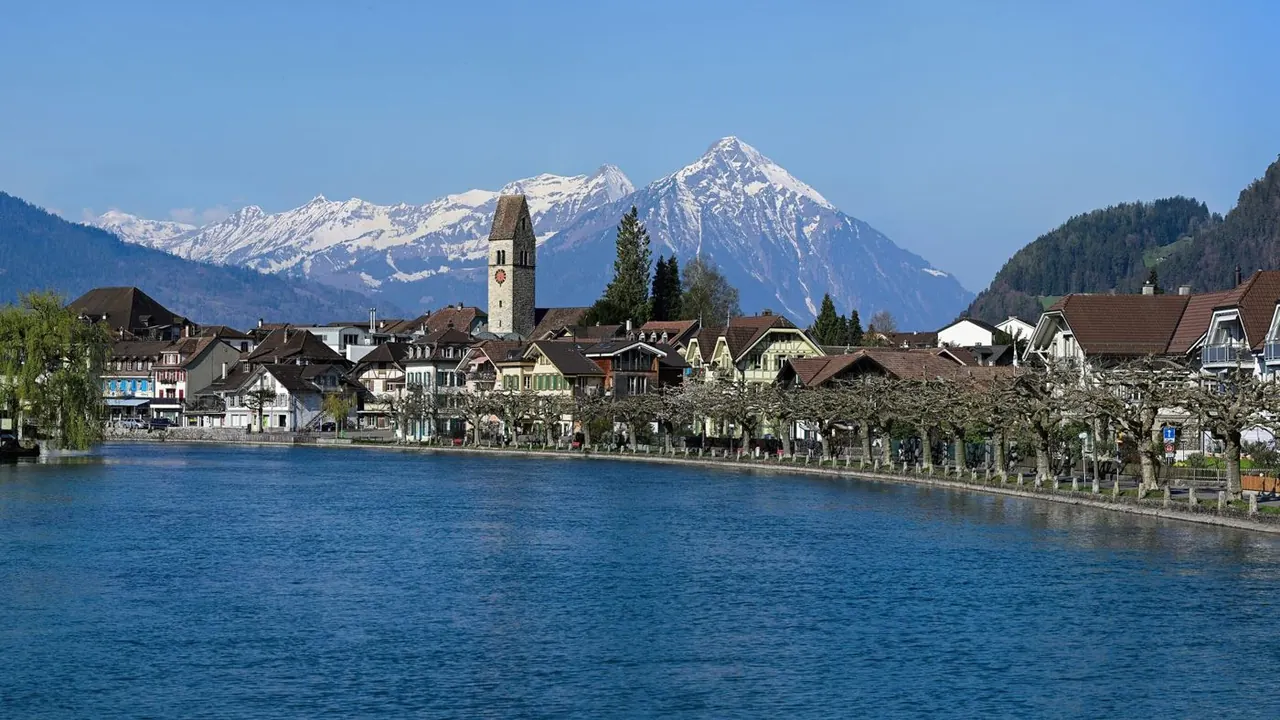
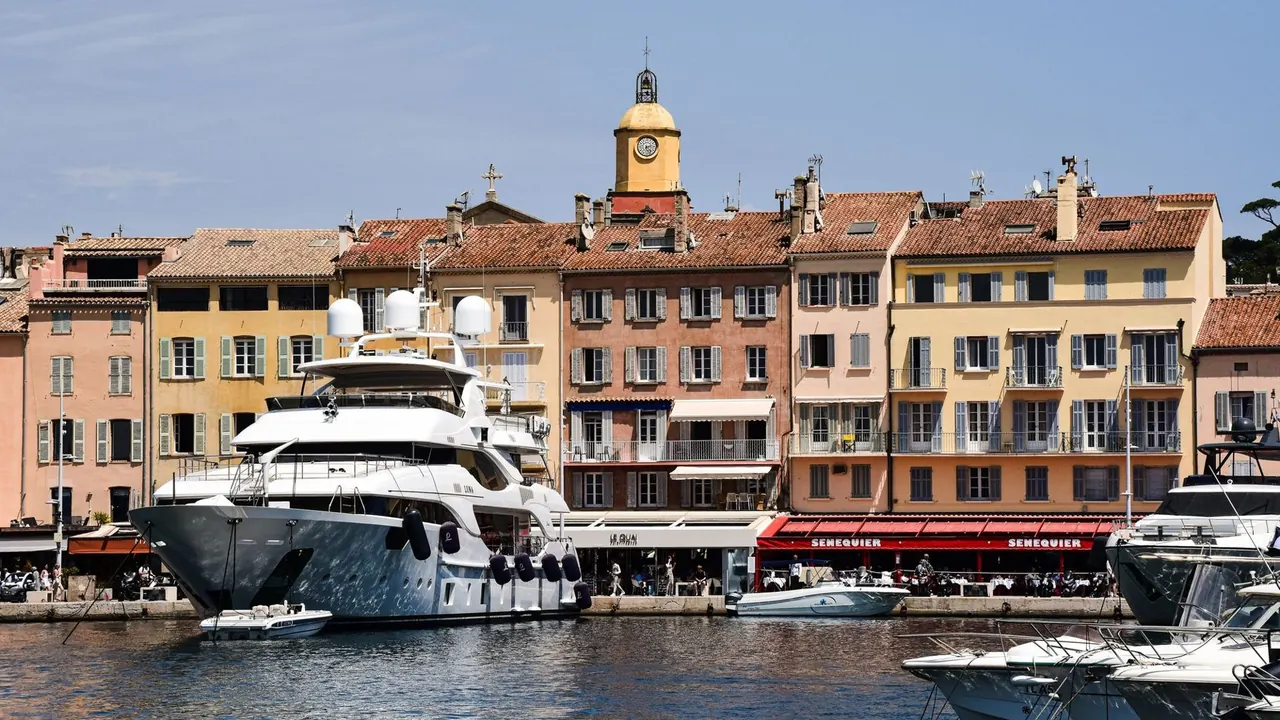
Photos: Interlaken by Roy Egloff, CC BY-SA 4.0, cropped; Saint-Tropez by AXP Photography, Pexels License.
Interlaken or Saint-Tropez?
Our verdict in twelve categories, each scored against the same fixed benchmark cities, and the climate month by month, so you can choose for your trip.
Choose Interlaken for
- getting around
- families
- nature and the outdoors
Interlaken is the choice for travellers who want mountains at the heart of the trip: high trails reached by cog railway, paragliders landing in the middle of town, lake steamers in summer and ski slopes in winter. It also suits families and anyone happy to leave the car at home, since trains, gondolas and boats link the whole Jungfrau region, and Bern, Thun and Lucerne are easy rail outings.
Choose Saint-Tropez for
- beaches
- nightlife
- shopping
For a summer trip built around sand, sea and long evenings, Saint-Tropez makes more sense. Pampelonne's beaches, Provençal lunches with local rosé, the boutiques behind the port and a glamorous club scene give it far more to do day to day. Getting about depends on a car or a boat, and the high season is short, but couples and groups after sun and style will be happier here.
Scoreboard
Twelve categories on one fixed scale from 0 to 100. The shaded stretch is the gap between the two.
Your match
Pick a travel style or drag the sliders, and both match scores follow your weighting.
Wins on getting around and families with your weighting.
Wins on beaches and nightlife with your weighting.
What matters to you?
Category by category
What the scores mean for a trip.
Beaches & swimming
Saint-Tropez is a real beach destination. Pampelonne runs for about 5km of pale sand on the Ramatuelle side, with clear water and wilder coves further south, and from June to September swimming is the whole point of a stay.
Interlaken offers lake swimming instead, at grassy lidos and small shingle beaches on Lake Thun and in the colder turquoise water of Lake Brienz at Bönigen. It is a fine way to cool off after a mountain day, but the swimming months are only July and August and the water stays cool even then.
Food & drink
Neither town is a food destination in its own right, but Saint-Tropez gives more to look forward to: grilled fish, bouillabaisse and aïoli, the Place des Lices market, the cream-filled tarte tropézienne and rosé from the surrounding vineyards, with polished cooking at the top end.
Interlaken's restaurants serve dependable fondue, raclette and rösti alongside Indian and Asian places for its international visitors. Its best meals are up in the hills, on hut terraces above Grindelwald or with cheese bought at mountain dairies.
Culture & sights
Saint-Tropez has more to see, though it is still about a day's worth: the Musée de l'Annonciade with its pointillist and Fauvist paintings from Signac's circle, the maritime museum in the citadel and the ochre lanes of La Ponche. Interlaken has almost nothing in town beyond the grand hotels of the Höheweg and the old timber houses of Unterseen; for museums and historic streets you take the train to Bern or Thun.
Nightlife
In July and August Saint-Tropez is a proper party town, with afternoon beach-club sessions at Pampelonne, champagne on the harbour terraces and famous clubs running until dawn, all glamorous and dress-coded. Outside summer it falls quiet.
Interlaken goes to bed early because its visitors rise for trains and hikes. A few backpacker pubs and basement clubs near the hostels and the casino in the Kursaal are about all there is.
Nature & outdoors
Both have fine landscapes, but Interlaken's are on another scale. The Jungfraujoch at 3,454m above the Aletsch glacier, the waterfalls of the Lauterbrunnen valley and the high trails from Grindelwald First and Mürren are all reached by train and gondola, and the town is a base for paragliding, canyoning and skiing.
Saint-Tropez offers a gentler, sea-facing outdoors: the coast path to the capes of Camarat and Taillat, cork-oak forest in the Massif des Maures, sailing, snorkelling and the national park islands of Port-Cros and Porquerolles. Summer heat and fire risk limit it in high season.
Day trips
Interlaken is the better base for outings, because the rail network does the work: Bern's arcaded old town is under an hour away, Thun's castle is a steamer ride along the lake, Ballenberg's open-air museum lies near Brienz, and Lucerne is reached over the Brünig Pass.
Saint-Tropez's trips are charming but smaller: hilltop Ramatuelle and Gassin, Grimaud's ruined castle, canal-laced Port Grimaud by boat and wine tastings among the vineyards, with Porquerolles and Roman Fréjus for longer days. Summer traffic makes all of them slower than they look on the map.
Good for families
Interlaken works better for children, as long as they enjoy the outdoors. Trains, gondolas and boats are part of the fun, and the St Beatus caves, summer toboggan runs and Ballenberg's farm animals fill the days, though wet weather and high altitude need some planning.
Saint-Tropez has gently shelving sand at Pampelonne and Gigaro, which small children love, but the rest of the town is built for adults, and hot afternoons and traffic jams make days harder work.
Getting around
Both towns are small and easy on foot, so the difference lies beyond the centre. From Interlaken, mainline trains, mountain railways, cable cars and lake steamers connect across the Jungfrau region and nobody needs a car; the only nuisance is summer crowding on the busiest lines.
Saint-Tropez has no railway, slow buses and beaches several kilometres out, so most visitors rely on cars, scooters or taxis, and the single road along the gulf jams for hours in high summer. The passenger boats from Sainte-Maxime and Port Grimaud are the most pleasant way in.
Shopping & style
Saint-Tropez is far stronger for shopping, with the summer shops of the big fashion houses behind the port, resort-wear and swimwear labels, hand-made Tropézienne sandals and linen and pottery at the Place des Lices market, although much shuts in winter. Interlaken's Höheweg mostly sells watches, army knives, cuckoo clocks and chocolate to tour groups, and carved wood from Brienz is the one local craft worth seeking out.
Affordability
Both are among the most expensive places you could choose, but the money goes on different things. In Interlaken the mountain railways and cable cars, the Jungfraujoch above all, add a heavy layer on top of Swiss hotel and restaurant prices, and that holds in every season.
In Saint-Tropez the expense peaks in July and August, with rooms, beach loungers and harbour cocktails priced for the yachting crowd and taxis on top. Staying across the gulf and coming over by boat, or visiting in late spring or autumn, eases it.
Live music & performing arts
Neither is a place for serious theatre or concerts, and both lean on seasonal tradition. Interlaken has the open-air William Tell played by local amateurs in the woods each summer, plus folklore evenings of yodelling and alphorns, with Bern's theatre and orchestra under an hour away. Saint-Tropez has open-air classical and jazz on the citadel in summer and the Bravade, a costumed procession with muskets each May.
Wellness & relaxation
Calm in Interlaken comes from the setting rather than the town: an early morning on the lakeshore, a slow steamer crossing, or a night up in car-free Wengen or Mürren, away from the coach groups and backpackers on the Höheweg. Several of the grand hotels in town have sizeable spas, and there is a public pool with a wellness area.
In Saint-Tropez it is a matter of timing. High summer is loud and crowded, but in May, June and September the town slows to long lunches, walks up to the citadel and pétanque under the plane trees. Its spas belong to the luxury hotels and villas and are aimed at their guests, and like Interlaken it has no thermal baths of its own.
When should you go?
Pick your month. The climate figures are measured averages, not a forecast.
Interlaken in July
Saint-Tropez in July
Daytime high, °C
Rainfall in the month, mm
Where the figures come from
Interlaken has no rain gauge within 25 km of the centre, so its rainfall comes from a gridded climate dataset read at the city rather than from a gauge further away.
Saint-Tropez has no rain gauge within 25 km of the centre, so its rainfall comes from a gridded climate dataset read at the city rather than from a gauge further away.
Saint-Tropez's sunshine is measured 62 km from the centre, at Nice.
Temperature and rainfall are climate normals, averaged over the years shown. Interlaken: 2005-2020 (rainfall 1991-2020) normals, Meiringen / Unterbach (19.3 km from centre). Saint-Tropez: 1999-2020 (sunshine 1991-2020, rainfall 1991-2020) normals, Le Luc (24.2 km from centre).
Interlaken is a summer and winter place with a damp middle. July and August are the warmest months at around 24°C, ideal for hiking, but they are also the wettest, with about 125mm a month, often as showers and low cloud that can hide the peaks. September is drier and still mild for walking. From December to February the days are cold, too chilly for lingering in the streets but right for the ski areas above Grindelwald and Wengen.
Saint-Tropez is warmer all year. July and August reach about 32°C with almost no rain and long sunny days, and the sea is warmest in August at around 24°C, so June to September is the beach window. Midday heat makes walking hard in high summer, so May, June and September are the most comfortable months for the coast path and the old town. Rain arrives in autumn and peaks in November at about 155mm, and winter is mild but too cool for swimming.
Which traveller are you?
On an outdoors trip, Interlaken is the clear pick. The Eiger, Mönch and Jungfrau are within an hour by rail, cable cars lift you onto high ridge trails, and canyoning, rafting, paragliding and skiing all start from town.
For a beach and sun trip, Saint-Tropez wins easily. Pampelonne's long stretch of fine sand, clear summer water and quieter coves at Escalet and Gigaro make a proper Mediterranean season, while Interlaken's cool lakes only offer a swim after hiking.
On a family trip with children, Interlaken is the easier base. Rack railways, gondolas and steamers are adventures in themselves, summit stations have playgrounds and toboggan runs, and no car is needed. Saint-Tropez has gentle sandy beaches but little else aimed at children.
Before you go
| Measure | Interlaken | Saint-Tropez |
|---|---|---|
| Official language | French, German, Italian, Romansh | French |
| Currency | Swiss Franc (CHF) | Euro (EUR) |
| Sockets | CJ230 V, 50 Hz | CE230 V, 50 Hz |
| Driving side | Right | Right |
| Time zone | UTC+1, UTC+2 in summer | UTC+1, UTC+2 in summer |
| Emergency number | 112 | 112 |
| Elevation | 571 m | 0 m |
| Main airport | Zürich Airport (ZRH)100 km from centre226 non-stop destinations | Nice-Côte d'Azur Airport (NCE)64 km from centre130 non-stop destinations |
| Public holidays this year | 10 days | 11 days |
By the numbers
| Measure | Interlaken | Saint-Tropez |
|---|---|---|
| City population | 6,123 | 3,582 |
| People per km² | 1,424 | 320 |
| Museums within 10 km | 3 | 4 |
| UNESCO World Heritage sites within 50 km | 2 | 0 |
| Swim season, months above 21 °C | - | 3 months |
Where else could you go?
Every comparison below shares a destination with this one, so you can follow Interlaken or Saint-Tropez somewhere new.