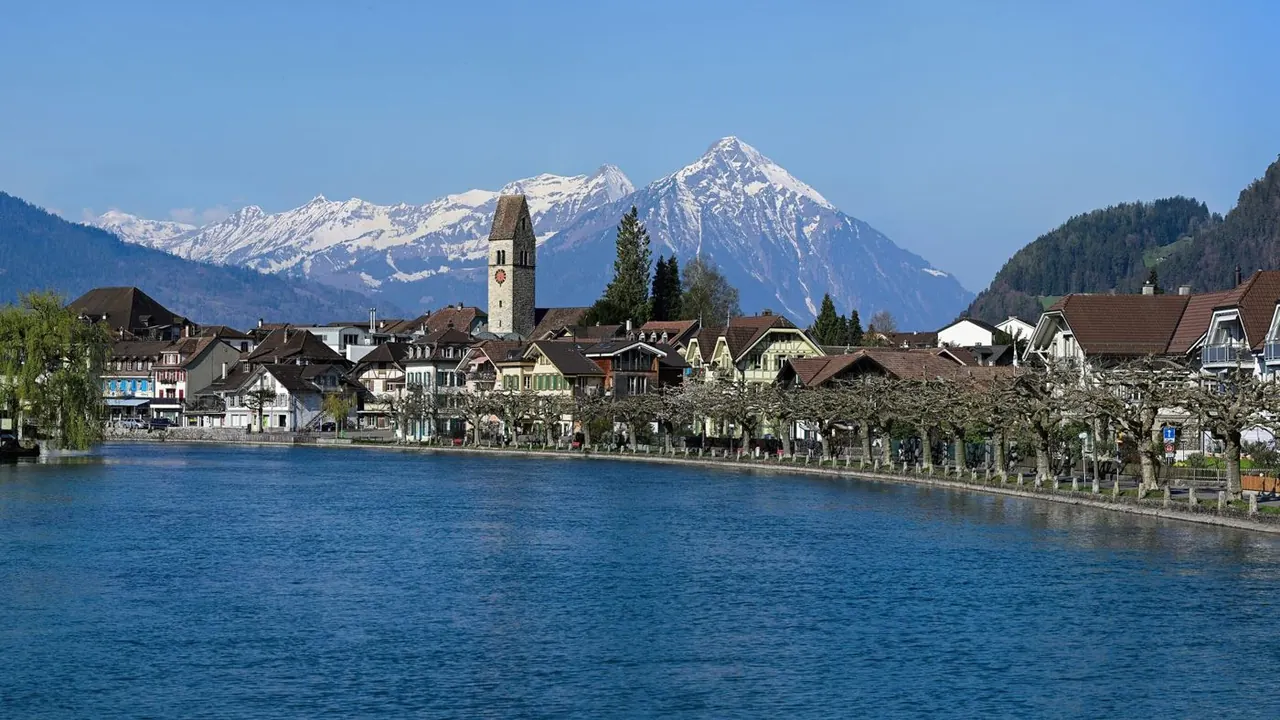
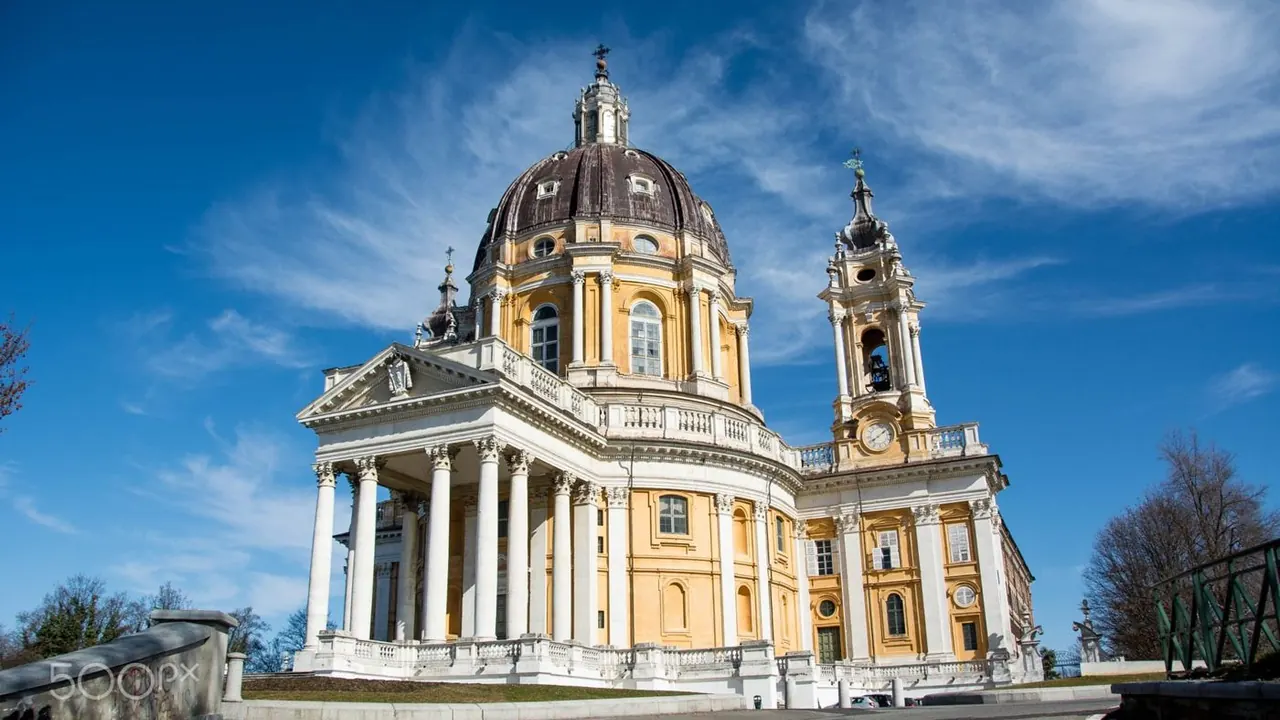
Photos: Interlaken by Roy Egloff, CC BY-SA 4.0, cropped; Turin by Konstantin Dacosta, CC BY 3.0, cropped.
Interlaken or Turin?
Our verdict in twelve categories, each scored against the same fixed benchmark cities, and the climate month by month, so you can choose for your trip.
Choose Interlaken for
- beaches
- nature and the outdoors
- families
Pick Interlaken if the mountains are the whole point. It sits at the foot of the Eiger, Mönch and Jungfrau, with trains, cog railways and cable cars that take you up to high trails, waterfalls and glaciers without a car, and it's an easy place to bring children. Expect to pay heavily for this, and to eat and spend your evenings simply in a town that goes to bed early.
Choose Turin for
- culture and sights
- food and drink
- prices
Turin is the better choice for a city vacation built around eating, museums and evenings out. The Museo Egizio, the Savoy palaces, the aperitivo and Piedmontese cooking with Barolo give you a full itinerary inside the city. Wine country and the Alps are both within reach for days out, and the whole stay costs far less than it would in Switzerland.
Scoreboard
Twelve categories on one fixed scale from 0 to 100. The shaded stretch is the gap between the two.
Your match
Pick a travel style or drag the sliders, and both match scores follow your weighting.
Wins on beaches and nature and the outdoors with your weighting.
Wins on culture and sights and food and drink with your weighting.
What matters to you?
Category by category
What the scores mean for a trip.
Beaches & swimming
Neither city is a beach destination, but Interlaken at least has water on its doorstep. In July and August you can swim from the lidos and shingle beaches of Lake Thun at Neuhaus or towards Spiez, or brave the colder turquoise water of Lake Brienz at Bönigen, with snow peaks above you.
Turin has nothing comparable within the city. Locals head out to small lakes such as Avigliana in summer, and the Ligurian sea is a long day's round trip away.
Food & drink
In Interlaken you eat to refuel after a day on the mountain. In Turin, eating is a reason to go. Interlaken's menus stick to fondue, raclette, rösti and veal in cream, with Indian and Asian places alongside. The food is hearty and reliable, but the best of it is out of town, at hut terraces above Grindelwald or Mürren, at dairies selling Alpine cheese and with white wine from Lake Thun.
Turin's Piedmontese cooking is rich and precise. Look for agnolotti del plin, tajarin, vitello tonnato, white truffles from the Langhe in autumn and Barolo or Barbaresco on most wine lists. Vermouth comes from here too, and so do gianduja and bicerin, served in the old arcaded cafés. Porta Palazzo market is good for produce and snacks.
Culture & sights
Interlaken is a base for the mountains, not a place to go sightseeing. Its sights amount to the hotel facades and Kursaal along the Höheweg, a few timber houses in Unterseen and a small local museum.
Turin is a former royal capital with a great deal to see. The Museo Egizio holds one of the most important Egyptian collections outside Cairo, and around it are the Royal Palace, Palazzo Madama, the Shroud cathedral and the UNESCO-listed Savoy residences. The Mole's cinema museum, the Lingotto and Castello di Rivoli carry the story into the industrial and modern age.
Nightlife
Interlaken goes to bed early because people are up for the first trains and paragliding flights. Apart from a few backpacker pubs, basement clubs and the Kursaal casino, an evening usually means one drink on the Höheweg.
Turin has a proper evening culture. The aperitivo leads on to wine bars in the Quadrilatero Romano, student crowds on the pavements of San Salvario, the more alternative Vanchiglia and the riverside Murazzi in summer. It is sociable rather than wild, but it lasts much later than Interlaken.
Nature & outdoors
Both cities have the Alps in view, but Interlaken is already among them. Lauterbrunnen's steep valley is under an hour away by rail, with the Trümmelbach meltwater pounding inside the rock. The cog railway to the Jungfraujoch at 3,454m, above the Aletsch glacier, takes longer and makes a full day. The Harder Kulm funicular leaves from town, the two lakes add kayaking and paddling, and in winter there's skiing at Wengen and Mürren. Low cloud is the one thing that can spoil it.
From Turin, the mountains are an hour or more away: the ibex country of the Gran Paradiso, the Susa valley or the slopes around Sestriere. Closer to town, the Superga hills, the walled Mandria forest with its deer and the cycle paths along the Po make good breaks from a city on a flat plain.
Day trips
Both make good bases, and Turin has a small edge for variety. From Interlaken, trains and paddle steamers reach Bern's arcaded old town, the castles at Thun, Spiez and Oberhofen, the woodcarving town of Brienz with Ballenberg nearby, and Lucerne over the Brünig Pass.
Turin adds wine country to the list. Alba, Barolo, La Morra and Bra in the Langhe are about an hour south, Milan is an hour away by fast train, and the Sacra di San Michele, Roman Aosta and Genoa's port make longer days out.
Good for families
Interlaken is the easier place with children, because getting up the mountain is half the fun. Rack railways, gondolas, lake steamers, summit playgrounds, summer toboggan runs, the St Beatus caves and Ballenberg's farm animals fill the days, though wet weather and high altitude can be a problem.
Turin works well enough with older children. They tend to like the glass lift up the Mole, the car museum and the mummies of the Museo Egizio, and the arcades help with pushchairs. Its main zoo park is out at Cumiana, and you'll want a car to get there.
Getting around
Interlaken has the better network for what visitors come to do. Mainline trains, narrow-gauge mountain railways, cog railways, gondolas and lake steamers link up so neatly that you can explore the whole Jungfrau region without a car, and the town itself is a flat walk between its two stations.
Turin's grid of arcaded streets is easy to cover on foot, but beyond the centre there is only one metro line, with trams and buses that take some working out. For the wine hills and the mountains, a car helps.
Shopping & style
Interlaken's Höheweg sells watches, army knives, cuckoo clocks and chocolate to tour groups. Apart from Brienz woodcarving, there is little you couldn't find elsewhere.
Turin gives you much more to browse: luxury labels under the arcades of Via Roma, boutiques around Via Lagrange, antique dealers on Via Maria Vittoria and the Balon flea market. Its best buys are edible, from chocolate makers and pastry shops to delicatessens selling truffles and wine.
Affordability
Interlaken is one of the most expensive places you can choose. Swiss hotel and restaurant prices come first, then the mountain railways, with the Jungfraujoch the costliest of all, and then any adventure activities on top.
Turin is comfortable rather than cheap, but a generous aperitivo can stand in for dinner, trattorie and market food are good value and most of the centre is walkable. Only fine dining and truffle season push the bill up.
Live music & performing arts
Interlaken's live performance is mostly summer folklore: the amateur open-air William Tell in the woods, yodelling and alphorn evenings, and the occasional concert at the Kursaal.
Turin has a full programme all year. There is opera and ballet at the Teatro Regio, the RAI National Symphony Orchestra in its own hall, concerts at the Lingotto auditorium, theatre in the baroque Teatro Carignano and small jazz venues around the centre. The theatre is almost entirely in Italian, but music needs no translation.
Wellness & relaxation
Neither city has thermal baths of its own, and they are broadly level here, but they offer different kinds of rest. In Interlaken you unwind in the large spas of the old Höheweg hotels, on quiet lake crossings and in Wengen or Mürren, away from the busy town centre.
In Turin the calm comes from the pace of the city: long breaks in historic cafés, evening walks under the arcades and slow afternoons in Valentino park. Real thermal water at Acqui Terme or in the Aosta valley means a journey of close to two hours.
When should you go?
Pick your month. The climate figures are measured averages, not a forecast.
Interlaken in July
Turin in July
Daytime high, °C
Rainfall in the month, mm
Where the figures come from
Interlaken has no rain gauge within 25 km of the centre, so its rainfall comes from a gridded climate dataset read at the city rather than from a gauge further away.
Turin has no rain gauge within 25 km of the centre, so its rainfall comes from a gridded climate dataset read at the city rather than from a gauge further away.
Temperature and rainfall are climate normals, averaged over the years shown. Interlaken: 2005-2020 (rainfall 1991-2020) normals, Meiringen / Unterbach (19.3 km from centre). Turin: 1991-2020 normals, Torino / Caselle (15.4 km from centre).
Interlaken has a short warm season. June to August is the time for high trails and lake swimming, with July reaching about 24°C. Spring and autumn are cool but good for walking in the valleys. From November to March it is cold, around 3°C at midday in January, and the mountains become ski country. Rain is spread fairly evenly through the year, so low cloud over the peaks is more of a nuisance than any rainy season.
Turin is warmer all year and has a clearer pattern of wet and dry months. July and August reach about 29°C, which can feel sticky for walking the streets. Late spring and early autumn are more comfortable, though May, June and November are the wettest months, with November close to 88mm. Winter is cool but milder than in Interlaken, which makes it a reasonable time for museums, cafés and the ski slopes an hour away.
Which traveller are you?
For an outdoors trip, choose Interlaken. Lauterbrunnen, the Jungfraujoch, Grindelwald First and the Schynige Platte are all close by rail, and paragliding, canyoning and rafting start from town. Turin's Alps are wonderful but always need a journey to reach them first.
On a culture and arts trip, Turin wins easily. The Museo Egizio, the Royal Palace, the Reggia di Venaria, the cinema museum in the Mole and an opera season at the Teatro Regio fill several days. Interlaken has a single short street of grand hotels.
On a tight budget, Turin will be far kinder. Trattorie, a filling aperitivo, Porta Palazzo market and cheap public transport keep costs reasonable. In Interlaken, Swiss prices and expensive mountain railways leave hostels and supermarket picnics as the only real savings.
Before you go
| Measure | Interlaken | Turin |
|---|---|---|
| Official language | French, German, Italian, Romansh | Italian |
| Currency | Swiss Franc (CHF) | Euro (EUR) |
| Sockets | CJ230 V, 50 Hz | CFL230 V, 50 Hz |
| Driving side | Right | Right |
| Time zone | UTC+1, UTC+2 in summer | UTC+1, UTC+2 in summer |
| Emergency number | 112 | 112 |
| Elevation | 571 m | 239 m |
| Main airport | Zürich Airport (ZRH)100 km from centre226 non-stop destinations | Turin Airport (TRN)14 km from centre65 non-stop destinations |
| Public holidays this year | 10 days | 13 days |
By the numbers
| Measure | Interlaken | Turin |
|---|---|---|
| City population | 6,123 | 841,600 |
| People per km² | 1,424 | 6,474 |
| Museums within 10 km | 3 | 72 |
| UNESCO World Heritage sites within 50 km | 2 | 4 |
Where else could you go?
Every comparison below shares a destination with this one, so you can follow Interlaken or Turin somewhere new.