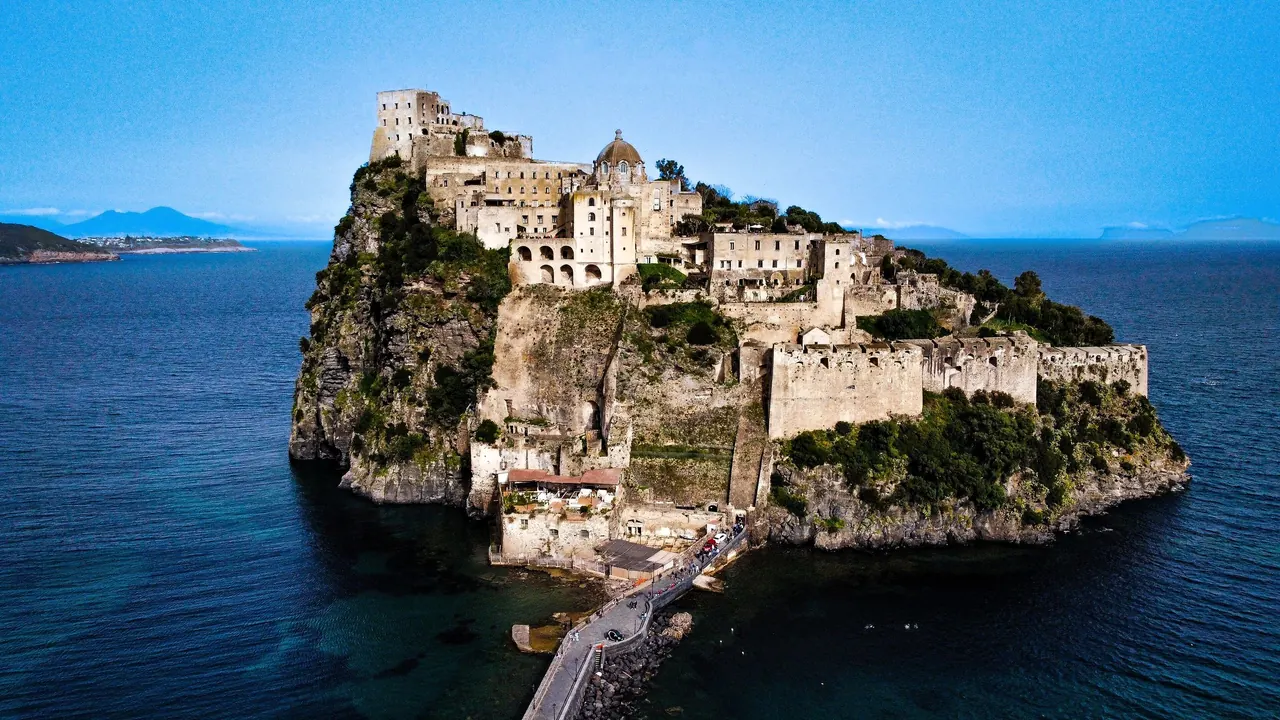
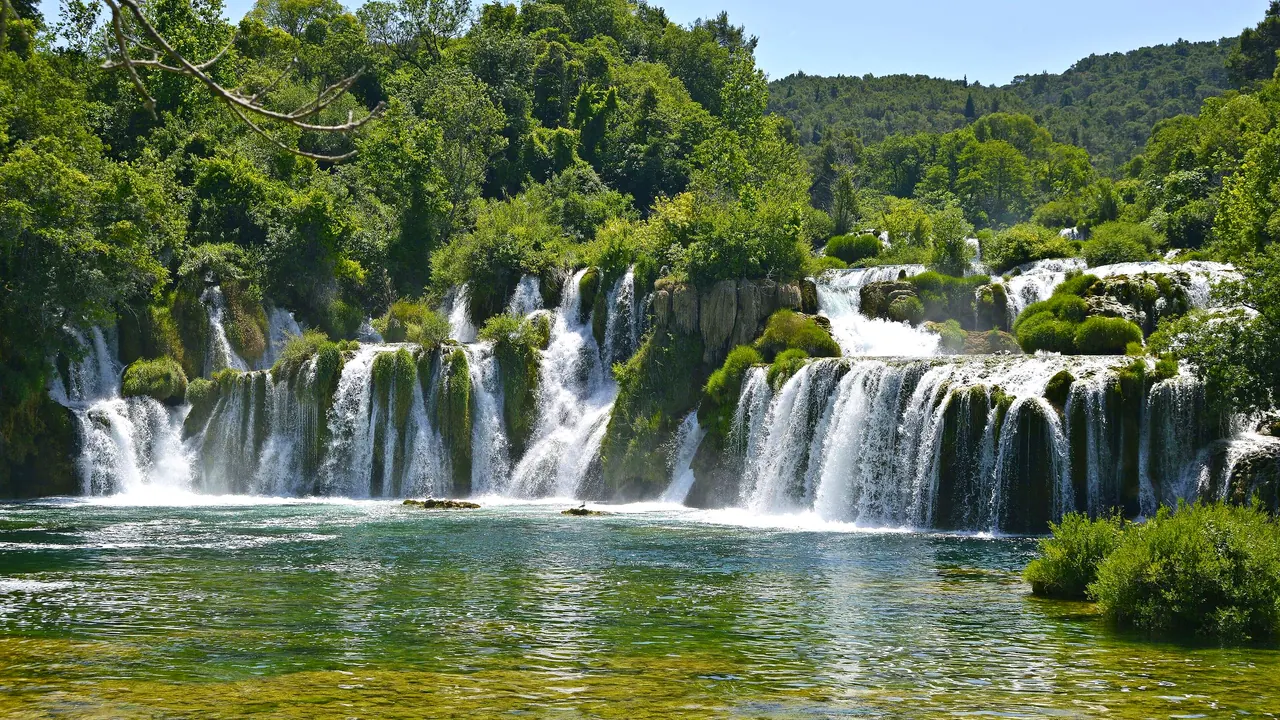
Photos: Ischia by Pipito93, CC BY-SA 4.0, cropped; Krka by Alberto-g-rovi, CC BY 4.0, cropped.
Ischia or Krka?
Our verdict in twelve categories, each scored against the same fixed benchmark cities, and the climate month by month, so you can choose for your trip.
Choose Ischia for
- wellness
- beaches
- shopping
Ischia is the choice for a slow week by the water. Hot springs and thermal parks set the pace, the island has more sand than most of the Bay of Naples at Maronti and Citara, and ferries to Procida, Naples and the Phlegraean Fields are there when you want a change. It suits travellers who want to stay put, swim, soak and seek out a good dinner in the hill villages.
Choose Krka for
- nature and the outdoors
- culture and sights
- getting around
If you'd rather be on the move, look to Krka. Its river canyon, travertine falls and the island monastery on Visovac give it the stronger landscape and the richer heritage. At the estuary, Šibenik adds a UNESCO-listed cathedral, and Trogir and Zadar are within an hour's drive. Bring a car, treat the sea as an afternoon and expect quiet evenings rather than spa days.
Scoreboard
Twelve categories on one fixed scale from 0 to 100. The shaded stretch is the gap between the two.
Your match
Pick a travel style or drag the sliders, and both match scores follow your weighting.
Wins on wellness and beaches with your weighting.
Wins on nature and the outdoors and culture and sights with your weighting.
What matters to you?
Category by category
What the scores mean for a trip.
Beaches & swimming
Ischia is the better place for swimming. Maronti is a long run of dark volcanic sand with hot springs at its Sant'Angelo end, Citara faces the sunset and San Montano is a calm, shallow bay. All are a bus or water-taxi ride from wherever you stay, and the sea is a touch warmer.
At Krka, swimming is not allowed below the falls, so a beach day is a separate outing. The choices are the pebble coves at Banj and on the Solaris peninsula near Šibenik, the bays around Primošten, or the quiet rocks on Zlarin and Prvić. The water is clear, but a swim there fills an afternoon rather than the whole trip.
Food & drink
Ischia eats a little better and with more character. Expect rabbit braised in terracotta, clams and grilled fish in the harbours of Sant'Angelo and Forio, and white wines from the terraces on Epomeo. Krka serves plain Dalmatian cooking: meat slow-cooked under an iron bell, Skradin's slow-cooked veal risotto and oysters from the estuary, with the better restaurants in Šibenik's old town.
Both offer only a narrow range, for different reasons. On Ischia, many visitors eat at their half-board hotels. Along the Krka away from Šibenik, the choice comes down to a few family-run konobas.
Culture & sights
Krka has more to see. Its heritage runs the length of the river: the Franciscan monastery on Visovac, the Orthodox Krka Monastery with its catacombs and the Roman legionary camp at Burnum. Šibenik adds the UNESCO-listed Cathedral of St James and the sea fortress of St Nicholas.
Ischia's culture rests on the Aragonese Castle at Ischia Ponte and the Greek finds from Pithekoussai at Villa Arbusta, including Nestor's Cup, plus gentler sights such as the white Soccorso church at Forio. A couple of days covers it, and serious sightseeing means taking the ferry to Naples.
Nightlife
Neither is a place to go out, but Ischia has a little more going on after dinner. Ischia Porto has wine bars and cocktail terraces, plus a couple of summer disco venues that stay open late in July and August. At Krka, evenings end with a drink on Skradin's harbour among the moored yachts. A few bars in Šibenik's old town are the only lively corner, and there are no clubs of note.
Nature & outdoors
Krka's landscape is the main event. A limestone canyon cuts through dry karst, boardwalks loop past the travertine falls at Skradinski Buk, Roški Slap spreads into many small cascades, and the park boats cross Visovac lake. Rim trails, cycling and kayaking add variety, though most of it is gentle walking rather than real hiking.
Ischia's nature is greener and steeper. There are chestnut woods and vineyards on Monte Epomeo, steam vents on the south coast, and snorkelling in the Regno di Nettuno marine protected area. It is lovely, but the island is small and a week shows you all of it.
Day trips
Both are good bases for outings, and the difference is in how you travel. From Ischia every trip starts at the ferry quay. Boats run to Procida, to Naples with its archaeological museum, to Pozzuoli for the Phlegraean Fields and, in summer, to Capri and Sorrento.
From Krka you go by road. Walled Trogir and Split are to the south, Zadar is to the north and Primošten is close by. Small ferries from Šibenik reach Zlarin and Prvić, and boats leave Murter for the Kornati.
Good for families
Neither place is built for children, and each suits a different kind of family day. Ischia is a slow beach and pool vacation. San Montano and Maronti have gentle water, and the garden pools of the thermal parks make easy days, though villages built on steps and packed buses are hard on small legs.
Krka's draw is adventure: boardwalks over rushing water, fish in the pools and boat rides to Visovac. Most families stay on the coast near Šibenik for the hotel pools and shallow pebble shores and drive in for the park, ideally outside high summer.
Getting around
Krka is the easier of the two to get around, as long as you drive. The roads are good, the motorway passes close to the Lozovac entrance, and park buses and boats run between the falls. Without a car, though, you need a tour to reach the upper falls and the monasteries.
Ischia works the other way round. A car is more trouble than it is worth, so you rely on buses around the single coastal loop, which are slow and crowded in summer, plus microtaxis and water taxis. Arriving also means a ferry or hydrofoil from Naples or Pozzuoli.
Shopping & style
Ischia at least has a shopping street: the long walk from Ischia Porto to Ischia Ponte along Via Roma and Corso Vittoria Colonna. Its shops sell linen, sandals, jewellery and thermal cosmetics and stay open into the evening. Krka offers little beyond olive oil, honey, figs and lavender from stalls, a few craft shops in Šibenik and the coral work of Zlarin.
Affordability
Costs are much the same: an ordinary Italian resort on one side, coastal Croatia in summer on the other, and both are noticeably cheaper in spring and autumn. Where the money goes differs. On Ischia, sunbeds, thermal park entry and boat trips add up over a week. At Krka, the national park entrance is the biggest single cost, and private apartments inland around Lozovac are the cheapest places to stay.
Live music & performing arts
There is little live performance at either, and most of it happens in summer. Ischia has chamber concerts in William Walton's Mortella gardens and screenings at the Aragonese Castle during its film festival. Krka's offer is in Šibenik, with concerts in the fortresses and the children's festival, while klapa singing at village festivities is what you are most likely to hear by chance.
Wellness & relaxation
This is where the two are furthest apart. Ischia is built around its hot springs. They feed thermal pools in the hotels and terraced spring parks at Citara, Lacco Ameno and Casamicciola, bubble into the open-air sea pools at Sorgeto and fill the steam caves of Cavascura, and mud treatments are a local speciality.
Krka has no bathing tradition and only a few resort spas near Šibenik. What it offers instead is quiet: Skradin's harbour at dusk and early mornings on the river. That suits an unhurried trip but not one planned around treatments.
When should you go?
Pick your month. The climate figures are measured averages, not a forecast.
Ischia in July
Krka in July
Daytime high, °C
Rainfall in the month, mm
Where the figures come from
Ischia's temperatures are measured 36 km from the centre, at Grazzanise.
Ischia has no rain gauge within 25 km of the centre, so its rainfall comes from a gridded climate dataset read at the destination rather than from a gauge further away.
Krka's temperatures are measured 53 km from the centre, at Split / Marjan.
Krka has no rain gauge within 25 km of the centre, so its rainfall comes from a gridded climate dataset read at the destination rather than from a gauge further away.
Krka's sunshine is measured 53 km from the centre, at Split / Marjan.
Temperature and rainfall are climate normals, averaged over the years shown. Ischia: 1991-2020 normals, Grazzanise (36 km from centre). Krka: 1991-2020 (sunshine 1971-2000) normals, Split / Marjan (52.9 km from centre).
Both places are hot in July and August, with highs around 31°C, and that heat is harder to bear on Krka's boardwalks and canyon paths than on Ischia's beaches. Ischia's sea is a degree or two warmer and reaches 26°C in August. You can swim there into early October, while the Adriatic off Šibenik is best from June to September. Both are dry and very sunny through high summer.
Autumn is where they differ. Ischia turns wet from October, and November is its rainiest month at 148mm, while Krka's autumn rain is lighter. For the river, spring is the time to go: the falls run fullest and May is warm without the full summer heat. On Ischia, April to June and October are best for walking up Epomeo and spending long days in the thermal pools.
Which traveller are you?
On a beach and sun trip, choose Ischia, where the sea can fill every day and the swimming lasts into early October. At Krka the river is not for bathing, so each swim means a separate trip to the coast.
For an outdoors trip, Ischia's walking and snorkelling make good mornings but run out within a week. Krka keeps going for longer, with a different day on foot, by bike, by kayak or by boat, and the scenery changing along the river.
On a relaxing and wellness trip, Ischia is the place. Hot water is the point of the stay, and days drift between warm pools, the sea and a long lunch. Krka offers peace and quiet, but no spa culture to plan around.
Before you go
| Measure | Ischia | Krka |
|---|---|---|
| Official language | Italian | Croatian |
| Currency | Euro (EUR) | Euro (EUR) |
| Sockets | CFL230 V, 50 Hz | CF230 V, 50 Hz |
| Driving side | Right | Right |
| Time zone | UTC+1, UTC+2 in summer | UTC+1, UTC+2 in summer |
| Emergency number | 112 | 112 |
| Main airport | Naples International Airport (NAP)131 non-stop destinations | Split Saint Jerome Airport (SPU)69 non-stop destinations |
| Public holidays this year | 13 days | 14 days |
By the numbers
| Measure | Ischia | Krka |
|---|---|---|
| Population | 62,027 | - |
| People per km² | 1,340 | - |
| Swim season, months above 21 °C | 5 months | 4 months |
Where else could you go?
Every comparison below shares a destination with this one, so you can follow Ischia or Krka somewhere new.