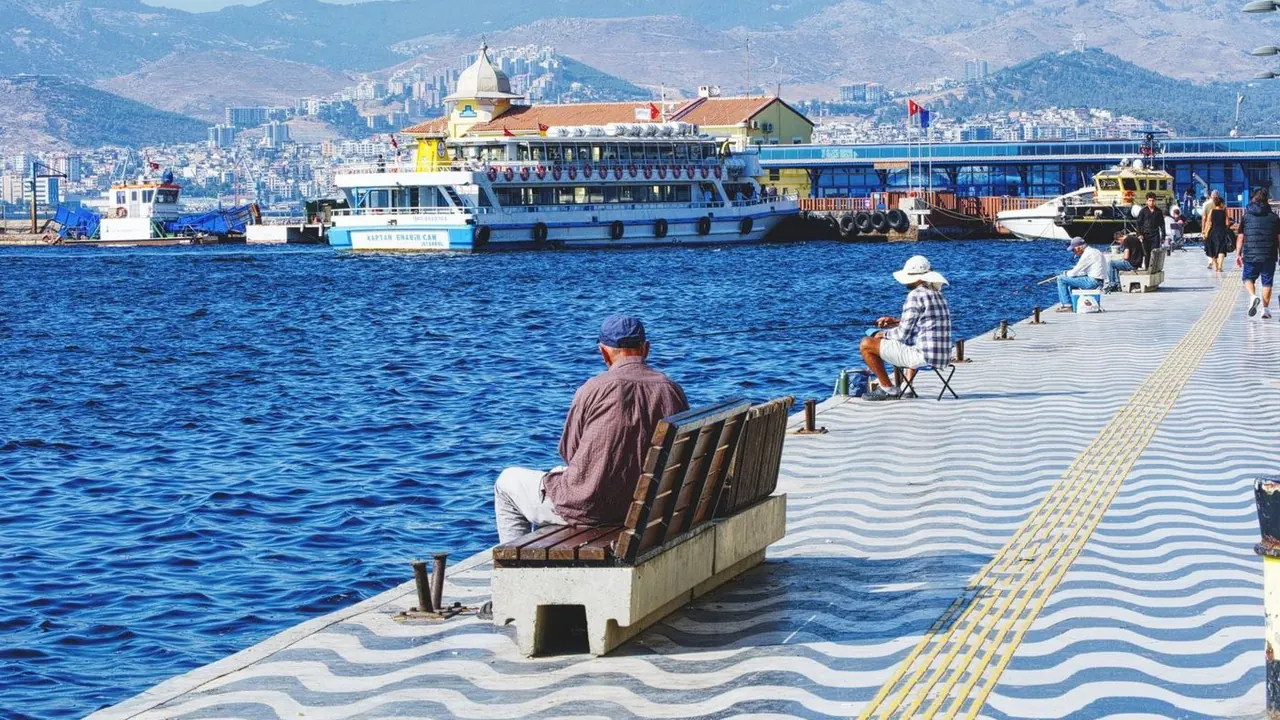
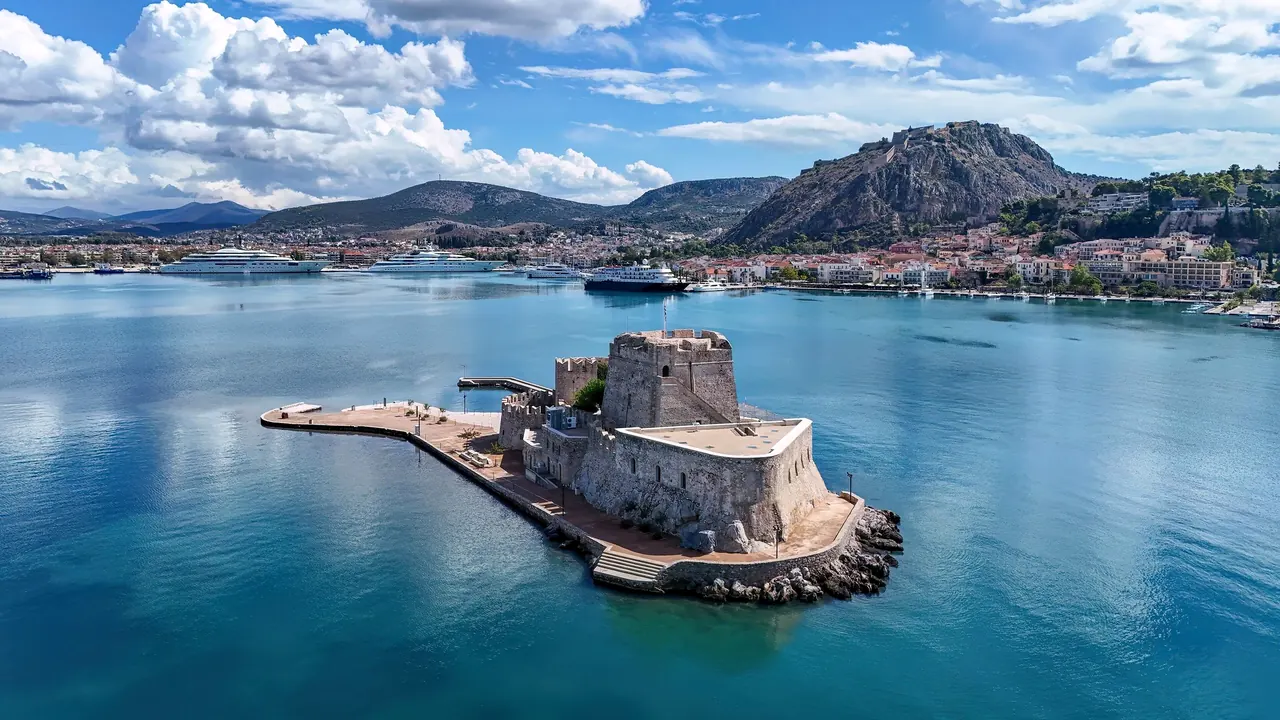
Photos: Izmir by Toygar Par, Pexels License; Nafplio by Giles Laurent, CC BY-SA 4.0, cropped.
Izmir or Nafplio?
Our verdict in twelve categories, each scored against the same fixed benchmark cities, and the climate month by month, so you can choose for your trip.
Choose Izmir for
- nightlife
- food and drink
- shopping
Izmir suits travellers who want a real working city with a big appetite: Aegean meze and raki by the water, boyoz and gevrek from the carts, packed bar streets in Alsancak, a bazaar quarter where locals still shop, and thermal baths on the city's edge. Ephesus and Pergamon are close enough to see from it, so a week can mix ancient sites with city evenings. The catch is that the good beaches are an hour away on the Cesme peninsula.
Choose Nafplio for
- beaches
- day trips
Choose Nafplio for a slower, smaller trip where the town itself is the pleasure. Its old town of Venetian and neoclassical houses is unusually well preserved, you can swim below the Palamidi cliffs, and Mycenae, Tiryns and Epidaurus are all a short drive away. Food, shopping and nightlife are gentle rather than memorable, but few seaside towns sit this close to the heart of ancient Greece.
Scoreboard
Twelve categories on one fixed scale from 0 to 100. The shaded stretch is the gap between the two.
Your match
Pick a travel style or drag the sliders, and both match scores follow your weighting.
Wins on nightlife and food and drink with your weighting.
Wins on beaches and day trips with your weighting.
What matters to you?
Category by category
What the scores mean for a trip.
Beaches & swimming
Swimming is about equally good in both, but it fits into the trip very differently. In Izmir the city waterfront is not for swimming, so beaches are day outings: Ilıca's shallow sand and the wilder coves on the Cesme peninsula an hour west, or the long family beaches at Gumuldur to the south. The strong northerly winds there suit windsurfers more than people who want to float.
Nafplio puts the sea at the end of the street. You can walk to the pebbles at Arvanitia for a quick swim before dinner, reach the pine-backed sand of Karathona along a coastal path, and find sunbeds and tavernas at Tolo. The beaches are small, though, and fill up on summer weekends.
Food & drink
Izmir is much the better place to eat. Its Aegean cooking of wild greens, herbs and olive oil has its own character, the meyhane spread of cold meze and grilled fish is a whole evening, and the street classics, boyoz with a boiled egg, gevrek and kumru, give you good food at every hour. Kemeraltı's market lanes and the Urla vineyards add depth.
Nafplio serves pleasant Peloponnesian taverna food, such as octopus from the gulf, slow-cooked lamb and Nemea's agiorgitiko red. The central squares lean towards tourist menus, though, and there is no street food. The better meals are often out at Tolo or in the villages of the Argolid plain.
Culture & sights
Both have a few days of sightseeing, but of opposite kinds. In Izmir the history is scattered through a modern city: the Roman Agora of ancient Smyrna, the walls of Kadifekale above the gulf, Ottoman hans in Kemeraltı and the Clock Tower on Konak Square. The 1922 fire means the streets themselves are rarely beautiful.
In Nafplio the town itself is the sight. It was modern Greece's first capital, and its intact lanes of Venetian, Ottoman and neoclassical houses lie below Palamidi, Akronafplia and the island castle of Bourtzi. The museums are few and small, so this is atmosphere more than depth.
Nightlife
Izmir has a proper night out and Nafplio does not. In Izmir the evening starts with drinks on the Kordon at sunset and moves into the small bars, pubs and rock bars behind Alsancak, with crowds out in the street until late. In summer, the beach clubs of Alaçatı and Çeşme take over for bigger nights.
Nafplio's evenings are dinner followed by a drink by the harbour or off Syntagma Square. It gets lively on summer weekends when Athenians arrive, but there are no real clubs, and winter weeknights are quiet.
Nature & outdoors
For sheer variety, the outdoors around Izmir reaches further. Flamingos gather in the Gediz Delta wetlands just north of the city, Alaçatı's steady winds draw windsurfers and kitesurfers from across the Mediterranean, and inland there are pine forest walks on Spil Mountain and winter skiing on Bozdağ.
Nafplio's strength is how close it all is. The path around the Akronafplia headland and the coastal trail to Karathona start in town, the limestone draws climbers, and sea kayakers paddle around the islets off Tolo. For proper mountain walking, the fir forests of Mainalo are about an hour and a half inland.
Day trips
Both are outstanding bases for the ancient world. Izmir's sites are grander and further apart: Ephesus is an hour away by train, Pergamon and Sardis are about two hours in opposite directions, and Priene, Miletus and Didyma take a long day by car. Şirince, Alaçatı and Old Foça add villages and harbour towns.
Nafplio's are packed tightly around it. Tiryns is ten minutes away, Mycenae under half an hour and Epidaurus about forty minutes, with Ancient Corinth, Nemea and the islands of Hydra and Spetses within a day. You will want a car in either place, but Nafplio needs less driving each day.
Good for families
Both are relaxed, child-friendly places and neither has a theme park. Izmir has more outings designed for children: the large Wildlife Park at Sasalı, Kültürpark's shade and small fun fair, and cheap ferry rides across the bay. Its gentle Ilıca beaches, though, are an hour away.
Nafplio works the other way round. It has no animal attractions, but the old town is mostly traffic-free, calm shallow water at Karathona and Tolo is close by, and the boat to Bourtzi feels like an adventure. Small children will struggle with the Palamidi steps in summer.
Getting around
Izmir is the easier place to get around without a car. The flat walk from Konak to Alsancak covers the centre, and beyond it a metro, the İZBAN railway along the gulf, trams and bay ferries all run on one card, with trains to Selçuk for Ephesus. The city is spread out, though, and the coast roads jam at rush hour.
In Nafplio the old town takes minutes to cross on foot, but that is where the convenience ends. Regional buses to Mycenae, Epidaurus and Argos are infrequent, so most visitors hire a car and then hunt for parking near the walls in summer.
Shopping & style
Kemeraltı alone puts Izmir well ahead. Its lanes and old hans sell fabrics, copperware, leather, spices and olive-oil soaps mostly to locals, and Alsancak's boutiques and the city's malls cover fashion.
Nafplio is a browse that takes an hour or two. Its lanes are mostly souvenirs, sandals and beachwear, with a few jewellers and galleries, and the best things to take home are komboloi worry beads, Argolid honey and Nemea wine.
Affordability
Izmir is the cheaper of the two for daily spending. Street breakfasts, simple lokanta lunches, transport and ferry crossings cost very little, and mid-range hotels are reasonable. The bills grow with seafood and raki, with summer stays on the Cesme peninsula, and with entry to Ephesus and the other big sites.
In Nafplio the main expense is a bed. Old-town mansion guesthouses aimed at Athenian weekenders charge more on Fridays, Saturdays and in high summer. Meals and site fees are fair, and weekday stays or rooms in Tolo bring the costs down.
Live music & performing arts
Izmir has the stronger year-round programme. It has a state opera and ballet company at the Elhamra theatre, a symphony orchestra, and the International Izmir Festival, which brings summer concerts to the theatre at Ephesus. The theatre is in Turkish, though, and touring productions are few.
Nafplio has little for most of the year, but it does have one unforgettable experience. In summer, ancient drama is staged in the theatre at Epidaurus, and watching it there at dusk is unlike anything Izmir offers. A small classical festival in town fills out the season.
Wellness & relaxation
Izmir has an actual bathing tradition. The springs at Balçova, known in antiquity as the Baths of Agamemnon, feed thermal pools on the city's edge, Ilıca has warm water rising near the shore, and old hammams in Kemeraltı still offer a scrub and steam.
Nafplio has no baths of its own, only hotel spas. The thermal waters at Loutraki and Methana are an hour or more away. What it does offer is a quiet pace of harbour coffees and walks around the headland, best enjoyed outside high summer.
When should you go?
Pick your month. The climate figures are measured averages, not a forecast.
Izmir in July
Nafplio in July
Daytime high, °C
Rainfall in the month, mm
Where the figures come from
Nafplio's temperatures are measured 89 km from the centre, at Kalamata Airport.
Nafplio has no rain gauge within 25 km of the centre, so its rainfall comes from a gridded climate dataset read at the city rather than from a gauge further away.
Temperature and rainfall are climate normals, averaged over the years shown. Izmir: 1991-2020 normals, Izmir (3.4 km from centre). Nafplio: 1991-2020 normals, Kalamata Airport (88.8 km from centre).
Both are at their best in late spring and early autumn. May, June, September and October bring warm, dry days that suit sightseeing and, from June, swimming. In high summer Izmir gets the fiercer heat, around 34°C in July and August, which makes midday walking in Kemeraltı or around the ruins hard going. Nafplio peaks a little lower at about 32°C, though the exposed ancient sites still call for early starts. Both are very sunny from May to September, with Izmir slightly ahead.
For swimming, Nafplio's gulf warms more, reaching about 26°C in July and August, while the water on Izmir's beaches stays nearer 24°C and the peninsula winds can make it feel cooler. Winter is where they part most clearly. Izmir turns wet from November to February, with around 127mm of rain in December, and Nafplio's winters are milder and noticeably drier. That makes the Greek town the more comfortable choice for a quiet off-season stroll.
Which traveller are you?
On a food and nightlife trip, Izmir is the clear pick. Long meyhane dinners, Aegean olive-oil cooking and the street pastries of Kemeraltı lead into sunset drinks on the Kordon and crowded bar lanes in Alsancak. Nafplio offers steady tavernas and a quiet harbour drink.
For a relaxing and wellness trip, Izmir has the stronger bathing tradition: the ancient hot springs at Balçova, the warm springs at Ilıca and old hammams in the bazaar quarter. Nafplio is calm, but its spas are hotel-based and its thermal waters are an hour away.
On a beach and sun trip, Nafplio fits more easily. Arvanitia is a short walk from the old town, the sandy bay at Karathona is close by and the sea is warmer in summer. From Izmir, every beach day means an hour's journey west.
Before you go
| Measure | Izmir | Nafplio |
|---|---|---|
| Official language | Turkish | Greek |
| Currency | Turkish Lira (TRY) | Euro (EUR) |
| Sockets | CF230 V, 50 Hz | CF230 V, 50 Hz |
| Driving side | Right | Right |
| Time zone | UTC+3 | UTC+2, UTC+3 in summer |
| Emergency number | 112 | 112 |
| Elevation | 2 m | 6 m |
| Main airport | Adnan Menderes International Airport (ADB)13 km from centre120 non-stop destinations | Athens Eleftherios Venizelos International Airport (ATH)109 km from centre173 non-stop destinations |
| Public holidays this year | 14 days | 15 days |
By the numbers
| Measure | Izmir | Nafplio |
|---|---|---|
| City population | 4,493,242 | 14,532 |
| People per km² | 4,760 | 433 |
| Museums within 10 km | 29 | 5 |
| UNESCO World Heritage sites within 50 km | 0 | 2 |
| Swim season, months above 21 °C | 5 months | 5 months |
Where else could you go?
Every comparison below shares a destination with this one, so you can follow Izmir or Nafplio somewhere new.