Photos: Jasper by Marmot Basin, CC BY-SA 4.0, cropped; Victoria by Guilice, CC BY-SA 3.0, cropped.
Jasper or Victoria?
Our verdict in twelve categories, each scored against the same fixed benchmark cities, and the climate month by month, so you can choose for your trip.
Choose Jasper for
- nature and the outdoors
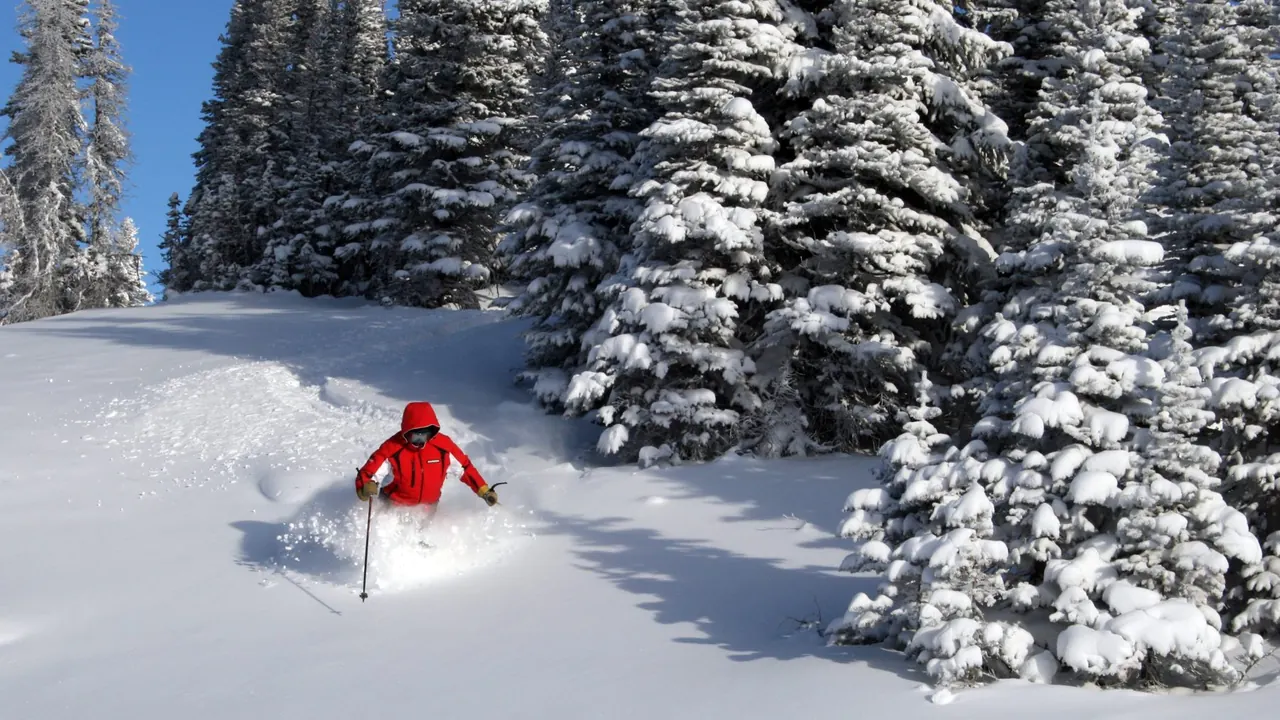
Jasper is the choice when the mountains are the whole point of the trip. The town sits inside a vast Rockies park, with elk on the verges, Maligne Canyon and Maligne Lake close by, the Icefields Parkway running south and skiing in winter. Come with a car and plan your days around trails, lakes and wildlife. Expect a small town with simple food and quiet evenings.
Choose Victoria for
- day trips
- getting around
- live music and the arts
Travellers who want a gentle, walkable city with the outdoors at its edge rather than in charge will be happier in Victoria. The Inner Harbour, the Royal BC Museum, local seafood and brewpubs, a night at the theatre and outings to Butchart Gardens or the Cowichan Valley fill a stay easily. Its mild winters make it a year-round city, and it works without a car.
Scoreboard
Twelve categories on one fixed scale from 0 to 100. The shaded stretch is the gap between the two.
Your match
Pick a travel style or drag the sliders, and both match scores follow your weighting.
Wins on nature and the outdoors with your weighting.
Wins on day trips and getting around with your weighting.
What matters to you?
Category by category
What the scores mean for a trip.
Beaches & swimming
Neither city is a beach destination, and in both the summer swim happens in a lake. Jasper's Lake Annette and Lake Edith have small sandy beaches with mountains behind them, but they are only warm enough in July and August.
Victoria adds a long shoreline to walk, with sheltered Willows Beach and pebble and driftwood along Dallas Road, but the strait is too cold for more than a paddle. For a real swim, locals head to Thetis Lake or the river pools at the Sooke Potholes.
Food & drink
Victoria is the better place to eat. Its cooking draws on Pacific seafood such as spot prawns and Dungeness crab, and on the farms and vineyards of the Saanich Peninsula and the Cowichan Valley. Add serious brunches, good coffee, taprooms, afternoon tea and Canada's oldest Chinatown for variety.
Jasper feeds hikers rather than food lovers: steak and burger houses, a brewpub, pizza and bakeries, with Alberta beef and bison as the local touch. Many visitors self-cater, and in summer the better tables book up quickly.
Culture & sights
The gap here is wide. In Jasper the sights amount to a short walk past the 1914 stone and timber information centre, the heritage railway station, a totem pole and a small museum about fur traders and the railway.
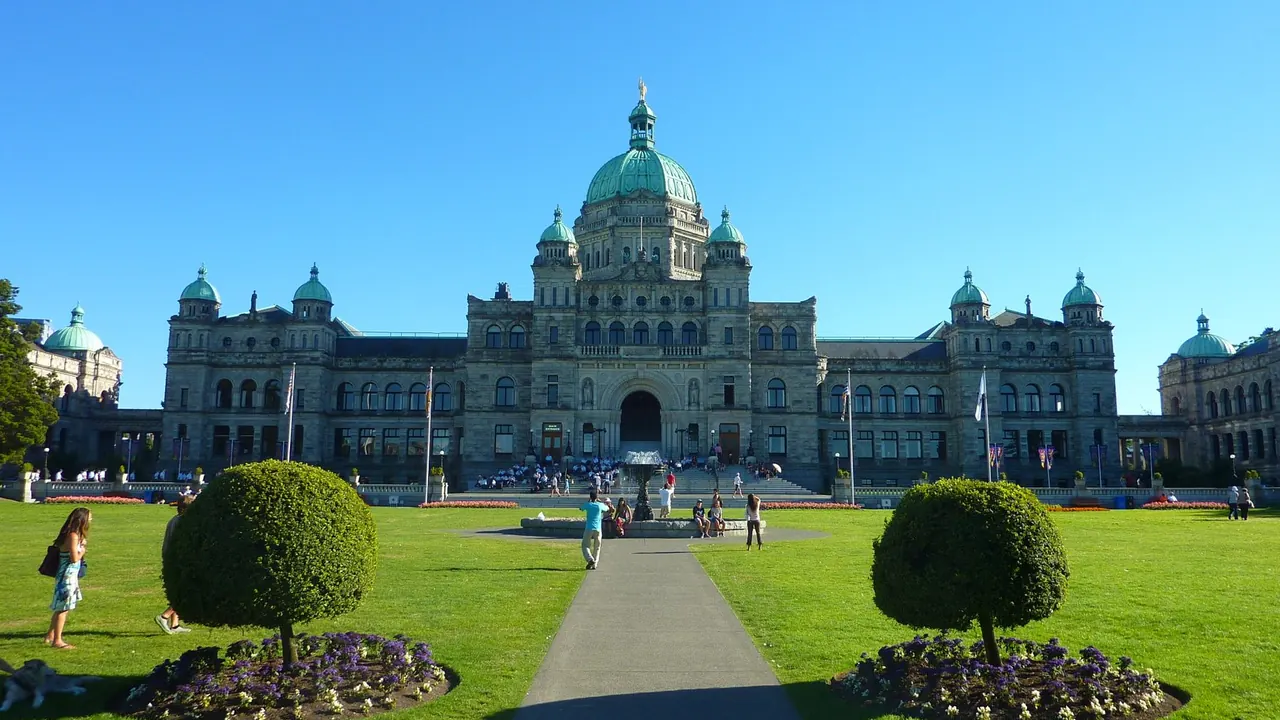
Victoria gives you a proper city to explore. There are the Parliament Buildings facing the harbour, the Royal BC Museum's First Nations collections, the carved poles of Thunderbird Park, Craigdarroch Castle and the Emily Carr House. It is still a small city, and two or three days cover it.
Nightlife
Both cities are quiet after dark, but Victoria has more to do. Its pubs, brewery taprooms and cocktail bars around Wharf Street and Lower Johnson make for a pleasant evening, and university students keep a small club scene going at weekends.
Evenings in Jasper mean a few pubs and a late bar or two, filled mostly with seasonal staff, and most visitors are in bed early. What Jasper has instead is the night sky, in one of the largest dark-sky preserves in the world.
Nature & outdoors
Both cities have the outdoors on the doorstep, but Jasper's is on another scale. It has glaciers, turquoise lakes and Rockies peaks, with bears, elk and bighorn sheep along the roads. Maligne Canyon is minutes from town, the Icefields Parkway leads to the Columbia Icefield, and winter brings skiing.
Victoria's nature is coastal and gentler. There are clifftop walks along Dallas Road, whale watching for orcas, easy sea kayaking, old-growth cedar at Goldstream and long car-free cycle trails. It has no high mountains within easy reach, but you can get outside in every month.
Day trips
Victoria makes a much better base for outings. Butchart Gardens is half an hour away, and the Cowichan Valley's wineries and the mural town of Chemainus are about an hour north. Ferries reach Salt Spring Island and its artists' studios, though the water crossings make days longer than the map suggests.
From Jasper, nearly every outing goes into the park itself. Hinton and Valemount are practical towns with little to see, and Banff and Lake Louise are too far for an easy return in a day.
Good for families
Victoria is the easier city with children. Beacon Hill Park has a petting farm and playgrounds, and the Royal BC Museum has a replica old town. The harbour has seaplanes and little ferries, there is whale watching for older children, and distances are short.
Jasper suits outdoorsy families with children old enough for walks. They can spot elk and bears, cross the bridges over Maligne Canyon and paddle at the lake beaches in summer. Long drives on winding roads and the lack of attractions built for children make it harder with toddlers.
Getting around
Victoria is far simpler without a car. Its main sights are all within a short walk of each other and harbour ferries hop between docks. Protected bike lanes and car-free trails lead out of town, and buses reach Butchart Gardens. Sooke and the Cowichan Valley still call for a car.
Jasper's town is only a few blocks across, and you can arrive on the transcontinental railway. But the lakes, canyons and trailheads lie along long valley roads served only by seasonal shuttles and tours, so in practice a car is essential.
Shopping & style
For an afternoon of browsing with something worth taking home, Victoria is the better bet by some way. Jasper's shopping fills its two main streets with outdoor gear and rental shops, park souvenirs and a few galleries of Canadian and Indigenous art and wildlife photography. That is enough to replace a forgotten fleece or pick up a gift.
Victoria's shops are small and independent rather than grand. The restored heritage storefronts of Lower Johnson Street hold local clothing labels and design shops, while Market Square and Chinatown add tea and curio stores. Specialist galleries sell Northwest Coast First Nations prints, carvings and jewellery. Second-hand bookshops add to the appeal, though you will find no luxury brands.
Affordability
Both are expensive, and Jasper more so. Rooms are scarce in a small town inside a national park, and fuel, car hire and a park pass add to the bill. Camping, self-catering and visiting in winter or the shoulder seasons are the ways to save.
Victoria's summer rooms are dear too, and whale watching and ferries add up. But the compact centre saves on transport, pub meals, food trucks and Chinatown's cheaper restaurants help, and room rates drop a lot from November to March.
Live music & performing arts
Victoria has a real arts calendar and Jasper has almost none. The Royal Theatre and the McPherson Playhouse host the symphony, opera and ballet, the Belfry stages contemporary Canadian theatre, and summer brings the jazz and Fringe festivals and the symphony's concert on a barge in the harbour. In Jasper, live performance means an occasional guitarist in a pub and a few events during the seasonal festivals.
Wellness & relaxation
The two offer rest in different ways. Jasper has the hot springs: Miette Hot Springs, about an hour east, has outdoor pools in a steep forested valley, open in the warmer months. The town's quiet mornings and dark skies do the rest.
Victoria has no springs, but it makes slowing down easy, with gardens, seafront walks in Oak Bay and James Bay, long afternoon teas and spas in hotels and around town. Its mild climate keeps that slow pace pleasant out of season.
When should you go?
Pick your month. The climate figures are measured averages, not a forecast.
Jasper in July
Victoria in July
Daytime high, °C
Rainfall in the month, mm
Where the figures come from
Victoria's sunshine is measured 87 km from the centre, at Vancouver International Airport.
Temperature and rainfall are climate normals, averaged over the years shown. Jasper: 1991-2020 normals, Jasper Warden (7.2 km from centre). Victoria: 1991-2020 normals, Victoria Gonzales CS (3.6 km from centre).
Jasper has two good seasons and little in between. July and August are the warm months, reaching around 24°C at best. That is when Lake Annette and Lake Edith are warm enough to swim and the high trails are clear. June is the wettest month, though the showers are modest. From November to March daytime highs sit near or below freezing, falling to -3°C in December. That is too cold for lingering in the streets but right for skiing and frozen canyon walks. Spring and autumn are cool and the weather changes quickly in the high country.
Victoria's year is far more even. Summers are dry, sunny and mild, peaking around 21°C, with July the brightest month. The sea never warms past about 12°C, so swimming means the lakes. The rain sets in during October and is heaviest in November at 116mm, with short grey days through the winter. Even then it rarely gets cold enough to put you off a walk. April to September is the best time to go, and the winter still works for a city stay.
Which traveller are you?
On an outdoors trip, Jasper is the clear pick. There is wildlife on the valley roads, a hike up to the hanging glacier on Mount Edith Cavell, paddling and rafting in summer and skiing at Marmot Basin in winter. Its landscapes are far bigger than Victoria's coast.
For a culture and arts trip, Victoria wins easily. The Parliament Buildings, the Royal BC Museum, Craigdarroch Castle and the Emily Carr House fill a few days, and the Royal Theatre and the Belfry offer evening performances that Jasper does not have.
On a food and nightlife trip, Victoria again has more to offer. Local salmon, crab and oysters, long-established taprooms and cocktail bars in old brick buildings beat Jasper's steak houses and early-closing pubs, though neither city keeps you out late.
Before you go
| Measure | Jasper | Victoria |
|---|---|---|
| Official language | French, English | French, English |
| Currency | Canadian Dollar (CAD) | Canadian Dollar (CAD) |
| Sockets | AB120 V, 60 Hz | AB120 V, 60 Hz |
| Driving side | Right | Right |
| Time zone | UTC-7, UTC-6 in summer | UTC-8, UTC-7 in summer |
| Emergency number | 911 | 911 |
| Elevation | 1,060 m | 23 m |
| Main airport | Edmonton International Airport (YEG)304 km from centre52 non-stop destinations | Victoria International Airport (YYJ)25 km from centre16 non-stop destinations |
| Public holidays this year | 13 days | 11 days |
By the numbers
| Measure | Jasper | Victoria |
|---|---|---|
| City population | 4,738 | 91,867 |
| People per km² | 5 | 4,711 |
| Museums within 10 km | 1 | 6 |
| UNESCO World Heritage sites within 50 km | 0 | 0 |
| Swim season, months above 21 °C | - | None |
Where else could you go?
Every comparison below shares a destination with this one, so you can follow Jasper or Victoria somewhere new.