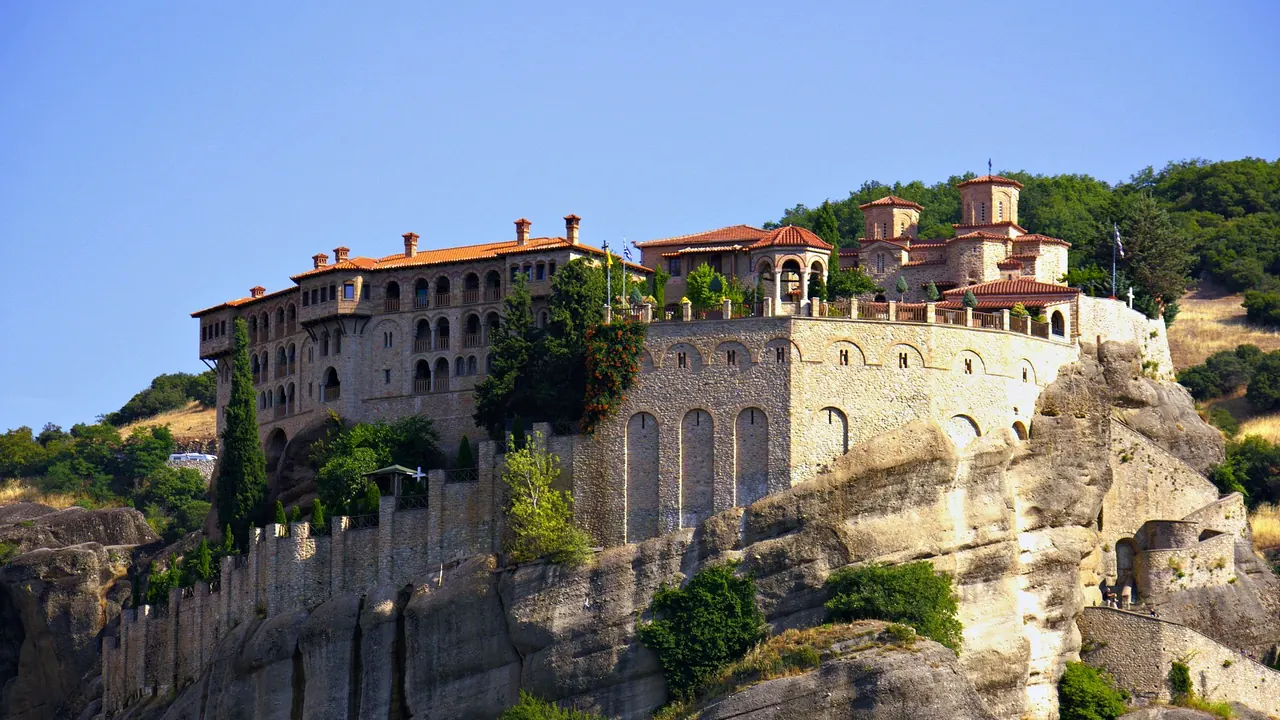
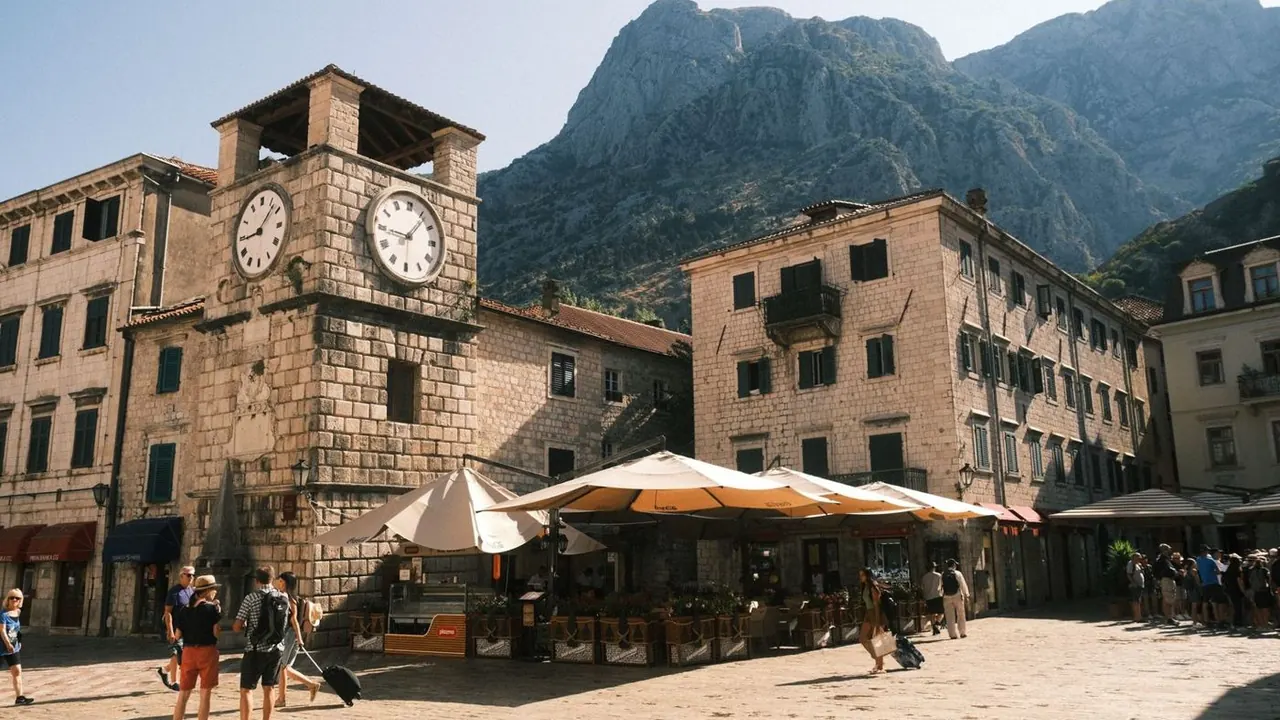
Photos: Kalambaka by José Barbosa, Pexels License; Kotor by Muhammed Fatih Beki, Pexels License.
Kalambaka or Kotor?
Our verdict in twelve categories, each scored against the same fixed benchmark cities, and the climate month by month, so you can choose for your trip.
Choose Kalambaka for
- prices
- wellness
- culture and sights
Kalambaka is for travellers who come for the Meteora monasteries and the rocks they stand on. It suits walkers, climbers and anyone content with early nights and hearty taverna food. Of the two it is the cheaper and quieter stay. It lies far inland, though, so it works best as a stop of two or three nights on a longer route through mainland Greece.
Choose Kotor for
- beaches
- nightlife
- day trips
If you want water as well as mountains, pick Kotor. The fjord-like bay gives you swimming from the jetties, boat trips to Perast and a short run to the sandy beaches near Budva, and the villages along the shore make it the better base for day trips. Evenings are also livelier, with terraces inside the walls and Budva's clubs nearby. The price is crowds at midday in summer and higher rates in the old town.
Scoreboard
Twelve categories on one fixed scale from 0 to 100. The shaded stretch is the gap between the two.
Your match
Pick a travel style or drag the sliders, and both match scores follow your weighting.
Wins on prices and wellness with your weighting.
Wins on beaches and nightlife with your weighting.
What matters to you?
Category by category
What the scores mean for a trip.
Beaches & swimming
Kalambaka has no beach. Swimming means a hotel pool or a cold river in the Pindos, and the coast is a separate stage of the trip.
Kotor clearly wins, though its own shoreline is concrete platforms and narrow pebble strips along the warm, sheltered inner bay. For sand and clearer water you go over the hill to Jaz, Budva and the pink pebbles near Sveti Stefan, or round to the rocky coves of the Lustica peninsula.
Food & drink
Neither town is a food destination, but Kotor's table is broader. Kalambaka serves the grilled lamb and pork, bean soups, pies and tsipouro of central Greece, often with a sunset view of the pillars, and the menu barely changes from one taverna to the next.
In Kotor the bay adds mussels, octopus and black cuttlefish risotto, the mountains add Njegusi ham and sharp cheese, and the red Vranac goes with both. The green market outside the walls is worth a morning. The best meals are in the konobas of Dobrota and Perast, since the terraces in the old town's squares are uneven.
Culture & sights
The two are about level, but the sights are of different kinds. Kalambaka's heritage stands outside the town, on top of the rocks: six working monasteries with frescoed churches, refectories and icon collections, reached by rock-cut steps. Modest dress is required, and the plain modern town below adds only the frescoed Byzantine church of the Dormition.
In Kotor the town itself is the monument. The UNESCO-listed walled triangle of marble lanes has the 12th-century Cathedral of St Tryphon, the palazzi of seafaring families and the Maritime Museum, with the fortress walls climbing the cliff above. Both are covered in about two days.
Nightlife
Kotor gives you more after dark. In summer a few bars inside the walls stay open late and there is a small club scene, and Budva's seafront clubs, which run until dawn, are close enough for a night out.
Kalambaka goes to bed early. An evening means a long dinner and a drink on the central square, and for anything livelier you drive half an hour to Trikala's student bars.
Nature & outdoors
Both settings are outstanding, and both are best walked in spring or autumn. At Kalambaka the scenery is rock and forest. The pillars rise around 400m over the plain, monks' footpaths run through oak woods between them, and the Pindos beyond has fir forests, rafting in the Aspropotamos valley and small winter ski slopes near Metsovo.
Kotor's landscape is mountain meeting sea. Limestone walls rise over 1,000m straight from the bay, the Ladder of Kotor climbs from the town gates towards Lovcen National Park, and a kayak lets you see the mountains close in from the water.
Day trips
Kotor has more within easy reach, much of it along one bay. You can see Perast and its island church, Herceg Novi, Budva's old town and Sveti Stefan, then go inland over Lovcen to Cetinje, with Dubrovnik and the cliff monastery of Ostrog for longer days.
Kalambaka's outings are fewer and more spread out. They include Trikala's Varousi quarter and castle, the stone village of Metsovo, the lakeside castle quarter of Ioannina and the edge of Zagori, and you will want a car for nearly all of them.
Good for families
Kalambaka's monasteries mean long flights of steps and hushed rooms, which wear on small children. Older ones can walk the trails among the giant rocks or try a beginners' climb, but little else in either town is made for young visitors.
Kotor gives children a car-free old town full of street cats, calm water off the jetties and a boat trip to Perast's island church. The fortress climb is hard work in summer heat.
Getting around
Kotor is slightly easier, mostly because its sights are close together. The flat, car-free old town takes minutes to cross, water taxis link some of the bay villages, and Tivat airport is a short drive away. Buses around the bay are infrequent, though, and the single road jams with traffic in summer.
Kalambaka is simple to reach by rail from the Athens to Thessaloniki line, and the town itself is easy on foot. The monasteries are several kilometres up a winding road with few buses, so most visitors hike up for an hour or use a car, a taxi or a tour.
Shopping & style
Kalambaka's shopping is one street of icons, carvings and postcards, along with honey, herbs and tsipouro. The monasteries sell their own religious items.
Kotor has slightly more to buy. Alongside the souvenirs you will find silver filigree, lace and coral jewellery, a few galleries, and delicatessens selling Vranac and Njegusi ham. For brand-name shops, people go to the marina at Tivat.
Affordability
Kalambaka is the cheaper stay. Guesthouses and taverna meals are modestly priced, and costs climb mainly at the hotels facing the rocks and over Orthodox Easter. Car hire and guided tours are the costs that add up.
Kotor costs more, especially in July and August, when hotels and terrace restaurants inside the walls charge resort rates. An apartment in Dobrota or Muo and a visit in May, June or September bring it closer to Kalambaka.
Live music & performing arts
Kotor has a seasonal programme and Kalambaka has almost nothing. In summer Kotor's churches and squares host classical recitals and choirs, and the carnival and Boka Night bring masked parades and lit boats onto the bay.
In Kalambaka, the closest thing to music is a taverna musician or a summer folk festival. Byzantine chant at a monastery service is worship and should be approached as such.
Wellness & relaxation
Neither has a bathing tradition, and spas in both are limited to resort hotels. The calm is different in each. Kalambaka is quiet all day and sleeps early, with slow dawns and dusks over the rocks.
Kotor's peace has to be timed around the crowds: early mornings on the water and long lunches in the shore villages, away from the old town at midday in summer.
When should you go?
Pick your month. The climate figures are measured averages, not a forecast.
Kalambaka in July
Kotor in July
Daytime high, °C
Rainfall in the month, mm
Where the figures come from
Kalambaka's temperatures are measured 68 km from the centre, at Larissa Airport.
Kalambaka's station stands 164 m below the city centre, so the centre is likely a little cooler than the figures say.
Kalambaka has no rain gauge within 25 km of the centre, so its rainfall comes from a gridded climate dataset read at the city rather than from a gauge further away.
Kotor has no rain gauge within 25 km of the centre, so its rainfall comes from a gridded climate dataset read at the city rather than from a gauge further away.
Kotor's sunshine is measured 42 km from the centre, at Podgorica-Grad.
Temperature and rainfall are climate normals, averaged over the years shown. Kalambaka: 1991-2020 normals, Larissa Airport (68.1 km from centre). Kotor: 1991-2020 normals, Tivat (4.2 km from centre).
Both places are at their best in late spring and early autumn, but the summer and the winter differ. Kalambaka has the hotter, drier inland summer, with afternoons around 34°C in July, too hot for the exposed trails between the rocks. April, May, September and October are the months for walking and climbing there. Winters are cold and grey, with the most rain in December.
Kotor is a little milder in midsummer, and from June to September the bay is warm enough for an easy swim, reaching about 26°C in August. Its weakness is rain. From October the bay turns very wet, and November brings around 202mm, roughly twice what Kalambaka gets in its wettest month. That makes late autumn and winter a poor time to go. May, June and September give the best balance of swimming, sunshine and walking weather.
Which traveller are you?
On a trip with a tight budget, Kalambaka goes further. Family guesthouses and generous taverna meals cost less, and the monasteries charge only small entry fees. Kotor is fair value away from the walls, but rooms inside them cost resort rates in summer.
For a beach and sun trip, Kalambaka is the wrong base, because the nearest sea is more than two hours' drive away. Kotor has warm bay swimming off its jetties, and the sand at Jaz is about half an hour away.
On a food and nightlife trip, Kotor gives you more. Kalambaka means hearty grills and tsipouro, then an early night, unless you drive to Trikala. Kotor adds mussels, octopus and Vranac, late summer bars inside the walls and Budva's clubs nearby.
Before you go
| Measure | Kalambaka | Kotor |
|---|---|---|
| Official language | Greek | Montenegrin |
| Currency | Euro (EUR) | Euro (EUR) |
| Sockets | CF230 V, 50 Hz | CF230 V, 50 Hz |
| Driving side | Right | Right |
| Time zone | UTC+2, UTC+3 in summer | UTC+1, UTC+2 in summer |
| Emergency number | 112 | 112 |
| Elevation | 237 m | 10 m |
| Main airport | Thessaloniki Macedonia International Airport (SKG)146 km from centre90 non-stop destinations | Tivat Airport (TIV)5 km from centre42 non-stop destinations |
| Public holidays this year | 15 days | - |
By the numbers
| Measure | Kalambaka | Kotor |
|---|---|---|
| City population | 8,372 | 562 |
| People per km² | 4,925 | - |
| Museums within 10 km | 0 | 3 |
| UNESCO World Heritage sites within 50 km | 1 | 3 |
| Swim season, months above 21 °C | - | 5 months |
Where else could you go?
Every comparison below shares a destination with this one, so you can follow Kalambaka or Kotor somewhere new.