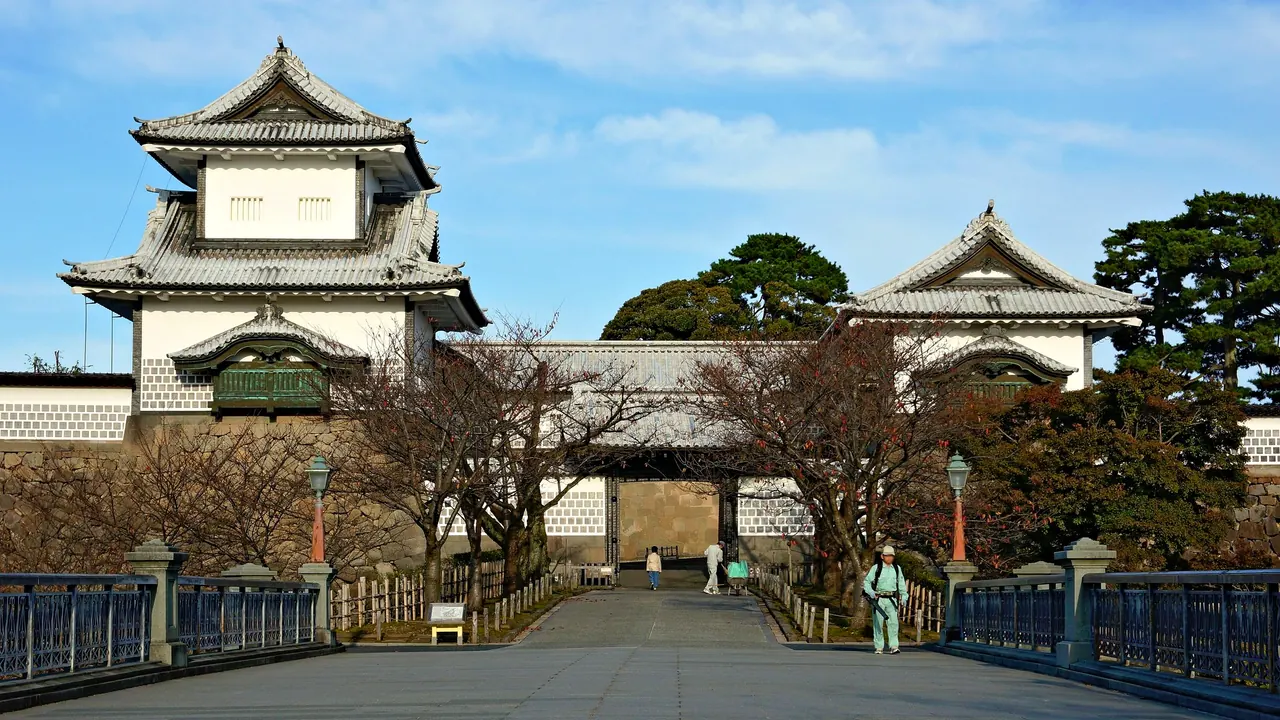
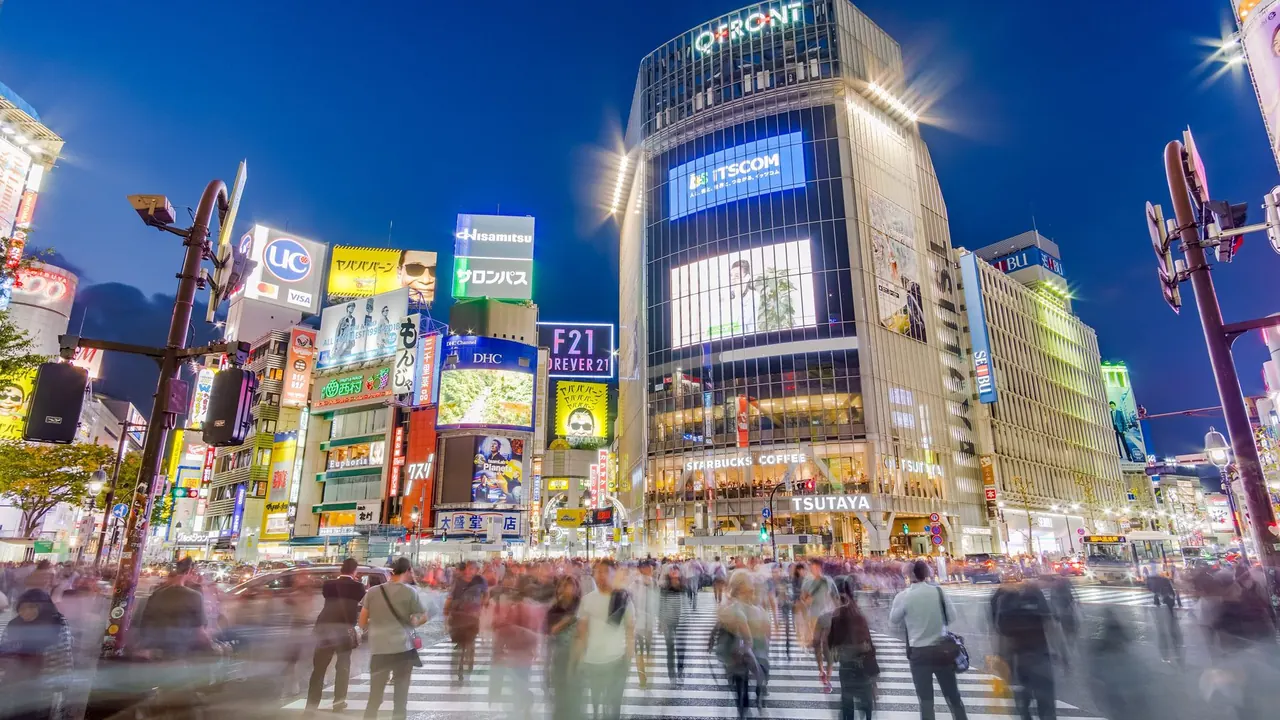
Photos: Kanazawa by 663highland, CC BY 2.5, cropped; Tokyo by Benh LIEU SONG, CC BY-SA 2.0, cropped.
Kanazawa or Tokyo?
Our verdict in twelve categories, each scored against the same fixed benchmark cities, and the climate month by month, so you can choose for your trip.
Choose Kanazawa for
- prices
Kanazawa suits a traveller who wants old Japan at a walking pace: samurai lanes in Nagamachi, the latticed teahouses of Higashi Chaya, Kenroku-en early in the morning, and a craft tradition of gold leaf, Kutani porcelain and lacquer you can buy close to the makers. It is smaller, calmer and a little cheaper to sleep in. Two or three days cover it, and the thatched villages of Shirakawa-go make the obvious outing.
Choose Tokyo for
- nightlife
- live music and the arts
- shopping
Tokyo is the stronger choice for almost everything else. It eats, drinks, shops and performs on a scale no regional city comes near, from Golden Gai's tiny bars to Kabuki in Ginza and the museums of Ueno. Its rail network makes the city and its day trips effortless. Families, first-time visitors and anyone who wants full evenings will find far more here.
Scoreboard
Twelve categories on one fixed scale from 0 to 100. The shaded stretch is the gap between the two.
Your match
Pick a travel style or drag the sliders, and both match scores follow your weighting.
Wins on prices with your weighting.
Wins on nightlife and live music and the arts with your weighting.
What matters to you?
Category by category
What the scores mean for a trip.
Beaches & swimming
Neither city is a reason to pack swimwear, and in both the swimming season is really just July and August. Tokyo's beach option makes the better outing. The Shonan coast at Kamakura and Enoshima is about an hour away by train, and a swim there fits easily alongside temples and a small seaside town.
Kanazawa's sand is closer, at Uchinada and along the drivable beach at Chirihama, and the water is just as warm in August. Outside summer, though, that coast is grey and windswept, and there is little to do there beyond the beach itself.
Food & drink
Kanazawa is a fine regional food city with a clear identity. It has the seafood counters of Omicho Market, sweet shrimp and winter snow crab, Kaga dishes such as jibuni duck stew, wagashi with matcha in the chaya teahouses and sake from the Kaga plain. A few days of eating covers it well.
Tokyo is in a different category. It runs from station soba counters to the most refined sushi and kaiseki, with specialists that have made one dish for decades and French and Italian cooking of real class. You could eat for weeks without repeating yourself.
Culture & sights
Kanazawa has something Tokyo cannot offer: an Edo-period townscape that survived the war. Kenroku-en, the castle walls, the wooden teahouses of Higashi Chaya and the samurai canals of Nagamachi all lie within a short walk of one another. The 21st Century Museum and the ninja temple round out a few rich, unhurried days.
Tokyo has the greater depth overall. A great earthquake and wartime bombing left its heritage scattered across a modern city, but Senso-ji, Meiji Jingu and the Imperial Palace are still major sights. The museums of Ueno, led by the Tokyo National Museum, hold collections that no regional city can match.
Nightlife
An evening in Kanazawa means a long dinner and a sake bar or two in Katamachi and Kigura-machi, perhaps with a drink in an old wooden house by the river. There are hardly any clubs.
Tokyo is the opposite. Hundreds of tiny themed bars are packed into Golden Gai and stacked floor upon floor across whole districts, smoky yakitori alleys sit beside the stations, and clubs in Shibuya and Roppongi keep going until the first morning train.
Nature & outdoors
Both cities make you travel for real mountains, but Tokyo makes it easier. Mount Takao is about an hour away by train, and the Okutama gorges lie within Tokyo's own boundary. Hakone and the Fuji Five Lakes bring views of Mount Fuji within about two hours, and Fuji itself can be climbed in summer.
Kanazawa has riverside paths along the Sai and Asano and low hills at its edge. Further out, Mount Hakusan and the terraced coast of the Noto Peninsula are fine country, but most of it needs a car. The long, snowy winters suit skiers more than walkers.
Day trips
Kanazawa's outings are memorable and quite unlike Tokyo's. There are the thatched gassho farmhouses of Shirakawa-go and Gokayama, Takayama's merchant streets, the Kaga hot-spring towns and the Zen monastery of Eihei-ji. Several of them, though, mean a long bus ride or a full day.
Tokyo offers more choice for less effort. Kamakura's Great Buddha and Zen temples, Nikko's Toshogu shrine and the harbour at Yokohama are all simple rail trips. Kawagoe, Sawara, Hakone and Karuizawa fill further days.
Good for families
Both cities share the Japanese basics that make travelling with children easy: safe, clean streets and spotless public toilets. Beyond that the gap is wide.
In Kanazawa, the 21st Century Museum's playful installations, the garden lawns and the ninja temple's trick doors are the highlights. The zoo, the beaches and the dinosaur museum are all outside the city. Tokyo can fill a whole week of days planned around children, from Ueno Zoo and the bay aquariums to toy and character shops in Akihabara and Ikebukuro, and its food pleases fussy eaters.
Getting around
Kanazawa's main sights lie in a compact band about 2km from the station, so walking does most of the work. Beyond that there are only buses, and the loop lines get crowded, though a bike-share helps outside winter.
Tokyo has the densest rail and metro network in the world. It runs to the minute, is signed in English and works on a single card, so almost every sight is a short walk from a station. The catches are crammed rush hours and a last train around midnight.
Shopping & style
Kanazawa is worth a shopping stop for one thing, its crafts. Gold leaf, Kutani porcelain, Kaga yuzen silk and Ohi tea bowls are made here, and the prefectural craft centre sells serious work. Mainstream fashion, though, goes little further than Tatemachi and a few department stores.
Tokyo covers everything else. It has Ginza's luxury houses and Mitsukoshi, vintage clothing in Shimokitazawa, electronics in Akihabara, knives along Kappabashi and books in Jimbocho, and its craft shops sell lacquer and ceramics of real quality too.
Affordability
Kanazawa is the slightly cheaper stay, mainly because of where you sleep. Its station business hotels are plentiful and fairly priced, while central Tokyo rooms are small and costly, especially in cherry-blossom season and Golden Week. Everyday noodles, set lunches and conveyor-belt sushi are good value in both.
The costs that add up are different. In Kanazawa they are snow crab, kaiseki dinners and Shinkansen or Shirakawa-go fares. In Tokyo they are taxis, cocktail bars and fine dining, though lunch menus soften that last one.
Live music & performing arts
Kanazawa's stage life is small but genuine. There is Noh at the prefectural theatre, geisha dance and shamisen in the chaya teahouses, and the chamber season of the Orchestra Ensemble Kanazawa. Plan an evening around the programme, because there is little else.
Tokyo has a stage for almost any taste on any night. The Kabuki-za sells single acts, the Takarazuka Revue puts on lavish musicals, and Suntory Hall and the NHK Symphony anchor a deep classical scene. Hundreds of live houses in Shimokitazawa and Koenji host bands nightly.
Wellness & relaxation
Both cities make bathing part of a stay, but Tokyo offers more choice. It has hundreds of neighbourhood sento, some fed by dark mineral spring water, and large bathing complexes with saunas and outdoor pools. Hakone's onsen inns are about ninety minutes away.
Kanazawa's appeal is a quieter one. Yuwaku Onsen's streamside ryokan are half an hour into the hills, and the Kaga hot-spring towns make an easy overnight stay. In the city itself, mornings in Kenroku-en and matcha in a teahouse set an unhurried pace that Tokyo only finds in its gardens and backstreets.
When should you go?
Pick your month. The climate figures are measured averages, not a forecast.
Kanazawa in July
Tokyo in July
Daytime high, °C
Rainfall in the month, mm
Temperature and rainfall are climate normals, averaged over the years shown. Kanazawa: 1991-2020 normals, Kanazawa (3.2 km from centre). Tokyo: 1991-2020 normals, Tokyo (3.6 km from centre).
Spring and autumn are the best seasons in both cities. April, May and October are mild enough for long days on foot, with blossom or red leaves in the gardens. Summer is hot and humid in each, with August highs around 31°C in Kanazawa and 32°C in Tokyo. That is also the only time the sea is warm enough for a swim, reaching about 27°C off Kanazawa's coast.
Winter is where the two part ways. From November Kanazawa turns grey, wet and snowy, with about 301mm of rain and snow in December and very little sunshine. It rewards visitors who come for snow on the gardens rather than easy sightseeing. Tokyo's winter is cool, dry and bright, with around 60mm of rain in January and plenty of sun, which makes it a good season for walking the streets. Tokyo's own wettest spell comes in September and October.
Which traveller are you?
For a food and nightlife trip, Tokyo is in another league. Its specialist counters, depachika food halls and yakitori alleys run endlessly deep. After dinner come Golden Gai's tiny bars or Shibuya's clubs, while Kanazawa's evenings end quietly in a Katamachi sake bar.
On a family trip with children, Tokyo is far easier and fuller. Disneyland, the Ghibli Museum, aquariums and Miraikan fill days, and stations have lifts and baby rooms. Kanazawa is just as safe, but its gardens and teahouses can feel slow to young children.
On a tight budget, Kanazawa makes the money go a little further. A short stay covers its sights, which are close enough to walk between rather than ride buses, and lunch can be a plain counter near the station. Keep snow crab for one evening's treat.
Before you go
| Measure | Kanazawa | Tokyo |
|---|---|---|
| Official language | Japanese | Japanese |
| Currency | Yen (JPY) | Yen (JPY) |
| Sockets | AB100 V, 50 and 60 Hz depending on the region | AB100 V, 50 and 60 Hz depending on the region |
| Driving side | Left | Left |
| Time zone | UTC+9 | UTC+9 |
| Emergency number | Police 110, fire 119 | Police 110, fire 119 |
| Elevation | 28 m | 6 m |
| Main airport | Komatsu Airport / JASDF Komatsu Air Base (KMQ)29 km from centre7 non-stop destinations | Tokyo Haneda International Airport (HND)18 km from centre98 non-stop destinations |
| Public holidays this year | 16 days | 16 days |
By the numbers
| Measure | Kanazawa | Tokyo |
|---|---|---|
| City population | 462,479 | 14,264,798 |
| People per km² | 989 | 6,501 |
| Museums within 10 km | 27 | 192 |
| UNESCO World Heritage sites within 50 km | 1 | 1 |
| Swim season, months above 21 °C | 4 months | 4 months |
Where else could you go?
Every comparison below shares a destination with this one, so you can follow Kanazawa or Tokyo somewhere new.