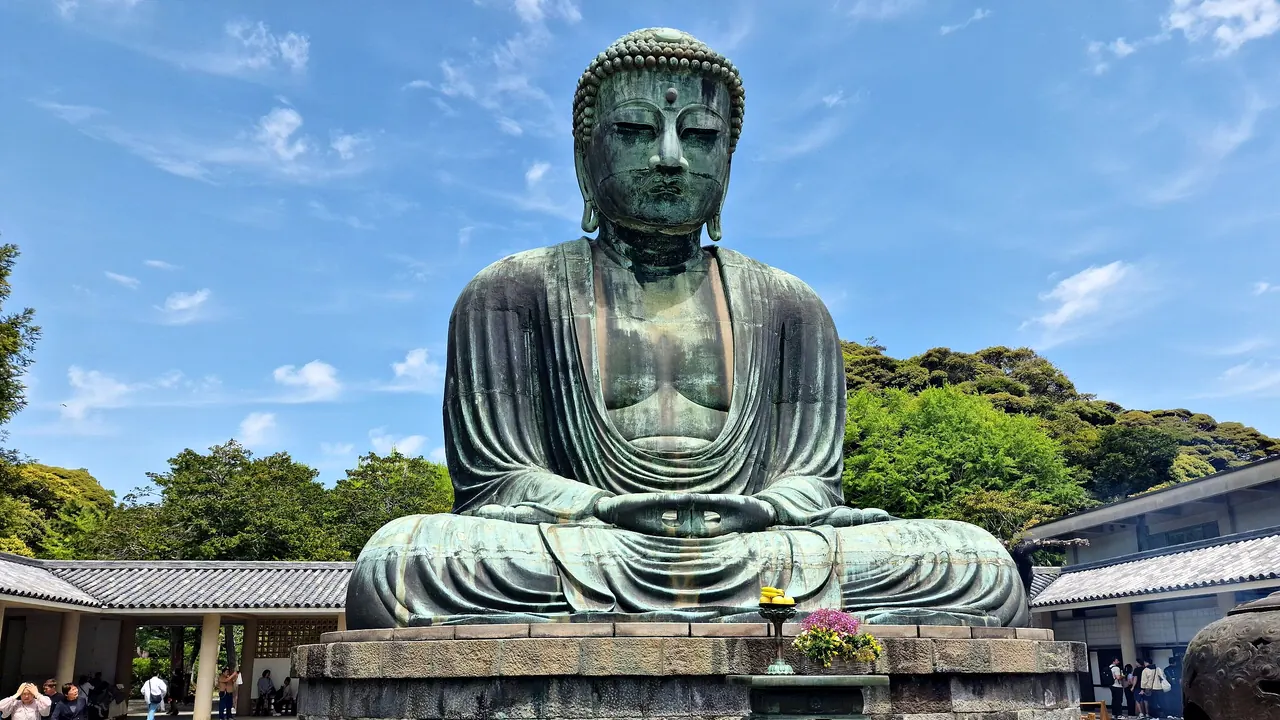
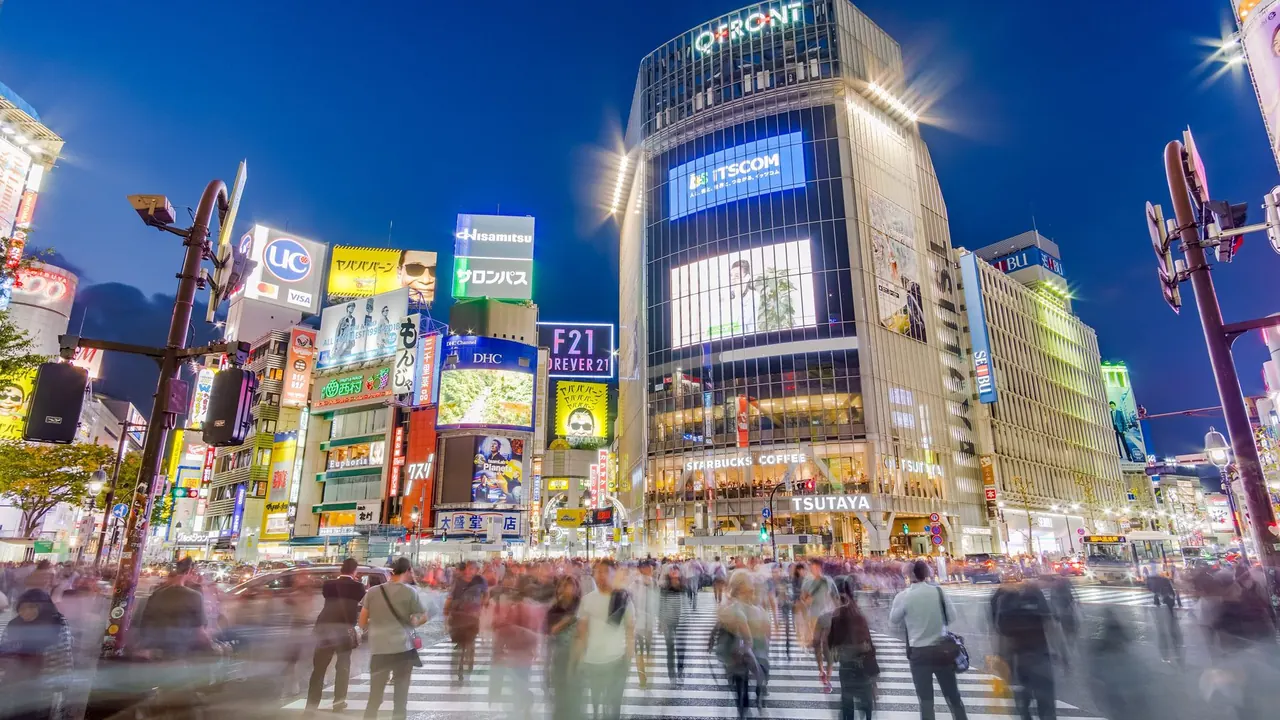
Photos: Kamakura by Anagoria, CC BY-SA 4.0, cropped; Tokyo by Benh LIEU SONG, CC BY-SA 2.0, cropped.
Kamakura or Tokyo?
Our verdict in twelve categories, each scored against the same fixed benchmark cities, and the climate month by month, so you can choose for your trip.
Choose Kamakura for
- beaches
Kamakura suits a slower trip built around temples, trails and the sea. Its Zen temples, the Great Buddha and the wooded ridge walks sit inside a small town you can cross on foot, and in summer the beach is a few minutes from the station. It is for travellers who are happy with quiet evenings, or who want a calm base with Tokyo an hour up the line.
Choose Tokyo for
- nightlife
- live music and the arts
- shopping
For almost everything else, Tokyo is the stronger choice. Eating, shopping, nightlife and the stage are on a different scale, the museums go deeper, and its rail network and ease with children make it the better pick for families and first-time visitors to Japan. What it lacks is a beach, and the one Tokyo uses is Kamakura's.
Scoreboard
Twelve categories on one fixed scale from 0 to 100. The shaded stretch is the gap between the two.
Your match
Pick a travel style or drag the sliders, and both match scores follow your weighting.
Wins on beaches with your weighting.
Wins on nightlife and live music and the arts with your weighting.
What matters to you?
Category by category
What the scores mean for a trip.
Beaches & swimming
Kamakura has the sand itself. Yuigahama and Zaimokuza are a walk from the station, the beaches facing Enoshima are along the Enoden line, and Zushi and Hayama to the east are quieter. In July and August that makes it easy to swim before or after the temples.
Tokyo's own bay shore at Odaiba and Kasai is for strolling, so a Tokyo visitor who wants to swim ends up on the same Shonan sand after an hour on the train. Neither is a beach destination: the sand is grey and volcanic in both cases, and summer weekends are crowded.
Food & drink
Kamakura eats well within a narrow range: whitebait over rice near the beach, shojin ryori around the Zen temples, snacks along Komachi-dori and Kamakura vegetables at the Renbai market. It has little choice in the evening.
Tokyo is a reason to travel to Japan on its own, running from standing soba counters in stations and yakitori under the Yurakucho tracks to sushi and kaiseki counters, the depachika food halls and the Tsukiji outer market. Even Kamakura's own visitors make the trip up the line for serious sushi, ramen or an izakaya crawl.
Culture & sights
Kamakura's heritage is concentrated and coherent. The open-air Great Buddha, Tsurugaoka Hachimangu and the great Zen temples of Engaku-ji and Kencho-ji all date from the age of Japan's first warrior government, the museums are modest, and two or three days see it well.
Tokyo offers more overall, and its strength is the museums, led by the Tokyo National Museum in Ueno, along with Senso-ji, Meiji Jingu and the Imperial Palace moats. Because so much was rebuilt after 1923 and 1945, the feeling of walking through one historic town belongs to Kamakura, while depth and range belong to Tokyo.
Nightlife
Kamakura goes quiet once the day-trippers leave, with a few izakaya and small bars near the station and nothing that runs late. Tokyo is the opposite, with the two hundred tiny bars of Golden Gai, izakaya around every major station and clubs in Shibuya and Roppongi that keep going until the first morning trains. If you stay in Kamakura, a night out means an hour on the train each way and keeping an eye on the last departure.
Nature & outdoors
There is a similar amount of nature on offer, but it comes in different forms. In Kamakura it starts at the door: the Daibutsu and Tenen trails link the temples through wooded hills past cave tombs, and the bay has surfing at Shichirigahama and paddling at Zaimokuza.
Inside Tokyo, the green space means parks such as Shinjuku Gyoen and Yoyogi, and real hiking is a train ride out, to Mount Takao, the Okutama gorges or the Fuji Five Lakes. Tokyo gets you to steeper mountains, while Kamakura puts forest and sea within walking distance.
Day trips
Both are excellent bases on the same rail network, and each is the other's favourite outing. Kamakura's strengths lie close by: Enoshima on the Enoden, Yokohama in under half an hour, the fishing port of Misaki on the Miura Peninsula, and Odawara and Hakone to the west.
Tokyo reaches further north and inland, to the Toshogu shrines of Nikko, the clay-walled merchant houses of Kawagoe, the Edo-period canals of Sawara and, by shinkansen, Karuizawa. Choose Kamakura for the coast and Hakone, and Tokyo for a wider spread across the region.
Good for families
Both have Japan's safety and cleanliness, but Tokyo gives children far more to do and makes daily life easier. Disneyland and DisneySea, the Ghibli Museum, Ueno Zoo and Miraikan can fill a week, and stations have lifts and baby rooms.
Kamakura works well for two or three days: climbing inside the Great Buddha, riding the Enoden along the sea, the aquarium at Katase and summer paddling. Long temple staircases, hill trails that defeat a stroller and weekend crowds make it harder work with small children.
Getting around
Kamakura is a small town you can walk, with the Enoden and a single JR stop covering the rest, but valleys, steps and weekend gridlock slow it down. Tokyo is easier despite its size: the densest rail network in the world, signs in English and one rechargeable card put almost every sight a short walk from a station. Tokyo's hard parts are its giant stations and rush hour, and Kamakura's are a packed Enoden and the hills.
Shopping & style
Kamakura is good for an afternoon of browsing on Komachi-dori and the quieter Wakamiya-oji, for sweets, tenugui cloths, ceramics, good knives and the lacquered Kamakura-bori woodwork. Tokyo is a shopping destination in itself, from Ginza's department stores and Omotesando's flagship stores to the vintage of Shimokitazawa, the knives of Kappabashi and the bookshops of Jimbocho. Anyone travelling with a shopping list should save it for Tokyo.
Affordability
Neither is cheap to sleep in, and Tokyo comes out a little kinder overall. Kamakura has few hotels and competes for them with Tokyo weekenders, though temple fees, train fares and soba lunches are fair.
Tokyo's business hotels offer a sensible middle ground, and its cheap ramen, set lunches and convenience-store meals make a budget go further than Kamakura's small choice of places to eat allows. Many Kamakura visitors save by sleeping in Yokohama or Fujisawa.
Live music & performing arts
Kamakura's stage is mostly its shrine calendar, with traditional dance at the spring festival and yabusame horseback archery in autumn, plus occasional performances at a small Noh theatre. On an ordinary evening there is little to see.
Tokyo has a performance every night: kabuki at the Kabuki-za with single-act tickets, the Takarazuka Revue, the NHK Symphony at Suntory Hall, opera at the New National Theatre and bands in the live houses of Shimokitazawa and Koenji. If a festival falls during your stay, Kamakura is worth timing for. Otherwise the stage belongs to Tokyo.
Wellness & relaxation
Kamakura's calm comes from stillness rather than bathing: zazen sessions at Engaku-ji and Kencho-ji and the moss gardens around Jomyo-ji and Zuisen-ji, best on weekday mornings. It has no hot springs of its own.
Tokyo adds the bath to its temple gardens, with hundreds of neighbourhood sento, some fed by natural hot-spring water, and large complexes with saunas and outdoor pools. For a true onsen inn, both send you to Hakone, and many of Tokyo's baths turn away guests with tattoos.
When should you go?
Pick your month. The climate figures are measured averages, not a forecast.
Kamakura in July
Tokyo in July
Daytime high, °C
Rainfall in the month, mm
Where the figures come from
Kamakura's sunshine is measured 45 km from the centre, at Tokyo.
Temperature and rainfall are climate normals, averaged over the years shown. Kamakura: 1991-2020 normals, Yokosuka Fwf (11.6 km from centre). Tokyo: 1991-2020 normals, Tokyo (3.6 km from centre).
Spring and autumn are the best seasons for both. April and May bring easy walking weather, and November is mild and drier after September and October, the wettest months, when Tokyo gets up to 237mm. June is grey and rainy, with the least sunshine of the year. Winter is cool, around 11°C by day, but dry and sunny, which makes it a good time for temples and gardens without the heat.
Only July and August are warm enough for the sea, when Sagami Bay reaches about 26°C. In those months Kamakura stays slightly cooler than Tokyo, where August reaches 32°C and long city walks become hard going. In winter Kamakura's sea also stays a couple of degrees warmer than Tokyo's, though still far too cold to swim.
Which traveller are you?
On a beach and sun trip, Kamakura is the one to pick. Yuigahama and Zaimokuza are a short walk from the station and the Enoden runs on to Enoshima. From Tokyo, the same sand means an hour on the train each way.
For a food and nightlife trip, Tokyo is in another league. Sushi counters, yakitori alleys under the tracks and depachika food halls fill the day, then Golden Gai's tiny bars and the Shibuya clubs go on until dawn. In Kamakura, a whitebait lunch ends in an early, quiet night.
On a shopping trip, Tokyo wins easily. Ginza's department stores, Harajuku vintage, Kappabashi knives and Akihabara electronics cover almost any list. Kamakura gives you a pleasant afternoon on Komachi-dori for lacquered Kamakura-bori, sweets and tenugui cloths, and not much more.
Before you go
| Measure | Kamakura | Tokyo |
|---|---|---|
| Official language | Japanese | Japanese |
| Currency | Yen (JPY) | Yen (JPY) |
| Sockets | AB100 V, 50 and 60 Hz depending on the region | AB100 V, 50 and 60 Hz depending on the region |
| Driving side | Left | Left |
| Time zone | UTC+9 | UTC+9 |
| Emergency number | Police 110, fire 119 | Police 110, fire 119 |
| Elevation | 17 m | 6 m |
| Main airport | Tokyo Haneda International Airport (HND)34 km from centre98 non-stop destinations | Tokyo Haneda International Airport (HND)18 km from centre98 non-stop destinations |
| Public holidays this year | 16 days | 16 days |
By the numbers
| Measure | Kamakura | Tokyo |
|---|---|---|
| City population | 172,929 | 14,264,798 |
| People per km² | 4,356 | 6,501 |
| Museums within 10 km | 18 | 192 |
| UNESCO World Heritage sites within 50 km | 1 | 1 |
| Swim season, months above 21 °C | 5 months | 4 months |
Where else could you go?
Every comparison below shares a destination with this one, so you can follow Kamakura or Tokyo somewhere new.