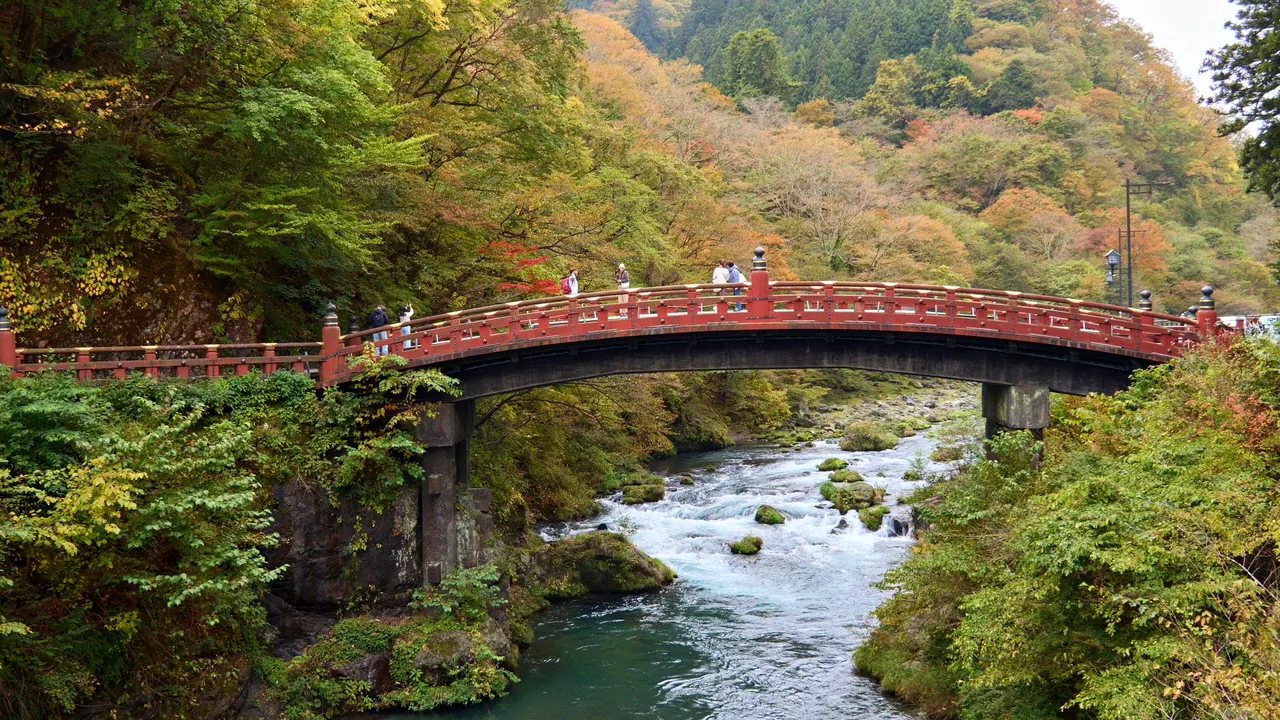
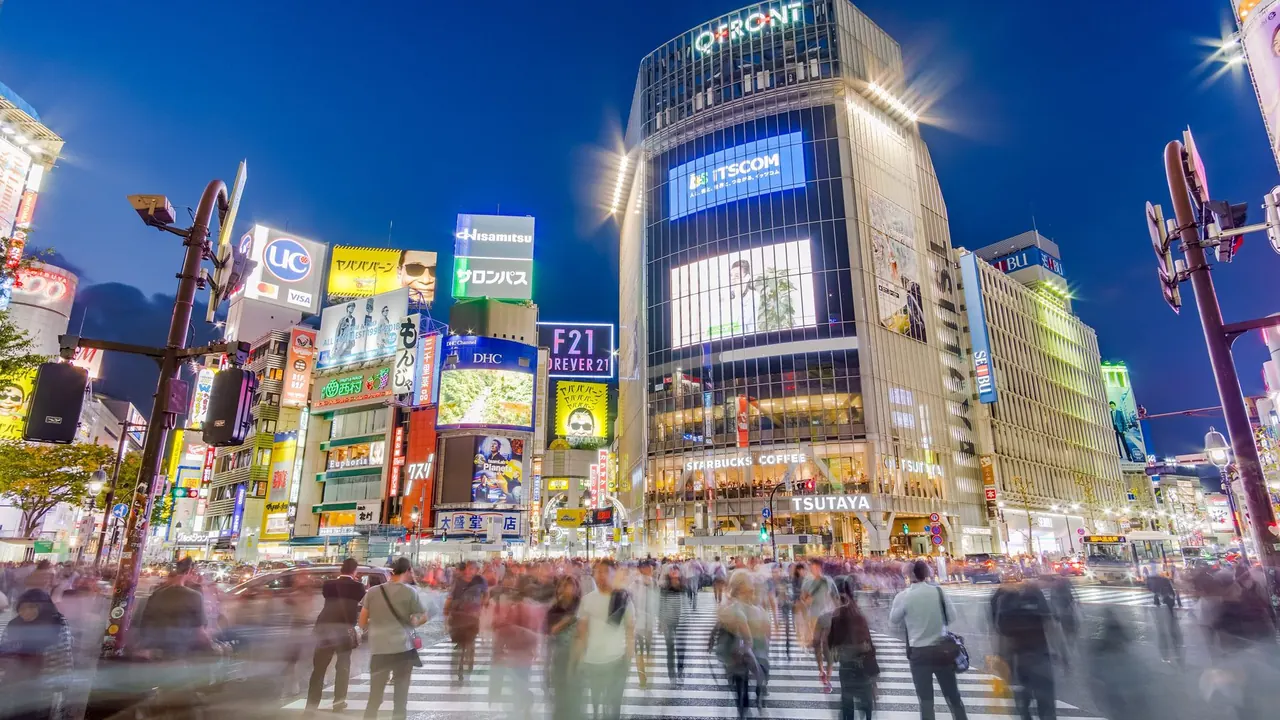
Photos: Nikko by lumoplank, CC0; Tokyo by Benh LIEU SONG, CC BY-SA 2.0, cropped.
Nikko or Tokyo?
Our verdict in twelve categories, each scored against the same fixed benchmark cities, and the climate month by month, so you can choose for your trip.
Choose Nikko for
- nature and the outdoors
- prices
- wellness
Nikko suits travellers who want mountains, forest and hot water more than city life. The UNESCO shrines under the cedars, the waterfalls and marshland trails of the national park, and a night in an onsen inn with a long dinner make a slow, quiet stay of two or three days. Go for the landscape and the bathing, and expect evenings to end early.
Choose Tokyo for
- shopping
- nightlife
- live music and the arts
Tokyo is the better pick for almost any other kind of trip. Food, shopping, nightlife, stages and museums go deeper there than nearly anywhere, and the rail network makes the whole city easy to get around, children included. Nikko is one of its classic day trips, so a Tokyo base can include the shrines, though not the mountain evenings.
Scoreboard
Twelve categories on one fixed scale from 0 to 100. The shaded stretch is the gap between the two.
Your match
Pick a travel style or drag the sliders, and both match scores follow your weighting.
Wins on nature and the outdoors and prices with your weighting.
Wins on shopping and nightlife with your weighting.
What matters to you?
Category by category
What the scores mean for a trip.
Beaches & swimming
Neither city is a place to swim. Nikko is far inland, and its highland lakes are for boats and fishing. In summer, the cool water you will actually use is a hot spring or a hotel pool.
Tokyo at least puts the sea within reach. The Shonan coast at Kamakura and Enoshima is about an hour south by train, with dark volcanic sand and warm water in July and August. That makes a pleasant afternoon out, not a beach vacation.
Food & drink
Nikko's food comes from its temples: yuba in its many forms, mountain soba, grilled river fish and yokan. Most of it is eaten at lunch along the road to the shrines. The best meal is usually the multi-course dinner at your ryokan, because the town has little else to offer in the evening.
Tokyo is in a different league. It has sushi and tempura counters, kaiseki rooms, ramen shops, the Tsukiji outer market and the depachika food halls, and it cooks foreign cuisines just as well. Here the hard part is choosing, while in Nikko the choice runs out after a day.
Culture & sights
Nikko has one superb set piece. Toshogu, with its lacquer, gold leaf and Yomeimon gate, stands with Rinnoji, Futarasan and Taiyuinbyo in a forest of giant cedars, and no single shrine in Tokyo is as lavish. Add the Shinkyo bridge, the Tamozawa villa and the Jizo statues along the gorge, and a day or two covers it, with few museums for a wet afternoon.
Tokyo goes much further, although the 1923 earthquake and the bombing of 1945 left its heritage scattered across the city. Senso-ji, Meiji Jingu, the Imperial Palace moats and the lanes of Yanaka are only the start. The real depth is in the museums: the Tokyo National Museum and the Western Art museum in Ueno, then the Nezu and the Mori. Modern architecture such as Tange's Olympic gymnasium is a sight in itself, and Nikko has nothing like it.
Nightlife
Nikko has almost no nightlife. Once the day visitors leave, the evening is a ryokan dinner and a soak, with perhaps a hotel lounge in Kinugawa Onsen.
Tokyo's nights are among the great reasons to go. You can hop between tiny themed bars in Golden Gai, eat skewers in Omoide Yokocho and dance in Shibuya or Roppongi, where people stay out until the first train.
Nature & outdoors
Nikko is a gateway to a national park, and the climb begins straight away. The Irohazaka bends lead up to Lake Chuzenji beneath Mount Nantai, Kegon Falls drops nearly 100m, and the Senjogahara boardwalks run to Ryuzu and Yudaki falls. Maples turn colour from the high marsh down to the town over several weeks of autumn.
Tokyo's nature is mostly reached by train. Mount Takao, the Okutama gorges, and Hakone and the Fuji Five Lakes for views of Fuji are all good outings. In the city itself, the greenery is parks and gardens.
Day trips
From Nikko, the best day trip is the capital itself. Closer to hand are Utsunomiya for gyoza, the pottery town of Mashiko and the thatched post town of Ouchi-juku. Beyond these, most places within reach are more mountains and lakes.
Tokyo is the stronger base by a long way. Kamakura, Yokohama, Kawagoe, Sawara, Hakone and Karuizawa are all easy rail trips, each quite different from the others. Nikko itself is one of the classic outings, about two hours north.
Good for families
Nikko suits a short family stay. Older children enjoy the Edo-period village and the miniature world park at Kinugawa, along with the lake boats and the waterfalls. The shrine staircases and long bus rides are harder going with toddlers.
Tokyo is one of the easiest big cities in the world to bring children to. Disneyland and DisneySea, the Ghibli Museum, Miraikan, the zoo and the aquariums can fill a week. Stations have lifts and baby rooms, and the food is easy for fussy eaters. Only the summer heat and rush-hour crowds take some planning.
Getting around
Nikko is basically one 2km road from the stations up to the shrines. That part is fine on foot, but the lake, falls and marshland depend on buses up the Irohazaka road, which can sit in traffic for hours on autumn weekends.
Tokyo's metro and rail network is the densest in the world, with trains running to the minute and signs in English. Nearly every sight is a short walk from a station. The only drawbacks are crowded rush hours and the network shutting down around midnight.
Shopping & style
Nikko's shopping is a single street of souvenirs. The things worth taking home are Nikko-bori carved trays, straw-soled Nikko geta sandals and boxes of yuba and yokan.
Tokyo may be the best city in the world to shop in. It has the Ginza department stores and Omotesando flagships, vintage clothing in Shimokitazawa, kitchen knives on Kappabashi, books in Jimbocho and fine lacquer and washi paper. Save your money for here.
Affordability
Nikko is the cheaper of the two, at least day to day. Soba lunches, buses and shrine entry cost little, and there are plenty of plain guesthouses. The splurge is the classic onsen inn with dinner, which costs most at the lakes in autumn.
Tokyo's food is a bargain if you eat as residents do, and many shrines and parks are free. Small central rooms are where the money goes, especially during cherry blossom and Golden Week. Taxis and cocktails add up too.
Live music & performing arts
In Nikko, the performance worth planning a trip around is the Toshogu festival in spring and autumn. Around a thousand men in samurai armour process through the town, with horseback archery alongside. On other days, there are only theme-park shows and the odd sacred dance.
Tokyo offers single-act kabuki at the Kabuki-za, Noh, the Takarazuka Revue, top orchestras, and opera at the New National Theatre. Jazz bars and live houses in Koenji and Shimokitazawa have bands on every night.
Wellness & relaxation
Both places take bathing seriously, but Nikko does it in the mountains. You can choose between the large riverside inns of Kinugawa Onsen and the remote sulphur springs of Yumoto by Lake Yunoko. Open-air baths look onto forest, and in winter there is snow on the water's edge.
Tokyo's version belongs to everyday city life: neighbourhood sento with painted Fuji murals, big bathing complexes and a strong sauna culture. For the calm of a mountain onsen, people from Tokyo head out of the city, which is exactly what Nikko already offers.
When should you go?
Pick your month. The climate figures are measured averages, not a forecast.
Nikko in July
Tokyo in July
Daytime high, °C
Rainfall in the month, mm
Where the figures come from
Nikko has no weather station within reach, so its figures come from a gridded climate model rather than a measured record, and read a broad area rather than the city itself.
Temperature and rainfall are climate normals, averaged over the years shown. Nikko: 2001-2020 normals, NASA POWER reanalysis grid, no weather station within 90 km. Tokyo: 1991-2020 normals, Tokyo (3.6 km from centre).
Winter is when Nikko and Tokyo differ most. In January Nikko's highs are around 3°C, against Tokyo's 10°C, so in Nikko the shrine paths are for wrapping up rather than lingering. From spring to autumn the gap narrows to a few degrees. Nikko's summer is warm, with highs near 29°C in August, a little cooler than the capital. Rain builds through June and stays heavy from July to October, the wettest stretch of the year, so May and November are the better times for walking and hiking.
Tokyo stays mild enough to walk comfortably through the winter, which is its driest season, and January is its sunniest month. July and August are hot and humid, with highs near 32°C. The sea at Sagami Bay is at its warmest from July to September, reaching 26°C in August, so a late-summer swim is still pleasant. Tokyo's heaviest rain comes in September and October, later than Nikko's, so spring and November are the best months for exploring the city on foot.
Which traveller are you?
On an outdoors trip, Nikko is the clear choice. Its national park starts right at the edge of town, with Kegon Falls, the boardwalks of Senjogahara and climbs up Mount Nantai, and you can raft the Kinugawa gorge. From Tokyo, Takao and Okutama take a train ride to reach.
For a relaxing and wellness trip, Nikko also comes out ahead. You can sleep in an onsen inn by a river gorge or at milky Yumoto on Lake Yunoko and spend quiet evenings without crowds. Tokyo's sento are enjoyable, but its streets are never this still.
For a food and nightlife trip, choose Tokyo without hesitation. It has specialist counters, depachika food halls, yakitori alleys and Golden Gai's tiny bars, with clubs that go on until the first trains. Nikko's eating ends with yuba at lunch, and its streets are dark by early evening.
Before you go
| Measure | Nikko | Tokyo |
|---|---|---|
| Official language | Japanese | Japanese |
| Currency | Yen (JPY) | Yen (JPY) |
| Sockets | AB100 V, 50 and 60 Hz depending on the region | AB100 V, 50 and 60 Hz depending on the region |
| Driving side | Left | Left |
| Time zone | UTC+9 | UTC+9 |
| Emergency number | Police 110, fire 119 | Police 110, fire 119 |
| Elevation | 660 m | 6 m |
| Main airport | Tokyo Haneda International Airport (HND)134 km from centre98 non-stop destinations | Tokyo Haneda International Airport (HND)18 km from centre98 non-stop destinations |
| Public holidays this year | 16 days | 16 days |
By the numbers
| Measure | Nikko | Tokyo |
|---|---|---|
| City population | 77,027 | 14,264,798 |
| People per km² | 53 | 6,501 |
| Museums within 10 km | 5 | 192 |
| UNESCO World Heritage sites within 50 km | 1 | 1 |
| Swim season, months above 21 °C | - | 4 months |
Where else could you go?
Every comparison below shares a destination with this one, so you can follow Nikko or Tokyo somewhere new.