Hakone or Nikko?
Our verdict in twelve categories, each scored against the same fixed benchmark cities, and the climate month by month, so you can choose for your trip.
Choose Hakone for
- day trips
- beaches
- families
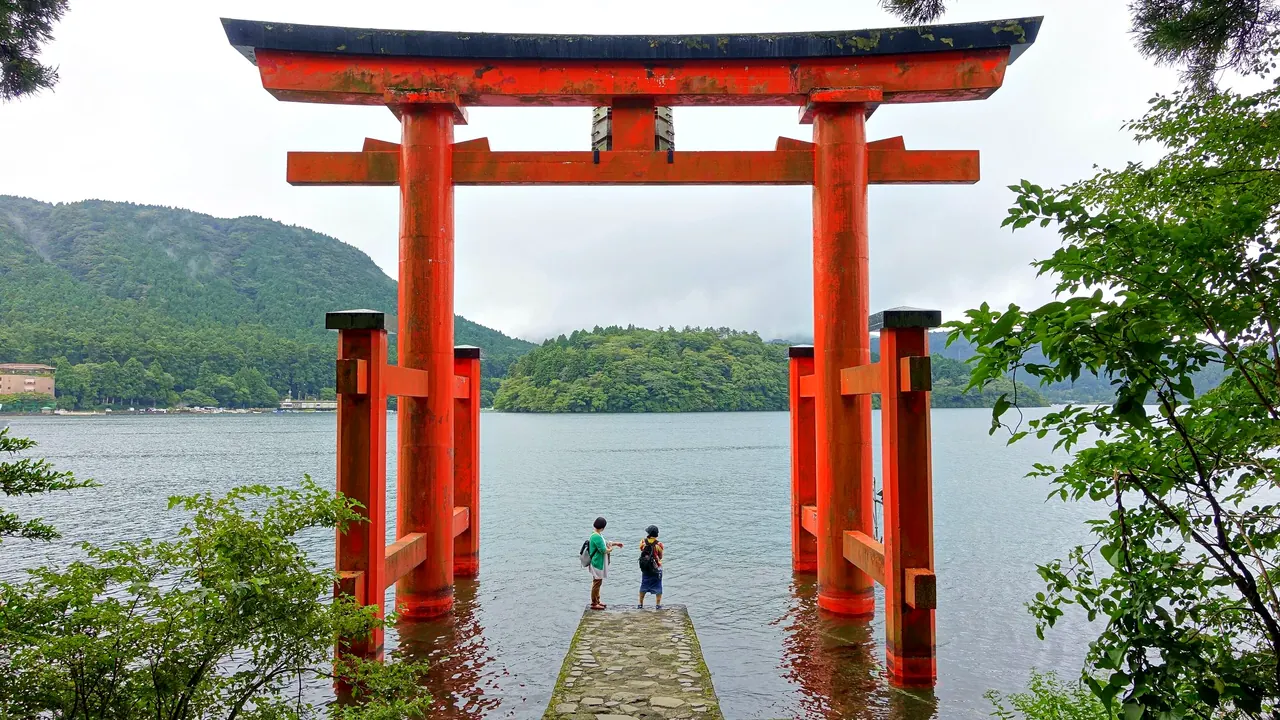
Hakone suits a trip built around the bath. Its hot springs are spread across the whole caldera, the mountain railway, ropeway and lake boats turn getting about into an outing in itself, and on a clear day Mount Fuji stands behind Lake Ashi. It also suits families and anyone who wants to add Kamakura, Yokohama or Tokyo to the stay. You pay more for it, and the sights are art museums and fragments of an old road rather than great monuments.
Choose Nikko for
- culture and sights
- prices
- live music and the arts
Nikko is for the traveller who wants one of Japan's great historic sights. The gilded, carved shrines of Toshogu under giant cedars are in a different league from anything in Hakone, and above the town the national park climbs to waterfalls, a high marsh and serious summits. Simple stays and meals cost less, and the hot springs at Kinugawa and Yumoto are very good, though they are not the whole point of the visit as they are in Hakone.
Scoreboard
Twelve categories on one fixed scale from 0 to 100. The shaded stretch is the gap between the two.
Your match
Pick a travel style or drag the sliders, and both match scores follow your weighting.
Too close to call, 2 points apart
Wins on day trips and beaches with your weighting.
Wins on culture and sights and prices with your weighting.
What matters to you?
Category by category
What the scores mean for a trip.
Beaches & swimming
Neither town is a place to swim, but Hakone at least has the sea within reach. Atami's sheltered sand is under an hour away and makes a decent summer outing, even if the shore at Odawara is pebbly and rough.
From Nikko the coast is hours away, and its highland lakes are for boats and fishing, so in summer you cool off in a hotel pool or not at all.
Food & drink
In both towns the best meal is the long dinner at your inn, and outside it the choice is thin and closes early. Hakone leans on kaiseki of mountain vegetables and river fish, with soba, tofu and Odawara fish cake on Yumoto's main street and black eggs boiled at Owakudani.
Nikko's signature is yuba, the soy-milk skin of its temple vegetarian tradition, served in a dozen forms along the road up to the shrines. It is the more distinctive local dish of the two, but there is even less beyond it once the lunchtime crowd has gone.
Culture & sights
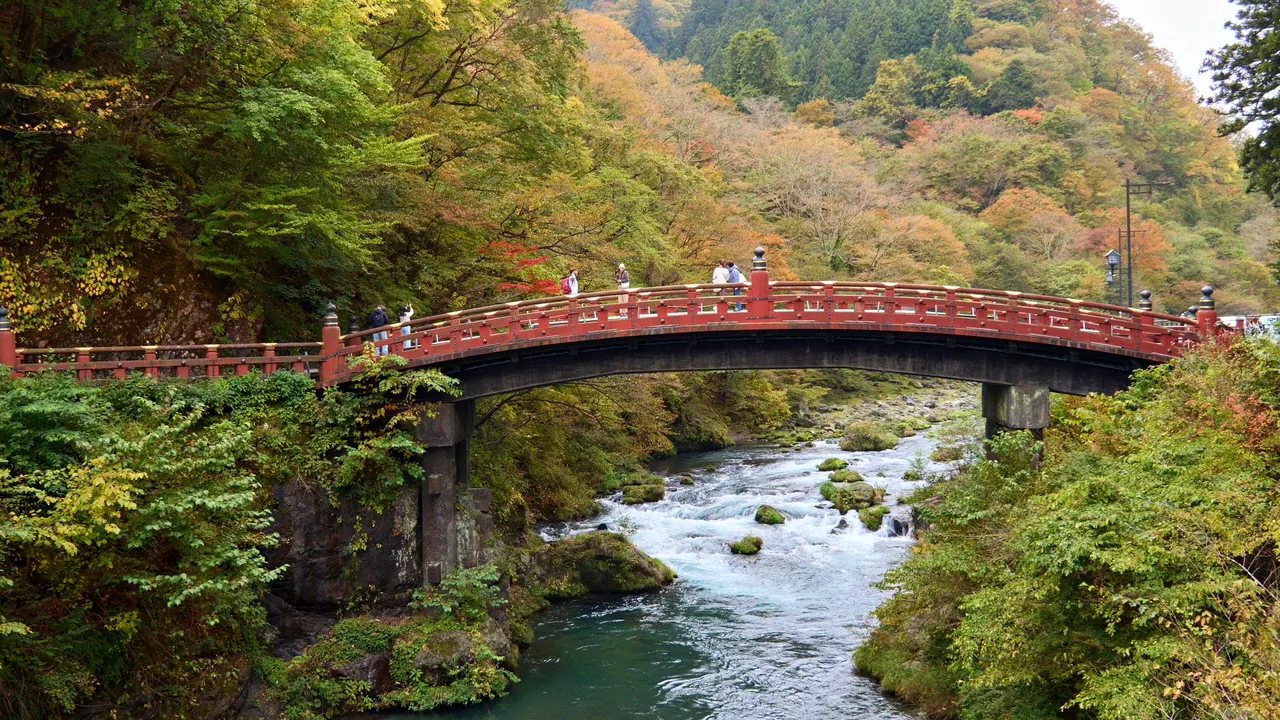
This is where Nikko pulls well clear. Toshogu, Rinnoji, Futarasan and Taiyuinbyo form a compact, UNESCO-listed group of richly carved and gilded buildings in cedar forest, and they deserve a full day or two on their own. The Shinkyo bridge and the Jizo statues of Kanmangafuchi add to it.
Hakone's strength is art rather than monuments: sculpture across the lawns of the Open-Air Museum, Impressionists at the Pola, and smaller collections of glass and prints. Its history, the stone Tokaido road and the rebuilt checkpoint, is pleasant to walk but slight beside Nikko's shrines.
Nightlife
Both go to bed early, and that is part of the appeal. Hakone-Yumoto keeps a handful of izakaya open a little later, while Nikko's equivalent is a few bars and hotel lounges down in Kinugawa Onsen. For anything more, it is Tokyo from either.
Nature & outdoors
Both are fine mountain landscapes in national parks, but they feel different. Hakone is a volcanic caldera: steaming sulphur slopes at Owakudani, Lake Ashi on the crater floor and Fuji on the skyline when the mist allows, with ridge walks to Kintoki and pampas grass at Sengokuhara.
Nikko climbs higher and offers more variety. Kegon Falls drops from Lake Chuzenji, boardwalks cross the Senjogahara marsh to more waterfalls, Nantai and Shirane are real climbs, and the Kinugawa gorge has rafting. In winter it adds snow, frozen falls and small ski slopes.
Day trips
Hakone is the better base for days out. Kamakura's Great Buddha and temples, the port of Yokohama, Odawara's castle, the Izu Peninsula and the Fuji lakes are all within a day, and the Romancecar has you in Tokyo in under two hours.
Nikko has Tokyo at a similar distance, plus gyoza in Utsunomiya and the pottery kilns of Mashiko. Ouchi-juku's thatched post town is a long day, and beyond these the choice is mostly more mountains and lakes.
Good for families
Hakone gives children more to do. The chain of railway, cable car, ropeway and pirate ship is the attraction, and the seal shows at Hakone-en, the climbable net sculptures and the swimsuit onsen park fill the gaps. Nude communal baths and quiet formal inns are the catch.
Nikko's child-friendly side is at Kinugawa, with its Edo village of ninja shows and a park of miniature landmarks. Older children like the lake boats and the falls, but the shrines' steep stairs and the long bus rides make it harder going with toddlers.
Getting around
Hakone's single pass covers railway, cable car, ropeway, boats and buses in one loop, so moving around is part of the sightseeing, although the villages are too far apart to walk between and weekend queues build at the ropeway.
Nikko's town is simpler, one 2km road from the stations to the shrines that you can walk. The trouble starts higher up, where everything depends on buses up the Irohazaka road that can crawl for hours on autumn weekends.
Shopping & style
Hakone gives a shopper more to work with. In the workshops around Hatajuku you can watch yosegi marquetry being pieced together into puzzle boxes and trays, the museum shops are good for art and design books, and anyone who wants clothes can take the bus over the ridge to the outlet mall near Gotemba.
Nikko's shopping is one main street of souvenir and food stores. Its carved Nikko-bori trays and straw-soled geta are genuine local crafts and make good presents, alongside packaged yuba, but for fashion or department stores you wait for Tokyo.
Affordability
Nikko is the gentler place on the wallet. It has a good supply of plain guesthouses, simple soba and yuba meals and reasonably priced shrine entry, and only the ryokan stay and the lake hotels in autumn push costs up.
In Hakone the ryokan night is the whole point, and the better inns with private outdoor baths are expensive. Hostels around Yumoto, public day-bathhouses and the good-value transport pass help a careful traveller keep costs down.
Live music & performing arts
Neither has a theatre or concert life, but Nikko has one occasion worth timing a visit for. At the Toshogu festival in spring and autumn, a procession of armoured samurai re-enacts the shogun's funeral march, with horseback archery alongside. Hakone offers only the odd museum concert or a performance laid on at an inn.
Wellness & relaxation
Hakone was made for bathing. Seventeen hot-spring areas, from riverside Yumoto to the milky sulphur pools of Sengokuhara, inns with private baths on the balcony and day-bathhouses in the woods let you build a whole stay around soaking.
Nikko's springs are excellent but take more effort to reach. The large riverside inns are a train ride away at Kinugawa, and the remote, sulphurous Yumoto Onsen sits up by Lake Yunoko. Snow on the outdoor baths in winter gives Nikko a stillness of its own.
When should you go?
Pick your month. The climate figures are measured averages, not a forecast.
Hakone in July
Nikko in July
Daytime high, °C
Rainfall in the month, mm
Where the figures come from
Hakone's temperatures are measured 43 km from the centre, at Kawaguchiko.
Hakone has no rain gauge within 25 km of the centre, so its rainfall comes from a gridded climate dataset read at the city rather than from a gauge further away.
Nikko has no weather station within reach, so its figures come from a gridded climate model rather than a measured record, and read a broad area rather than the city itself.
Temperature and rainfall are climate normals, averaged over the years shown. Hakone: 1971-2000 (rainfall 1991-2020) normals, Kawaguchiko (42.9 km from centre). Nikko: 2001-2020 normals, NASA POWER reanalysis grid, no weather station within 90 km.
The two mountain towns follow much the same year, with Nikko a little colder in winter and a little hotter in summer. Both are wet from June to October. Hakone's rain peaks in early autumn at about 216mm in September, while Nikko's heaviest month is July. November is the sweet spot in both places: the maples turn, the rain eases and the air is crisp for walking the shrine paths or the Old Tokaido Road. May is the other fine month, mild and greener, before the summer damp sets in.
Midwinter is cold, with highs around 3°C in Nikko in January, which is good weather for an outdoor bath and, in Hakone, the clearest views of Fuji. July and August are warm and humid in both towns, and Nikko reaches about 29°C. Only Hakone has a beach within reach, and the sea at Atami is warm enough for swimming only from July to September, when it touches 26°C.
Which traveller are you?
On a culture and arts trip, choose Nikko. The UNESCO-listed shrines and temples, with Toshogu's lacquer, gold leaf and the Yomeimon gate, outclass Hakone's scattered museums. The spring and autumn samurai procession adds a spectacle Hakone cannot match.
On a family trip with children, Hakone works better. The zigzag railway, the ropeway over the steaming vents, the pirate ship on Lake Ashi, the seal shows and the swimsuit onsen park keep children busy, while Nikko's shrines mean long staircases and gravel.
On a trip on a tight budget, Nikko is the easier place to do it. Plain guesthouses, soba and yuba lunches and modest shrine entry keep daily costs down, whereas Hakone's appeal rests on ryokan stays that quickly become expensive.
Before you go
| Measure | Hakone | Nikko |
|---|---|---|
| Official language | Japanese | Japanese |
| Currency | Yen (JPY) | Yen (JPY) |
| Sockets | AB100 V, 50 and 60 Hz depending on the region | AB100 V, 50 and 60 Hz depending on the region |
| Driving side | Left | Left |
| Time zone | UTC+9 | UTC+9 |
| Emergency number | Police 110, fire 119 | Police 110, fire 119 |
| Elevation | 734 m | 660 m |
| Main airport | Tokyo Haneda International Airport (HND)71 km from centre98 non-stop destinations | Tokyo Haneda International Airport (HND)134 km from centre98 non-stop destinations |
| Public holidays this year | 16 days | 16 days |
By the numbers
| Measure | Hakone | Nikko |
|---|---|---|
| City population | 10,925 | 77,027 |
| People per km² | 118 | 53 |
| Museums within 10 km | 16 | 5 |
| UNESCO World Heritage sites within 50 km | 2 | 1 |
| Swim season, months above 21 °C | 5 months | - |
Where else could you go?
Every comparison below shares a destination with this one, so you can follow Hakone or Nikko somewhere new.