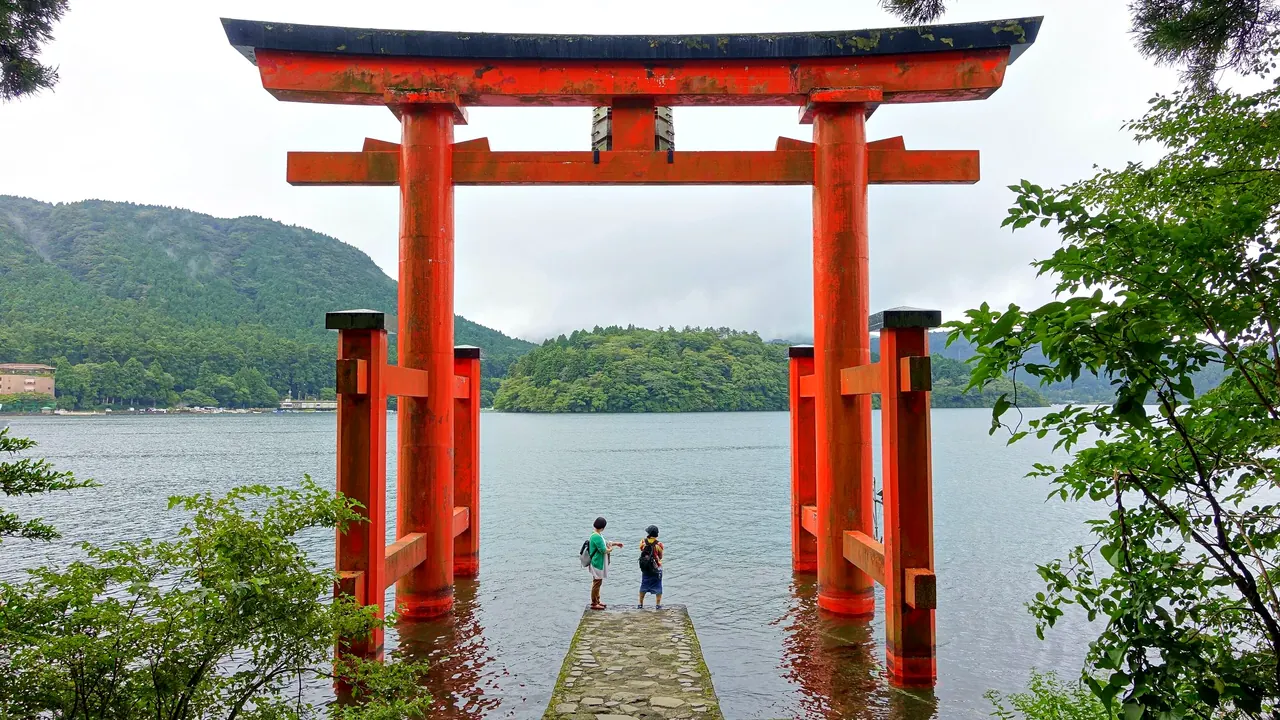
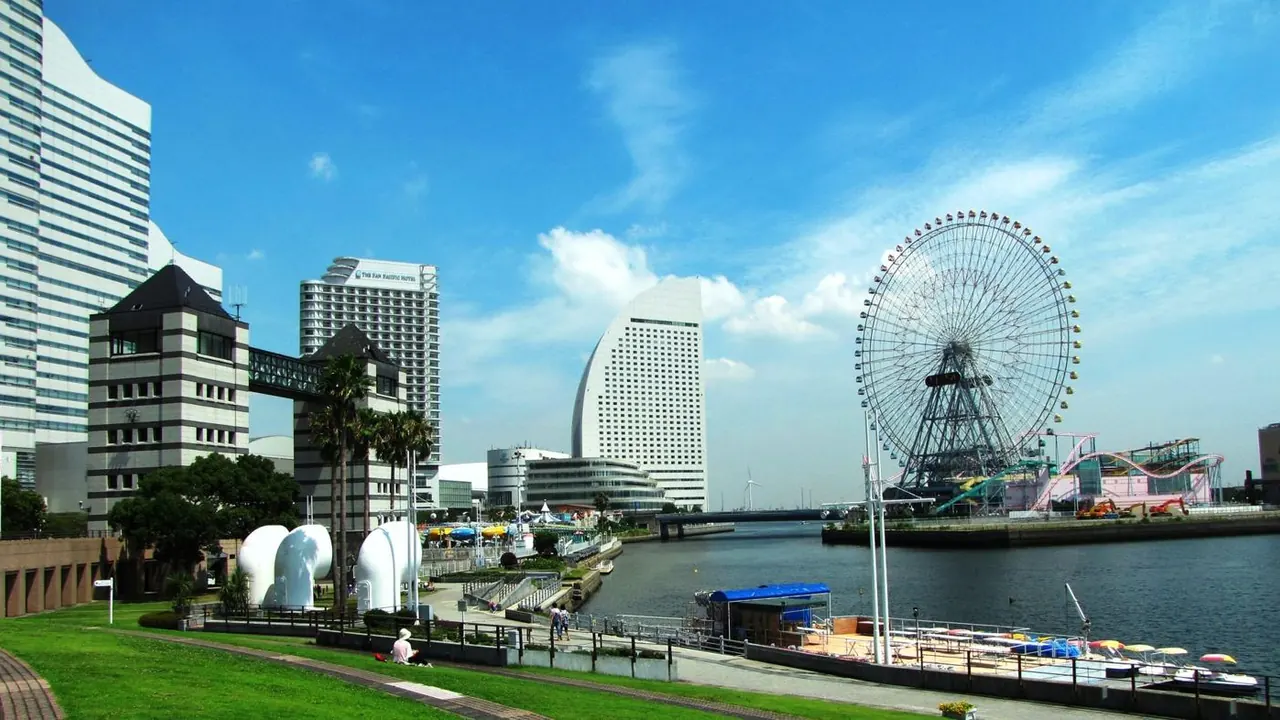
Photos: Hakone by Daderot, CC0; Yokohama by Yoshio Kohara, CC BY 3.0, cropped.
Hakone or Yokohama?
Our verdict in twelve categories, each scored against the same fixed benchmark cities, and the climate month by month, so you can choose for your trip.
Choose Hakone for
- wellness
- nature and the outdoors
Hakone is for travellers who want to slow down. A night or two in a ryokan with an outdoor bath, a long kaiseki dinner, and days spent walking the old Tokaido road or riding the ropeway over the steaming vents of Owakudani make up the whole trip. It suits couples and anyone who would rather end the day in hot water under the cedars than in a bar, and who are happy with quiet evenings and eating mostly at the inn.
Choose Yokohama for
- live music and the arts
- nightlife
- food and drink
Pick Yokohama if you want a comfortable city base that is easy to get around and has more going on after dark. Chinatown, the ramen shops and the grill bars of Noge make eating easy and inexpensive. Children have the Cup Noodles Museum, Sea Paradise and the zoo, and fast trains put Tokyo and Kamakura close at hand. It is the better choice for families, for food lovers and for anyone planning a run of day trips, and Hakone itself is one of them.
Scoreboard
Twelve categories on one fixed scale from 0 to 100. The shaded stretch is the gap between the two.
Your match
Pick a travel style or drag the sliders, and both match scores follow your weighting.
Wins on wellness and nature and the outdoors with your weighting.
Wins on live music and the arts and nightlife with your weighting.
What matters to you?
Category by category
What the scores mean for a trip.
Beaches & swimming
Neither is a beach destination, but Yokohama gets you to the sand far more easily. Lake Ashi is not for swimming and Hakone's nearest sea is the steep, pebbly shore at Odawara, so a proper swim means a trip to Atami.
From Yokohama, the Shonan beaches at Zushi, Kamakura and Enoshima and the shores of the Miura Peninsula are a short train ride away, with broad grey-brown sand and summer beach huts. The city also has its own man-made beach at Hakkeijima.
Food & drink
In Hakone the best meal is the one at your inn: a long kaiseki dinner of mountain vegetables, river fish and tofu, followed by breakfast the next morning. Beyond that there are soba shops in Yumoto, the black eggs at Owakudani and lunch places for day visitors that shut early.
Yokohama gives you far more choice. With Japan's largest Chinatown, the home of iekei ramen, a whole museum of noodle shops at Shin-Yokohama and the small grill bars of Noge, you can eat well and cheaply every night, though most of the grandest restaurants are in Tokyo.
Culture & sights
Yokohama has the wider range of sights, and they tell a story unusual in Japan, that of a treaty port open to the West. You can see it in the merchant houses on the Yamate Bluff, the stone customs buildings of Kannai and the Red Brick Warehouses. Sankeien adds a garden of temple buildings and teahouses moved from Kyoto and Kamakura.
Hakone's strength is art set in landscape: sculpture on the lawns of the Open-Air Museum, and paintings at the Pola in a glass building sunk into beech forest. Add stretches of the old Tokaido road and the torii standing in Lake Ashi. These sights are scattered around the caldera, so linking them takes more travelling.
Nightlife
In Hakone, evenings end with a bath and a yukata, and a few izakaya in Yumoto are about all there is. Yokohama offers much more, mainly long evenings of yakitori and beer at the standing bars and counters of Noge, plus karaoke in Kannai and bars overlooking the harbour at Minato Mirai. Neither is a clubbing city, and from both a really big night out means going into Tokyo.
Nature & outdoors
Hakone is the stronger choice for landscape, and the landscape is the reason to stay. It has sulphur vents at Owakudani, a crater lake ringed by forest, Fuji on clear days, and ridge walks to Mount Kintoki and Komagatake starting close to your inn.
In Yokohama, most of the nature is a train ride away: the wooded temple trails above Kamakura, the Miura coast, the cliffs of Enoshima and the Tanzawa mountains. The city itself has parks and promenades rather than wild country, and one of its best outdoor days out is a trip to Hakone.
Day trips
Both make good bases, and many of the destinations are the same, including Odawara castle, Kamakura and each other. Hakone covers the mountain side best, with Atami, the temple towns of the Izu Peninsula and the Fuji lakes over the ridge, but Tokyo is close to two hours away on the Romancecar.
Yokohama has the edge on speed. Tokyo is under half an hour away and Kamakura about 25 minutes, so you can fit a day out around an evening back in the city with no fuss.
Good for families
Hakone makes a memorable two or three days for children, with the zigzag railway, the ropeway, the replica pirate ship on Lake Ashi and the net sculptures at the Open-Air Museum. The formal inns, nude communal baths and steep paths make it harder going with small children.
Yokohama is set up for families in a way Hakone is not. It has the Cup Noodles Museum, the Anpanman museum, Hakkeijima Sea Paradise and Zoorasia, along with lifts in stations and flat harbour paths for pushchairs.
Getting around
Neither city needs a car. In Hakone the loop of mountain railway, cable car, ropeway, lake boat and bus is part of the fun, but it is slow: the villages are kilometres apart on winding roads, and at weekends queues build at the ropeway.
Yokohama is much simpler. Dense rail and subway lines run on one tap-on card with English signs, and the harbour from Minato Mirai to Chinatown is a flat, easy walk.
Shopping & style
Hakone has one local craft worth seeking out, the yosegi-zaiku wood marquetry made in the workshops of Hatajuku. Beyond that there are snacks and souvenirs in Yumoto and an outlet mall over the ridge at Gotemba. Yokohama is a far better place to shop, with department stores and underground arcades around the main station, waterfront malls at Minato Mirai and the smart leather shops of Motomachi.
Affordability
Hakone's costs come from the night's lodging. A ryokan with dinner, breakfast and a private bath adds up fast, especially at weekends and in autumn, though simple inns around Yumoto, soba lunches and public day-bathhouses help, and the transport pass is good value.
Yokohama is the cheaper stay. Business hotels in Kannai and Sakuragicho are moderately priced, ramen and Chinatown buns cost little, and many sights, from Yamashita Park to the Western houses on the Bluff, are free.
Live music & performing arts
Hakone has almost nothing on stage apart from the odd museum concert. Yokohama has a proper programme: the Kanagawa Philharmonic at Minato Mirai Hall, opera and dance at the Kanagawa Arts Theatre, touring bands in the harbour arenas, and a jazz tradition kept alive in the old cafés of Noge and Kannai and at an autumn festival.
Wellness & relaxation
Hakone is one of Japan's great bathing places. It has seventeen hot-spring areas, from riverside Yumoto to the milky sulphur water of Sengokuhara, outdoor baths under maples, and a pace that slows almost to a stop after dinner.
Yokohama offers the everyday version: neighbourhood sento, a large hot-spring complex on the Minato Mirai waterfront, and quiet hours in the Sankeien teahouses or the rose gardens on the Bluff. It is restful for a city, but for a real onsen stay you go up to Hakone.
When should you go?
Pick your month. The climate figures are measured averages, not a forecast.
Hakone in July
Yokohama in July
Daytime high, °C
Rainfall in the month, mm
Where the figures come from
Hakone's temperatures are measured 43 km from the centre, at Kawaguchiko.
Hakone has no rain gauge within 25 km of the centre, so its rainfall comes from a gridded climate dataset read at the city rather than from a gauge further away.
Yokohama's sunshine is measured 29 km from the centre, at Tokyo.
Temperature and rainfall are climate normals, averaged over the years shown. Hakone: 1971-2000 (rainfall 1991-2020) normals, Kawaguchiko (42.9 km from centre). Yokohama: 1971-2000 (sunshine 1991-2020, rainfall 1991-2020) normals, Yokohama (1.6 km from centre).
Hakone sits high in a caldera and stays cooler than the coast all year. Winter days reach only about 5°C, which is chilly for walking, but this is the driest stretch, with the clearest Fuji views and the best weather for an outdoor bath in the cold air. Spring and November are the most pleasant months on the trails. From June to October the rain is heavy, peaking in September and October, and mist often hides the mountain. Summer up here is warm rather than oppressive, and from July to September the sea down at Atami is warm enough for a swim.
Yokohama is warmer through the year. August highs reach about 30°C, and the humidity makes midday sightseeing tiring. October is the wettest month at around 276mm, and June has the least sunshine. Winter is cool and dry, and often sunnier than summer, which makes it good for harbour walks. The sea to the south is warm enough for swimming from July to September, at about 25°C at its warmest. Spring and late autumn suit both places, and in high summer Hakone's cooler air is an easy escape from the city.
Which traveller are you?
For a relaxing and wellness trip, Hakone is the clear choice. Its seventeen hot-spring areas, rooms with private outdoor baths and quiet early evenings are made for rest. Yokohama offers city bath complexes and garden strolls, but it is still a working port.
On a food and nightlife trip, Yokohama wins easily. Chinatown, iekei ramen and the standing bars of Noge fill long evenings of eating and drinking. In Hakone you eat mainly the kaiseki dinner at your inn, and the villages go dark soon after.
On a family trip with children, Yokohama is the easier of the two. The Cup Noodles Museum, Sea Paradise, Zoorasia and flat harbour paths fill several days. Hakone's railway, ropeway and lake boats make a lovely day or two, but beyond those there is little for children.
Before you go
| Measure | Hakone | Yokohama |
|---|---|---|
| Official language | Japanese | Japanese |
| Currency | Yen (JPY) | Yen (JPY) |
| Sockets | AB100 V, 50 and 60 Hz depending on the region | AB100 V, 50 and 60 Hz depending on the region |
| Driving side | Left | Left |
| Time zone | UTC+9 | UTC+9 |
| Emergency number | Police 110, fire 119 | Police 110, fire 119 |
| Elevation | 734 m | 24 m |
| Main airport | Tokyo Haneda International Airport (HND)71 km from centre98 non-stop destinations | Tokyo Haneda International Airport (HND)18 km from centre98 non-stop destinations |
| Public holidays this year | 16 days | 16 days |
By the numbers
| Measure | Hakone | Yokohama |
|---|---|---|
| City population | 10,925 | 3,757,630 |
| People per km² | 118 | 8,585 |
| Museums within 10 km | 16 | 38 |
| UNESCO World Heritage sites within 50 km | 2 | 1 |
| Swim season, months above 21 °C | 5 months | 5 months |
Where else could you go?
Every comparison below shares a destination with this one, so you can follow Hakone or Yokohama somewhere new.