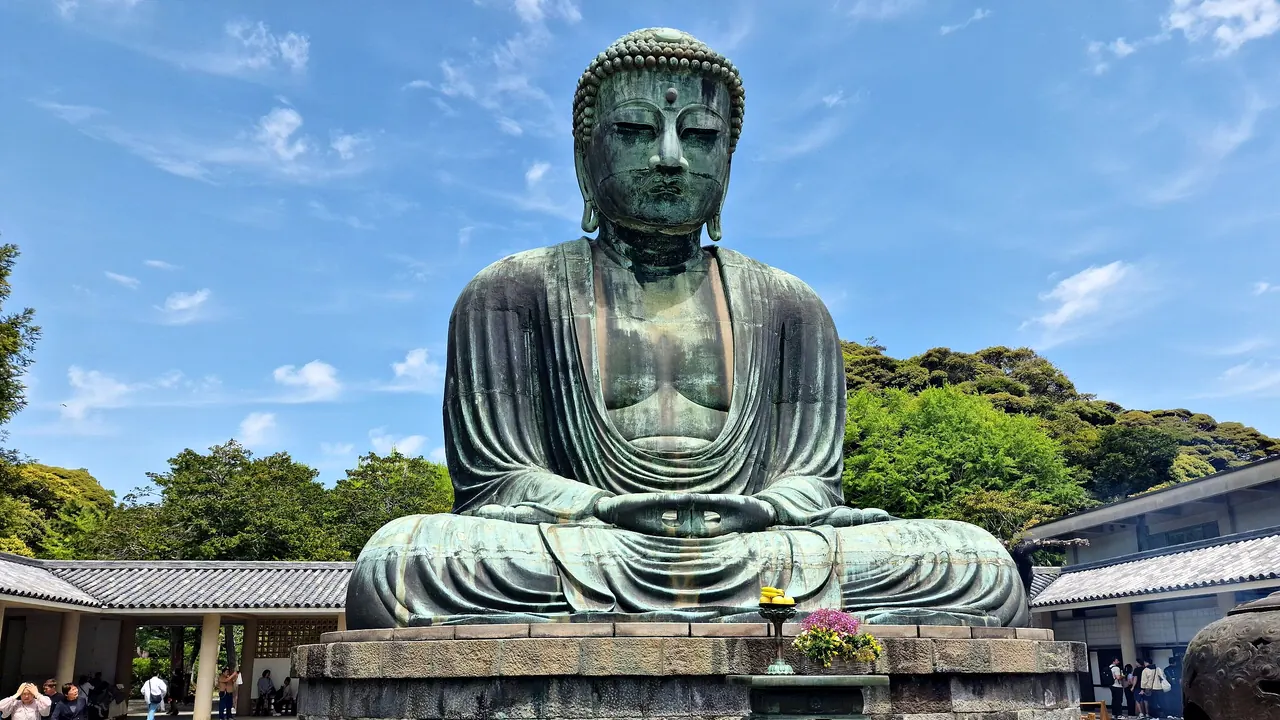
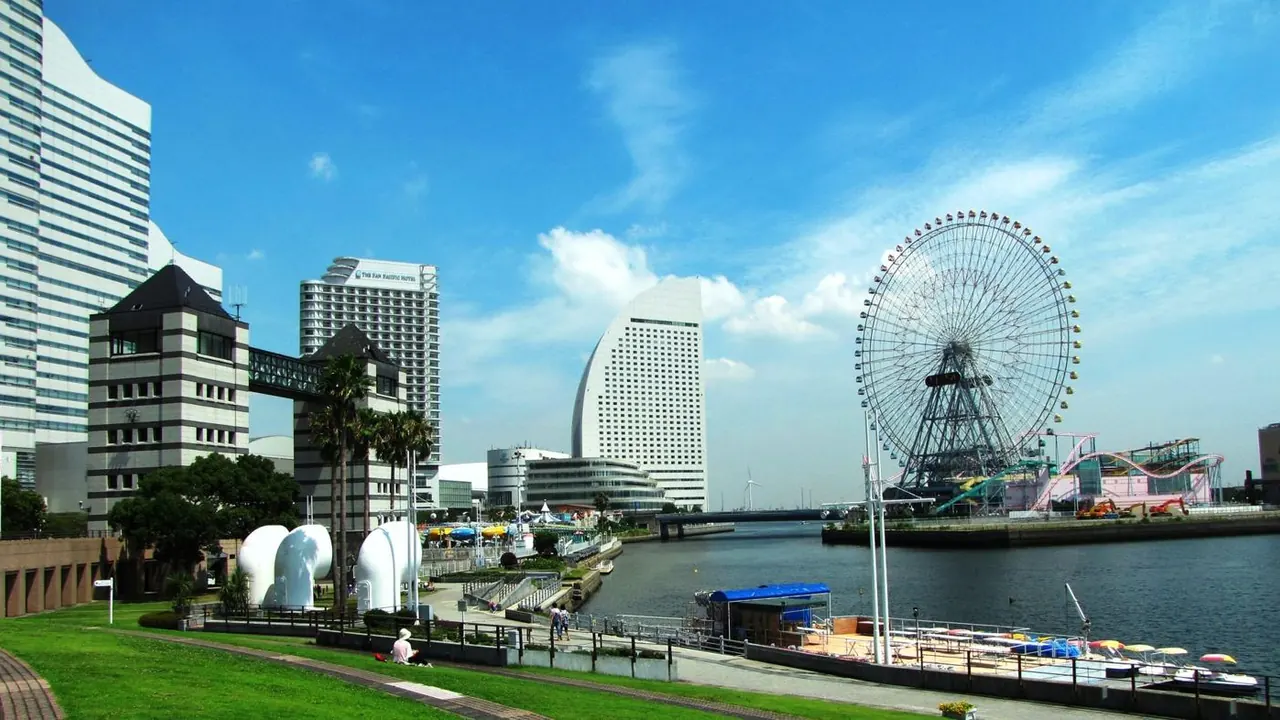
Photos: Kamakura by Anagoria, CC BY-SA 4.0, cropped; Yokohama by Yoshio Kohara, CC BY 3.0, cropped.
Kamakura or Yokohama?
Our verdict in twelve categories, each scored against the same fixed benchmark cities, and the climate month by month, so you can choose for your trip.
Choose Kamakura for
- culture and sights
- beaches
- nature and the outdoors
Kamakura is the choice when the trip is about Japan's older past and you want to sleep where it happened. The Zen temples, the Great Buddha and the wooded ridge trails are all a walk or a short Enoden ride from your door, and the sea is close enough for a swim in summer. It suits couples and slower travellers who are happy with quiet evenings and some stairs, and who want to be out on the trails early, before the day-trippers arrive.
Choose Yokohama for
- live music and the arts
- nightlife
- food and drink
Yokohama works better as a base for a fuller, easier trip. It eats better, stays up later, handles children with less effort and gets you anywhere on fast, simple trains, with rooms that cost less. Kamakura is only a short train ride away, so you can see its temples in a day and come back for Chinatown dumplings, a jazz set or a bar in Noge.
Scoreboard
Twelve categories on one fixed scale from 0 to 100. The shaded stretch is the gap between the two.
Your match
Pick a travel style or drag the sliders, and both match scores follow your weighting.
Wins on culture and sights and beaches with your weighting.
Wins on live music and the arts and nightlife with your weighting.
What matters to you?
Category by category
What the scores mean for a trip.
Beaches & swimming
Kamakura has the better beaches, because it is on the shore itself. Yuigahama and Zaimokuza are a short walk from the station, the Enoden runs on to Koshigoe and Katase, and Zushi and Hayama offer calmer water to the east. The sand is dark and volcanic and the swimming season is only high summer, but you can step out of a temple and into the sea on the same afternoon.
Yokohama's waterfront is quays and promenades. Its one beach is the man-made strip at Umi no Koen on the shallow inner bay. Most Yokohama residents who want a proper swim take the train to the Shonan coast, which means Kamakura's own beaches.
Food & drink
Yokohama is clearly the stronger place to eat. Japan's largest Chinatown, the city's own iekei ramen and sanma-men, the ramen museum at Shin-Yokohama and the food halls under the station give it range at every hour, and Noge's tiny grill bars keep it going into the evening.
Kamakura's food is narrower but has a character of its own. There is shirasu whitebait over rice near the beach, refined shojin ryori vegetarian cooking by the Zen temples, snacks along Komachi-dori and local vegetables at the Renbai market. For dinner with any choice, people take the train to Yokohama.
Culture & sights
Kamakura carries far more history. It was the shogunate's capital from 1192, and the open-air Great Buddha, Tsurugaoka Hachimangu and the great Zen temples of Engaku-ji and Kencho-ji are national landmarks. Hase-dera, the bamboo at Hokoku-ji and a dozen smaller temples fill out two or three days.
Yokohama tells a different, later story: the opening to foreign trade in the 1850s. That story lives in the merchant houses on the Yamate Bluff, the Red Brick Warehouses and the liner Hikawa Maru. Its finest sight, Sankeien, is partly made of historic buildings moved there from Kyoto and Kamakura.
Nightlife
Yokohama is the only one of the two with a night out worth the name. Noge's warren of izakaya and standing bars fills after work, Kannai adds pubs and karaoke, and Minato Mirai has bars looking over the lit harbour. It is a city for long evenings of yakitori and beer rather than clubbing until dawn.
Kamakura empties once the day-trippers leave. A handful of izakaya near the station and some summer evenings on the beach are about all there is.
Nature & outdoors
Both give similar access to the same green country, but from different starting points. In Kamakura you are already inside it. The Daibutsu and Tenen trails climb from the temples into the wooded ridges, Shichirigahama draws surfers, and Zaimokuza's calm water suits paddleboarding and windsurfing.
Yokohama is densely built, so its nature mostly starts with a train ride to those same Kamakura hills, the Miura coast, the Tanzawa mountains or Hakone. Within the city, Negishi Forest Park and Sankeien's ponds are the green spaces.
Day trips
Both are excellent bases for day trips, and what differs is the direction. From Yokohama, Tokyo is under half an hour away, close enough to go in for a few hours on several days, and Kawagoe's Edo-period streets are on direct lines.
Kamakura is closer to the coast. Enoshima is a few stops along the Enoden, and Yokosuka and the fishing port of Misaki on the Miura Peninsula are easy outings. Hakone and Odawara are within similar reach of both.
Good for families
Yokohama is built for children in a way Kamakura is not. They can design their own instant noodles at the Cup Noodles Museum or ride the Ferris wheel by the sea. Hakkeijima Sea Paradise has an aquarium and rides, there is the Anpanman museum for toddlers and the zoo at Zoorasia, and the flat harbour and station lifts make pushchairs simple.
Kamakura has its own small pleasures, such as climbing inside the Great Buddha, the rattling Enoden, the caves on Enoshima and the aquarium at Katase. Long temple staircases, weekend crowds and cramped rooms make it harder work.
Getting around
Yokohama is easier to move around. The Minatomirai Line, JR, the subways and the private railways all take one tap-on card, signs are in English, and water buses cross the bay. The harbour walk from Minato Mirai to Chinatown is flat.
Kamakura is small enough to cover on foot from the station, with the Enoden for the Great Buddha and the coast. But weekend gridlock slows the buses, the little trains fill to standing, and many temples sit up steps or valleys. A rented bicycle helps on the flat run to the beach.
Shopping & style
Yokohama has the real shopping. There are department stores and underground arcades around the station, waterfront malls at Minato Mirai, and Motomachi, a long street known for leather goods and the port's Western-tinged style.
Kamakura is for an afternoon of browsing on Komachi-dori and the quieter lanes off Wakamiya-oji. The one thing it does that Yokohama cannot is Kamakura-bori, the carved lacquerware descended from the Zen temples, along with good knives and ceramics.
Affordability
Yokohama is the cheaper place to stay. Plain business hotels in Kannai, Sakuragicho and Shin-Yokohama keep rooms moderate, everyday food is inexpensive, and the harbour, the Bluff's Western houses and Yamashita Park cost nothing.
Kamakura's day-to-day spending is fair, with small temple fees and good-value soba lunches. Its few hotels are in demand from Tokyo weekenders, though, which is why many visitors sleep in Yokohama and come in by train.
Live music & performing arts
Yokohama has a proper stage life. The Kanagawa Philharmonic plays in Minato Mirai Hall, the Kanagawa Arts Theatre puts on opera and dance, and the old jazz cafés of Noge and Kannai keep up the port's long jazz habit, which peaks with its autumn festival.
Kamakura offers little on an ordinary evening beyond occasional Noh at its small theatre. Its real performances follow the shrine calendar, with traditional dance in spring and yabusame horseback archery at the autumn festival.
Wellness & relaxation
Yokohama gives you Japanese bathing on the doorstep. It has neighbourhood sento and large hot-spring complexes, one of them on the Minato Mirai waterfront, with open-air baths and saunas, and Sankeien's teahouses for a slower afternoon.
Kamakura has no baths of its own, so its calm is a temple calm. There are zazen sessions at Engaku-ji and Kencho-ji, and the moss gardens around Jomyo-ji and Zuisen-ji are near silent on a weekday morning. For a mountain onsen, both send you to Hakone.
When should you go?
Pick your month. The climate figures are measured averages, not a forecast.
Kamakura in July
Yokohama in July
Daytime high, °C
Rainfall in the month, mm
Where the figures come from
Kamakura's sunshine is measured 45 km from the centre, at Tokyo.
Yokohama's sunshine is measured 29 km from the centre, at Tokyo.
Temperature and rainfall are climate normals, averaged over the years shown. Kamakura: 1991-2020 normals, Yokosuka Fwf (11.6 km from centre). Yokohama: 1971-2000 (sunshine 1991-2020, rainfall 1991-2020) normals, Yokohama (1.6 km from centre).
The two towns share one coastal climate, so it matters more which month you pick than which town. Spring from late March to May and the cooler weeks of November are the most comfortable for temple walks and harbour strolls. July to early September is the swimming season. The sea reaches 26°C in August, but daytime heat close to 30°C and heavy humidity make long walks on the temple steps hard going. June brings the rainy season, and September and October are wetter still: in October Yokohama's figures peak at 276mm against 211mm in Kamakura.
Winter is cool, dry and among the sunnier stretches of the year. It is a good time for walking the ridges and the harbour, and clear days bring the best views of Mount Fuji across the bay. Yokohama's figures also show a noticeably wetter spring, with April rainfall close to double Kamakura's, so Kamakura has a slight edge for a spring visit.
Which traveller are you?
On a culture trip built around history and temples, Kamakura is the better choice. The seat of the first warrior government, the Great Buddha and the Zen temples of Kita-Kamakura are all within walking distance, while Yokohama's port heritage is pleasant but slighter.
For a food and nightlife trip, Yokohama wins clearly. You get Chinatown's dim sum halls, iekei ramen, the grill bars and standing bars of Noge and harbour-view drinks afterwards. Kamakura offers whitebait lunches and temple cuisine, then goes quiet soon after dark.
On a family trip with children, Yokohama is much easier. It has the Cup Noodles Museum, the Anpanman museum, an aquarium island and a zoo, plus a flat harbour for pushchairs and lifts in the stations. Kamakura's stone staircases, packed trains and small hotel rooms take more effort.
Before you go
| Measure | Kamakura | Yokohama |
|---|---|---|
| Official language | Japanese | Japanese |
| Currency | Yen (JPY) | Yen (JPY) |
| Sockets | AB100 V, 50 and 60 Hz depending on the region | AB100 V, 50 and 60 Hz depending on the region |
| Driving side | Left | Left |
| Time zone | UTC+9 | UTC+9 |
| Emergency number | Police 110, fire 119 | Police 110, fire 119 |
| Elevation | 17 m | 24 m |
| Main airport | Tokyo Haneda International Airport (HND)34 km from centre98 non-stop destinations | Tokyo Haneda International Airport (HND)18 km from centre98 non-stop destinations |
| Public holidays this year | 16 days | 16 days |
By the numbers
| Measure | Kamakura | Yokohama |
|---|---|---|
| City population | 172,929 | 3,757,630 |
| People per km² | 4,356 | 8,585 |
| Museums within 10 km | 18 | 38 |
| UNESCO World Heritage sites within 50 km | 1 | 1 |
| Swim season, months above 21 °C | 5 months | 5 months |
Where else could you go?
Every comparison below shares a destination with this one, so you can follow Kamakura or Yokohama somewhere new.