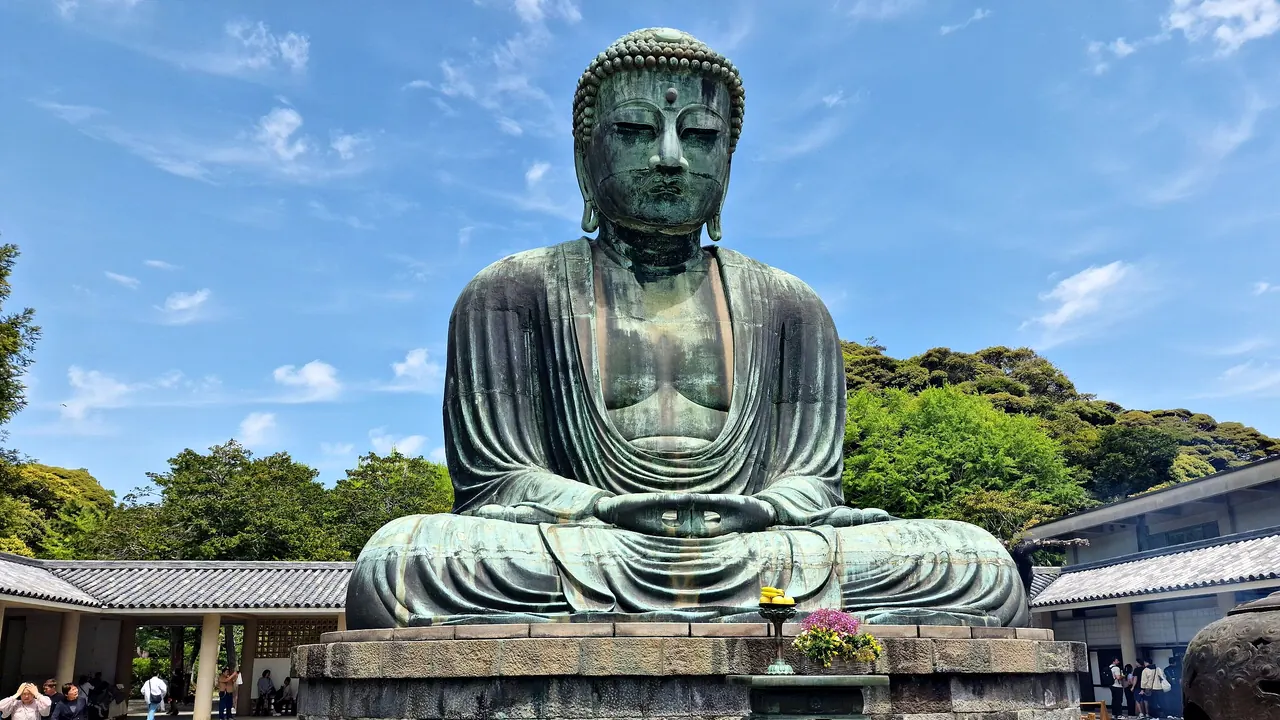
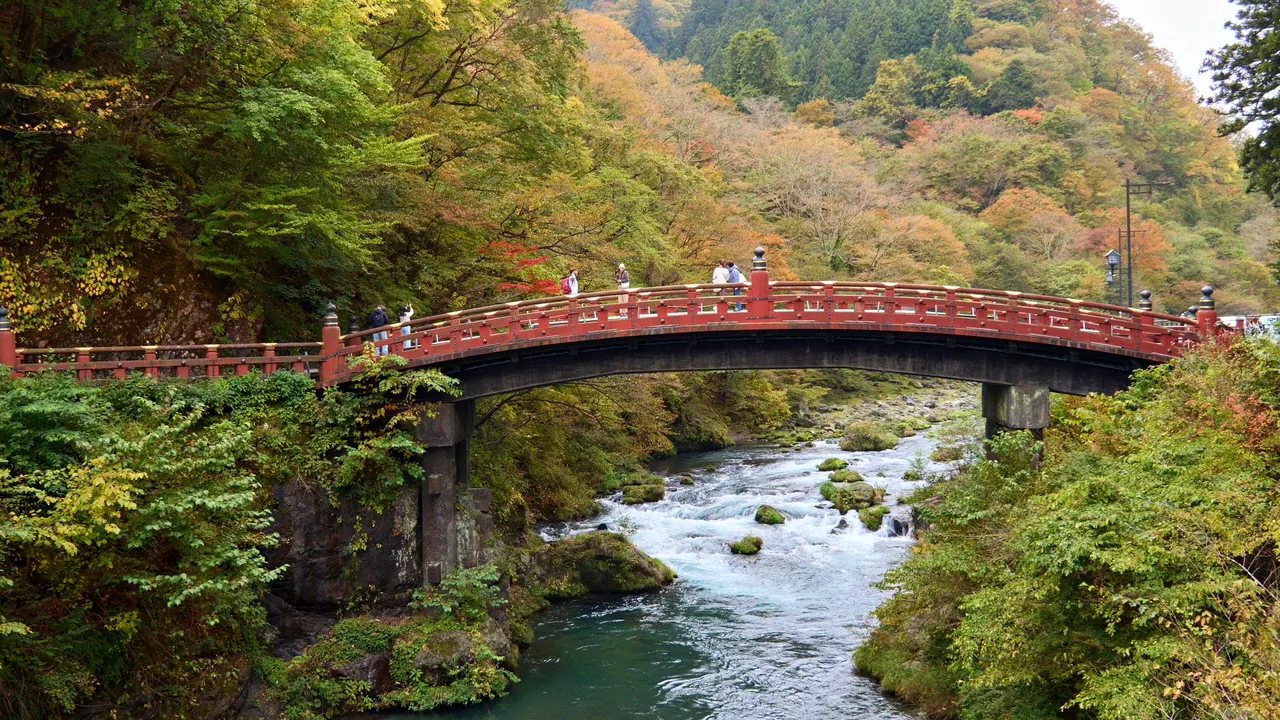
Photos: Kamakura by Anagoria, CC BY-SA 4.0, cropped; Nikko by lumoplank, CC0.
Kamakura or Nikko?
Our verdict in twelve categories, each scored against the same fixed benchmark cities, and the climate month by month, so you can choose for your trip.
Choose Kamakura for
- beaches
- day trips
- shopping
Kamakura suits a traveller who wants history and the sea in the same few days. You can see Zen temples and the Great Buddha in the morning and swim or walk the seafront in the afternoon. Tokyo and Yokohama are an easy train ride away for everything the town lacks. It is compact, easy to walk and better for children, and it makes a natural base for seeing more of the Tokyo region.
Choose Nikko for
- wellness
- nature and the outdoors
- prices
Pick Nikko when the point is to slow down in the mountains. Its gilded shrines under the cedars match Kamakura's temples for importance, but the real difference lies above the town. There is a national park of lakes, waterfalls and marshland trails, and hot-spring inns where the evening is a long soak and a multi-course dinner. Everyday costs are lower, but there is no beach and very little to do after dark.
Scoreboard
Twelve categories on one fixed scale from 0 to 100. The shaded stretch is the gap between the two.
Your match
Pick a travel style or drag the sliders, and both match scores follow your weighting.
Wins on beaches and day trips with your weighting.
Wins on wellness and nature and the outdoors with your weighting.
What matters to you?
Category by category
What the scores mean for a trip.
Beaches & swimming
This is the clearest gap between the two. Kamakura has a proper summer seaside, with the long curve of dark sand at Yuigahama and Zaimokuza, wooden beach houses and family swimming in July and August. Surfers have the beaches for the rest of the year, and Zushi and Hayama have calmer water. It is a seaside extra to a temple stay rather than a beach resort, but the sea is right there.
Nikko has nothing like it. The sea is hours away, and Lake Chuzenji and Lake Yunoko are cold highland water for boats and fishing. In summer, the water you get in Nikko is a hot-spring bath.
Food & drink
Both towns grew up around a vegetarian temple cuisine, and the speciality tells you which town you are in: shojin ryori in Kamakura, fresh yuba in Nikko. Kamakura has more beyond that, with shirasu whitebait on rice near the beach, snacks along Komachi-dori, soba shops and the farmers' market by the station. For serious evening eating, people still go to Yokohama.
Nikko's restaurants line the road to the shrines and cater to the lunchtime crowd, so the choice narrows sharply after dark. The meal to plan around is the multi-course dinner at your ryokan, which is part of the stay rather than a restaurant scene.
Culture & sights
These are two of Japan's great heritage towns, on a similar level but very different in feel. Kamakura carries the austere legacy of the first warrior government: the open-air Great Buddha, the long avenue up to Tsurugaoka Hachimangu, and the Zen halls and rock gardens of Engaku-ji and Kencho-ji. Smaller sights such as Hase-dera and the bamboo at Hokoku-ji are spread around the town.
Nikko gathers its treasures in one UNESCO-listed group of shrines and temples among giant cedars, and the mood is the opposite of Zen plainness, since Toshogu is all lacquer, gold leaf and carving. Kamakura rewards two or three days of wandering, while the heart of Nikko is seen in one or two.
Nightlife
Neither is a place for a night out. Kamakura at least has a few izakaya and small bars near the station and the beach, and the seafront is livelier on summer evenings, with Tokyo or Yokohama about an hour away by train. Nikko goes dark early. The night is a ryokan dinner and a bath, and the hotel lounges in Kinugawa Onsen are the only alternative.
Nature & outdoors
Kamakura's nature is gentle and close at hand. Wooded ridges carry trails between the temples, Mount Fuji appears across the bay on clear winter days, and Shichirigahama draws surfers. For real mountains, visitors to Kamakura travel towards Hakone.
Nikko is the stronger choice for landscape. It is the gateway to a national park that climbs fast to Lake Chuzenji under Mount Nantai, with Kegon Falls, the level boardwalks of Senjogahara and steep summits for serious hikers. There is also rafting in the Kinugawa gorge and snow in winter. The autumn colour spreading down from the high marsh is the high point of its year.
Day trips
Kamakura is much better placed. Yokohama is under half an hour away, Tokyo about an hour and Enoshima a few stops along the Enoden. Hakone and the Miura Peninsula are within easy reach too, so a week here can become a tour of the region.
From Nikko, Tokyo makes a long day at about two hours each way. Utsunomiya's gyoza and the pottery kilns of Mashiko are good outings, and Ouchi-juku is possible. Most places nearby, though, are lakes and mountains rather than towns.
Good for families
Kamakura gives children more to do within a short distance. They can climb inside the Great Buddha, ride the little Enoden train along the sea, swim gently in summer, and explore Enoshima's caves and the aquarium at Katase. The price is temple steps, weekend crowds and small hotel rooms.
Nikko's family attractions are mostly at Kinugawa: the Edo village with its ninja shows and the park of miniature landmarks. Older children enjoy the lake boats and the falls. The shrine staircases and the bus rides between scattered sights make Nikko harder with small children, and better suited to a short stay.
Getting around
Kamakura is the easier of the two to get around. The shrine and Komachi-dori are minutes from the station, the Enoden reaches the Great Buddha and the coast, and JR trains link Kita-Kamakura, Yokohama and Tokyo. The problems are weekend traffic and packed trains.
Nikko's town runs along one road about 2km long from the stations to the shrines, which is simple enough. But the lake, the falls and the marshland depend on buses up the Irohazaka road, which can crawl for hours on autumn weekends.
Shopping & style
Kamakura is the better place for an afternoon of browsing. Komachi-dori is lined with sweets, pickles, tenugui cloths and chopsticks, and the quieter side streets and Wakamiya-oji hold small craft shops. The thing to look for is Kamakura-bori, the carved and lacquered woodwork that goes back to the Zen temples, and there are good ceramics and knives too.
Nikko has much less, just one main street of souvenir and food shops. Look for carved Nikko-bori trays, Nikko geta sandals with woven straw soles, or packaged yuba and yokan to take home. Neither town has fashion streets or department stores, so for those, plan on Tokyo.
Affordability
Kamakura's daily costs are fair, with small temple fees, modest train fares and good-value lunches of soba or whitebait. But hotels are few and in demand from Tokyo weekenders, so many visitors stay in Yokohama or Fujisawa instead.
Nikko is the easier place to keep costs down. It has plenty of plain guesthouses and hostels and similarly moderate everyday costs. Only the classic ryokan stay with dinner, and rooms by the lake in autumn, push the bill up.
Live music & performing arts
Neither town has a concert or theatre scene, and in both the performances worth planning around fall on festival days, with yabusame horseback archery in each. Kamakura has a little more on other days: a small Noh theatre with occasional performances and introductions, touring concerts at the Ofuna arts hall, and Yokohama's stages within an hour.
Nikko's highlight is the Toshogu procession of around a thousand men in samurai armour in spring and autumn. Outside those days, live performance means the theme-park shows at Kinugawa.
Wellness & relaxation
Kamakura has no hot springs, so its calm comes from the temples. Engaku-ji and Kencho-ji hold zazen sessions open to the public, and the moss gardens of Kita-Kamakura are silent in the morning, though this works best early in the day and on weekdays. For an onsen, visitors take the train to Hakone.
Nikko is far stronger here, with hot springs all around. The riverside inns of Kinugawa, the milky sulphur water of Yumoto by Lake Yunoko and the open-air baths facing forest or river set the pace of a stay. On winter weekdays the snow-covered outdoor baths are deeply quiet.
When should you go?
Pick your month. The climate figures are measured averages, not a forecast.
Kamakura in July
Nikko in July
Daytime high, °C
Rainfall in the month, mm
Where the figures come from
Kamakura's sunshine is measured 45 km from the centre, at Tokyo.
Nikko has no weather station within reach, so its figures come from a gridded climate model rather than a measured record, and read a broad area rather than the city itself.
Temperature and rainfall are climate normals, averaged over the years shown. Kamakura: 1991-2020 normals, Yokosuka Fwf (11.6 km from centre). Nikko: 2001-2020 normals, NASA POWER reanalysis grid, no weather station within 90 km.
Kamakura has the gentler year. Winters are mild, with days around 11°C and plenty of sunshine, so January and February are good for temple walks and the clearest views of Mount Fuji. The sea is warm enough for swimming from July to September and reaches about 26°C in August, but high summer is also hot for climbing temple steps. June is the dullest month, and the heaviest rain comes late, in September and especially October, at about 211mm. April, May and November are the most comfortable months for walking.
Nikko is far colder in winter, with daytime highs near 3°C in January and snow in the mountains. It suits a stay of snow and hot springs then, not long days of sightseeing on foot. Its wettest stretch runs from July to October and peaks at about 202mm in July. Late spring and autumn are the best times, with mild days for the shrines and the trails, and the highland lakes stay cooler than the town through summer.
Which traveller are you?
On a beach and sun trip, Kamakura is the only real choice. Yuigahama and Zaimokuza offer summer swimming fifteen minutes' walk from the station, with Enoshima's beaches a short ride away. Nikko is far inland, and its lakes are for boating, not bathing.
For a relaxing and wellness trip, Nikko wins clearly. Kinugawa and Yumoto have real onsen, from riverside inns to the milky sulphur baths by Lake Yunoko. Kamakura's calm comes from zazen and moss gardens, and depends on avoiding the weekend crowds.
On an outdoors trip, Nikko's national park offers more. You have the climb to Lake Chuzenji, Kegon Falls, the Senjogahara boardwalks and serious ascents of Mount Nantai. Kamakura's ridge trails make pleasant half-days, and its strength lies in surfing and paddling on the bay.
Before you go
| Measure | Kamakura | Nikko |
|---|---|---|
| Official language | Japanese | Japanese |
| Currency | Yen (JPY) | Yen (JPY) |
| Sockets | AB100 V, 50 and 60 Hz depending on the region | AB100 V, 50 and 60 Hz depending on the region |
| Driving side | Left | Left |
| Time zone | UTC+9 | UTC+9 |
| Emergency number | Police 110, fire 119 | Police 110, fire 119 |
| Elevation | 17 m | 660 m |
| Main airport | Tokyo Haneda International Airport (HND)34 km from centre98 non-stop destinations | Tokyo Haneda International Airport (HND)134 km from centre98 non-stop destinations |
| Public holidays this year | 16 days | 16 days |
By the numbers
| Measure | Kamakura | Nikko |
|---|---|---|
| City population | 172,929 | 77,027 |
| People per km² | 4,356 | 53 |
| Museums within 10 km | 18 | 5 |
| UNESCO World Heritage sites within 50 km | 1 | 1 |
| Swim season, months above 21 °C | 5 months | - |
Where else could you go?
Every comparison below shares a destination with this one, so you can follow Kamakura or Nikko somewhere new.