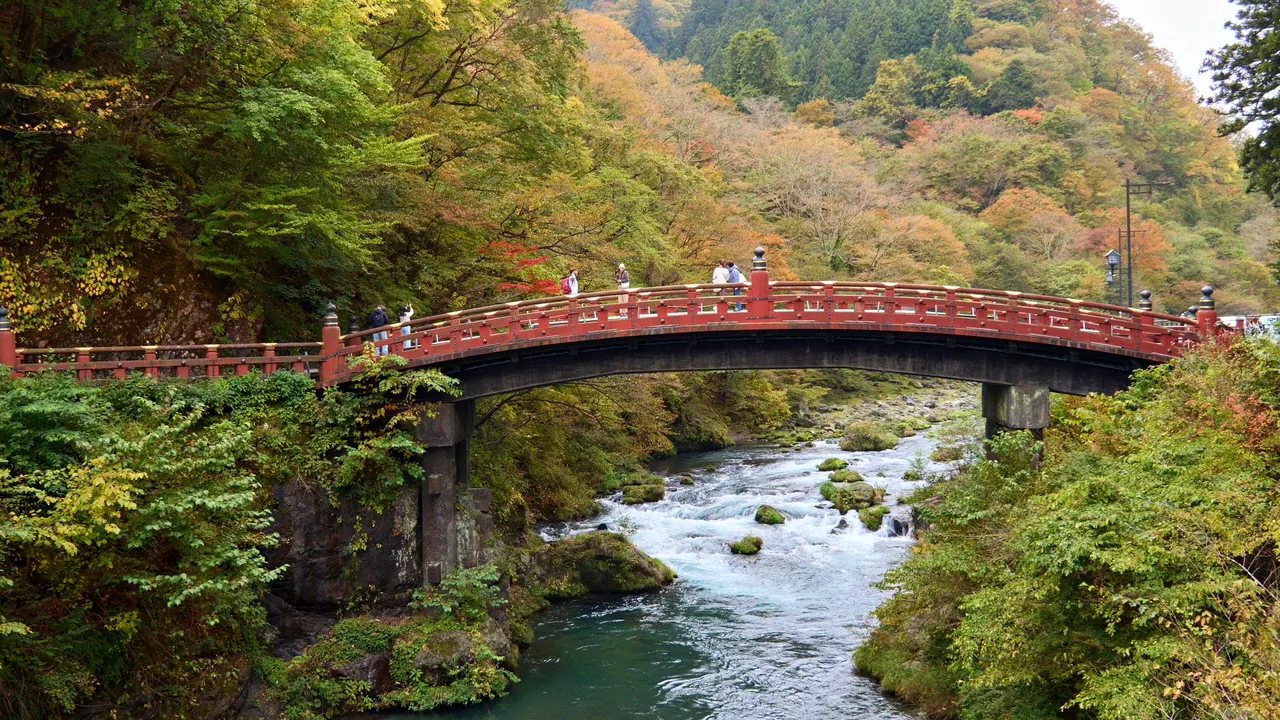
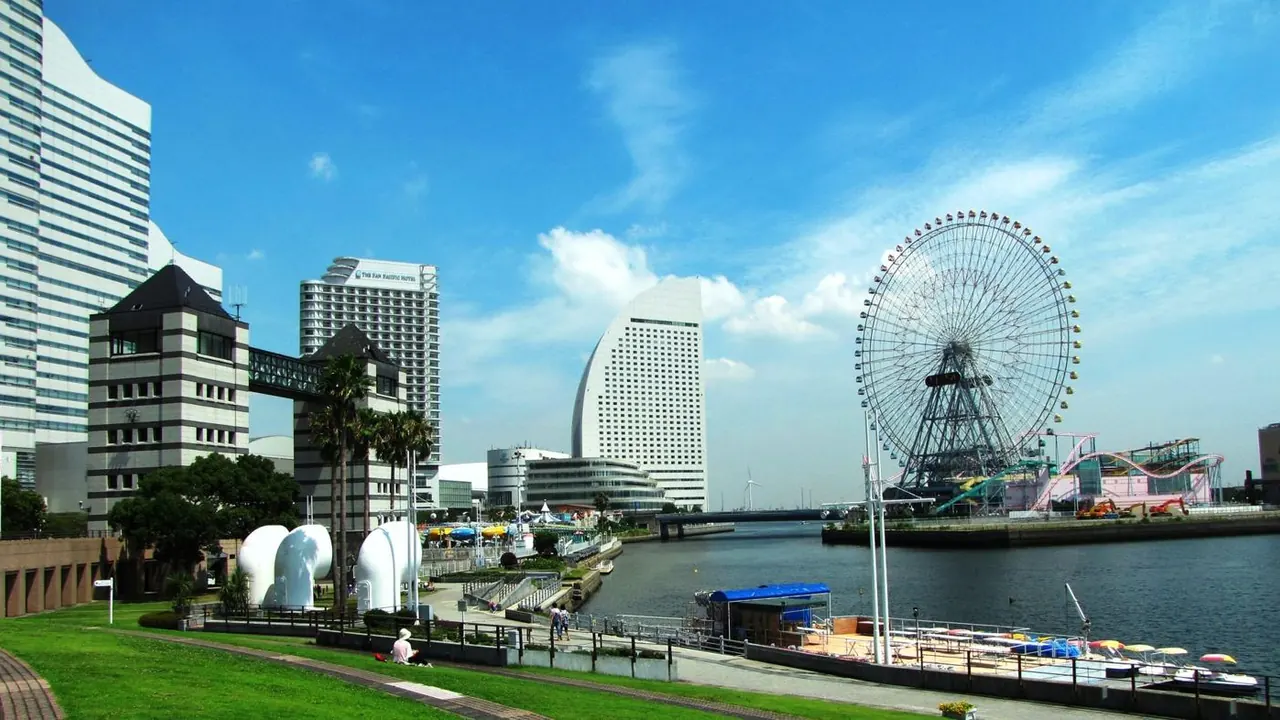
Photos: Nikko by lumoplank, CC0; Yokohama by Yoshio Kohara, CC BY 3.0, cropped.
Nikko or Yokohama?
Our verdict in twelve categories, each scored against the same fixed benchmark cities, and the climate month by month, so you can choose for your trip.
Choose Nikko for
- wellness
- nature and the outdoors
- culture and sights
Nikko suits travellers who come for Japan's shogun-era shrines set among giant cedars, with mountain lakes and waterfalls above them and evenings that end in a hot spring rather than a bar. It rewards a slow stay of two or three nights in a ryokan, especially for walkers and anyone who wants quiet. Expect little to eat beyond the local dishes and nothing at all to do after dark.
Choose Yokohama for
- food and drink
- shopping
- live music and the arts
Pick Yokohama if you want an easy, well-connected base with plenty to eat, outings for children along the waterfront and evenings in Noge's izakaya. Its own sights are pleasant rather than essential, but Tokyo, Kamakura and Hakone are all short train rides away. That makes it the stronger choice for a longer trip, a family trip, or anyone who would rather not depend on mountain buses.
Scoreboard
Twelve categories on one fixed scale from 0 to 100. The shaded stretch is the gap between the two.
Your match
Pick a travel style or drag the sliders, and both match scores follow your weighting.
Wins on wellness and nature and the outdoors with your weighting.
Wins on food and drink and shopping with your weighting.
What matters to you?
Category by category
What the scores mean for a trip.
Beaches & swimming
Neither city is a beach destination, but only Yokohama gets you into the sea. Nikko sits high in the mountains, and its lakes are for boats rather than bathing, so in summer the water you get is a hot spring or a hotel pool.
Yokohama has a small man-made beach of its own at Umi no Koen, and the grey-brown sands of Zushi, Kamakura and the Miura Peninsula are under an hour away by train. They make a good outing in July and August, though jellyfish arrive late in the season.
Food & drink
Yokohama has far more to eat. Between Japan's largest Chinatown, its own iekei ramen and sanma-men, a whole museum given over to ramen in Shin-Yokohama and the counter bars of Noge, you can eat something different at every meal, even if the finest restaurants are mostly in Tokyo.
Nikko's food is limited but has its own character: yuba from the temple cooking tradition, mountain soba and river fish, served mostly at lunch along the road to the shrines. The meal to plan for is the multi-course dinner at your ryokan, because once the day visitors leave there is little open in town.
Culture & sights
Nikko has the greater sight. The UNESCO-listed shrines among giant cedars centre on Toshogu, the most lavishly decorated shrine in Japan, with its lacquer, gold leaf and carved Yomeimon gate. Rinnoji, Taiyuinbyo and the Jizo statues of Kanmangafuchi fill a day or two of serious sightseeing.
Yokohama's heritage tells a different story: the port's opening to the West, seen in the merchant houses on the Yamate Bluff, the customs buildings of Kannai and the moored Hikawa Maru. Sankeien's relocated temples and teahouses are lovely, but nothing in the city has the impact of Toshogu.
Nightlife
There is no real contest here. In Nikko the day visitors are gone by late afternoon, and evenings mean a long ryokan dinner and a soak, with a few hotel lounges in Kinugawa as the only alternative.
Yokohama has proper evenings out, built around drinking and eating rather than dancing: izakaya and standing bars in Noge, karaoke and pubs around Kannai, and bars in Minato Mirai with views of the lit-up harbour. Anyone wanting a club night goes to Tokyo.
Nature & outdoors
Nikko has big scenery right on its doorstep. The Irohazaka road climbs to Lake Chuzenji beneath Mount Nantai, Kegon Falls drops nearly 100m, and the Senjogahara boardwalks lead on to more waterfalls. There are rafting trips in the Kinugawa gorge and maples that turn from the high marsh down to the town each autumn.
From Yokohama, good walking country is a train ride away: temple trails along Kamakura's wooded ridges, the Miura coast, and the Tanzawa mountains or Hakone further out. What Yokohama has that Nikko lacks is the sea, with Fuji on the horizon on clear winter days.
Day trips
Yokohama is much the better base for day trips. Tokyo is under half an hour away, Kamakura and Enoshima make a classic pair, and Hakone, Odawara and the Edo-period streets of Kawagoe are all easy to reach, so you could fill a week with a different outing every day.
From Nikko, Tokyo is a long day out, at about two hours each way. Utsunomiya's gyoza, the pottery town of Mashiko and the thatched post town of Ouchi-juku are rewarding trips, but beyond them the choice turns to mountains rather than towns.
Good for families
Yokohama could keep children busy for a week. There is a seafront amusement park with a big Ferris wheel, the Nippon Maru sailing ship to clamber over and harbour parks for easy afternoons, and the stations have nursing rooms. The hot, humid summer is the main thing to plan around.
Nikko works better for a short stay. Older children enjoy the ninja and samurai shows at the Edo-period village in Kinugawa, the park of miniature world landmarks and the boats on Lake Chuzenji. Because the attractions are spread out, two or three days is about right.
Getting around
Yokohama is the simpler city to move around. The Minatomirai Line, JR, the subways and the private railways all take the same tap-on card, signs are in English, and the harbour from Minato Mirai to Chinatown is a flat, pleasant walk.
Nikko is small but slower to cover than it looks. The town is a single road of about 2km, rising gently from the stations to the shrines. The lakes and falls depend on buses up the Irohazaka road, which can crawl for hours on autumn foliage weekends.
Shopping & style
Yokohama covers most needs. There are department stores and underground arcades around the main station, waterfront malls at Minato Mirai, and Motomachi, a long and smart street known for its leather goods. Chinatown adds Chinese tea and tableware. The shopping is comfortable rather than fashionable.
Nikko's shopping is one street of souvenir shops, worth browsing for the genuine local crafts: Nikko-bori carved trays and boxes and Nikko geta, sandals with woven straw soles. Packaged yuba and yokan make good things to take home.
Affordability
Overall costs work out much the same, but the money goes on different things. In Nikko, buses, shrine entry and simple soba lunches are reasonable and there are plain guesthouses, but the classic ryokan stay with dinner and breakfast is where budgets stretch, especially by the lakes in autumn.
Yokohama gives you more room to choose. You can stay in compact business hotels in Kannai or Shin-Yokohama, eat cheap ramen and Chinatown buns, and visit free sights such as the Bluff houses and Yamashita Park, with the harbour-view hotels at the expensive end.
Live music & performing arts
Yokohama has a real stage of its own. The Kanagawa Philharmonic plays at Minato Mirai Hall, the Kanagawa Arts Theatre stages opera and dance, and touring bands play the arenas by the harbour. Jazz runs deep, from the old record cafés of Noge and Kannai to an autumn festival.
Nikko's one great performance is the Toshogu festival in spring and autumn, when around a thousand men in samurai armour walk in procession and archers shoot from horseback. It is worth timing a visit around, but on other days there is nothing to book.
Wellness & relaxation
Nikko is the place to soak. The riverside inns along the Kinugawa gorge, the milky, sulphur-scented water of Yumoto Onsen on Lake Yunoko and open-air baths looking onto forest make bathing the centre of the day. On weekdays and in winter, the mountain resorts are deeply quiet.
Yokohama offers the city version: neighbourhood sento and a large hot-spring complex on the Minato Mirai waterfront, where people spend a whole evening. Sankeien's ponds and the Bluff's rose gardens add calm, but the pace is still that of a working city.
When should you go?
Pick your month. The climate figures are measured averages, not a forecast.
Nikko in July
Yokohama in July
Daytime high, °C
Rainfall in the month, mm
Where the figures come from
Nikko has no weather station within reach, so its figures come from a gridded climate model rather than a measured record, and read a broad area rather than the city itself.
Yokohama's sunshine is measured 29 km from the centre, at Tokyo.
Temperature and rainfall are climate normals, averaged over the years shown. Nikko: 2001-2020 normals, NASA POWER reanalysis grid, no weather station within 90 km. Yokohama: 1971-2000 (sunshine 1991-2020, rainfall 1991-2020) normals, Yokohama (1.6 km from centre).
Nikko has proper mountain seasons. In January daytime highs are around 3°C and there is snow higher up, which suits onsen and frozen waterfalls better than long walks. Late spring and autumn are the best times for the shrines and for hiking. Summer is the wettest stretch, peaking in July at about 202mm, and the rain stays heavy through September and October, although the autumn colour makes October worth it. High summer reaches the high twenties in town and is cooler up by the lakes.
Yokohama is milder all year. January is near 10°C, and the clear, sunny winter days are good for walking the harbour. July and August are the beach months, hot and humid, with the sea reaching about 26°C in August. Spring is pleasant before the June rains. Early autumn is the wettest time, with October at around 276mm, so November is often the more reliable month for sightseeing.
Which traveller are you?
For a food and nightlife trip, Yokohama is the clear choice. Chinatown, the home-grown iekei ramen and the grill bars and standing counters of Noge give you real choice well into the evening. Nikko's restaurants serve lunchtime day-trippers, and its main street goes dark early.
On a relaxing and wellness trip, Nikko wins easily. Hot springs run through the whole area, the inns serve long dinners and the evenings are early and quiet. Yokohama's bath complexes are pleasant, but for a true mountain onsen you would have to travel out of the city anyway.
On a family trip with children, Yokohama is far easier. A noodle museum where children pack their own noodles, the island aquarium at Hakkeijima and Zoorasia fill several days. In Nikko, the shrine staircases and long bus rides soon tire small children.
Before you go
| Measure | Nikko | Yokohama |
|---|---|---|
| Official language | Japanese | Japanese |
| Currency | Yen (JPY) | Yen (JPY) |
| Sockets | AB100 V, 50 and 60 Hz depending on the region | AB100 V, 50 and 60 Hz depending on the region |
| Driving side | Left | Left |
| Time zone | UTC+9 | UTC+9 |
| Emergency number | Police 110, fire 119 | Police 110, fire 119 |
| Elevation | 660 m | 24 m |
| Main airport | Tokyo Haneda International Airport (HND)134 km from centre98 non-stop destinations | Tokyo Haneda International Airport (HND)18 km from centre98 non-stop destinations |
| Public holidays this year | 16 days | 16 days |
By the numbers
| Measure | Nikko | Yokohama |
|---|---|---|
| City population | 77,027 | 3,757,630 |
| People per km² | 53 | 8,585 |
| Museums within 10 km | 5 | 38 |
| UNESCO World Heritage sites within 50 km | 1 | 1 |
| Swim season, months above 21 °C | - | 5 months |
Where else could you go?
Every comparison below shares a destination with this one, so you can follow Nikko or Yokohama somewhere new.