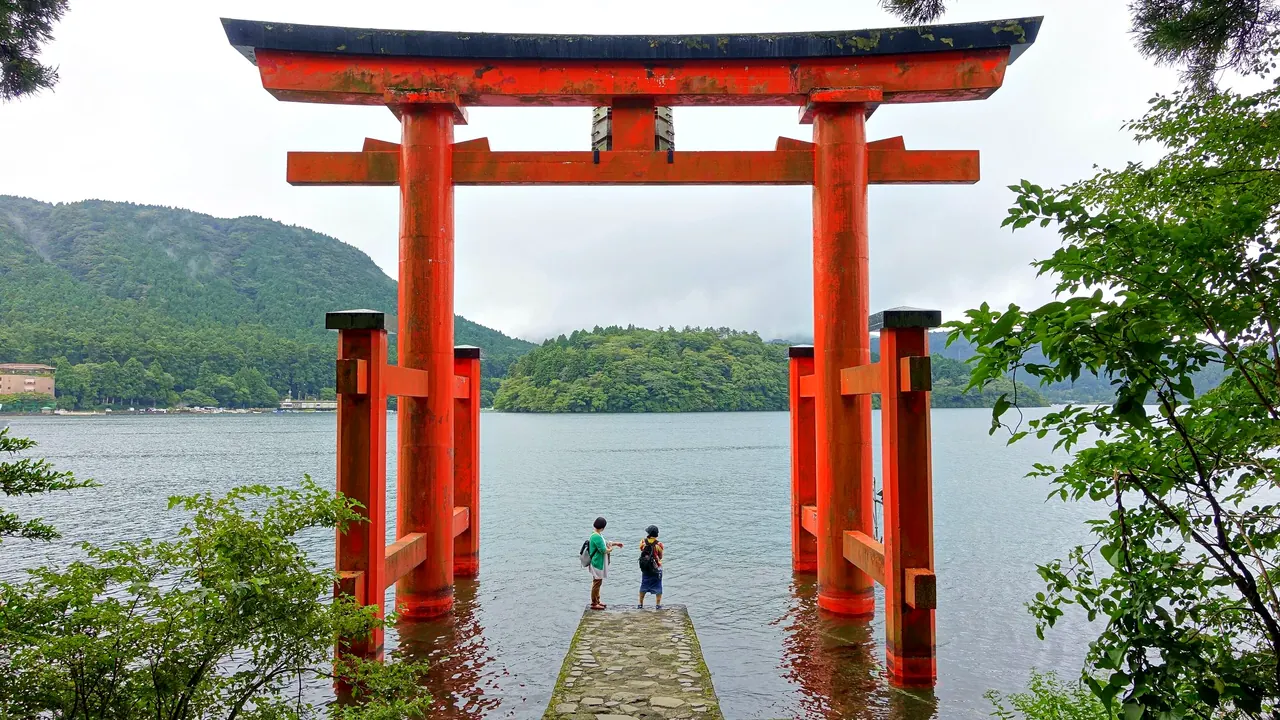
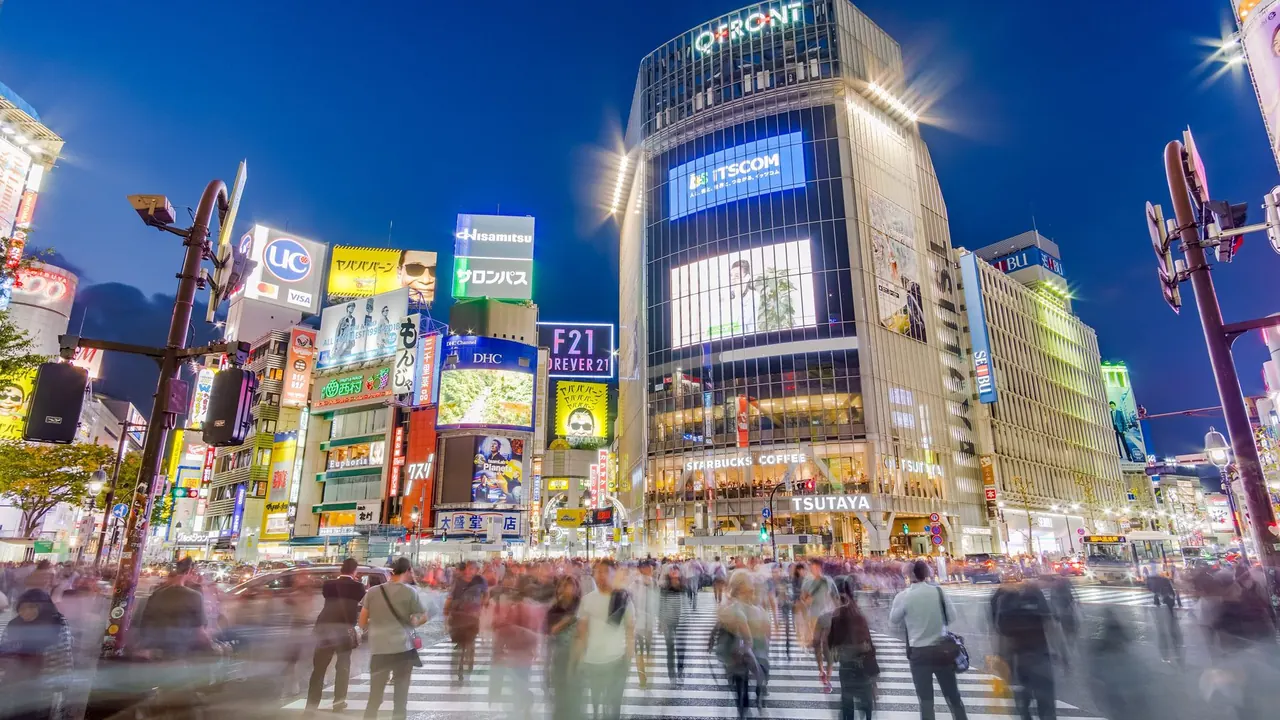
Photos: Hakone by Daderot, CC0; Tokyo by Benh LIEU SONG, CC BY-SA 2.0, cropped.
Hakone or Tokyo?
Our verdict in twelve categories, each scored against the same fixed benchmark cities, and the climate month by month, so you can choose for your trip.
Choose Hakone for
- wellness
- nature and the outdoors
Hakone is for travellers who want to slow down. A night or two at a ryokan, with an outdoor bath under the cedars, a long kaiseki dinner and an early night in a yukata, is the whole point, and the volcanic caldera around it, with Lake Ashi, the Owakudani vents and the walks along the Old Tokaido Road, fills the days between soaks. Pick it if quiet evenings sound like a reward rather than a loss.
Choose Tokyo for
- nightlife
- live music and the arts
- shopping
Tokyo is the better choice for almost everything else a trip can hold: some of the world's best eating, tiny bars stacked floor upon floor, kabuki and concert halls, great museums in Ueno and shopping from Ginza to Shimokitazawa. It is also far easier with children and simpler to get around. Many visitors base themselves in the capital and add Hakone as a one or two-night escape.
Scoreboard
Twelve categories on one fixed scale from 0 to 100. The shaded stretch is the gap between the two.
Your match
Pick a travel style or drag the sliders, and both match scores follow your weighting.
Wins on wellness and nature and the outdoors with your weighting.
Wins on nightlife and live music and the arts with your weighting.
What matters to you?
Category by category
What the scores mean for a trip.
Beaches & swimming
Neither place is a beach destination, though Tokyo comes closer. From the capital, direct trains run in about an hour to the Shonan coast, where Yuigahama, Zushi and Enoshima offer long stretches of dark volcanic sand, and Odaiba's man-made shore is pleasant for a stroll.
Hakone has no swimming of its own. Lake Ashi is off limits and the coast below at Odawara is steep and pebbly, so a swim means heading on to Atami's sheltered sand for a summer outing.
Food & drink
Food is where Tokyo pulls furthest ahead. Its range runs from station soba counters and one-dish specialists to Tsukiji's outer market, the yakitori alleys of Yurakucho and more Michelin-starred restaurants than any city on earth, and good food is easy to find at any hour.
Hakone's best meal is the kaiseki dinner served at your inn, which can be superb, but beyond the ryokan you are left with soba and tofu shops in Yumoto, black eggs at Owakudani and lakeside set meals, most of them closed by early evening.
Culture & sights
Tokyo offers far more to see. Ueno Park alone holds the Tokyo National Museum and the National Museum of Western Art, and Senso-ji, Meiji Jingu, the Imperial Palace moats and the lanes of Yanaka add heritage spread across the modern city.
Hakone's sights are fewer but distinctive for a mountain resort: the sculpture lawns of the Open-Air Museum, the Pola Museum in its beech forest, the rebuilt Sekisho checkpoint and the torii gate standing in Lake Ashi. Two unhurried days cover them all.
Nightlife
The two could hardly be further apart after dark. Tokyo has Golden Gai's two hundred tiny bars, smoky Omoide Yokocho, whisky and vinyl bars in every district and clubs in Shibuya and Roppongi that run until morning.
In Hakone, the evening is a bath and an early night, with only a handful of izakaya in Yumoto staying open a little longer.
Nature & outdoors
Hakone has the better landscape on the doorstep. You are inside a volcanic caldera in a national park, with steaming sulphur vents at Owakudani, Lake Ashi ringed by forest, Fuji on clear days and trails leaving straight from the villages, and the seasons change it sharply, from hydrangeas in early summer to red maples in November.
Tokyo's green spaces inside the city are parks and gardens such as Shinjuku Gyoen and Yoyogi. The real hills, Mount Takao and the Okutama gorges, lie an hour or more away by train.
Day trips
Both make good bases, and they share Kamakura and Yokohama within easy reach. The difference is the direction you head in. From Hakone the natural outings run south and west, to Odawara's castle, Atami and the temple towns of Izu, or over the ridge to the Fuji lakes, and Tokyo itself is a day trip on the Romancecar.
Tokyo's fast lines open up the north instead: the shrines of Nikko, the merchant streets of Kawagoe, canal-side Sawara and Karuizawa by shinkansen, with Hakone as one of its own classic outings.
Good for families
Tokyo is much the easier choice with children. Disneyland and DisneySea, the Ghibli Museum, Ueno Zoo and the hands-on Miraikan can fill a week, and lifts, baby rooms and spotless toilets in every station make daily life simple.
Hakone works for a short stay of two or three days. Children love the zigzag railway, the ropeway over the vents and the pirate ship across the lake, but formal inns, nude communal baths and steep paths that defeat a pushchair make it harder going.
Getting around
Tokyo's dense network of metro, overground lines and the Yamanote loop puts nearly every sight a short walk from a station, and the neighbourhoods between are pleasant to walk. Its only snags are crowded rush hours and huge stations that confuse at first.
Hakone needs no car either, since one pass covers the mountain railway, cable car, ropeway, lake boats and buses, and the loop is a sight in itself. It is slow, though, with villages kilometres apart and queues at the ropeway at weekends.
Shopping & style
Tokyo is a destination for shopping in its own right, from the department stores of Ginza and Omotesando's flagships to vintage in Shimokitazawa, knives on Kappabashi, books in Jimbocho and electronics in Akihabara.
Hakone has one craft worth seeking out, the yosegi-zaiku wood marquetry made around Hatajuku, plus sweets and pickles along Yumoto's main street. Anyone wanting fashion has to take the bus to the outlet mall near Gotemba.
Affordability
Tokyo is the easier place to keep costs down, because eating out is such a bargain, from ramen and set lunches to convenience-store meals, and many shrines and parks are free. The money goes on small central hotel rooms.
In Hakone the ryokan night with dinner, breakfast and a bath is the costly heart of the visit, especially with a private outdoor bath or at weekends in autumn. Simple inns in Yumoto and public day-bathhouses soften the bill.
Live music & performing arts
This is all Tokyo. Kabuki at the Kabuki-za, Noh theatres, the Takarazuka Revue, the NHK Symphony at Suntory Hall, opera at the New National Theatre and live houses in Koenji and Shimokitazawa give a choice every night.
Hakone has no theatre or concert hall, and an occasional museum recital or performance at an inn is the most a visitor will find.
Wellness & relaxation
Both have serious bathing cultures, but Hakone is built around them. Its hot-spring villages, from riverside Yumoto to the milky sulphur water of Sengokuhara, offer outdoor baths under maples, private baths on the balcony and slow evenings in a yukata, best midweek in autumn or winter.
In Tokyo, bathing is part of daily life in neighbourhood sento with their painted Fuji murals and in big sauna complexes, while calm comes from temple grounds and gardens between the crowds.
When should you go?
Pick your month. The climate figures are measured averages, not a forecast.
Hakone in July
Tokyo in July
Daytime high, °C
Rainfall in the month, mm
Where the figures come from
Hakone's temperatures are measured 43 km from the centre, at Kawaguchiko.
Hakone has no rain gauge within 25 km of the centre, so its rainfall comes from a gridded climate dataset read at the city rather than from a gauge further away.
Temperature and rainfall are climate normals, averaged over the years shown. Hakone: 1971-2000 (rainfall 1991-2020) normals, Kawaguchiko (42.9 km from centre). Tokyo: 1991-2020 normals, Tokyo (3.6 km from centre).
Hakone sits high in the mountains and stays several degrees cooler than Tokyo all year. Its winters are cold, with daytime highs around 5°C in January, but they are dry and bring the clearest views of Fuji, ideal weather for an outdoor onsen with snow-cold air on your face. Tokyo's winter is milder, dry and sunny, good weather for walking the city. Spring and autumn suit both places, and November is especially kind, cool enough for long walks and lit by autumn colour.
Summer is where they part. Hakone stays fresher at around 27°C in August, though rain and mist often hide Fuji, while Tokyo grows hot and humid at about 32°C, which makes long days on foot tiring. Both get heavy rain from June to October, worst in September and October, when Tokyo sees over 230mm in a month. For a swim, both head to Sagami Bay. The water reaches about 25°C from July to September, but the official bathing season covers only July and August.
Which traveller are you?
On a relaxing and wellness trip, Hakone is the clear choice. Seventeen hot-spring areas, inns with private balcony baths and silent evenings make rest the whole agenda, whereas Tokyo's sento and bathing complexes are a pleasant break from the crowds rather than a retreat.
For an outdoors trip, Hakone puts you right inside the landscape: ridge walks to Mount Kintoki, the cedar-lined Old Tokaido Road, the pampas grass at Sengokuhara and Fuji over the lake. From Tokyo, Mount Takao and Okutama mean a train ride before every hike.
On a food and nightlife trip, Tokyo wins outright. Ramen counters, sushi bars, depachika food halls, Golden Gai's tiny bars and clubs in Shibuya open until the first train add up to a city of nights out, while Hakone is shut and dark after dinner.
Before you go
| Measure | Hakone | Tokyo |
|---|---|---|
| Official language | Japanese | Japanese |
| Currency | Yen (JPY) | Yen (JPY) |
| Sockets | AB100 V, 50 and 60 Hz depending on the region | AB100 V, 50 and 60 Hz depending on the region |
| Driving side | Left | Left |
| Time zone | UTC+9 | UTC+9 |
| Emergency number | Police 110, fire 119 | Police 110, fire 119 |
| Elevation | 734 m | 6 m |
| Main airport | Tokyo Haneda International Airport (HND)71 km from centre98 non-stop destinations | Tokyo Haneda International Airport (HND)18 km from centre98 non-stop destinations |
| Public holidays this year | 16 days | 16 days |
By the numbers
| Measure | Hakone | Tokyo |
|---|---|---|
| City population | 10,925 | 14,264,798 |
| People per km² | 118 | 6,501 |
| Museums within 10 km | 16 | 192 |
| UNESCO World Heritage sites within 50 km | 2 | 1 |
| Swim season, months above 21 °C | 5 months | 4 months |
Where else could you go?
Every comparison below shares a destination with this one, so you can follow Hakone or Tokyo somewhere new.