Photos: Kanazawa by 663highland, CC BY 2.5, cropped; Yokohama by Yoshio Kohara, CC BY 3.0, cropped.
Kanazawa or Yokohama?
Our verdict in twelve categories, each scored against the same fixed benchmark cities, and the climate month by month, so you can choose for your trip.
Choose Kanazawa for
- culture and sights
- wellness
- prices
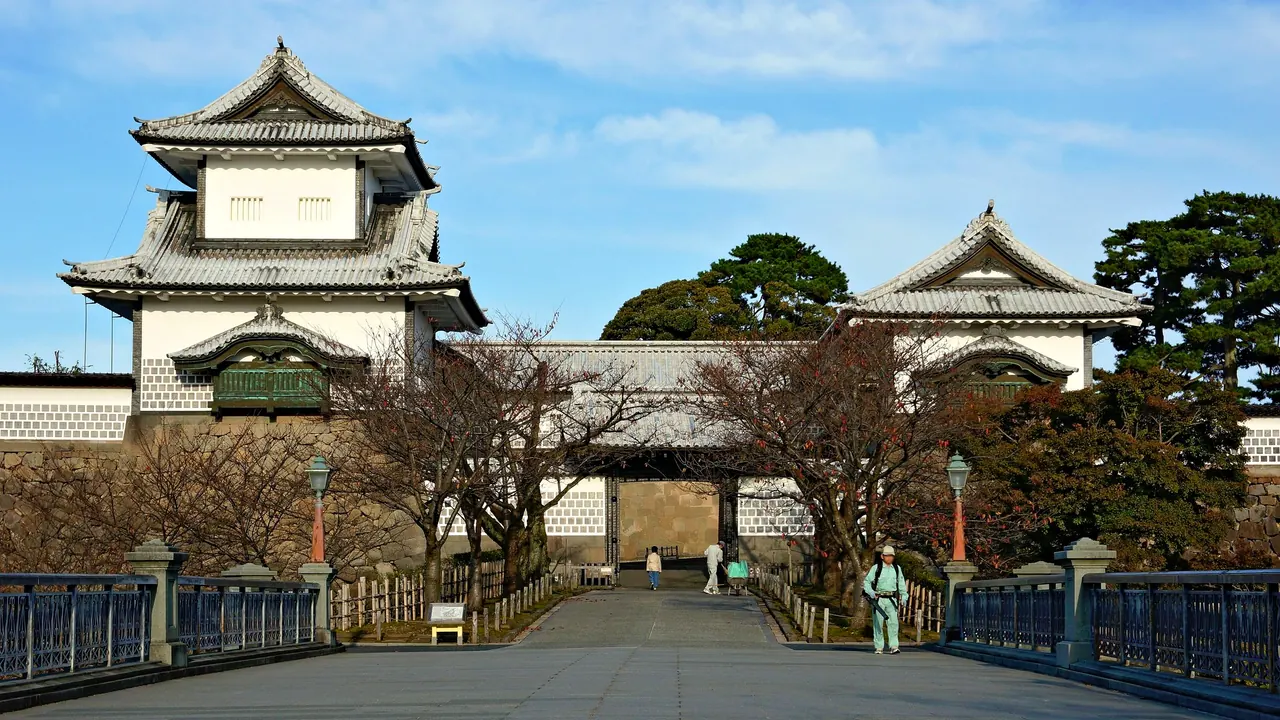
Kanazawa suits travellers who came to Japan for its older face. The war passed it by, so the samurai lanes, latticed teahouse streets and one of the country's great gardens are all still there, along with serious craft workshops and some of the best seafood on the Sea of Japan. Hot-spring villages lie close by and the pace is slow. It rewards two or three unhurried days, ideally in spring or autumn, more than a long stay or a trip with small children.
Choose Yokohama for
- families
- getting around
- nightlife
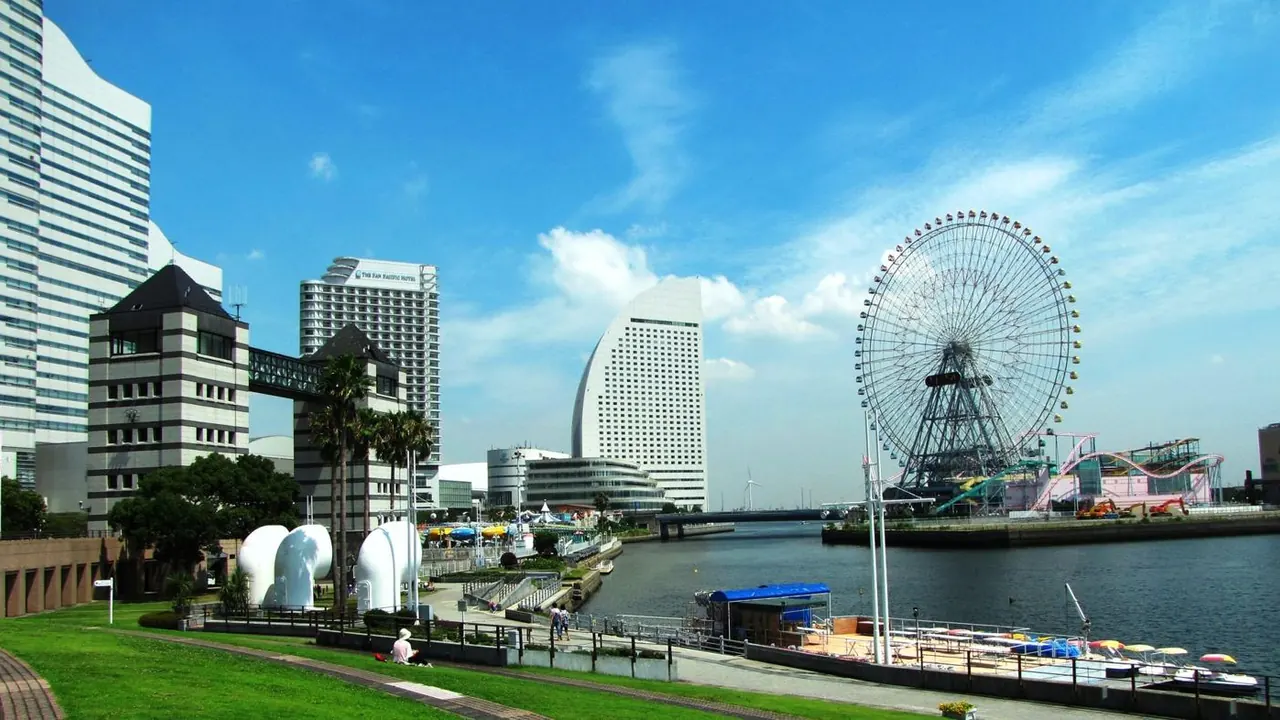
Yokohama is the better pick if your trip depends on ease and range. Trains go everywhere, Tokyo and Kamakura are each under half an hour away, and the city has some of the best attractions for children in Japan. The heritage is a treaty-port story rather than a feudal one, and nothing in town is a must-see in its own right. As a comfortable base for a week of varied outings, especially with a family, it is hard to beat.
Scoreboard
Twelve categories on one fixed scale from 0 to 100. The shaded stretch is the gap between the two.
Your match
Pick a travel style or drag the sliders, and both match scores follow your weighting.
Wins on culture and sights and wellness with your weighting.
Wins on families and getting around with your weighting.
What matters to you?
Category by category
What the scores mean for a trip.
Beaches & swimming
Neither city is a beach destination, but Yokohama gives you more choice. Fast trains reach the Shonan coast at Zushi, Kamakura and Enoshima, and the Miura Peninsula, so a swim can be added to a temple visit on the same day.
Kanazawa has long sandy beaches at Uchinada and Chirihama, where cars drive on the firm sand. Getting there is less simple, though, and outside July and August that coast is windswept and grey.
Food & drink
Both cities eat very well, in different ways. Kanazawa is about refined regional Japanese cooking: snow crab and sweet shrimp from Omicho Market, Kaga dishes such as jibuni duck stew, kaiseki dinners, teahouse sweets and local sake.
Yokohama is more casual and more international. It has Japan's largest Chinatown, its own iekei ramen, a ramen museum and the small grill bars of Noge. For a special dinner, Kanazawa is the stronger choice.
Culture & sights
Kanazawa is clearly ahead. Because the war spared it, the city still has Kenroku-en, the wooden teahouse streets of Higashi Chaya and the earthen samurai walls of Nagamachi, as well as the 21st Century Museum of Contemporary Art.
Yokohama tells another story, Japan's opening to foreign trade, through the Western merchant houses on the Bluff, the Red Brick Warehouses and the moored liner Hikawa Maru. Sankeien's garden of relocated temples is its finest sight, but the city has nothing to match Kanazawa's old streets.
Nightlife
Yokohama gives you more to do in the evening. Noge's standing bars and izakaya fill up after work, Kannai adds pubs and karaoke, and Minato Mirai has bars with views over the lit harbour. Even so, it closes earlier than its size suggests.
Kanazawa's evenings centre on Katamachi's sake bars and snack bars, plus a few quiet bars in old chaya houses. They are good for a slow drink after dinner and little more.
Nature & outdoors
Yokohama has easier access to the outdoors. Wooded temple trails around Kamakura, coastal walks on the Miura Peninsula, the Tanzawa ridges and the volcanic valleys of Hakone are all reachable by train, and Mount Fuji shows on clear winter days.
Kanazawa's wilder country, sacred Mount Hakusan and the rugged Noto coast, is largely out of reach without a car. In town, the riverbanks make gentle walks, and the snowy winters suit skiers more than hikers.
Day trips
Both are good bases, but Yokohama's outings are closer and more varied. Tokyo and Kamakura are each under half an hour away, and Hakone and the Edo-era streets of Kawagoe are easy to reach by direct train.
From Kanazawa, the highlights are the thatched farmhouse villages of Shirakawa-go and Gokayama, along with Takayama and the Zen monastery of Eihei-ji. They are memorable but mostly involve longer bus rides, so each one takes a full day.
Good for families
With children the gap is wide. Yokohama has the Cup Noodles Museum, the Anpanman museum, a seafront Ferris wheel, the aquarium and rides at Hakkeijima and a large modern zoo, and the flat harbour is easy with a pushchair.
Kanazawa is just as safe and clean. In the city, though, the main draws for children are the playful installations at the 21st Century Museum and the trick doors of the ninja temple. The dinosaur museum and the zoo mean driving out of town.
Getting around
Yokohama is much easier to get around. An underground line, JR trains, subways and private railways all take the same IC card, with English signs and fast links to Tokyo and Haneda.
Kanazawa has no metro or tram. Its sights sit within about 2km of the station, so walking or the bike-share scheme often works better than the slow loop buses, at least until snow makes the streets hard going.
Shopping & style
There is little between them, but they sell different things. Kanazawa is the place for Japanese crafts: gold-leaf lacquerware, Kutani porcelain, Kaga yuzen silk and tea bowls by serious makers.
Yokohama offers easy, everyday shopping, with department stores and underground arcades by the station, waterfront malls, Motomachi's leather goods and Chinese teas in Chinatown. For luxury labels, both send you elsewhere.
Affordability
The two cost about the same, with plenty of tidy business hotels and cheap noodle and set-lunch meals. What drives up the cost is different. In Kanazawa it is the speciality food, kaiseki dinners and snow crab, plus Shinkansen fares and ryokan nights.
In Yokohama it is the harbour-view hotels and family attraction tickets, though the Bluff houses, the parks and the harbour walks are free.
Live music & performing arts
Yokohama has the wider programme. Minato Mirai Hall has a large pipe organ, the Kanagawa Arts Theatre stages opera and dance, arenas host touring bands, and old jazz cafés reflect the port's long jazz history. Tokyo's stages are also close by.
Kanazawa's offer is smaller and more traditional: Noh at the prefectural theatre, geisha dance in the chaya districts and the respected Orchestra Ensemble Kanazawa. Plan an evening around one of these.
Wellness & relaxation
Kanazawa is the better place to unwind, because its bathing is the traditional kind and is close at hand. Inns beside a mountain stream at Yuwaku and the three Kaga spa towns put a proper onsen stay within easy reach. In town, hotel baths and the old bathhouses mean you can have a hot soak without making a separate trip. The city is also never crowded, so the whole stay slows down.
Yokohama's version is more urban. Its big bath complexes, saunas included, are good for a long evening after a day of sightseeing. For an inn with mountain views you have to travel to Hakone, though, and the quiet of Sankeien and the Bluff gardens is something you go looking for rather than something that surrounds you.
When should you go?
Pick your month. The climate figures are measured averages, not a forecast.
Kanazawa in July
Yokohama in July
Daytime high, °C
Rainfall in the month, mm
Where the figures come from
Yokohama's sunshine is measured 29 km from the centre, at Tokyo.
Temperature and rainfall are climate normals, averaged over the years shown. Kanazawa: 1991-2020 normals, Kanazawa (3.2 km from centre). Yokohama: 1971-2000 (sunshine 1991-2020, rainfall 1991-2020) normals, Yokohama (1.6 km from centre).
Winter is where the two part ways. Kanazawa's December and January are cold, grey and very wet, with about 301mm of rain or snow in December and little sunshine, so walking the streets means boots and short, dim days. Yokohama's winter is milder, far drier and much brighter, with highs around 10°C, which makes the cold months good for walking the harbour and the Bluff.
Spring is mild in both cities, and May is Kanazawa's driest month and one of its sunniest. July and August are hot and humid in both, reaching about 31°C in Kanazawa, which is too warm for long walks in the middle of the day. The sea is warm enough for swimming from July to September, peaking at around 27°C off Kanazawa in August. The autumn rain comes at different times. In Kanazawa, September is wet and October is the settled month before heavy rain returns in November. Yokohama's wettest stretch runs through September and October, so November is its better autumn month.
Which traveller are you?
On a culture and arts trip, Kanazawa is the stronger choice. Kenroku-en, the Higashi Chaya teahouses, the samurai lanes of Nagamachi, Noh performances and its living crafts give it a depth of Edo-period heritage that Yokohama's port history does not match.
On a family trip with children, choose Yokohama. The Cup Noodles Museum, the island aquarium at Hakkeijima, Zoorasia and the waterfront rides keep children busy, and step-free stations make pushchairs easy. Kanazawa's gardens and teahouses can feel slow to young children.
For a relaxing and wellness trip, Kanazawa wins. Yuwaku Onsen is half an hour away, the Kaga hot-spring towns make an easy overnight stay, and quiet mornings in the garden suit a slow trip. Yokohama's baths are urban, and its mountain inns are in Hakone.
Before you go
| Measure | Kanazawa | Yokohama |
|---|---|---|
| Official language | Japanese | Japanese |
| Currency | Yen (JPY) | Yen (JPY) |
| Sockets | AB100 V, 50 and 60 Hz depending on the region | AB100 V, 50 and 60 Hz depending on the region |
| Driving side | Left | Left |
| Time zone | UTC+9 | UTC+9 |
| Emergency number | Police 110, fire 119 | Police 110, fire 119 |
| Elevation | 28 m | 24 m |
| Main airport | Komatsu Airport / JASDF Komatsu Air Base (KMQ)29 km from centre7 non-stop destinations | Tokyo Haneda International Airport (HND)18 km from centre98 non-stop destinations |
| Public holidays this year | 16 days | 16 days |
By the numbers
| Measure | Kanazawa | Yokohama |
|---|---|---|
| City population | 462,479 | 3,757,630 |
| People per km² | 989 | 8,585 |
| Museums within 10 km | 27 | 38 |
| UNESCO World Heritage sites within 50 km | 1 | 1 |
| Swim season, months above 21 °C | 4 months | 5 months |
Where else could you go?
Every comparison below shares a destination with this one, so you can follow Kanazawa or Yokohama somewhere new.