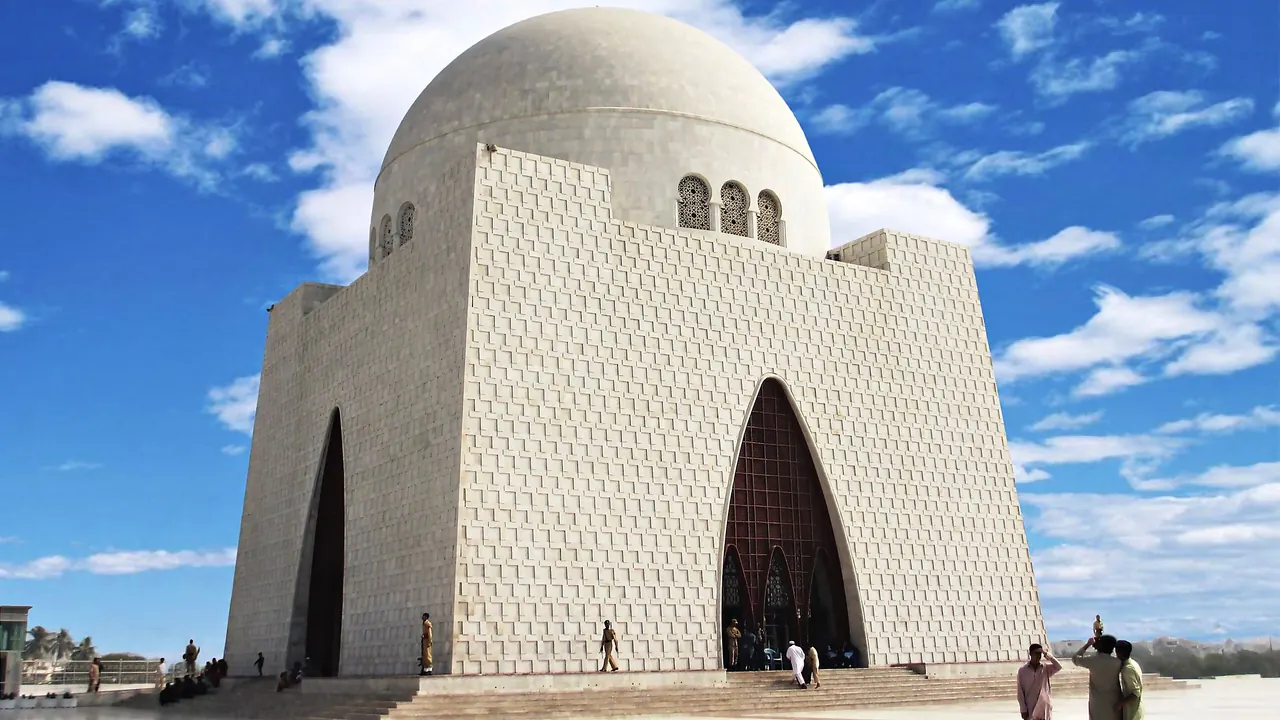
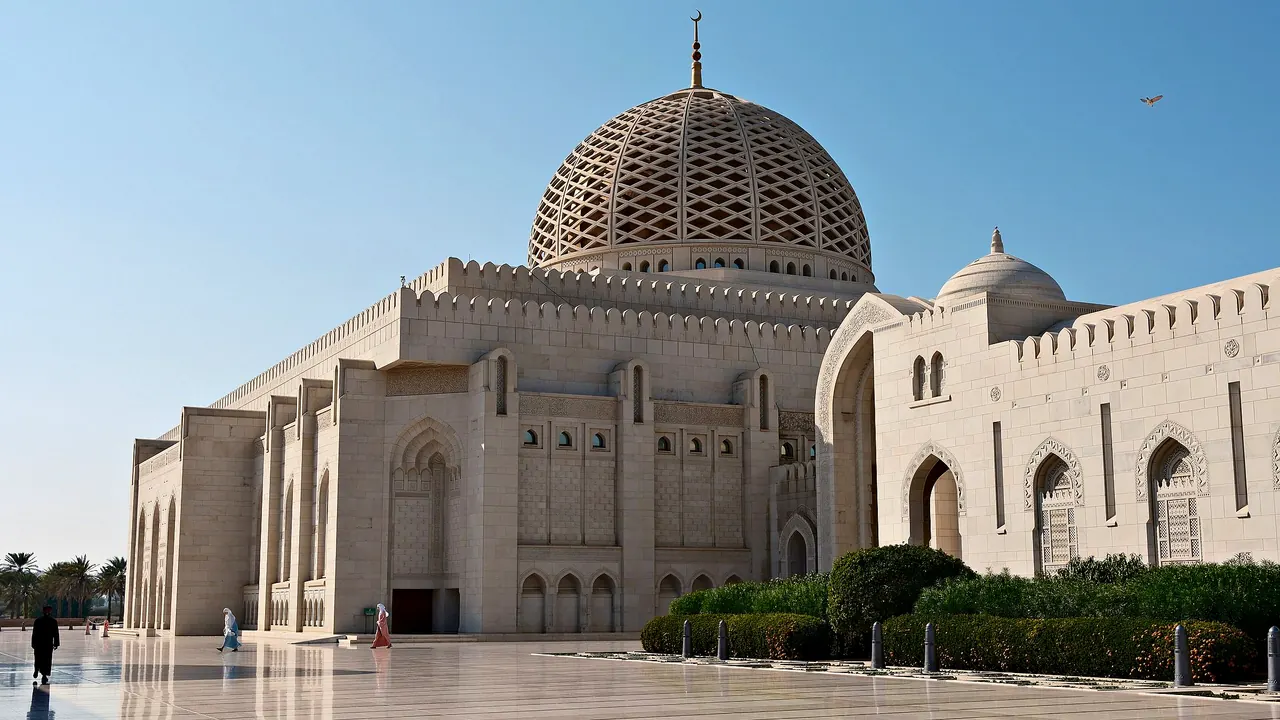
Photos: Karachi by M.irfan44, CC BY-SA 4.0, cropped; Muscat by Alli Khalil, CC BY 4.0, cropped.
Karachi or Muscat?
Our verdict in twelve categories, each scored against the same fixed benchmark cities, and the climate month by month, so you can choose for your trip.
Choose Karachi for
- prices
- food and drink
- shopping
Karachi is for the traveller who plans a day around meals. Nihari on Burns Road, late-night charcoal grills and seafood at Do Darya make it one of the region's great eating cities, and it is far cheaper than Muscat for food, transport and ordinary hotels. Add tailoring and fabric bazaars and you have a rewarding trip, as long as you can live with heavy traffic, heat and a city that never really quietens down.
Choose Muscat for
- nature and the outdoors
- wellness
- beaches
Muscat suits those who want scenery, sea and calm. The Hajar mountains drop straight into clear water, the coves have proper swimming and snorkelling, and the forts and villages of the interior make the best day trips of the two. It is the easier choice with children and the obvious one for a restful resort stay, though rooms cost far more and the food is less memorable.
Scoreboard
Twelve categories on one fixed scale from 0 to 100. The shaded stretch is the gap between the two.
Your match
Pick a travel style or drag the sliders, and both match scores follow your weighting.
Wins on prices and food and drink with your weighting.
Wins on nature and the outdoors and wellness with your weighting.
What matters to you?
Category by category
What the scores mean for a trip.
Beaches & swimming
Karachi's famous seafront at Clifton and Sea View is for evening walks, camel rides and snacks, not for swimming. To get in the water you drive about an hour west to Hawke's Bay, Sandspit or French Beach, rent a hut for the day and swim fully clothed. The monsoon brings swimming bans in high summer.
Muscat is the better beach city by a distance. It has a long stretch of sand at Qurum within the city, and clear-water coves around Qantab, Al Bustan and Yiti. Boats run out to the Daymaniyat Islands for coral snorkelling. Dress codes are still modest, but the swimming itself is easy and attractive.
Food & drink
Eating is Karachi's strongest suit and one of the main reasons to go. You get nihari and haleem in the old-city streets, its own spicy potato biryani, bun kebabs off the grill late at night and fish cooked to order at Do Darya, all eaten at a social hour that runs past midnight.
Muscat's own cooking is mild and harder to find: shuwa, majboos and halwa at a few floor-seated traditional places. Most of its good cheap eating comes from Keralan and Pakistani canteens in Ruwi and Mutrah, so in Karachi you eat that kind of food where it comes from.
Culture & sights
Muscat has the more striking sights. The Sultan Qaboos Grand Mosque is the highlight, and Old Muscat packs Al Alam Palace, the Portuguese-era forts and Bait al Zubair into one small cove. The Mutrah corniche, with its merchants' houses and dhows, makes a fine walk.
Karachi's sights tell a different story, of a colonial port and Pakistan's first capital. They include the Mazar-e-Quaid, the sandstone of Frere Hall and Empress Market, Indus Valley and Gandhara finds at the National Museum and crowds of devotees at Abdullah Shah Ghazi's shrine. They are interesting but scattered across a huge city.
Nightlife
Neither city is a place for a night out, but they are quiet in different ways. In Karachi there are no public bars at all. Evenings mean a late dinner, tea at a dhaba and a drive along the Clifton seafront, with families out well past midnight. Muscat does at least serve a drink in licensed hotels, which have lounges and a few hotel nightclubs busy with expatriates at the weekend, while locals stroll the Mutrah corniche or sit in shisha cafés.
Nature & outdoors
Muscat's setting is spectacular. Bare Hajar ridges fall into fjord-like inlets, and within reach are Wadi Shab's emerald pools, the Bimmah sinkhole and the terraced gardens of Jebel Akhdar. At sea there are spinner dolphins, kayaking along the coves and diving with turtles in the Daymaniyat reserve.
Karachi sits on a flat, dry plain with little green space, so its outdoor life is quieter and mostly by the water. You can take boats into the mangrove creeks to go crabbing at night, see turtles nesting at Hawke's Bay and Sandspit, snorkel off Churna Island, or drive out to the lakes at Haleji and Keenjhar to watch birds.
Day trips
Karachi has one excellent outing, eastward to the vast carved necropolis at Makli and Thatta's blue-tiled Shah Jahan Mosque, stopping at the Chaukhandi tombs and Banbhore on the way. After that, little nearby is worth the drive.
Muscat has days of options. The interior holds Nizwa's round fort and Friday livestock market, the mud-brick fort at Bahla, painted Jabrin Castle and the hanging village of Misfat al Abriyeen. Along the coast there are Sur's dhow yards and the ruins of Qalhat. Both cities need a car and driver or a hire car.
Good for families
Children are made welcome in both, but only Muscat is easy with them. Karachi offers camel and pony rides on Clifton beach and mall play areas. Against that are long drives in heavy traffic, few pavements, humid heat and food and water that need care.
Muscat is safe, clean and unhurried. Families can watch dolphins on a morning boat trip, snorkel in shallow coves, spend evenings in Qurum's park and visit the aquarium tunnel and snow park at the Seeb mall. Winter with a beach resort as your base works best.
Getting around
Both are car cities where walking only works in small pockets, but they feel very different on the road. In Karachi you are driven by a rickshaw, a ride-hailing car or a hired driver through unruly traffic, and only parts of Saddar and the old city can be walked.
Muscat spreads for about 50km along fast, well-signed highways, so hiring a car and driving yourself is straightforward. Its walkable stretches are short and calm: the Mutrah corniche and the cove of Old Muscat.
Shopping & style
Karachi is the better place to shop, especially for clothes. There is embroidered lawn and wedding wear in the Zamzama boutiques, and tailors finish outfits in a few days. You can haggle in Zainab Market and Bohri Bazaar, buy spices at Empress Market and take home ajrak prints or rilli quilts.
Muscat's shopping comes down to Mutrah Souq. It is a calm, frankincense-scented maze of silver, khanjar daggers and perfume oils, and the selling is gentle. Beyond it, the malls stock the usual international chains.
Affordability
Karachi is much the cheaper trip. Meals, rickshaws and guesthouses cost very little, and the only real expense is an international hotel in a secure compound if you choose one.
In Muscat the cheap canteens and low entry fees are offset by expensive rooms, with beach resorts priced like the pricier Mediterranean coasts. A hire car or taxis add to the bill, and alcohol is costly. Summer rates drop, but so does comfort.
Live music & performing arts
Muscat has a real stage in the Royal Opera House. From autumn to spring it hosts touring opera, ballet, symphony orchestras and jazz, so check the season against your dates.
Karachi has more local life but less to plan around. There is Urdu theatre and classical dance at the Arts Council and the National Academy of Performing Arts. Its most memorable performance is qawwali sung at Sufi shrines on Thursday evenings, which Muscat has no equivalent of.
Wellness & relaxation
Muscat is built for unwinding. The city is low-rise and quiet, and the resort spas in the coves to the south offer hammam rituals, frankincense treatments and long pool days. Locals bathe in the warm springs under the forts at Nakhal and Rustaq.
Karachi's noise, crowds and heat make rest difficult. Its one bathing tradition is the sulphur springs at Manghopir, a crowded devotional folk cure rather than a spa. Otherwise there are hotel spas, the salons of Clifton and Defence, and a head massage at a traditional barber's.
When should you go?
Pick your month. The climate figures are measured averages, not a forecast.
Karachi in July
Muscat in July
Daytime high, °C
Rainfall in the month, mm
Where the figures come from
Muscat's sunshine is measured 32 km from the centre, at Seeb, International Airport.
Temperature and rainfall are climate normals, averaged over the years shown. Karachi: 1991-2020 (sunshine 1961-1990) normals, Karachi Airport (13.2 km from centre). Muscat: 1991-2020 normals, Qaboos Port (3.4 km from centre).
Both cities are at their best in winter. Karachi is pleasant from December to February, with January highs around 26°C, and outdoor plans and trips out of town work best then. From March to October the days stay hot, and from July to August the monsoon brings the year's only real rain, about 67mm in August, along with cloudier skies and swimming bans on the coast. The sea there is warm enough to swim in from spring to autumn, but the city is sticky and tiring through those months.
Muscat is almost dry all year, so the deciding factor is heat. November to March is the comfortable stretch for walking the corniche, hiking the wadis and lying on the beach. The sea stays near 24°C even in winter, so swimming never really stops. Highs reach 37°C in May and June, and from then until September the beach and the outdoors are only for early morning and evening. Muscat has more sunshine through the summer, while Karachi's skies cloud over in the monsoon.
Which traveller are you?
On a food and nightlife trip, Karachi wins clearly. Neither city has a bar scene, but Karachi's evenings revolve around food: nihari, spicy biryani, kebab grills and chai at roadside stalls running past midnight. Muscat's best cheap meals are mostly South Asian cooking anyway.
For a trip on a tight budget, Karachi stretches money much further. Meals, rickshaws and local guesthouses cost very little. In Muscat the canteens are cheap, but rooms are expensive, and a hire car or taxis become part of the budget.
On an outdoors trip, Muscat is far ahead. It has wading through Wadi Shab's pools, rim walks on Jebel Akhdar, dolphin trips and diving at the Daymaniyat Islands. Karachi's flat coastal plain offers mangrove boat trips, nesting turtles and lake birdwatching, which is pleasant but much less varied.
Before you go
| Measure | Karachi | Muscat |
|---|---|---|
| Official language | Urdu, English | Arabic |
| Currency | Pakistan Rupee (PKR) | Rial Omani (OMR) |
| Sockets | CGM230 V, 50 Hz | CG240 V, 50 Hz |
| Driving side | Left | Right |
| Time zone | UTC+5 | UTC+4 |
| Emergency number | Police 15, ambulance 1122, fire 16 | 968 |
| Elevation | 8 m | 69 m |
| Main airport | Jinnah International Airport (KHI)16 km from centre36 non-stop destinations | Muscat International Airport (MCT)31 km from centre85 non-stop destinations |
By the numbers
| Measure | Karachi | Muscat |
|---|---|---|
| Population | 14,910,352 | 1,421,409 |
| People per km² | 4,227 | 406 |
| Museums within 10 km | 9 | 10 |
| UNESCO World Heritage sites within 50 km | 0 | 0 |
| Swim season, months above 21 °C | 12 months | 12 months |
Where else could you go?
Every comparison below shares a destination with this one, so you can follow Karachi or Muscat somewhere new.