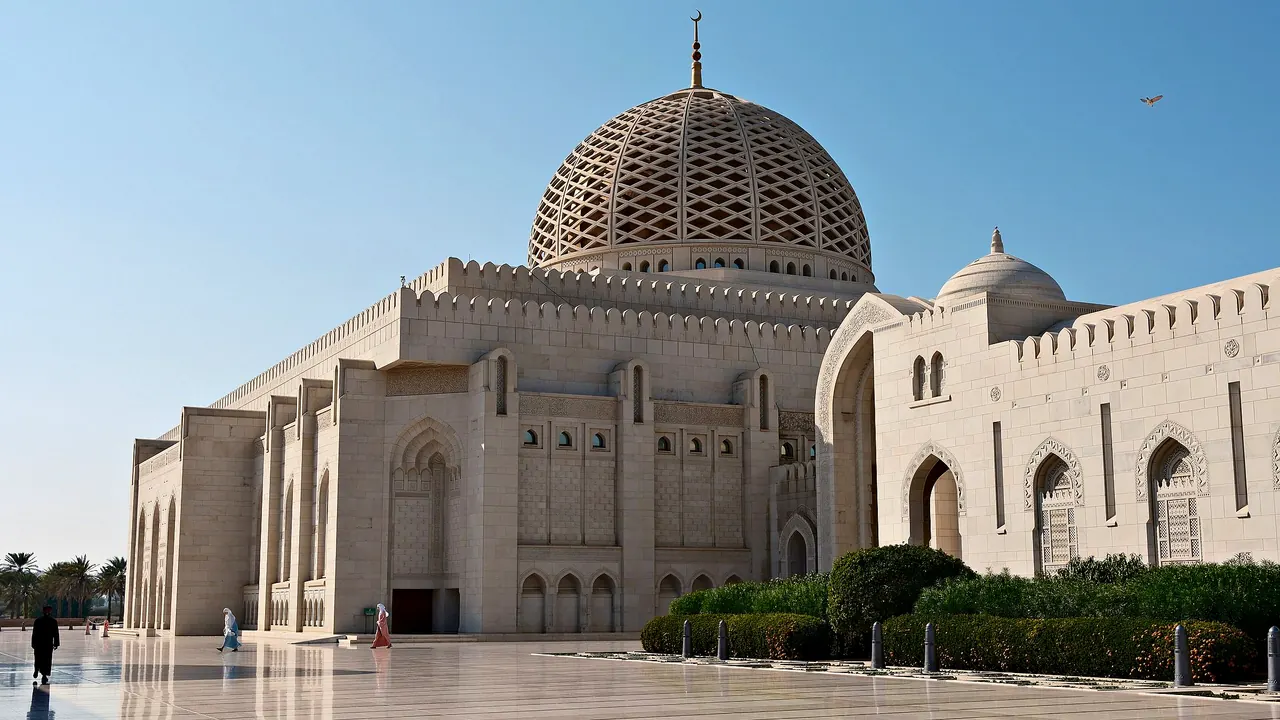
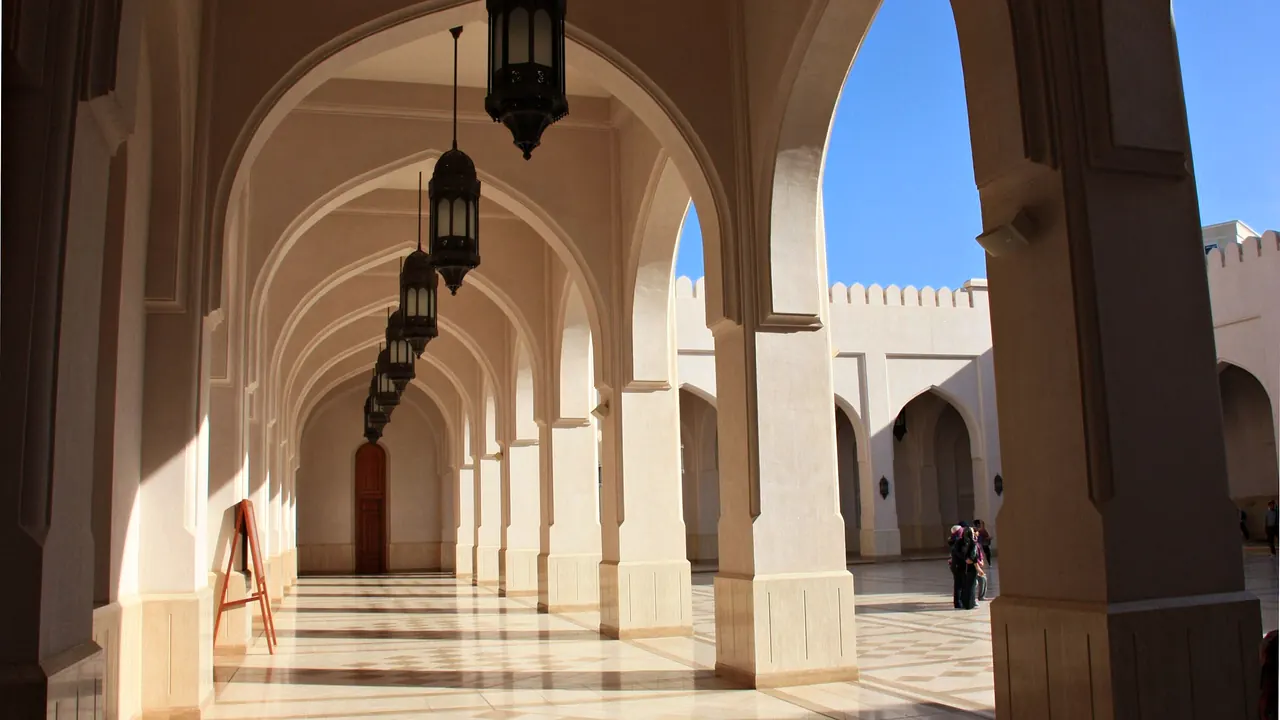
Photos: Muscat by Alli Khalil, CC BY 4.0, cropped; Salalah by Rrburke, CC BY 4.0, cropped.
Muscat or Salalah?
Our verdict in twelve categories, each scored against the same fixed benchmark cities, and the climate month by month, so you can choose for your trip.
Choose Muscat for
- live music and the arts
- culture and sights
- shopping
Muscat suits a first look at Oman, especially for travellers who want sights and outings as well as sun. The Grand Mosque, the forts of Old Muscat, the Mutrah corniche and an evening at the opera fill a few days, and the forts and villages of the interior around Nizwa are close enough for day trips. It also has more for children, a wider choice of food and better resort spas. It is a winter destination, best from October to April.
Choose Salalah for
- prices
Salalah is for a slower, simpler stay in a part of Arabia that looks quite different. People go for the frankincense heritage, the long empty beaches in winter and, from June to September, the monsoon that turns the Dhofar hills green while the rest of the Gulf bakes. Everyday costs are lower and the sights are few, so it rewards a week of driving, walking and doing very little more than a busy itinerary.
Scoreboard
Twelve categories on one fixed scale from 0 to 100. The shaded stretch is the gap between the two.
Your match
Pick a travel style or drag the sliders, and both match scores follow your weighting.
Wins on live music and the arts and culture and sights with your weighting.
Wins on prices with your weighting.
What matters to you?
Category by category
What the scores mean for a trip.
Beaches & swimming
The two coasts are about equally good for a beach stay, but in different ways. Muscat's best swimming is in the sheltered coves of Qantab, Al Bustan and Yiti and on the city sand at Qurum, with boats out to the coral of the Daymaniyat Islands for snorkelling. It is calm water with plenty to do around it.
Salalah has more sand and fewer people: the palm-lined Haffa beach and wide bays out towards Taqah and Mirbat. Open beaches there can have a strong undertow, so the resort strips at Hawana and Al Muntazah are the safe choice. The two also lose their beach season at the same time for different reasons: in summer, Muscat gets too hot and Salalah's sea gets too rough.
Food & drink
Muscat gives you more choice at the table. Omani dishes such as shuwa and majboos are served at the few traditional floor-seated places. The South Asian and Lebanese canteens of Ruwi and Mutrah cover everyday eating, the Mutrah fish market is worth an early start, and the hotels handle fine dining.
Salalah's food is simple and narrower: mandi and madhbi cooked on hot stones or in pits, grilled fish and Yemeni and South Indian cooking. Its own pleasure is the roadside stalls west of town selling coconuts and papayas from the plantations.
Culture & sights
Muscat has much more to see. The Sultan Qaboos Grand Mosque is a major sight on its own. Add the palace and Portuguese-era forts of Old Muscat, the National Museum and Bait al Zubair, and the merchants' houses along the Mutrah corniche, and you have two or three full days.
Salalah's heritage is concentrated in one place: the medieval port of Al Baleed, part of the UNESCO-listed Land of Frankincense, and its museum, which tells the incense story well. With the mosque and the old Haffa quarter, one day covers the town.
Nightlife
Neither city has much of a night out, but Muscat has a little more. Its licensed hotels have lounges, poolside terraces and a few nightclubs that fill with expatriates at the end of the week. In Salalah, drinking is limited to a handful of resort bars. Its livelier evenings come in the monsoon season, when festival crowds and food stalls replace drinking, much like the family strolls along Muscat's Mutrah corniche.
Nature & outdoors
Both are strong for the outdoors, but the scenery could hardly differ more. Muscat's bare, dark Hajar mountains fall into the sea, so much of the outdoors here happens on the water: dolphin trips, diving with turtles at the Daymaniyat Islands and kayaking the coves. On land there are the pools of Wadi Shab and the terraced plateau of Jebel Akhdar, all best from October to April.
Salalah's landscape changes with the seasons. In the monsoon the Dhofar hills turn green and waterfalls run at Wadi Darbat. In the dry months there are blowholes at Mughsail, baobab groves, frankincense trees, flamingo lagoons and the edge of the Empty Quarter within a drive.
Day trips
Muscat is the better base for exploring. The forts and mud-brick towns of the interior are within reach: Nizwa with its round fort and Friday livestock market, UNESCO-listed Bahla, painted Jabrin Castle and the hanging village of Misfat al Abriyeen. Along the coast, Sur and its dhow yards make a full day out.
Salalah's outings follow the frankincense route: Sumhuram above Khor Rori, Mirbat's castle, the tomb of Job and the ruins at Shisr. They are atmospheric but small, and several fit into one drive.
Good for families
Muscat has more for children. The mall in Seeb has an aquarium with a walk-through tunnel and an indoor snow park, Qurum has a big park with lakes and a science museum, and dolphin boats leave in the mornings. Those indoor options matter in the summer heat.
Salalah is just as safe and welcoming, but nothing there is built for children. Families make do with camels on the road, the Mughsail blowholes and paddling at Wadi Darbat, and they need to watch the currents on open beaches.
Getting around
Both cities more or less require a hire car, and in neither are the buses much use to a visitor. Muscat is a chain of districts strung for about 50km along the coast and joined by fast highways. Ride-hailing apps and taxis make a reasonable fallback, and the Mutrah corniche and the cove of Old Muscat are good for short walks, best in the evening.
Salalah has light traffic, so driving the coast is easy, though in the monsoon months mist and wandering camels slow the hill roads. Without a car you are left with taxis, hotel transfers and organised tours. At any time of year, walking only works on the corniche and in the streets around the Haffa souq.
Shopping & style
Muscat's Mutrah Souq offers more choice: silver jewellery, khanjar daggers, embroidered caps, pashminas and perfume oils in calm covered lanes, with large malls in the suburbs as well. Salalah's Haffa souq is narrower but goes deeper on one thing. This is where the frankincense grows, and the sellers will explain the grades alongside the clay burners and bakhoor. Beyond the souq, Salalah has little else to shop for.
Affordability
Salalah is the cheaper of the two. Meals at local restaurants cost little, and most sights are free or nearly free. Muscat's canteens are just as cheap, but its resort rooms are priced like a pricey Mediterranean coast.
Their seasons also run in opposite directions. Muscat's rates drop in the hot summer, while Salalah's climb well above winter levels when monsoon visitors arrive from the Gulf. In both places, a hire car is part of the budget.
Live music & performing arts
This is where the two differ most. Muscat has the Royal Opera House, a grand hall that hosts touring opera, ballet, orchestras, jazz and Arab music stars from autumn to spring, so it is worth planning an evening around the programme. Salalah has no concert hall or theatre at all. Its live performance is Dhofari folk music and dance at the summer khareef festival and at weddings.
Wellness & relaxation
Muscat is the better choice for a restorative stay. The resort spas in the coves south of the city offer hammam rituals and frankincense treatments, and the warm springs at Nakhal and Rustaq make an inland outing. Salalah's resorts offer Ayurvedic and Arabian massage. Its real offer is quiet roads and empty corniches, which suit a lazy week in the sun rather than a spa-focused trip.
When should you go?
Pick your month. The climate figures are measured averages, not a forecast.
Muscat in July
Salalah in July
Daytime high, °C
Rainfall in the month, mm
Where the figures come from
Muscat's sunshine is measured 32 km from the centre, at Seeb, International Airport.
Temperature and rainfall are climate normals, averaged over the years shown. Muscat: 1991-2020 normals, Qaboos Port (3.4 km from centre). Salalah: 1991-2020 normals, Salalah (1.7 km from centre).
Muscat is at its best from November to March, when days are warm rather than hot, around 24°C in January, and the sea is still pleasant for swimming. From May the highs reach 37°C, and through to September the beach and the streets are only for early mornings and evenings. The city is dry almost all year with steady sunshine, so heat matters more than rain.
Salalah follows its own pattern. Winter is warmer than in Muscat, about 28°C in January, with clear skies and warm water, which makes October to April the beach season. From June to September the monsoon brings drizzle, mist and less than 50 hours of sunshine in August. Rough seas close the beaches, but the hills turn green and the air stays mild. That makes Salalah the only one of the two that works in high summer, though as a vacation for the landscape and not for swimming.
Which traveller are you?
On a culture and arts trip, Muscat is the clear pick. It has the Grand Mosque, the National Museum, the walled cove of Old Muscat and a real opera house, with the great forts of Nizwa, Bahla and Jabrin within a day's drive. Salalah's sights fit into a single day.
On a trip on a tight budget, Salalah goes further. Local Yemeni and Indian meals are cheap, most sights are free or nearly free, and winter room rates are lower than in Muscat, where even mid-range hotels cost a fair amount. Avoid the khareef months, when Salalah's rates climb.
On an outdoors trip, the season decides. From October to April, Muscat has Wadi Shab, Jebel Akhdar and dolphin and diving boats. In summer, Muscat is too hot for hiking, while Salalah's misty green hills, Wadi Darbat waterfalls and cool air are made for walking and driving.
Before you go
| Measure | Muscat | Salalah |
|---|---|---|
| Official language | Arabic | Arabic |
| Currency | Rial Omani (OMR) | Rial Omani (OMR) |
| Sockets | CG240 V, 50 Hz | CG240 V, 50 Hz |
| Driving side | Right | Right |
| Time zone | UTC+4 | UTC+4 |
| Emergency number | 968 | 968 |
| Elevation | 69 m | 18 m |
| Main airport | Muscat International Airport (MCT)31 km from centre85 non-stop destinations | Salalah International Airport (SLL)2 km from centre18 non-stop destinations |
By the numbers
| Measure | Muscat | Salalah |
|---|---|---|
| Population | 1,421,409 | 331,949 |
| People per km² | 406 | - |
| Museums within 10 km | 10 | 1 |
| UNESCO World Heritage sites within 50 km | 0 | 1 |
| Swim season, months above 21 °C | 12 months | 12 months |
Where else could you go?
Every comparison below shares a destination with this one, so you can follow Muscat or Salalah somewhere new.