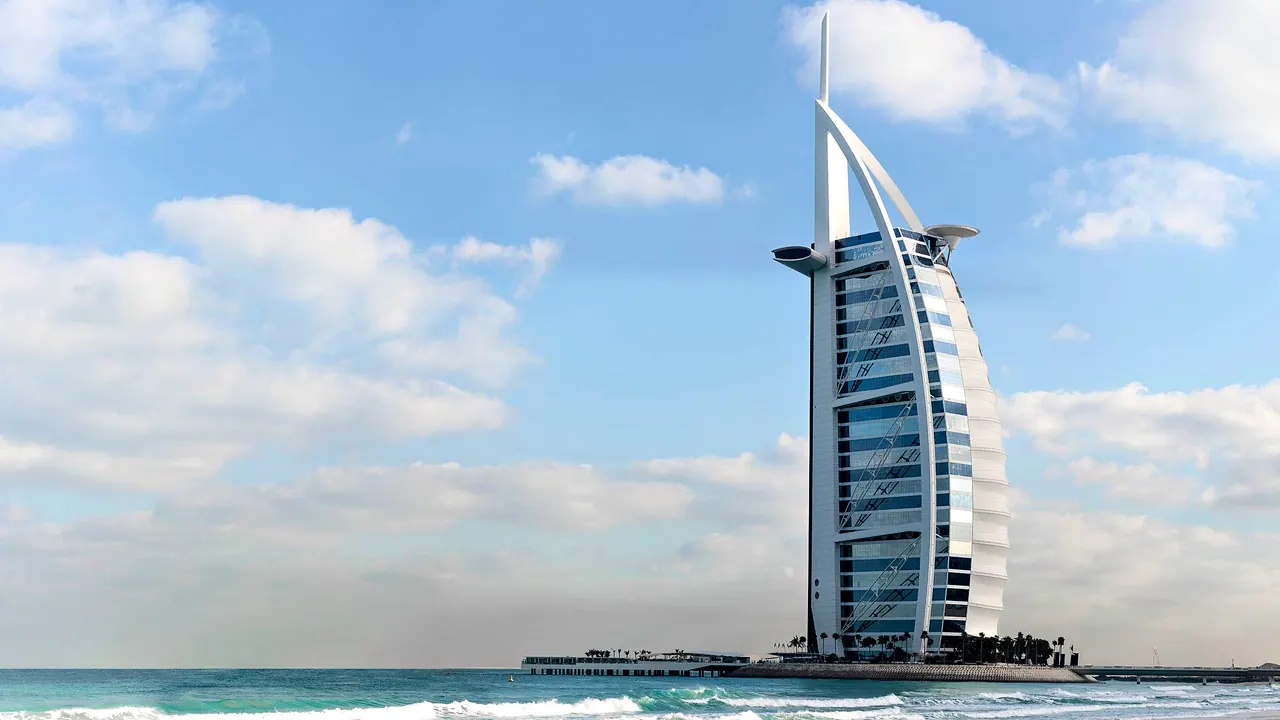
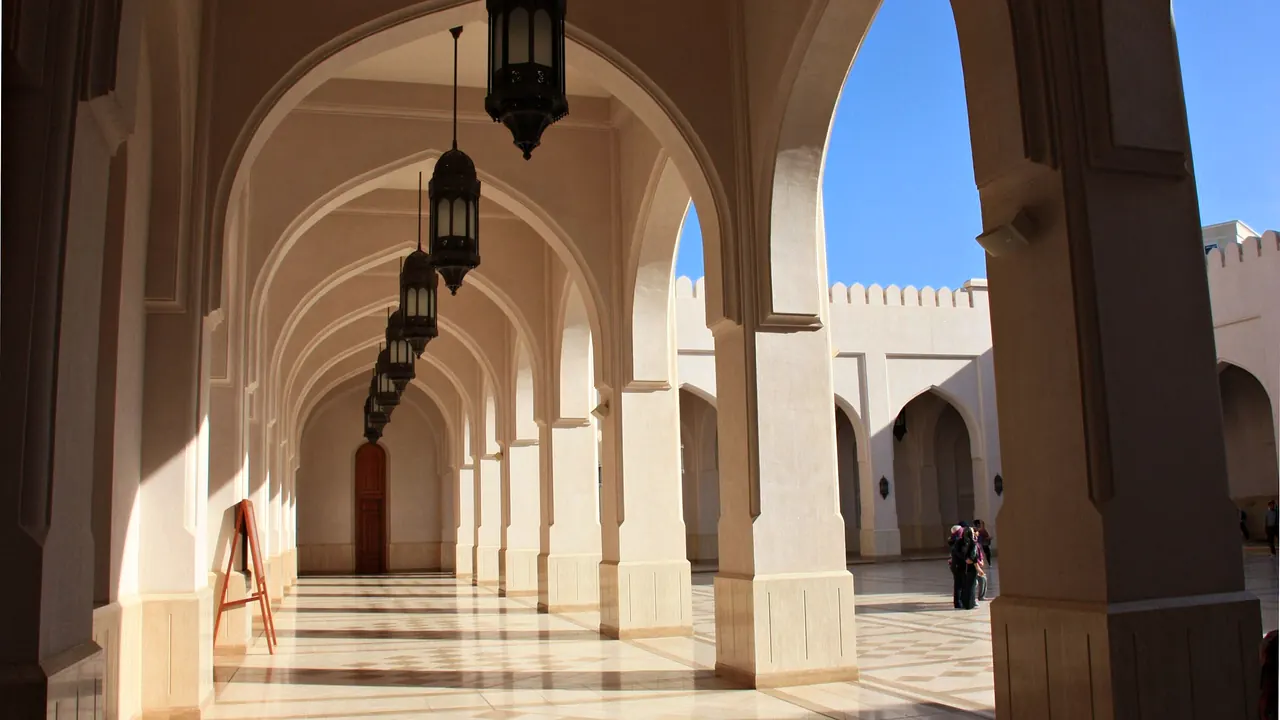
Photos: Dubai by Aleksandar Pasaric, Pexels License; Salalah by Rrburke, CC BY 4.0, cropped.
Dubai or Salalah?
Our verdict in twelve categories, each scored against the same fixed benchmark cities, and the climate month by month, so you can choose for your trip.
Choose Dubai for
- shopping
- nightlife
- food and drink
Dubai suits travellers who like a lot laid on for them. That means resort beaches on calm water, huge malls and gold souks, food that runs from Keralan canteens in Karama to chef-led dining rooms in DIFC, and polished late nights in hotel bars and clubs. It is the easier choice with children, and a metro plus plentiful taxis make a short stay without a car simple. Go in the cooler half of the year.
Choose Salalah for
- nature and the outdoors
- prices
- day trips
Salalah is for someone who would rather drive a quiet coast road to the Mughsail blowholes than queue for an observation deck. Its strengths are landscape and space: the Dhofar mountains, the frankincense ruins, near-empty bays and a slow pace with no evening scene at all. Day to day it costs less, but you will need a hire car, and meals and nights out stay simple.
Scoreboard
Twelve categories on one fixed scale from 0 to 100. The shaded stretch is the gap between the two.
Your match
Pick a travel style or drag the sliders, and both match scores follow your weighting.
Wins on shopping and nightlife with your weighting.
Wins on nature and the outdoors and prices with your weighting.
What matters to you?
Category by category
What the scores mean for a trip.
Beaches & swimming
Dubai has the more dependable beaches. The sand is pale, the Gulf is calm and shallow, and the choice runs from public strips at JBR and Kite Beach to private resort beaches on Palm Jumeirah. You can swim almost all year, though in summer only early or late in the day. The shoreline is engineered rather than natural.
Salalah's coast is wilder and much emptier, with palm-backed Haffa, the wide bays of Mirbat and the cliff coves at Al Fazayah. But open beaches have undertow, the khareef closes many of them for a whole season, and public sand calls for modest dress, so the resort stretches at Hawana are the easy option.
Food & drink
Dubai offers far more choice, and much of it is casual and runs late. There are shawarma counters still busy towards midnight, Afghan bread from the bakeries of Deira and Al Satwa, and the cooking of most of the countries the city's residents came from. What's harder to find is Dubai's own food. Emirati dishes such as machboos rice and luqaimat in date syrup mostly turn up in a few heritage restaurants or the Ramadan iftar tents, and since wine and beer stay inside licensed venues, the everyday drinks are karak tea, fresh juice and Arabic coffee.
Salalah is the other way round. The range is narrow, but local food is what you eat every day: mandi and madhbi, rice with goat or chicken cooked in pits or on hot stones, grilled fish, Yemeni and South Indian kitchens, and shuwa at festivals. Buying fresh coconuts, bananas and papayas from the roadside stalls by the plantations west of town is one of the pleasures of a stay. Anything more polished, or a glass of wine, means going to a resort hotel.
Culture & sights
Neither city takes long to see, but what you see is very different. Dubai's draw is modern spectacle, with the Burj Khalifa, the Museum of the Future and the skyline at dusk, plus a pocket of the old trading port in the wind-tower houses of Al Fahidi and the abra ride to the Deira souks.
Salalah looks much further back. At Al Baleed you walk the excavated streets of a medieval port, and the Museum of the Frankincense Land beside it explains the incense trade that made Dhofar rich. It is one day of sightseeing against Dubai's two or three.
Nightlife
This is one of the widest gaps between the two. Dubai has a large, glossy night scene inside hotels and licensed venues: DJ clubs, rooftop bars above Sheikh Zayed Road, beach clubs on the Palm and the boozy weekend brunch, with dress codes and steep drink bills to match.
Salalah has almost none. A handful of resort bars serve alcohol, and evenings in town mean late dinners, shisha and families on the corniche. Only the khareef festival livens the nights, and that is with food stalls rather than drinks.
Nature & outdoors
Salalah is much the better base for landscape. The Dhofar mountains rise right behind town and turn green and misty in the monsoon, when waterfalls run at Wadi Darbat. The rest of the year brings golden hills, blowholes on the Mughsail road, springs, frankincense trees and flamingo lagoons, all within reach by car.
Around Dubai the choice is mostly desert. The red dunes an hour inland are good for dune drives and a night under the stars, and kitesurfing and paddleboarding fill the coast. Real hills mean the drive to Hatta, and in summer the heat rules out nearly everything after early morning.
Day trips
Both have a short list of good outings, but of different kinds. From Dubai you go to other cities: the Sheikh Zayed Grand Mosque and the Louvre in Abu Dhabi, the heritage quarter and Islamic museum in Sharjah next door, and the UNESCO-listed oases and forts of Al Ain.
From Salalah you go to small ruins and quiet places along the old frankincense route. These include Sumhuram above Khor Rori, the castle at Mirbat, the tomb of Job in the hills and the ruins at Shisr linked to Ubar. Several fit into one drive, but none is a town to spend a day in.
Good for families
With children, the two cities are far apart. Dubai has Legoland and the theme parks near Jebel Ali, water parks, the aquarium in the Dubai Mall and indoor snow, so there is always something air-conditioned to fall back on. The calm, shallow water also makes the beach easy with small children.\n\nSalalah is just as safe and welcoming to children, and they enjoy the camels on the roads, the spray at Mughsail and paddling at Wadi Darbat. But there are no theme parks or aquariums, every outing means a drive, and open beaches need watching because of currents.
Getting around
Dubai is spread out too, but it has a working network. A driverless metro runs the length of Sheikh Zayed Road and through the old town, with a tram in the Marina, abras across the Creek and taxis everywhere. The weak points are the long, hot walks between stations and the wide roads.
Salalah has nothing like it. Buses are of little use, so it is a hire car, taxis or tours, and walking is pleasant only along the corniche and around the Haffa souq. On the plus side, roads are good and quiet, though mist and wandering camels slow the hill roads during the khareef.
Shopping & style
Dubai is a shopping destination in its own right, with vast malls full of luxury and high-street brands, a deep watch and jewellery trade, and a winter shopping festival. The souks of Deira sell gold by weight, spices and oud.
Salalah has one shopping experience worth the trip: the Haffa souq. Stalls there sell frankincense by grade with clay burners, bakhoor and attar, and you are buying the resin where it grows. Apart from that, there are just everyday malls.
Affordability
Salalah is the cheaper stay. Local Omani, Yemeni and Indian meals cost little, fuel is cheap and most sights are free, so your main costs are the room and the hire car. Dubai is expensive in its winter season, with costly hotels, headline attractions and some of the dearest alcohol anywhere, though Deira's canteens and the metro keep a careful visitor afloat.
The two cities' seasons run in opposite directions. Dubai's rates fall sharply in the summer heat, just as visitors from across the Gulf fill Salalah for the khareef and push its prices up.
Live music & performing arts
Dubai at least gives you a programme to plan around. The dhow-shaped Dubai Opera brings touring ballet, musicals and orchestras in the cooler months, and an arena hosts international tours, even though the city has no resident companies of its own.
Salalah has no theatre or concert hall at all. Dhofari music and dance turn up at weddings, national celebrations and the stages of the khareef festival, and that is the extent of it.
Wellness & relaxation
Neither city has a bathing tradition, so in both places wellness means a hotel spa. Dubai's resorts on the Palm and the Jumeirah coast offer more of it: hammam rituals, hydrotherapy pools and long treatment menus, plus desert retreats an hour inland for real silence.
Salalah's spas are smaller and add massage with frankincense oils, but the difference is that the town itself is restful. In Dubai you retreat into a resort away from a fast, traffic-heavy city. In Salalah the quiet roads and empty corniches carry on the calm outside the hotel.
When should you go?
Pick your month. The climate figures are measured averages, not a forecast.
Dubai in July
Salalah in July
Daytime high, °C
Rainfall in the month, mm
Temperature and rainfall are climate normals, averaged over the years shown. Dubai: 1991-2020 normals, Dubai International Airport (3.3 km from centre). Salalah: 1991-2020 normals, Salalah (1.7 km from centre).
Dubai is a winter destination. From November to March days are warm and dry, around 25°C in January, and the sea is pleasant for swimming at about 23°C. From May the heat builds to around 42°C in July and August, which makes walking the streets an ordeal and pushes beach time to dawn and dusk. Rain is rare in any month and falls mainly in winter.
Salalah stays warm all year and never reaches Dubai's summer extremes. From October to May it is sunny and settled, with warm, calm water and the best conditions for the beach. The khareef from June to September changes everything. Mist and drizzle roll in, sunshine falls to about 49 hours in August, swell closes the beaches, and highs drop to around 27°C. That is when the hills turn green, so the summer months suit sightseeing in the mountains rather than swimming. Dubai, meanwhile, is too hot to be outside.
Which traveller are you?
For an outdoors trip, Salalah is the clear pick. The Dhofar mountains, the waterfalls of Wadi Darbat, sea cliffs, baobab groves and the edge of the Empty Quarter give far more variety than Dubai's dunes and irrigated parks.
On a family trip with children, Dubai wins easily. Theme parks, water parks, a giant aquarium and indoor snow keep children busy even in summer. The shallow sea and kids' clubs help too, while Salalah has nothing built for children.
For a food and nightlife trip, choose Dubai. Its eating spans South Asian, Iranian and Filipino canteens as well as hotel fine dining and the long weekend brunch. After dark it has rooftop bars and big clubs, and Salalah's evenings end over shisha on the corniche.
Before you go
| Measure | Dubai | Salalah |
|---|---|---|
| Official language | Arabic | Arabic |
| Currency | UAE Dirham (AED) | Rial Omani (OMR) |
| Sockets | CG220 V, 50 Hz | CG240 V, 50 Hz |
| Driving side | Right | Right |
| Time zone | UTC+4 | UTC+4 |
| Emergency number | 112 | 968 |
| Elevation | 0 m | 18 m |
| Main airport | Dubai International Airport (DXB)7 km from centre295 non-stop destinations | Salalah International Airport (SLL)2 km from centre18 non-stop destinations |
By the numbers
| Measure | Dubai | Salalah |
|---|---|---|
| Population | 3,944,751 | 331,949 |
| Museums within 10 km | 14 | 1 |
| UNESCO World Heritage sites within 50 km | 0 | 1 |
| Swim season, months above 21 °C | 12 months | 12 months |
Where else could you go?
Every comparison below shares a destination with this one, so you can follow Dubai or Salalah somewhere new.