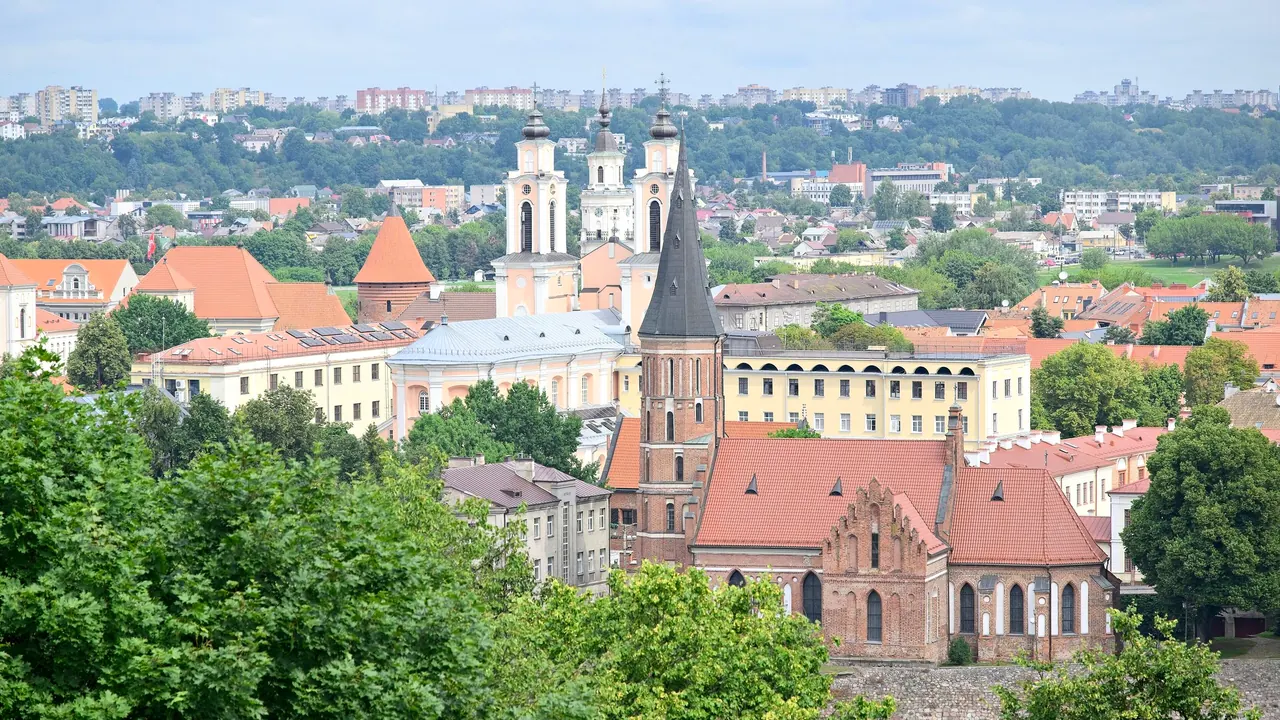
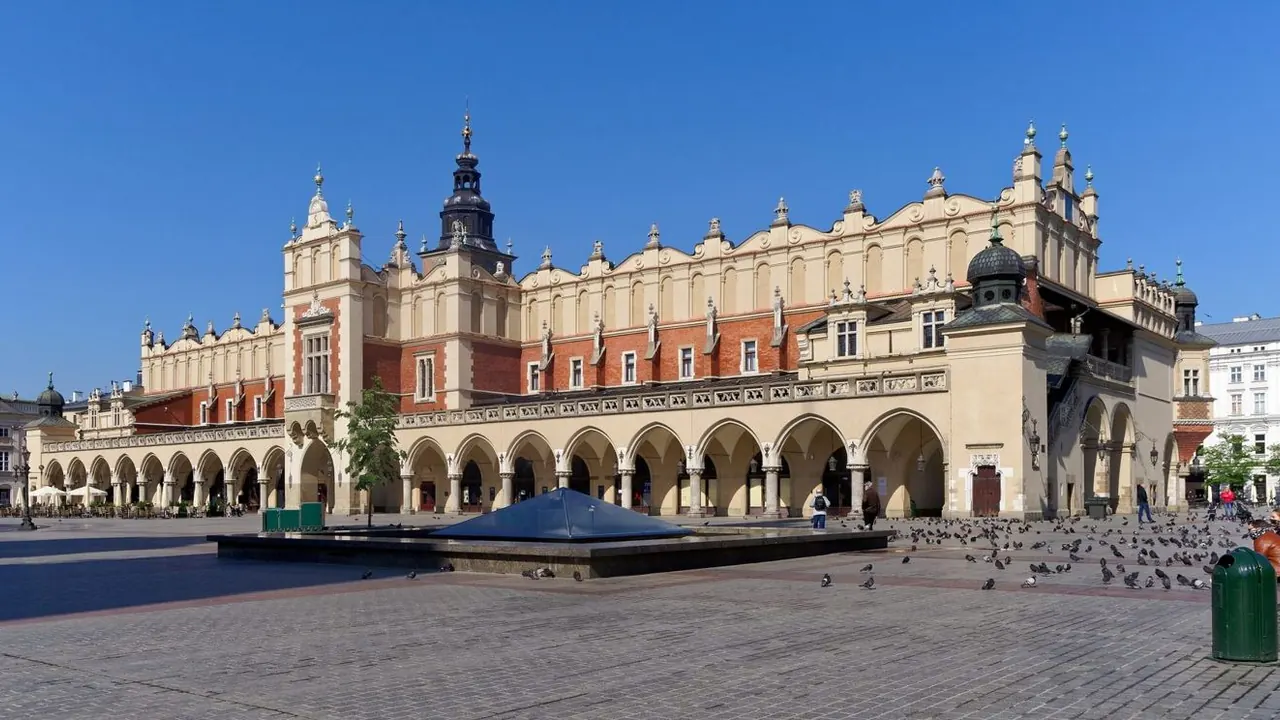
Photos: Kaunas by dave massie, CC BY 2.0, cropped; Krakow by Jakub Hałun, CC BY-SA 4.0, cropped.
Kaunas or Krakow?
Our verdict in twelve categories, each scored against the same fixed benchmark cities, and the climate month by month, so you can choose for your trip.
Choose Kaunas for
- beaches
- wellness
Kaunas suits the traveller who wants a slower, cheaper few days in a city that few visitors know. Its interwar modernist centre is unusual anywhere in Europe, the evenings are calm, and the pirtis saunas and riverside oak woods set the pace. It also makes an easy base for Vilnius and Trakai. Choose it for quiet, for architecture and for a summer swim in a reservoir, not for nights out or a big programme of sights.
Choose Krakow for
- nightlife
- culture and sights
- nature and the outdoors
Krakow is the stronger choice for almost everything else. The medieval centre came through the war intact, Wawel and Kazimierz give it real depth, the bars stay open late every night of the week, and Wieliczka, Auschwitz and the Tatras are all within reach. It is the better city for first-time visitors, groups of friends and families, as long as you accept busier streets around the Main Square.
Scoreboard
Twelve categories on one fixed scale from 0 to 100. The shaded stretch is the gap between the two.
Your match
Pick a travel style or drag the sliders, and both match scores follow your weighting.
Wins on beaches and wellness with your weighting.
Wins on nightlife and culture and sights with your weighting.
What matters to you?
Category by category
What the scores mean for a trip.
Beaches & swimming
Kaunas has the better summer swimming, though it is a lido and not a coast. Sandy bathing spots line the Kaunas Reservoir and the Nemunas at Panemune, small lakes such as Lampedziai sit on the edge of town, and the Baltic at Palanga can be done as a long day out.
Krakow has less to offer. The Zakrzowek quarry is beautiful, turquoise water under limestone cliffs, but you can only swim in its fenced bathing areas. The Vistula is for sitting beside, and the sea is too far for a day trip, so the indoor water park is the fallback.
Food & drink
The two cities eat in a similar way, all potatoes, rye and dumplings, but Krakow has more variety and more places to eat. Its milk bars serve cheap canteen lunches, obwarzanek bread is sold from street carts, Stary Kleparz is a proper produce market, and Plac Nowy keeps serving zapiekanki late into the night.
In Kaunas you eat cepelinai, pink cold beetroot soup in summer and smoked meats, and you drink mead and herbal bitters. It is satisfying, but you will have tried most of what the city does well within a few days.
Culture & sights
Krakow is the richer city to explore. Its medieval core survived the war almost untouched, from the Cloth Hall and St Mary's Basilica to the royal tombs on Wawel Hill. Kazimierz and the Schindler Factory add the Jewish and wartime history.
Kaunas's appeal is narrower and less familiar. The interwar modernist centre from its years as provisional capital is the real draw, with functionalist offices, the Central Post Office and the white Christ's Resurrection Church with its rooftop view. The Ciurlionis museum and the Ninth Fort add depth, and the brick Old Town is pleasant but modest.
Nightlife
This is where the two differ most. In Krakow you can go out any night of the week: Old Town cellar bars run past midnight, and Kazimierz has shabby-chic bars and packed courtyards. Drinks are cheap enough that bar-hopping is the usual plan. The downside is stag and hen groups around the Main Square at weekends.
Kaunas has student cellar bars and a few clubs, but they really fill only on Friday and Saturday, and the crowd thins when the universities break for summer. Expect a long dinner and some mead, not a late night.
Nature & outdoors
Krakow has more variety within reach. Ojcow's limestone pinnacles and caves are half an hour north, and the Tatras for real alpine hiking and the Pieniny for rafting the Dunajec are long but doable days. Closer in, the Kosciuszko Mound looks out towards the mountains.
The countryside around Kaunas is flat and gentle. The Azuolynas oak grove, the pine woods of the reservoir regional park and the Nemunas Loops are good for cycling, sailing or canoeing, but there are no hills to climb.
Day trips
Krakow's day trips are among the most important in the region. The underground salt church at Wieliczka is half an hour away, and the Auschwitz-Birkenau memorial is a full and sobering day. Zakopane and the wooden churches add a mountain side.
From Kaunas, the best outing is Vilnius and its baroque old town, about an hour by train. Trakai's island castle, the Rumsiskes open-air museum and the Hill of Crosses make a good list, but none has the weight of Krakow's two great sites.
Good for families
Krakow gives children more to do. There is the fire-breathing dragon below Wawel and the Dragon's Den cave, street performers on the car-free square, an indoor water park open all year and Energylandia about an hour's drive away. Several major sights deal with dark history, so you need to plan around younger children.
Kaunas is calm and easy but has little built for families: a small zoo in the oak grove, two short funicular rides and the carved figures at the Devils' Museum. It works best as a short summer stop.
Getting around
Both centres are best on foot. Krakow's is more compact and better connected: the Old Town, Wawel, Kazimierz and Podgorze are a short walk apart, trams cover the rest, and a train runs to the airport. Wieliczka and Auschwitz are easy by public transport.
In Kaunas, nearly everything lies along the long pedestrian Laisves aleja. The Ninth Fort, Pazaislis and the reservoir need a trolleybus or a cheap taxi. Both cities have cobbles that are slow going with wheeled luggage.
Shopping & style
Neither city is a place to go for fashion, but Krakow is more fun to browse. The Cloth Hall has sold crafts since the Middle Ages, Boleslawiec's blue-patterned pottery is the classic thing to take home, and Kazimierz adds vintage shops and a weekend flea market on Plac Nowy.
Kaunas has amber too, along with Lithuanian linen, woven sashes and rye bread from market stalls. Beyond that it offers chain stores on Laisves aleja and malls on the edge of the centre.
Affordability
Both are easy on the wallet, so the difference is in where the money goes. In Kaunas prices are low and even across the city, and rooms cost noticeably less than in Vilnius. Expect to pay more only for modern restaurants and imported drinks.
Krakow's beer, milk-bar lunches and trams are just as cheap, but rooms around the Main Square cost more, and summer weekends push prices up. Staying in Kazimierz or Podgorze and taking the train to day-trip sites instead of an organised tour keeps it cheap.
Live music & performing arts
In Krakow, music is easier to find without planning. Chopin recitals fill Old Town churches and palaces most evenings, jazz cellars play through the week, and klezmer is common in Kazimierz, with the Jewish Culture Festival's open-air finale on Szeroka Street.
Kaunas has a smaller but solid season. Operetta and musicals at the State Musical Theatre, the philharmonic, a spring jazz festival and summer concerts at Pazaislis Monastery are the highlights. In both cities nearly all theatre is in the local language.
Wellness & relaxation
Both cities are fairly calm, but they relax in different ways. Kaunas has a real sauna culture in the wood-fired pirtis, with birch whisks and a cold plunge by the lakes, and the old spa town of Birstonas is about 40 minutes away for a proper spa stay.
Krakow has no bathing tradition of its own, so it relies on hotel spas and the water park's saunas, plus salt-air sessions deep in the Wieliczka mine. Its naturally hot thermal pools are about two hours south near Zakopane.
When should you go?
Pick your month. The climate figures are measured averages, not a forecast.
Kaunas in July
Krakow in July
Daytime high, °C
Rainfall in the month, mm
Temperature and rainfall are climate normals, averaged over the years shown. Kaunas: 1991-2020 normals, Kaunas (6.7 km from centre). Krakow: 1991-2020 normals, Krakow (10.1 km from centre).
The two cities share a continental pattern, and both are at their best from late May to mid-September. Midsummer highs reach about 24°C in Kaunas and 25°C in Krakow, which is pleasant for walking and warm enough for a lake or quarry swim. Summer is also the wettest time in both places, and Krakow's July brings around 100mm of rain, often in short heavy showers. Kaunas makes up for it with long northern days and around 281 hours of sunshine in July, so evenings by the river stay light very late.
Winter is harder in Kaunas. January highs sit around -1°C, the sun barely shows from November to January, and the city feels dark and shut in. Krakow is a few degrees milder and copes better with a cold-weather city break. September and early October suit sightseeing in both: still mild, drier than midsummer, and kinder to long days on foot.
Which traveller are you?
For a food and nightlife trip, Krakow wins. Kaunas's cellar bars fill only on Friday and Saturday nights and fall quiet midweek, while Krakow's Kazimierz courtyards, vodka bars and cellar pubs stay busy every night, ending with zapiekanki on Plac Nowy.
On a culture and arts trip, Kaunas's interwar modernist centre and the Ciurlionis museum are distinctive but narrower. Krakow gives far more: Wawel's castle and cathedral, St Mary's altarpiece, Kazimierz's synagogues, Lady with an Ermine and Chopin recitals most evenings.
On a beach and sun trip, neither is truly right, but Kaunas does better: sandy spots on the reservoir and Nemunas, water past 20°C in summer and the Baltic as a long day out. Krakow has only fenced quarry swimming.
Before you go
| Measure | Kaunas | Krakow |
|---|---|---|
| Official language | Lithuanian | Polish |
| Currency | Euro (EUR) | Zloty (PLN) |
| Sockets | CF220 V, 50 Hz | CE50 Hz |
| Driving side | Right | Right |
| Time zone | UTC+2, UTC+3 in summer | UTC+1, UTC+2 in summer |
| Emergency number | 112 | 112 |
| Elevation | 48 m | 219 m |
| Main airport | Kaunas International Airport (KUN)12 km from centre30 non-stop destinations | Kraków John Paul II International Airport (KRK)11 km from centre132 non-stop destinations |
| Public holidays this year | 14 days | 14 days |
By the numbers
| Measure | Kaunas | Krakow |
|---|---|---|
| City population | 305,120 | 804,237 |
| People per km² | 1,943 | 2,459 |
| Museums within 10 km | 19 | 113 |
| UNESCO World Heritage sites within 50 km | 1 | 4 |
Where else could you go?
Every comparison below shares a destination with this one, so you can follow Kaunas or Krakow somewhere new.