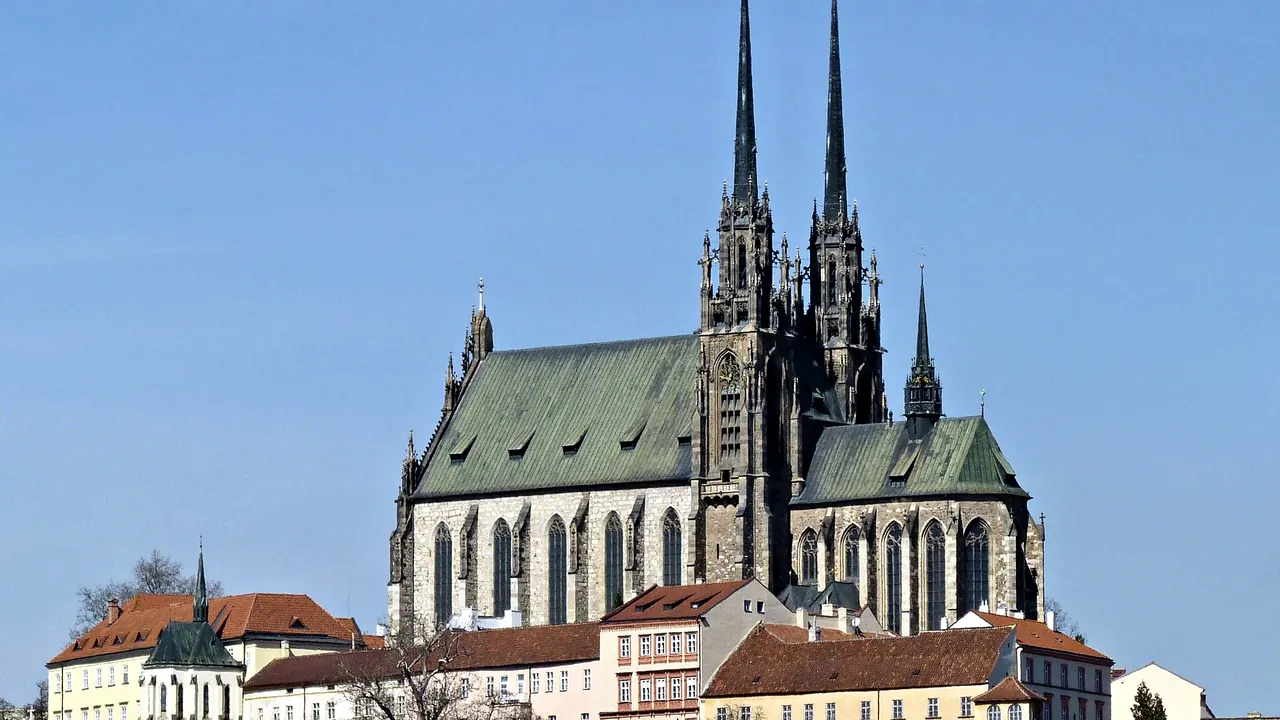
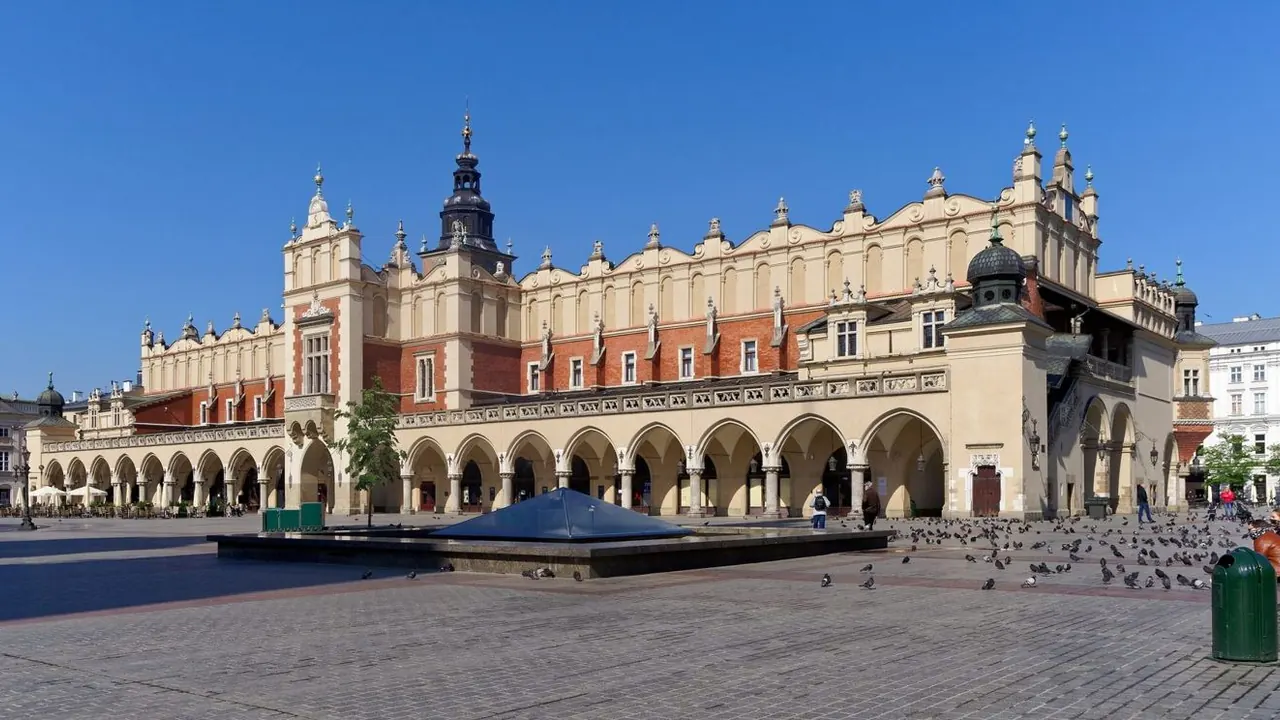
Photos: Brno by Michal Klajban, CC BY-SA 3.0, cropped; Krakow by Jakub Hałun, CC BY-SA 4.0, cropped.
Brno or Krakow?
Our verdict in twelve categories, each scored against the same fixed benchmark cities, and the climate month by month, so you can choose for your trip.
Choose Brno for
- day trips
- beaches
- live music and the arts
Brno suits a traveller who has already done the big-name cities and wants a calm, inexpensive base with a lot within reach. The town itself is small and quiet, but around it lie UNESCO chateaux, Renaissance squares, the caves of the Moravian Karst and the Moravian wine villages, with Vienna and Bratislava each a train ride away. Add Villa Tugendhat, the Janacek operas and a serious cocktail and coffee habit, and it makes a thoughtful trip at an easy pace.
Choose Krakow for
- nightlife
- culture and sights
- shopping
Krakow is the stronger choice for a first visit to Central Europe or a lively few days with friends. Its medieval core survived the war almost intact, so the Main Square, Wawel and Kazimierz give it far more to see on foot. The evenings are livelier and the food more varied, and the Wieliczka salt mine and Auschwitz-Birkenau are both easy day trips. It is busier and less intimate than Brno, but there is simply more going on.
Scoreboard
Twelve categories on one fixed scale from 0 to 100. The shaded stretch is the gap between the two.
Your match
Pick a travel style or drag the sliders, and both match scores follow your weighting.
Wins on day trips and beaches with your weighting.
Wins on nightlife and culture and sights with your weighting.
What matters to you?
Category by category
What the scores mean for a trip.
Beaches & swimming
Neither city is a beach destination, and both offer only a cool-off on hot summer afternoons. In Brno that means the reservoir on the Svratka, with grassy banks, small beaches and a boat ride out, though algae can spoil the water in heat waves. Krakow's version is Zakrzowek, a flooded quarry with turquoise water and cliffs, where swimming is restricted to fenced areas. The Vistula is only for sitting beside.
Food & drink
Krakow is the more satisfying place to eat. Pierogi, zurek served in bread, obwarzanek from street carts, cheap milk-bar lunches and the late-night zapiekanka stalls of Plac Nowy give it more variety and more food worth seeking out on the street.
Brno's kitchen is plainer: svickova, goulash and dumplings in beer halls, with few good bistros. It is stronger on drink, with careful specialty coffee, cocktail bars and Moravian wine from vineyards just south of town. In both cities fine dining is limited.
Culture & sights
Krakow has far more to see. The Main Market Square with the Cloth Hall and St Mary's altarpiece, the royal castle and coronation cathedral on Wawel, the synagogues of Kazimierz and the Schindler Factory museum make a full programme. The city's history shows on almost every street.
Brno's appeal is more specialised. Villa Tugendhat and the interwar functionalist buildings around it will draw architecture lovers, and Spilberk, the cathedral, the Capuchin Crypt and the Mendel Museum add character. For a general sightseer, though, it is a smaller old town with fewer headline sights.
Nightlife
Krakow is clearly the livelier city at night. The vaulted cellar bars of the Old Town and the courtyards and vodka bars of Kazimierz keep going well past midnight, drinks are cheap enough for long bar-hops, and there are more clubs. Weekend stag groups are the main drawback.
Brno's evenings are quieter and more considered. They centre on small cocktail bars behind unmarked doors around Jakubske namesti, plus wine bars and student cellars. It also empties out noticeably in July and August once term ends.
Nature & outdoors
Both cities have limestone country about half an hour north. Brno's Moravian Karst is the bigger area, with the boat ride through the Punkva Caves and the Macocha Abyss. Krakow's Ojcow valley is smaller, with rock pinnacles and castle ruins.
Krakow edges ahead because of what lies further out. The Tatras offer real alpine hiking and the Pieniny has rafting on the Dunajec, both about two hours away. Brno has no mountains, but the Palava ridge, Podyji's river valley and long cycle routes through the vineyards make gentle, sunny outings.
Day trips
Both cities are excellent bases, but the trips are very different. From Brno you can reach a string of UNESCO sites: the Lednice-Valtice estate, Kromeriz, Trebic, Telc and Zelena Hora. There are also the Austerlitz battlefield, Baroque Olomouc and the wine towns, and Vienna and Bratislava are each about an hour and a half by train.
From Krakow, most day trips go to two major sites: the salt chapels of Wieliczka and the Auschwitz-Birkenau memorial, which takes a full and sombre day. Zakopane and the Tatras, Wadowice and Czestochowa add a mountain and pilgrimage side that Brno does not have.
Good for families
Brno is easy and safe with children, but little in it is made for them. The VIDA science centre with its hands-on exhibits is the main draw. The wooded zoo, the Anthropos mammoths and the planetarium on Kravi hora fill out a day or two, and the underground boat through the Punkva Caves is the trip they talk about afterwards. Beyond that the choice soon runs thin.
Krakow keeps younger children busier. The metal dragon below Wawel breathes fire at intervals beside its cave, the car-free Main Square has horse carriages and street performers, and the water park is open all year. Wieliczka suits older children and Energylandia is about an hour away by car, though several major sights deal with history too heavy for the very young.
Getting around
Getting around is easy in both, with small walkable centres, dense tram networks and cobbles that are slow going with luggage. Brno has the edge for day trips because one integrated ticket covers city transport and regional trains across South Moravia. Krakow's sights are spread across several districts, from the Old Town and Wawel to Kazimierz and Podgorze, so there is more walking within the city itself, and its trams can get stuck in traffic.
Shopping & style
Brno gives a shopper little reason to linger. The centre is mostly familiar high-street names, and its few independent design and vintage shops take some finding. Its best souvenir is one Krakow cannot offer: Moravian wine bought straight from the cellar door during a day in the vineyards.
Krakow is the better city for browsing. The Cloth Hall has traded in the middle of the Main Square since the Middle Ages, and its stalls sell amber, carved wooden boxes, lace and embroidered linen. Blue-patterned Boleslawiec pottery is the classic buy, and Kazimierz adds vintage and antique shops and a weekend flea market on Plac Nowy. Neither city is a place for luxury fashion.
Affordability
Both are cheap by European standards, so the difference is in where the costs fall. Krakow is a little cheaper overall, with milk bars and inexpensive beer and vodka, but prices rise near the Main Square and on busy summer weekends. Brno's prices are more even across town. Its cocktails and specialty coffee are the main splurge, and the only time rooms get tight is during big trade fairs at the exhibition grounds.
Live music & performing arts
The two are evenly matched, but the music is different. Brno is built around Janacek: his operas at the Janacek Theatre, the festival in his name, the Brno Philharmonic and the historic Reduta, where the young Mozart played. Krakow is more informal. There are Chopin recitals in churches and palaces most evenings, jazz in brick cellars, klezmer in Kazimierz and the Jewish Culture Festival's open-air finale. Drama in both cities is almost all in the local language.
Wellness & relaxation
Neither city has a spa tradition, but Krakow has more options for a slow day. There is salt-air therapy deep in the Wieliczka mine, a water park with saunas, and naturally hot thermal pools near Zakopane two hours south. In town you can rest in the Planty or on the riverbanks below Wawel.
Brno offers public pools with saunas and a few day spas. What helps most is its unhurried pace and green spaces such as Luzanky park and the Spilberk slopes.
When should you go?
Pick your month. The climate figures are measured averages, not a forecast.
Brno in July
Krakow in July
Daytime high, °C
Rainfall in the month, mm
Temperature and rainfall are climate normals, averaged over the years shown. Brno: 1991-2020 normals, Brno / Turany (8.4 km from centre). Krakow: 1991-2020 (sunshine 1961-1990) normals, Krakow (10.1 km from centre).
The two cities share almost the same calendar of temperatures. Winters are grey and close to freezing in both, spring warms through April and May, and summer peaks at about 26°C in Brno and a degree lower in Krakow. Neither has a beach season, and neither summer gets too hot for walking the streets. May, June and September are the most comfortable months for sightseeing in both.
The real difference is rain and sun. Brno is noticeably drier and sunnier all year. Its summer rain stays near 70mm a month, while Krakow's peaks at about 100mm in July and its sky is cloudier from spring to autumn. Anyone planning outdoor days in the wine country or the karst gets more reliable weather from Brno, and in both cities November to February is a time for museums, cellars and concert halls.
Which traveller are you?
For a culture and arts trip, Krakow is the better pick. It has an intact medieval centre, a royal castle and cathedral on Wawel, Leonardo's Lady with an Ermine and the history of Kazimierz. Brno's modernist villas and Janacek opera are rewarding but make a narrower trip.
On a food and nightlife trip, Krakow pulls ahead. Pierogi, milk bars and late zapiekanki in Kazimierz give it more to eat, and its cellar bars and courtyards stay busy much later. Brno is better for a quiet cocktail than for a full night out.
For a trip built around wine, Brno has something Krakow cannot match. Moravian vineyards begin less than an hour south, wine bars in town pour local Frankovka and whites by the glass, and Mikulov and Znojmo make easy cellar-hopping days by regional train.
Before you go
| Measure | Brno | Krakow |
|---|---|---|
| Official language | Czech | Polish |
| Currency | Czech Koruna (CZK) | Zloty (PLN) |
| Sockets | CE230 V, 50 Hz | CE50 Hz |
| Driving side | Right | Right |
| Time zone | UTC+1, UTC+2 in summer | UTC+1, UTC+2 in summer |
| Emergency number | 112 | 112 |
| Elevation | 237 m | 219 m |
| Main airport | Brno-Tuřany Airport (BRQ)8 km from centre40 non-stop destinations | Kraków John Paul II International Airport (KRK)11 km from centre132 non-stop destinations |
| Public holidays this year | 13 days | 14 days |
By the numbers
| Measure | Brno | Krakow |
|---|---|---|
| City population | 402,739 | 804,237 |
| People per km² | 1,750 | 2,459 |
| Museums within 10 km | 25 | 113 |
| UNESCO World Heritage sites within 50 km | 2 | 4 |
Where else could you go?
Every comparison below shares a destination with this one, so you can follow Brno or Krakow somewhere new.