Tarawa
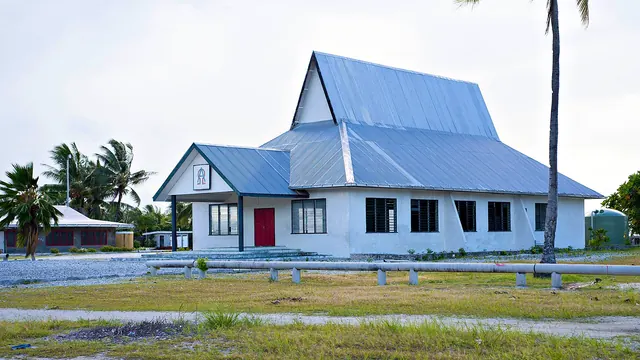
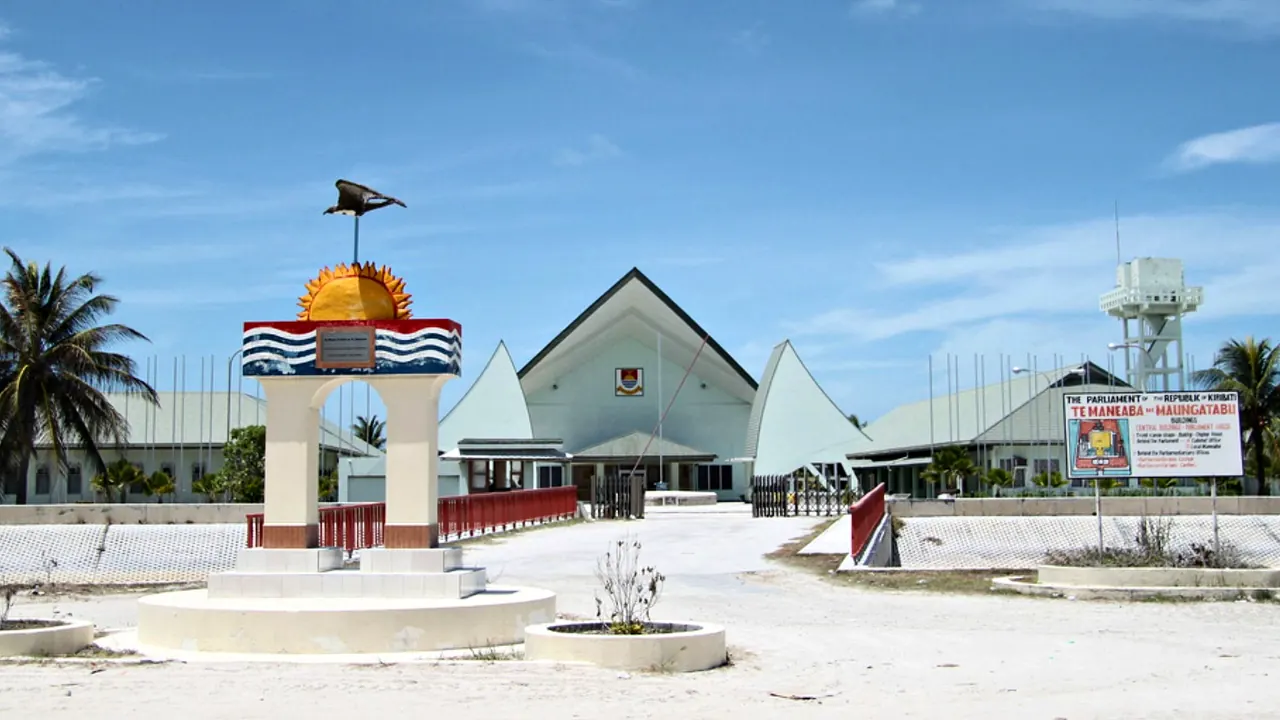
The Kiribati parliament, the Maneaba ni Maungatabu, at Ambo on South Tarawa
- Affordability45
- Getting around38
- Beaches35
Photo: KiribatiTraveller, CC BY-SA 4.0, cropped
Match
21
Every category weighted equally
- Beach & sun23
- Culture & arts21
- Food & nightlife19
- Family trip25
- Outdoors24
- Relax & unwind23
- Shopping & style19
- On a budget24
Tarawa in twelve categories
Our verdict on each, scored 0 to 100 against the same fixed benchmark cities, so a score means the same thing on every page.
Beaches & swimming. Scores 35 out of 100.
Food & drink. Scores 15 out of 100.
Culture & sights. Scores 20 out of 100.
Nightlife. Scores 6 out of 100.
Nature & outdoors. Scores 35 out of 100.
Day trips. Scores 12 out of 100.
Good for families. Scores 12 out of 100.
Getting around. Scores 38 out of 100.
Shopping & style. Scores 7 out of 100.
Affordability. Scores 45 out of 100.
Live music & performing arts. Scores 15 out of 100.
Wellness & relaxation. Scores 15 out of 100.
Tarawa category by category
Beaches & swimming
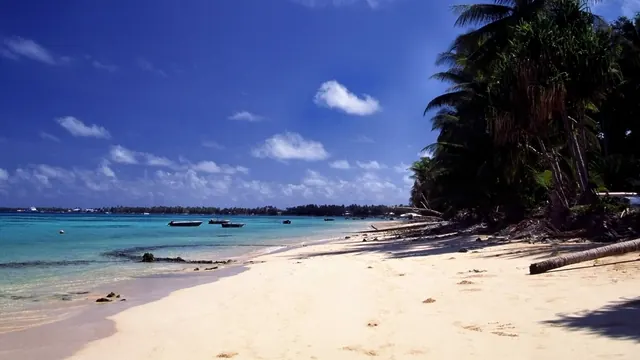
35The water is warm all year, around 28-29°C, and the lagoon is a beautiful colour. Swimming along South Tarawa, where nearly everyone stays, is still a poor idea. The lagoon shore here takes the runoff from a crowded strip of islets, and the ocean side is mostly sharp reef flat that drains at low tide. Local children swim off the causeways, but visitors are usually advised to stay out of the water near the populated stretch.
The beaches worth the effort are in North Tarawa, reached by boat across the lagoon. There you find quiet sand, clear shallow water and almost nobody else. That makes for a good day or overnight trip, not a beach vacation on the doorstep.
Food & drink
15Eating out is limited to a small number of hotel dining rooms, simple Chinese-run restaurants and takeaway counters along the main road. Much of what is on the menu depends on imported rice, tinned meat and frozen goods. The best food is the simplest: very fresh tuna and reef fish, often served raw with coconut cream, alongside breadfruit, pandanus and babai, the giant swamp taro grown in pits on the islets. Most traditional cooking happens at home or at community feasts, so a visitor rarely sees much of it. Come expecting to eat plainly.
Culture & sights
20The main reason to look around is history. In November 1943 Betio was the scene of one of the bloodiest battles of the Pacific war, and the islet is still scattered with Japanese coastal guns, concrete bunkers and command posts, with memorials near the landing beaches. A morning walking these sites is sobering and worth doing.
There is little else in the way of sights. The Te Umanibong cultural centre in Bikenibeu holds a small collection of traditional objects, and the parliament building in Ambo is built in the form of a maneaba, the open-sided meeting house that sits at the heart of every village. Seeing a village maneaba in use tells you more about I-Kiribati life than any exhibit does.
Nightlife
6There is almost no nightlife. A few hotel bars and some simple local drinking places along South Tarawa are about it, and church and family set the rhythm of evenings. Nights out tend to mean dinner, a drink by the lagoon at sunset and an early start the next day. Anyone looking for bars or clubs will find nothing to choose from.
Nature & outdoors
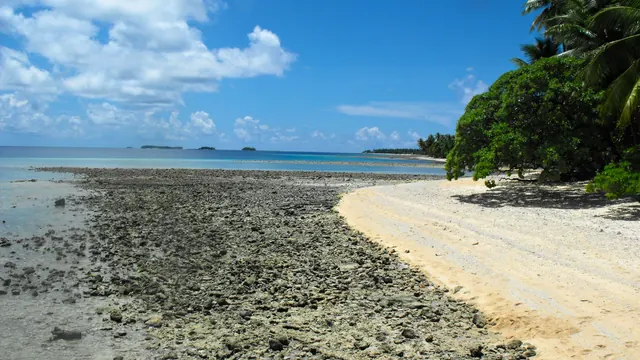
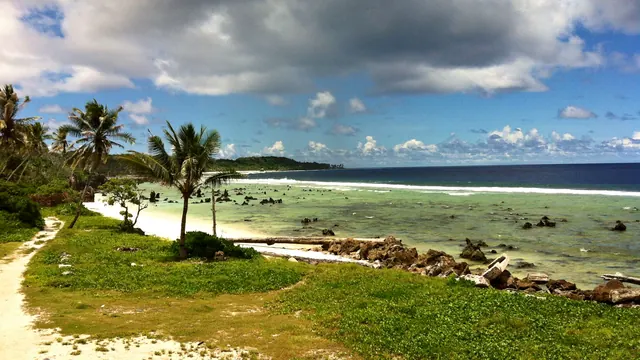
35Tarawa is a classic coral atoll: a thin chain of flat islets curving around a wide turquoise lagoon, with ocean surf breaking on the outer reef. South Tarawa is crowded and built up, so the natural side of the atoll begins in North Tarawa. There the islets are covered in coconut palm and pandanus, and you can wade between some of them at low tide.
The main outdoor pursuits are on the water. The lagoon flats are known for bonefishing, local boats go out after tuna, and snorkelling on the outer reef is possible in calm conditions. There are seabirds on the quieter islets and memorable lagoon sunsets. There are no hills, no trails to speak of and few organised dive or kayak operations, and the heat makes long walks hard work.
Day trips
12The one real outing is across the lagoon to North Tarawa. Its villages of thatched houses and maneaba live at a pace far slower than the crowded south, and a boat ride gets you there. Some visitors go on to the neighbouring atoll of Abaiang, a longer boat trip to the north, for a similar glimpse of outer-island life. Beyond these the nearest islands are a flight away, so this is not a base for exploring.
Good for families
12I-Kiribati culture is warm and welcoming towards children, and the atoll is calm and safe in the everyday sense. Still, there is nothing here made for children: no parks with facilities, no attractions, few hotel pools. The water near the populated area is not a safe place to splash about, the equatorial heat is relentless, and medical facilities are basic. Families who come are usually visiting relatives or working here, and the outing that works best is a boat trip to the quiet beaches of North Tarawa.
Getting around
38Getting around South Tarawa is simple, if not comfortable. A single road runs along the chain of islets from the airport at Bonriki through Bikenibeu and Bairiki to Betio, joined by causeways, and privately run minibuses ply it all day. You flag one down wherever you stand. Taxis and hire cars exist, but few visitors need them.
Walking is harder. Pavements are rare, the road is narrow and busy near Betio, and the heat makes even short distances tiring. North Tarawa has no road connection to the south, so getting there means arranging a boat, and the trip depends on the tide and the weather.
Shopping & style
7Shopping amounts to general stores stocked with imported goods and a few small handicraft outlets. The crafts are the only thing worth seeking out: finely woven pandanus mats, fans and baskets, shell jewellery and model canoes, sold mostly through women's cooperatives and the cultural centre. There are no shopping streets or markets aimed at visitors.
Affordability
45Day-to-day costs are mixed. Minibus rides are very cheap and local fish is inexpensive. Everything imported, which is most of what is in the shops, is expensive by the standards of the region. The handful of hotels and guesthouses charge more than their basic standard would suggest, because there is so little competition. Boat trips to North Tarawa are usually chartered, which adds up for a small group. Expect a stay that is modest in comfort without being particularly cheap.
Live music & performing arts
15Kiribati has a striking dance tradition. Dancers hold rigid, bird-like poses and make sharp movements of the arms and head, accompanied by seated choirs singing and clapping in powerful harmony. You see it at its best in the maneaba during weddings, church gatherings and community celebrations, and above all around Independence Day in July, when dance and singing competitions are held. Outside these occasions there is no theatre, no concert hall and no regular live music, so seeing a performance depends on timing or an invitation.
Wellness & relaxation
15Tarawa has no spas, bathhouses or wellness offer to speak of. South Tarawa is crowded, hot and noisy with traffic along its one road, and the hotels are simple. The restful side of the atoll is North Tarawa, where a few basic island guesthouses offer little more than shade, a hammock, lagoon breezes and silence after dark. For some visitors that is enough to unwind, but it is a matter of switching off rather than being looked after.
When should you go?
Pick a month to see what it is like. The climate figures are measured averages, not a forecast.
Tarawa in July
Daytime high, °C
Rainfall in the month, mm
The whole year
Shaded against this destination’s own year: the deepest cell is its best month for that figure and the palest its weakest.
Temperature and rainfall are climate normals, averaged over the years shown. Tarawa: 1991-2020 (sunshine 1981-2010) normals, Tarawa (7.2 km from centre).
Before you go
| Measure | Tarawa |
|---|---|
| Official language | English, Gilbertese |
| Currency | Australian Dollar (AUD) |
| Sockets | I240 V, 50 Hz |
| Driving side | Left |
| Time zone | UTC+12 |
| Emergency number | 999 |
| Elevation | 3 m |
| Main airport | Bonriki International Airport (TRW)20 km from centre7 non-stop destinations |
| Public holidays this year | 16 days |
By the numbers
| Measure | Tarawa |
|---|---|
| Population | 63,439 |
| People per km² | 4,015 |
| Museums within 10 km | 0 |
| UNESCO World Heritage sites within 50 km | 0 |
| Swim season, months above 21 °C | 12 months |
Compare Tarawa with
Every comparison with a written verdict behind it.