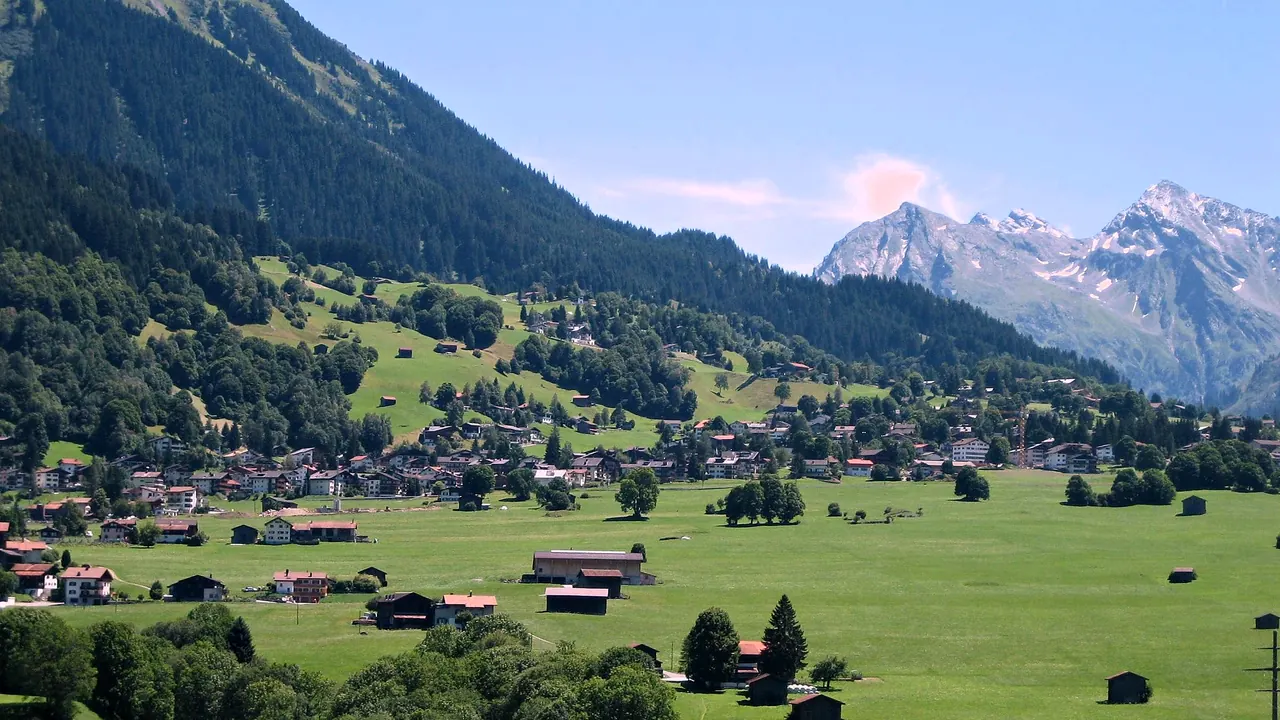
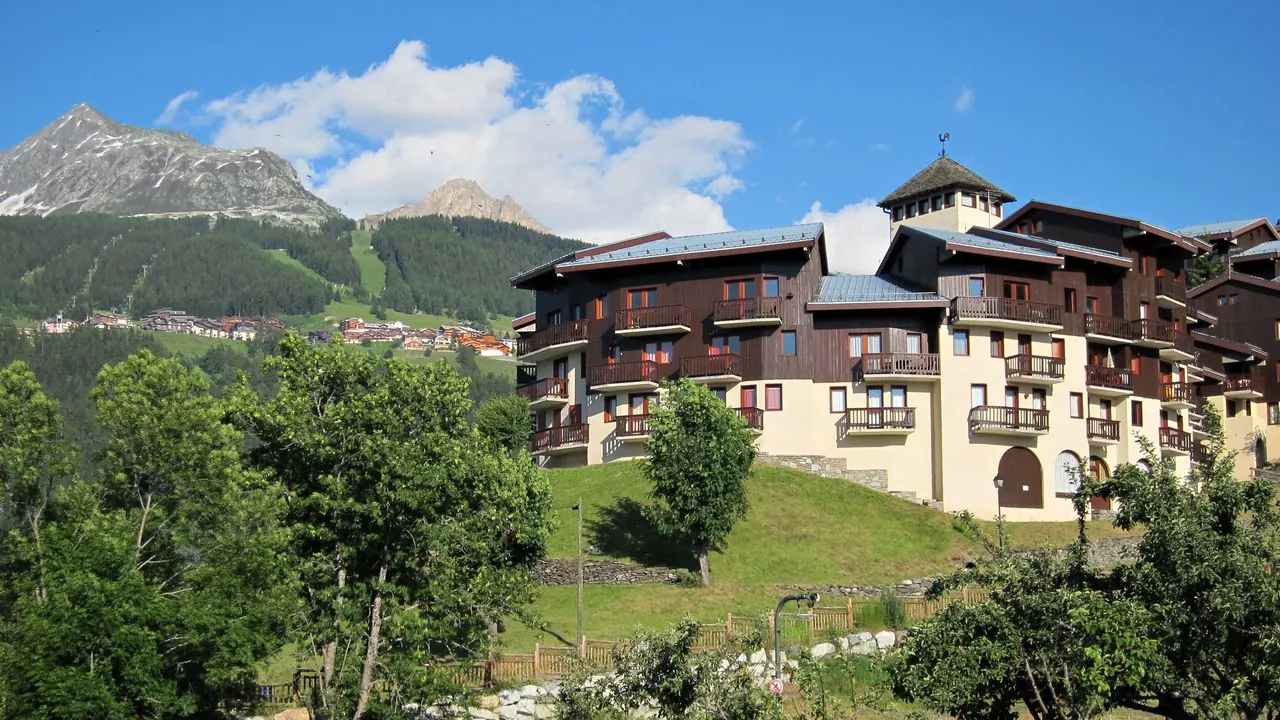
Photos: Klosters by Adrian Michael, CC BY-SA 3.0, cropped; La Plagne by Henk Monster, CC BY 3.0, cropped.
Klosters or La Plagne?
Our verdict in twelve categories, each scored against the same fixed benchmark cities, and the climate month by month, so you can choose for your trip.
Choose Klosters for
- getting around
- day trips
- wellness
Klosters suits travellers who want a quiet, polished Alpine village they can reach and explore entirely by train. Its stations put the Gotschna cable car and the Parsenn slopes a few steps away, the Rhaetian Railway opens up Chur, the Engadine and the Scuol baths for days off the mountain, and evenings are for a sauna and an early night. It is the more restful of the two, and the more expensive.
Choose La Plagne for
- prices
- nightlife
- families
La Plagne is the better pick for a family ski week where the snow is the whole point. Car-free villages such as Belle Plagne sit right on gentle slopes, the Paradiski link to Les Arcs gives keen skiers huge range, and self-catering apartments keep the bill more manageable. There is also a little more life after the lifts close. The trade-off is a resort built in the 1960s, set at the top of a long mountain road, where little happens beyond skiing and walking.
Scoreboard
Twelve categories on one fixed scale from 0 to 100. The shaded stretch is the gap between the two.
Your match
Pick a travel style or drag the sliders, and both match scores follow your weighting.
Too close to call, level with your weighting
Wins on getting around and day trips with your weighting.
Wins on prices and nightlife with your weighting.
What matters to you?
Category by category
What the scores mean for a trip.
Beaches & swimming
Neither place is a swimming destination, and they are about equal on that score. Both sit far inland among high mountains, where any outdoor lake is cold.
The difference lies in the alternatives. From Klosters you can reach the village outdoor pool, the bathing area on the Davos lake or the region's thermal baths. In La Plagne, swimming mostly means the resort's leisure centres and heated pools.
Food & drink
La Plagne has a slightly wider choice, mostly because it is bigger. Its villages mix Savoyard fondue, tartiflette and Beaufort with pizzerias and crêperies, and its resort supermarkets and cheese counters make self-catering easy.
Klosters is smaller and dearer, but its cooking is more distinctly regional: capuns, pizokel and Bündnerfleisch served in wood-panelled stuben, with Pinot Noir from the Bündner Herrschaft. In both places the best meal is often lunch on a sunny mountain terrace.
Culture & sights
Neither is a place for sightseeing. Klosters has a little old-village character, with timber chalets, Augusto Giacometti's windows in St. Jakob and a small museum of rural life in the Nutli-Hüschi farmhouse.
La Plagne's interest is modern rather than historic: the stranded-liner bulk of Aime 2000, the high-rise Plagne Centre and the 1992 Olympic bob track. For older heritage, both send you down to the valley.
Nightlife
La Plagne has more going on after dark. Après-ski bars fill as the lifts close, and Plagne Centre and Belle Plagne keep a few pubs, late bars and a small club or two busy in peak winter weeks.
Klosters is more discreet. A drink by the fire in a hotel bar is the usual evening, and anyone wanting more takes the train to Davos. Out of season, both go quiet early.
Nature & outdoors
Both are first-rate mountain destinations, and they differ in character rather than quality. Klosters gives you the Parsenn, with its famous long runs down to the valley, plus Madrisa, valley-floor cross-country trails and summer routes into the Silvretta.
La Plagne offers sheer size and height. It is part of the vast Paradiski area linked to Les Arcs, with wide, sunny intermediate terrain up to the Bellecôte glacier, and its summers reach into the Vanoise National Park, where you can see ibex and marmots.
Day trips
Klosters is far better placed for days out. The Rhaetian Railway runs to Davos, to old Chur and to Maienfeld's Heidi country, and the Vereina tunnel brings the sgraffito villages of the Lower Engadine and the Albula line within reach.
From La Plagne, every outing starts with the long drive down. Aime's basilica, medieval Conflans, Chambéry and Annecy are all rewarding, but they work best with a car, and in summer the passes into the Beaufortain and the Aosta Valley open up.
Good for families
La Plagne was designed around families, and it shows in the car-free, ski-in villages where children walk straight out onto gentle slopes. Big ski-school programmes and the bob-raft ride add to the appeal.
Klosters suits families who love the mountains, with Madrisa's summer adventure area and a safe, quiet village. It has less on offer overall, though, and nothing for a wet day.
Getting around
Klosters is the easier place to reach and stay in without a car. Trains stop at two village stations, the Gotschna cable car leaves from beside Platz station, and buses link the long valley village with the lifts.
La Plagne is easy once you are up there, thanks to ski-in apartments, free shuttles between villages and the lifts themselves. Getting there, however, means a bus or a drive up a winding road from Aime, often with snow chains in winter.
Shopping & style
Shopping is a minor part of a stay in either place. Klosters adds a few upmarket fashion and interior boutiques along its main street, and Zurich is the place for a proper shopping day.
La Plagne sticks to ski hire and groceries. Its best souvenirs are edible: Beaufort, génépi and cured sausages from the produce counters.
Affordability
Both are expensive, but La Plagne is the more forgiving of the two. Its large stock of self-catering apartments is how many families keep a ski week affordable, and summer or quieter winter weeks cost noticeably less.
Klosters is among the dearest stays in the Alps, from hotels and lift passes to restaurant meals. Its guest card for local transport helps only a little.
Live music & performing arts
Neither has a theatre or a regular venue, so this barely separates them. Klosters has the edge for classical listeners, with a summer concert series and occasional church recitals.
In La Plagne, live performance means torchlight descents and après-ski bands. For anything more serious, it is Chur from one and Chambéry from the other.
Wellness & relaxation
Klosters is the more restful choice. The village is slow and unshowy, its hotel spas are good, and you can soak in the thermal baths at Scuol or use the large pool and sauna complex in Davos without needing a car.
La Plagne's spas exist to ease legs after a ski day rather than to set a slower pace. Its proper mineral baths, at Brides-les-Bains and La Léchère, are an hour's drive down the valley.
When should you go?
Pick your month. The climate figures are measured averages, not a forecast.
Klosters in July
La Plagne in July
Daytime high, °C
Rainfall in the month, mm
Where the figures come from
Klosters's temperatures are measured 51 km from the centre, at S. Valentino Alla Muta.
Klosters's station stands 280 m above the city centre, so the centre is likely a little warmer than the figures say.
Klosters has no rain gauge within 25 km of the centre, so its rainfall comes from a gridded climate dataset read at the destination rather than from a gauge further away.
La Plagne has no weather station within reach, so its figures come from a gridded climate model rather than a measured record, and read a broad area rather than one spot.
Temperature and rainfall are climate normals, averaged over the years shown. Klosters: 1991-2020 normals, S. Valentino Alla Muta (51.4 km from centre). La Plagne: 2001-2020 normals, NASA POWER reanalysis grid, no weather station within 90 km.
Klosters sits lower and is the milder of the two all year. Winter highs hover around 2°C there, while La Plagne stays below freezing from December to February, dropping to about -4°C in January. That high, cold air is what keeps La Plagne's snow reliable deep into spring. In summer Klosters reaches about 20°C, pleasant for village strolls and meadow walks, while La Plagne's high pastures stay a little cooler.
Rain works differently in the two places. Klosters is wettest in high summer, with around 140mm in August, so July and August hikes need waterproofs and an early start before the afternoon storms. La Plagne's rain is spread more evenly through the year and its summers are noticeably drier. That makes July and August its best walking months, while late September suits Klosters well once the summer rain eases.
Which traveller are you?
For a relaxing and wellness trip, Klosters is the one to book, ideally in September when the summer rain eases. Stay near Platz station, fill the days with slow walks through the Prättigau meadows and keep one day for a train ride to the Engadine baths.
On a family trip with young children, Klosters works best in summer, for hikes to farm huts and picnics on Madrisa. For a winter ski week, though, La Plagne is the stronger choice: base yourselves in one of its upper villages, and the whole week runs from the front door.
On a trip on a tight budget, Klosters is hard to make work in any season. La Plagne is the realistic choice. Go in summer, when walking means no lift pass, lessons or hire, and buy your groceries down in Aime before driving up.
Before you go
| Measure | Klosters | La Plagne |
|---|---|---|
| Official language | French, German, Italian, Romansh | French |
| Currency | Swiss Franc (CHF) | Euro (EUR) |
| Sockets | CJ230 V, 50 Hz | CE230 V, 50 Hz |
| Driving side | Right | Right |
| Time zone | UTC+1, UTC+2 in summer | UTC+1, UTC+2 in summer |
| Emergency number | 112 | 112 |
| Elevation | 1,179 m | 1,974 m |
| Main airport | Zürich Airport (ZRH)120 km from centre226 non-stop destinations | Geneva International Airport (GVA)92 km from centre150 non-stop destinations |
| Public holidays this year | 9 days | 11 days |
By the numbers
| Measure | Klosters | La Plagne |
|---|---|---|
| Population | 4,499 | - |
| People per km² | 20 | - |
| Museums within 10 km | 3 | 2 |
| UNESCO World Heritage sites within 50 km | 1 | 0 |
Where else could you go?
Every comparison below shares a destination with this one, so you can follow Klosters or La Plagne somewhere new.
- Davosvs Klosters
- Courchevelvs La Plagne
- Les Arcsvs La Plagne
- Méribelvs La Plagne
- Arosavs Klosters
- Tignesvs La Plagne