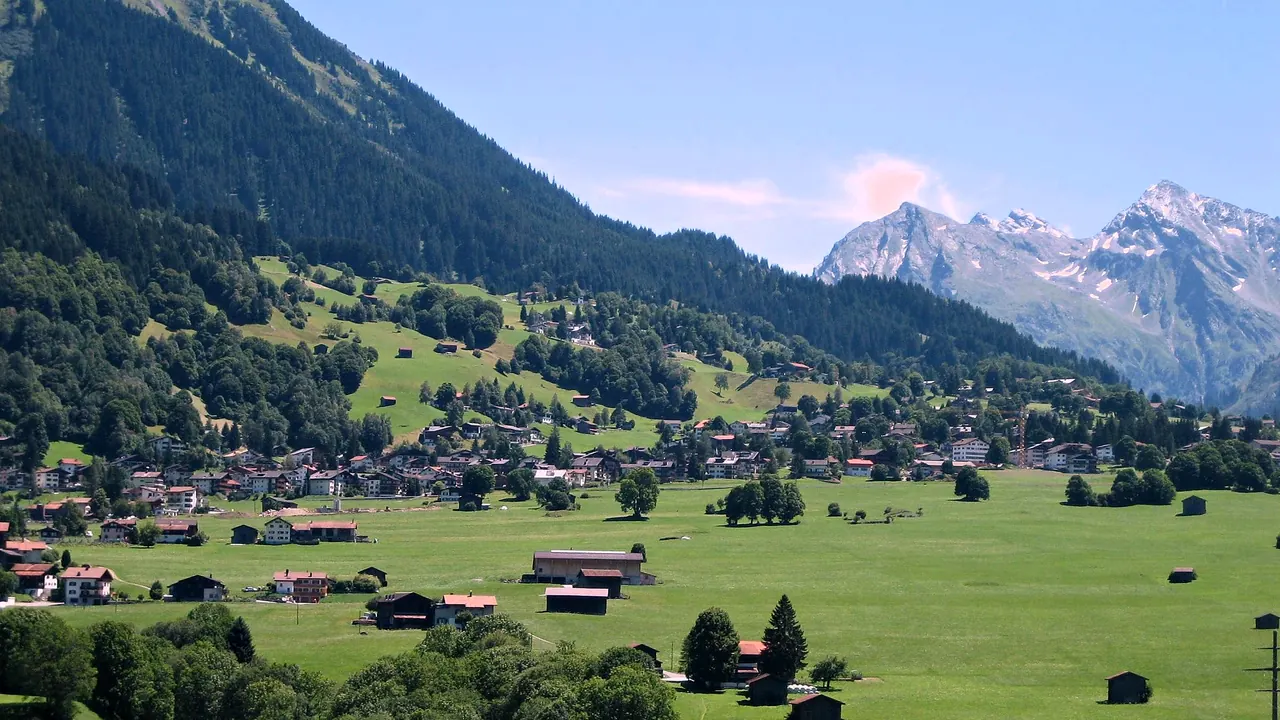
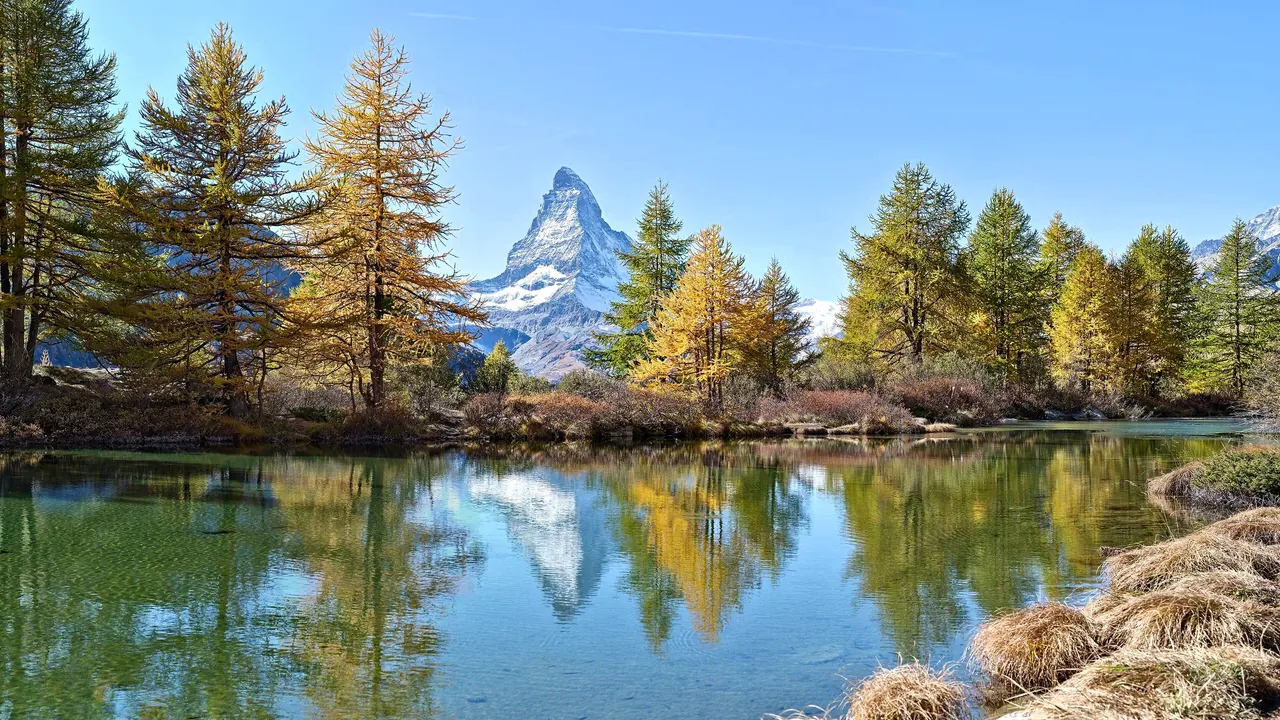
Photos: Klosters by Adrian Michael, CC BY-SA 3.0, cropped; Zermatt by Roy Egloff, CC BY-SA 4.0, cropped.
Klosters or Zermatt?
Our verdict in twelve categories, each scored against the same fixed benchmark cities, and the climate month by month, so you can choose for your trip.
Choose Klosters for
- day trips
- families
- beaches
Klosters suits travellers who want the Alps with room to roam beyond them. It is the better base for a family, with a children's mountain on the doorstep, and the Rhaetian Railway turns spare days into outings to Chur, the Engadine's painted villages and Liechtenstein. Its evenings are discreet and early, and its lower valley position brings greener, milder summers.
Choose Zermatt for
- nightlife
- food and drink
- shopping
Zermatt is for people who want to stand under one of the great mountains of the world. The Matterhorn, the glaciers and the highest lifts give it the edge for serious skiers, climbers and high-level hikers, and the village adds livelier après-ski, better terrace lunches and a mountaineering story worth a morning. The price of that is a dead-end valley, so you stay in the mountains rather than touring.
Scoreboard
Twelve categories on one fixed scale from 0 to 100. The shaded stretch is the gap between the two.
Your match
Pick a travel style or drag the sliders, and both match scores follow your weighting.
Wins on day trips and families with your weighting.
Wins on nightlife and food and drink with your weighting.
What matters to you?
Category by category
What the scores mean for a trip.
Beaches & swimming
Neither is a place to swim, but Klosters at least offers a little in summer: an outdoor pool in the village and a bathing area on the Davos lake about half an hour away, though the water rarely climbs past 17°C. In Zermatt the tarns are strictly scenery, glacier-fed and far too cold, so a swim means a hotel pool and nothing else.
Food & drink
Klosters keeps to Graubünden: capuns, pizokel, barley soup and Bündnerfleisch in wood-panelled stuben, with Pinot Noir from the Bündner Herrschaft. It is honest and specific but the choice is small, and a terrace lunch on the mountain is usually the highlight.
Zermatt eats better and more widely, because its international clientele supports a handful of serious fine-dining kitchens. The real draw is reaching the chalet restaurants of Findeln, Furi and Zum See on skis or on foot, then lingering over raclette and a Petite Arvine or Cornalin with the Matterhorn in view.
Culture & sights
Zermatt has more of a story to tell. The underground Matterhorn Museum recounts the first ascent of 1865 and its fatal descent, the mountaineers' cemetery makes that history personal, and the old larch barns of the Hinterdorf show the farming village beneath the resort. The Gornergrat cog railway, running since 1898, is a piece of heritage in itself.
Klosters offers little more than Augusto Giacometti's stained glass in St. Jakob and a small rural-life museum in the Nutli-Hüschi. Here history is something you take the train to find, in Chur's old centre.
Nightlife
Zermatt is clearly the livelier of the two in winter. Après-ski starts in the slope-side bars on the runs back into the village, loud and in ski boots, and on busy weekends a few bars and small clubs on the main street stay open past midnight.
Klosters prefers a fireside drink in a hotel bar, with a couple of late spots that only fill in the peak weeks; for a proper night out you take the train to Davos. In summer both villages go to bed after dinner.
Nature & outdoors
Both are exceptional mountain bases, but Zermatt is in a higher league of scenery. The Matterhorn stands over the village, lifts climb past 3,800m to the glacier, pistes stay open in summer and the skiing crosses into Italy, while summer brings the Five Lakes walk, the Europaweg suspension bridge and guided ascents of four-thousanders.
Klosters is gentler and greener. The Parsenn, shared with Davos, is known for long runs right down to the valley, and summer turns the slopes into flowery hiking country towards the Silvretta, with the Swiss National Park reachable through the Vereina tunnel.
Day trips
Klosters is far better placed for days away. The Rhaetian Railway runs to Davos, to Chur's old town in a little over an hour, and past the Maienfeld vineyards towards Vaduz, while the Vereina tunnel opens up the sgraffito houses of Guarda and Scuol and, on a longer day, the Albula line and St. Moritz.
From Zermatt every outing begins with the long train ride down the valley. Sion's castle hills and Brig's Stockalper Palace reward the effort, but most visitors simply spend their spare days higher up.
Good for families
Klosters works better for most families. Madrisa is geared to children, with an adventure and play area in summer and beginner slopes and ski schools in winter, and short hikes to farm huts suit small legs.
Zermatt's car-free streets are a real plus, and children enjoy the marmots and cog railways, but the headline viewpoints above 3,000m can be too cold and airless for little ones. Neither has a zoo, aquarium or easy rainy-day fallback.
Getting around
Both are easy without a car, in different ways. Klosters stretches along the valley with two railway stations, so the local bus helps between the ends, and the Vereina car train links it to the Engadine. Zermatt bans ordinary cars altogether: you leave yours at Täsch, then walk a compact village where the cog railway, funicular and gondolas all start within reach, with electric taxis for luggage up the steep edges.
Shopping & style
Zermatt has more to browse along its single main street, from Swiss watch and jewellery boutiques to well-stocked mountaineering outfitters and plenty of Matterhorn souvenirs. Klosters manages a few upmarket boutiques, rental shops and delis selling Graubünden cured meats and cheese. In neither case is shopping a reason to go, and serious retail from Klosters means a day in Zurich.
Affordability
Both rank among the most expensive places in the Alps, and no part of a stay in either is cheap. The ways to save differ: in Klosters the guest card covers local transport and apartments allow self-catering, while in Zermatt the biggest cut comes from sleeping down the valley in Täsch and living on supermarket picnics.
Live music & performing arts
Zermatt has the stronger calendar thanks to two festivals: Zermatt Unplugged, with acoustic sets on tent and mountain stages in spring, and a late-summer chamber music festival in the church and other small venues. Klosters has its own summer classical series and the odd church recital, but for most of the year live music in either village means a hotel pianist or an après-ski band.
Wellness & relaxation
Both rely on hotel spas rather than any bathing tradition of their own, so the difference lies in what surrounds them. From Klosters you can reach real thermal water at Scuol in under an hour, or the large public pool and sauna complex in Davos, and the village itself is made for early nights.
Zermatt has an unusually dense cluster of fine hotel spas, many with mountain views and some open to day guests, and the car-free quiet is restful. In peak weeks, though, the mood is more energetic than slow.
When should you go?
Pick your month. The climate figures are measured averages, not a forecast.
Klosters in July
Zermatt in July
Daytime high, °C
Rainfall in the month, mm
Where the figures come from
Klosters's temperatures are measured 51 km from the centre, at S. Valentino Alla Muta.
Klosters's station stands 280 m above the city centre, so the centre is likely a little warmer than the figures say.
Klosters has no rain gauge within 25 km of the centre, so its rainfall comes from a gridded climate dataset read at the destination rather than from a gauge further away.
Zermatt has no weather station within reach, so its figures come from a gridded climate model rather than a measured record, and read a broad area rather than one spot.
Temperature and rainfall are climate normals, averaged over the years shown. Klosters: 1991-2020 normals, S. Valentino Alla Muta (51.4 km from centre). Zermatt: 1991-2020 normals, TerraClimate 4 km grid at the town, no weather station within 90 km.
Klosters sits lower and feels it. Summer days reach about 20°C, comfortable for hiking and village walks, but June to September is also the wettest stretch, with August bringing around 141mm, so expect afternoon showers on the meadows. Winter highs hover just above freezing, which suits skiing, and the drier months from January to April make for the steadiest snow days.
Zermatt's figures are much colder all year. Even in July and August highs only reach about 14°C, so summer walking needs layers, and from December to March daytime temperatures stay at or below freezing, around -2°C in midwinter, which keeps the snow reliable. Its rain is spread more evenly than in Klosters, with summer noticeably drier, while November is the wettest and least appealing month at about 130mm. Neither village is warm enough for anything resembling a beach trip.
Which traveller are you?
On a family trip with children, Klosters is the easier choice. The Madrisa side is built around young skiers and has a summer adventure area, the village is calm, and none of the outings demand the thin, cold air of Zermatt's highest viewpoints.
For a food and nightlife trip, Zermatt gives more to work with. The hamlet chalets around Findeln and Furi make long lunches an event, the village has more ambitious kitchens, and après-ski carries on into bars and small clubs after midnight.
On an outdoors trip, Zermatt has the edge for anyone chasing altitude. The Matterhorn, glacier pistes open in summer, the ski link into Italy and guided four-thousanders outrank even Klosters' fine Parsenn runs and Silvretta hiking routes.
Before you go
| Measure | Klosters | Zermatt |
|---|---|---|
| Official language | French, German, Italian, Romansh | French, German, Italian, Romansh |
| Currency | Swiss Franc (CHF) | Swiss Franc (CHF) |
| Sockets | CJ230 V, 50 Hz | CJ230 V, 50 Hz |
| Driving side | Right | Right |
| Time zone | UTC+1, UTC+2 in summer | UTC+1, UTC+2 in summer |
| Emergency number | 112 | 112 |
| Elevation | 1,179 m | 1,624 m |
| Main airport | Zürich Airport (ZRH)120 km from centre226 non-stop destinations | Geneva International Airport (GVA)128 km from centre150 non-stop destinations |
| Public holidays this year | 9 days | 9 days |
By the numbers
| Measure | Klosters | Zermatt |
|---|---|---|
| Population | 4,499 | 6,023 |
| People per km² | 20 | 25 |
| Museums within 10 km | 3 | 2 |
| UNESCO World Heritage sites within 50 km | 1 | 2 |
Where else could you go?
Every comparison below shares a destination with this one, so you can follow Klosters or Zermatt somewhere new.
- Davosvs Klosters
- Saas-Feevs Zermatt
- Arosavs Klosters
- Lenzerheidevs Klosters
- Samnaunvs Klosters
- Crans-Montanavs Zermatt