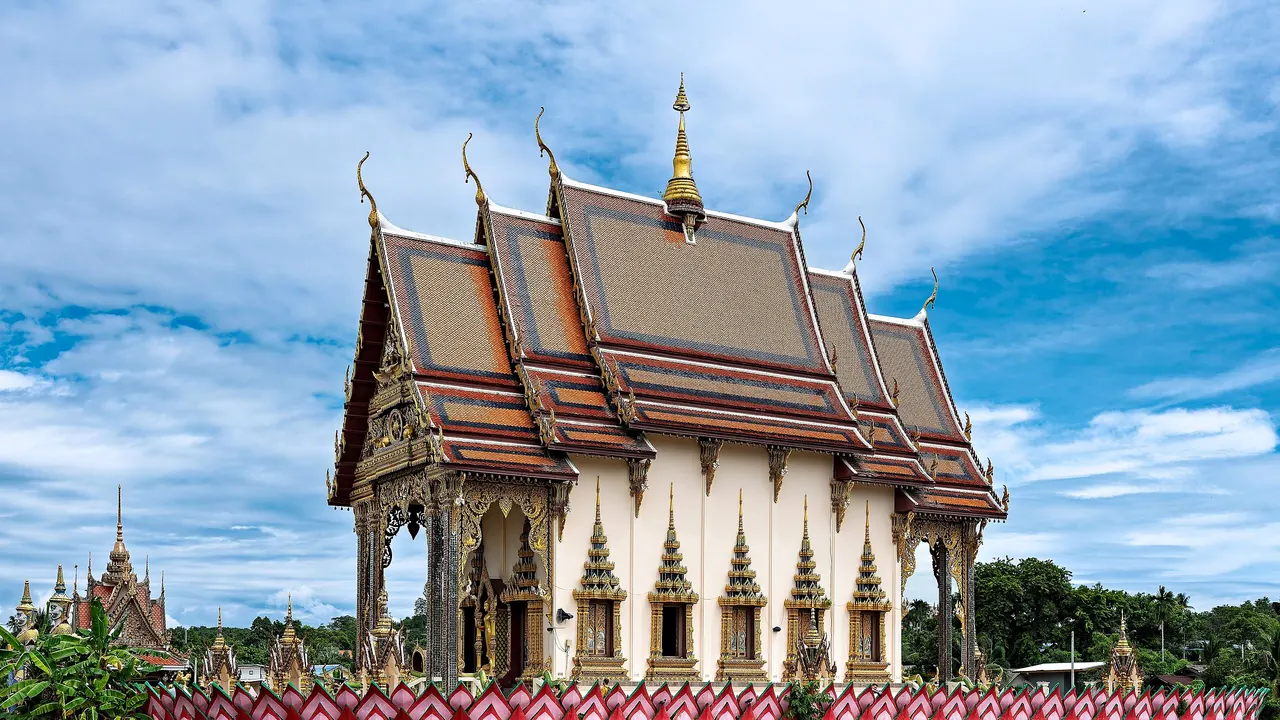
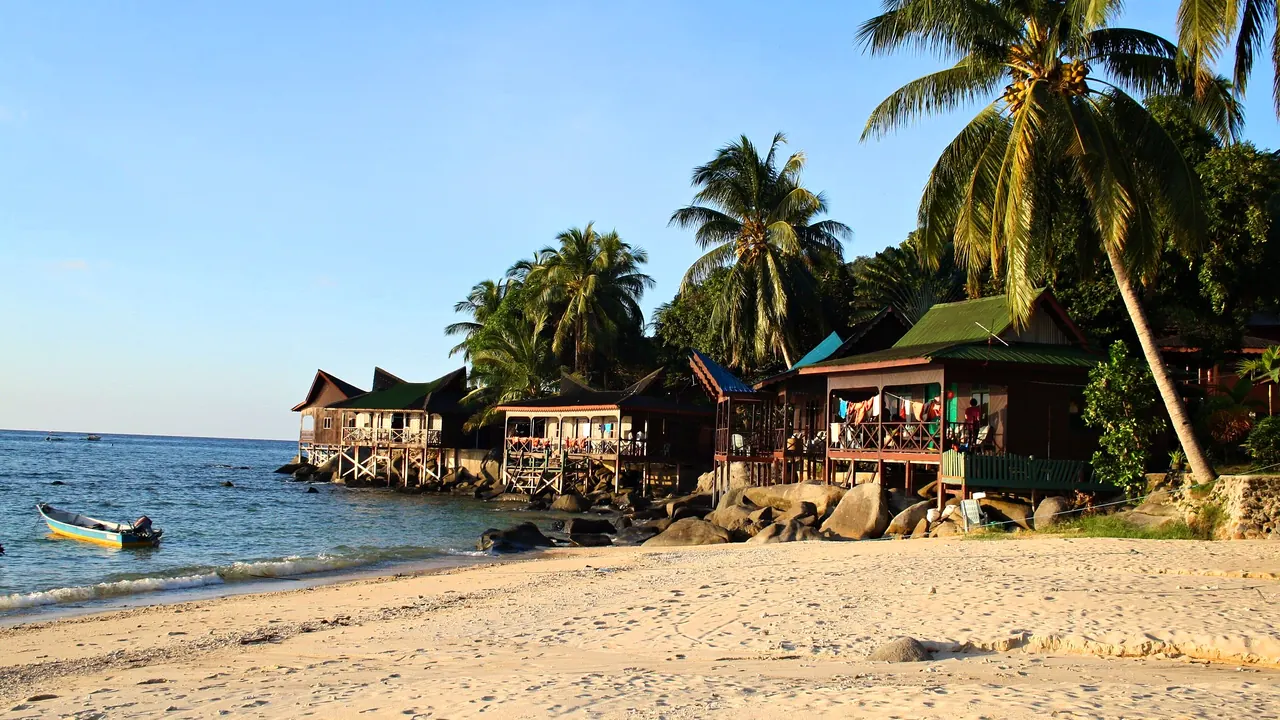
Photos: Koh Samui by Mustang Joe, CC0; Tioman by Jorge Cancela, CC BY 2.0, cropped.
Koh Samui or Tioman?
Our verdict in twelve categories, each scored against the same fixed benchmark cities, and the climate month by month, so you can choose for your trip.
Choose Koh Samui for
- nightlife
- wellness
- food and drink
Koh Samui is the more complete island vacation. Its east-coast beaches come with proper night markets and sea-view restaurants, a late bar and club scene in Chaweng, retreat centres and hillside spas, and a ring road that puts every beach within easy reach. It suits couples and friends who want sand by day and a choice of evenings, families who want resort pools and the calm northern bays, and anyone booking a yoga or detox stay.
Choose Tioman for
- prices
- nature and the outdoors
Pick Tioman for a quieter, wilder and cheaper week. Coral grows close enough to snorkel from the beach, rainforest climbs behind the villages, and nights end soon after grilled fish and a duty-free beer. In return it asks for a ferry crossing and boats between bays, and there is almost nothing to do beyond the sea and the forest. It suits travellers happy to switch off in one bay rather than move about.
Scoreboard
Twelve categories on one fixed scale from 0 to 100. The shaded stretch is the gap between the two.
Your match
Pick a travel style or drag the sliders, and both match scores follow your weighting.
Wins on nightlife and wellness with your weighting.
Wins on prices and nature and the outdoors with your weighting.
What matters to you?
Category by category
What the scores mean for a trip.
Beaches & swimming
Both islands are built around their beaches and the sea is equally warm, so the choice comes down to character. Samui has the long, broad sand of Chaweng and Lamai on the east coast, the sheltered bay of Choeng Mon, the calmer and shallower north coast, and boulder coves such as Silver Beach for a prettier swim.
Tioman's beaches are smaller and wilder. On the west coast there is a chain of village bays, with Salang the prettiest, and coral close enough to snorkel straight from the sand. On the east coast is the long, open sweep of Juara. Samui has more comfort behind the sand, while Tioman has the better snorkelling off the beach, along with sandflies at dusk on a few stretches.
Food & drink
Samui eats far better. Southern Thai curries, coconut soups and the night markets in Lamai, Maenam and Bophut's Fisherman's Village give real range, and there is a tier of sea-view restaurants in the hillside resorts and along the Bophut waterfront, even if the Chaweng strip is uneven.
Tioman's food is plain Malay village cooking: nasi lemak, roti canai and fried rice, with grilled fish and squid on the beach at Salang, Air Batang and Tekek in the evening. It is pleasant enough, but choice is thin outside the main villages and many kitchens close in the monsoon.
Culture & sights
Neither island is a heritage trip, but Samui at least fills a half-day: the gilded Big Buddha on its causeway islet, the many-armed Guanyin standing in a lake at Wat Plai Laem, the mummified monk at Wat Khunaram and the old Chinese shophouses of Fisherman's Village. Tioman has no sights to speak of. Its interest lies in the timber houses, small mosques and beached boats of fishing kampungs such as Juara and Mukut.
Nightlife
Samui has a real night out and Tioman does not. Chaweng's beach bars, roadside bars and clubs run well past midnight in high season, with fire shows and DJs at the beach clubs. Lamai offers a smaller, rougher version, and the full moon parties on Koh Phangan are a short boat ride away.
On Tioman the evening means a sunset beer at a beach bar in Salang, Air Batang or Tekek, perhaps with a bonfire, and bed soon after dinner. There are no clubs, and because this is a conservative Muslim area, drinking outside the traveller villages is a quiet affair.
Nature & outdoors
The two are close here, but they offer different kinds of outdoors. Samui's best nature lies offshore. Boats go to the limestone islands, emerald lake and viewpoint of Ang Thong National Marine Park, and dive trips head north to Sail Rock and Koh Tao. The island itself has modest jungle hills and the Na Muang waterfalls.
On Tioman the wild starts at the door. Rainforest climbs to Gunung Kajang at just over 1,000m, and the jungle trail from Tekek to Juara crosses the island past hornbills and macaques. The reefs at Renggis, Chebeh and the Tulai islets are close by, which makes it a good place to learn to dive.
Day trips
Samui gives you more scope for a day away, though it is island-hopping rather than sightseeing. Koh Phangan and its port town at Thong Sala are a short boat ride away, and Koh Tao with the sandbar islets of Koh Nang Yuan makes a full day out. From Tioman the only outings are snorkelling and dive boats to the offshore islets, since the mainland ports are a long ferry ride away and have little to see.
Good for families
Samui is the easier family choice. It has the calm, shallow bays of Choeng Mon, Bophut and Maenam, resorts with big pools and children's clubs, and a few animal parks, a water park and Ang Thong boat trips for variety. It works best if you stay away from Chaweng and keep children off scooters on the ring road.
Tioman suits families who are content with sand and sea. The west-coast bays are sheltered enough for children to snorkel among fish, and there is a turtle hatchery at Juara and pools at the larger resorts near Tekek. Against that, the ferry can be choppy, villages are linked by boat, nothing is built for children and medical care is basic.
Getting around
Neither island is easy without planning, but Samui is simpler. A single ring road of about 51km links every beach, and Chaweng to Bophut or Lamai takes about a quarter of an hour by hire car, ride-hailing or songthaew. Taxi fares are steep and have to be negotiated, and scooter accidents are common.
Tioman has almost no roads. One crosses the hills from Tekek to Juara, and otherwise the villages are linked by water taxi and jungle trail. Reaching the island takes an hour and a half to two hours by ferry from Mersing or Tanjung Gemok. Once you are settled in a bay, though, everything is a barefoot walk away.
Shopping & style
Samui at least offers a browse. There is the Friday walking street in Fisherman's Village with its crafts and coconut-wood homeware, weekly markets in Lamai and Maenam, a large modern mall in Chaweng and tailors for made-to-measure suits. Tioman has duty-free alcohol, tobacco and chocolate in Tekek and village stores selling sarongs and snorkel gear, so bring what you need from the mainland.
Affordability
Samui is expensive by Thai standards. Resort and villa rates, restaurants on the main strips, costly taxis and limited flights all push up the bill. If you eat at night markets and sleep in bungalows back from the beach on the north or west coast, it can still be kept modest.
Tioman is the cheaper of the two, by a modest margin. Simple chalets in Air Batang, Salang and Juara, cheap village meals, duty-free drink and good-value dive courses keep a week low-cost, though the ferry, the marine park fee and water taxis add up.
Live music & performing arts
Samui's live entertainment is made for visitors: Muay Thai fight nights at small stadiums around Chaweng and Lamai, ladyboy cabaret, fire dancers on the beach and cover bands in the bars. It makes a lively evening, though there is no theatre or concert hall. Tioman has less still, perhaps a guitar at a beach bar or a cultural evening laid on by a resort.
Wellness & relaxation
Samui is one of Asia's established retreat islands. It has detox and fasting programmes around Lamai, yoga and meditation centres, lavish hillside spas over the Gulf and cheap Thai massage everywhere. Base yourself in Maenam, Bang Po or Lipa Noi rather than noisy Chaweng and the pace is genuinely slow.
Tioman's restorative side is its stillness: most villages have no cars and no crowds, and the days follow the tide and the light. A few resort spas offer treatments and some chalets do massage or beach yoga, but the island is a place to unwind rather than to book a programme of care.
When should you go?
Pick your month. The climate figures are measured averages, not a forecast.
Koh Samui in July
Tioman in July
Daytime high, °C
Rainfall in the month, mm
Where the figures come from
Koh Samui has no rain gauge within 25 km of the centre, so its rainfall comes from a gridded climate dataset read at the destination rather than from a gauge further away.
Tioman's temperatures are measured 55 km from the centre, at Mersing.
Tioman has no rain gauge within 25 km of the centre, so its rainfall comes from a gridded climate dataset read at the destination rather than from a gauge further away.
Temperature and rainfall are climate normals, averaged over the years shown. Koh Samui: 1991-2020 normals, Ko Samui (7.4 km from centre). Tioman: 1991-2020 normals, Mersing (54.5 km from centre).
Koh Samui has the longer good season. From January to September the weather is hot and fairly settled, with daytime highs reaching 33°C in May and June and warm sea all year. The rain arrives in October and peaks in November at 372mm, though the north and west coasts stay calmer than the east then. On both islands walking about at midday is hard work from April onwards.
Tioman runs on a slightly different calendar. January is still very wet there while Samui is pleasant, and the swimming season only settles from March before holding through to October. Its monsoon from November to February is heavier than Samui's, with December bringing 721mm, rough seas and far fewer ferries. From March to September either island works. In January and February Samui is the clear choice, and in late autumn neither is at its best.
Which traveller are you?
For a food and nightlife trip, Koh Samui wins easily. Night markets in Lamai, Maenam and Fisherman's Village serve real southern Thai cooking, and Chaweng's bars and clubs keep going well past midnight. Tioman offers grilled fish, a beach bar and an early night.
On a relaxing and wellness trip, Samui again has more to offer: detox and fasting programmes around Lamai, yoga retreats, hillside spas and cheap Thai massage, with slow northern bays to stay in. Tioman is calm and quiet but has little in the way of treatments.
On a trip on a tight budget, Tioman goes further. Beach chalets in Air Batang, Salang and Juara cost little, village meals are cheap and duty-free beer is cheaper still. Samui can be done cheaply too, but its resorts, taxis and flights push costs up.
Before you go
| Measure | Koh Samui | Tioman |
|---|---|---|
| Official language | Thai | Malay |
| Currency | Baht (THB) | Malaysian Ringgit (MYR) |
| Sockets | ABCF220 V, 50 Hz | G240 V, 50 Hz |
| Driving side | Left | Left |
| Time zone | UTC+7 | UTC+8 |
| Emergency number | Police 191, ambulance 1669, fire 199 | 999 |
| Main airport | Samui International Airport (USM)10 non-stop destinations | Singapore Changi Airport (SIN)168 non-stop destinations |
By the numbers
| Measure | Koh Samui | Tioman |
|---|---|---|
| Population | 62,500 | 432 |
| People per km² | 273 | - |
| Swim season, months above 21 °C | 12 months | 12 months |
Where else could you go?
Every comparison below shares a destination with this one, so you can follow Koh Samui or Tioman somewhere new.
- Koh Phanganvs Koh Samui
- Koh Taovs Koh Samui
- Koh Lantavs Koh Samui
- Koh Phi Phivs Koh Samui
- Phuketvs Koh Samui
- Koh Lipevs Koh Samui