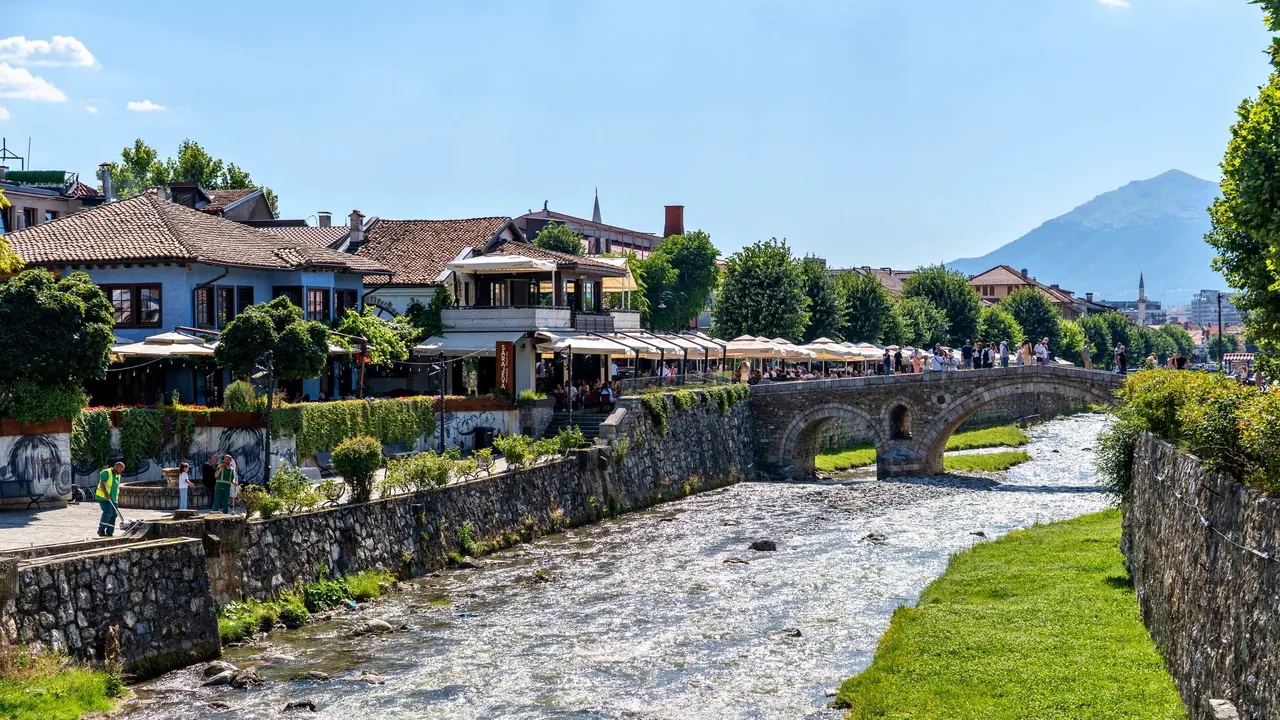
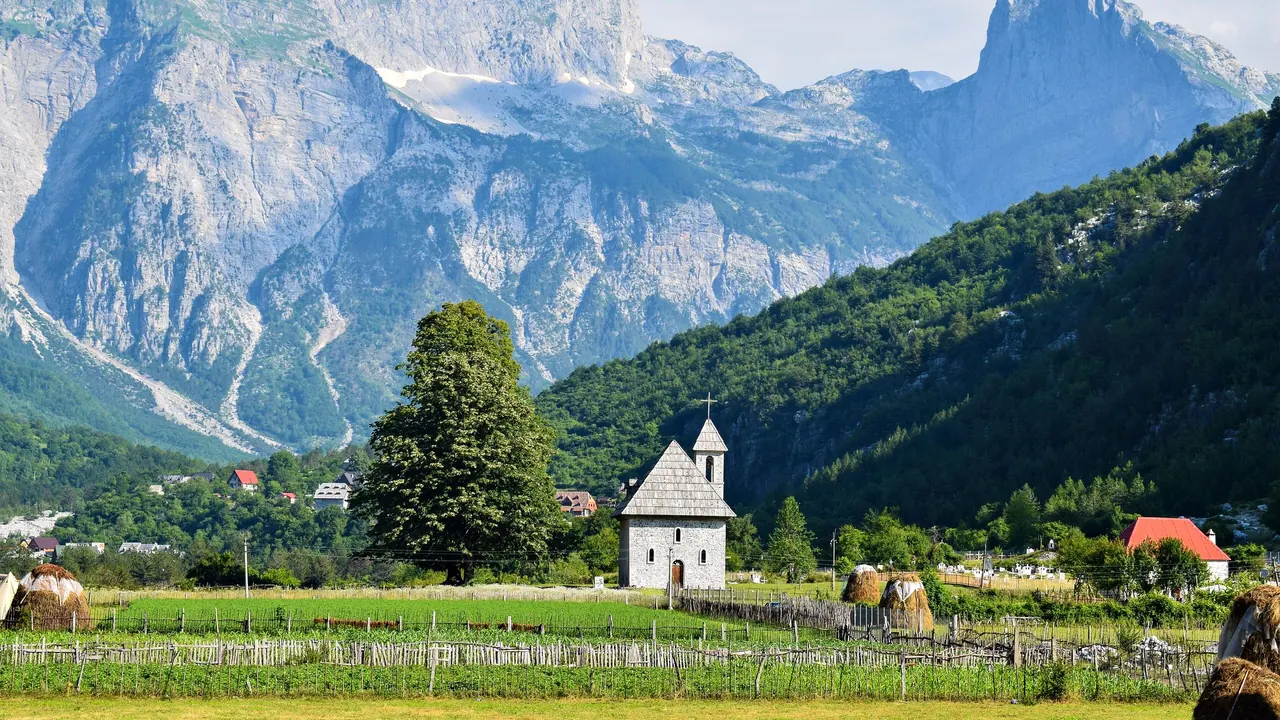
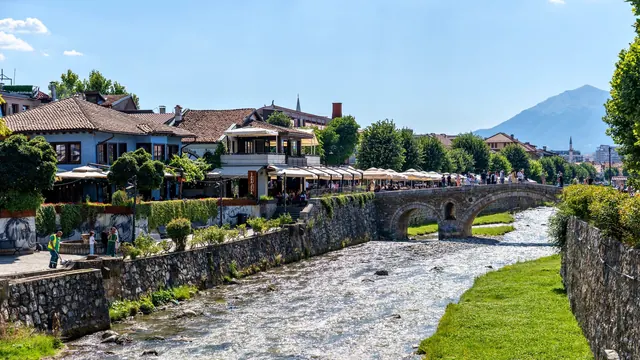
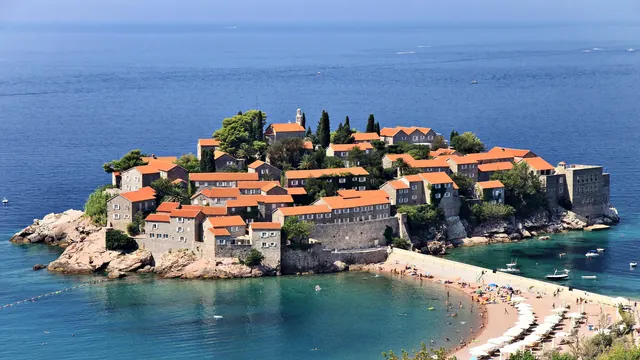
Photos: Kosovo by Filip Chmielecki, Pexels License; Albania by Liridon, CC BY-SA 4.0, cropped.
Kosovo or Albania?
Our verdict in twelve categories, each scored against the same fixed benchmark cities, and the climate month by month, so you can choose for your trip.
Choose Kosovo for
- getting around
- prices
Kosovo suits a compact, inexpensive trip built around a few towns close together. You can base yourself in Prishtina or Prizren, reach the frescoed monasteries at Dečani, Gračanica and Peć by short bus rides, and walk in the Rugova gorge without long mountain drives. It is the easier and cheaper of the two, and its pleasures are quiet ones: long macchiatos, Ottoman Prizren and medieval churches.
Choose Albania for
- beaches
- nature and the outdoors
- food and drink
Albania is the better pick if you want variety and don't mind the travel. It has what Kosovo lacks entirely, a sea coast with clear Ionian coves. On top of that come Butrint, Berat and Gjirokaster, the Theth to Valbona hike and the ferry through Lake Komani. Expect slow roads, a hire car or furgons, and higher costs on the Riviera in high summer.
Scoreboard
Twelve categories on one fixed scale from 0 to 100. The shaded stretch is the gap between the two.
Your match
Pick a travel style or drag the sliders, and both match scores follow your weighting.
Wins on getting around and prices with your weighting.
Wins on beaches and nature and the outdoors with your weighting.
What matters to you?
Category by category
What the scores mean for a trip.
Beaches & swimming
On the beach, the two are far apart. Kosovo has no coast. Its summer swimming means the grassy shores of Lake Batllava outside Prishtina or the river pools below the Mirusha waterfalls. Both are fine for a hot afternoon, but nobody would plan a trip around them.
Albania has the Ionian Riviera south of the Llogara Pass. Its white-pebble coves include the long bays at Dhermi and Drymades, Gjipe at the mouth of its canyon, and the shallow turquoise water off Ksamil with its small islets. Sand lovers can go to the Adriatic shore around Durres, which is greyer and heavily built up. Many travellers in Kosovo end up driving west to this coast anyway.
Where in Kosovo: Lake Batllava
Where in Albania: Albanian Riviera, Ksamil, Dhermi, Himara
Food & drink
The two kitchens are close relatives, with flaky burek or byrek, slow-baked tavë and grilled meat, and both countries take their coffee seriously. In Kosovo, the high points are a flija ordered ahead at a country restaurant, the riverside grills and Ottoman sweets of Prizren, and trout and fresh cheese at the inns above the Rugova gorge.
Albania offers more range. It has agriturismo meals at farms around Shkodra, Berat and Permet, olive oil from the southern groves, the day's catch grilled in Saranda and the Riviera villages, and modern kitchens in Tirana's Blloku. Raki comes with almost everything, while Kosovo's wine comes from the simple reds of the Rahovec cellars.
Where in Kosovo: Prishtina, Prizren, Rugova Valley, Rahovec
Where in Albania: Tirana, Shkodra, Berat, Permet
Culture & sights
Kosovo's heritage centres on one remarkable strand, its medieval Serbian Orthodox churches. Visoki Dečani has fourteenth-century frescoes that survive almost complete, and the Patriarchate of Peć is a short drive north, where the Rugova gorge opens out above Peja. Gračanica stands just outside Prishtina, so it fits easily into a stay in the capital. Add Prizren's Ottoman centre of stone bridges and the Sinan Pasha mosque, and you have a short but strong list.
Albania covers more eras. Butrint layers Greek, Roman and Venetian remains on its lagoon, Berat and Gjirokaster are whole Ottoman hill towns under their castles, and Apollonia stands among olive groves. In Tirana, the bunker museums explain the communist isolation era in a way nothing in Kosovo does.
Where in Kosovo: Prizren, Peja, Prishtina, Gjakova
Where in Albania: Berat, Gjirokaster, Butrint, Tirana
Nightlife
In both countries, going out means the capital's café-bar culture. In Prishtina, coffee places along the pedestrian boulevard turn into crowded bars, with a handful of clubs for late weekends. Prizren's riverside terraces fill up in July and August.
Albania has a little more, mainly because of its coast. Tirana's Blloku has denser streets of cocktail bars and terraces after the evening xhiro stroll. In high summer there are beach bars and open-air parties at Dhermi, Drymades, Ksamil and Saranda that go on into the early hours, and Kosovo has nothing like them.
Where in Kosovo: Prishtina, Prizren
Nature & outdoors
The two countries share the Accursed Mountains. Kosovo reaches them through the Rugova gorge behind Peja, which has via ferrata routes, climbing, paragliding and stages of the Peaks of the Balkans trail. In the south, the Sharr Mountains above Prizren have wide alpine meadows. Waymarking and huts are basic, so a guide helps on the higher routes.
Albania has more variety. There is the classic hike from Theth over the pass to Valbona, reached by ferry through the narrow Lake Komani gorge. The undammed Vjosa near Permet is good for rafting, the Osumi canyon and the Blue Eye spring are easy outings, and the Llogara Pass drops from pine forest to a coast with kayaking and cliff paths.
Where in Kosovo: Rugova Valley, Accursed Mountains, Sharr Mountains, Mirusha Waterfalls
Where in Albania: Accursed Mountains, Lake Komani, Vjosa Valley, Llogara Pass
Day trips
Kosovo's advantage is that one base reaches almost everything. From Prishtina, Gračanica, Ulpiana and Novo Brdo are short rides, Prizren is about an hour and a half away, and Skopje is within reach too. Peja and Dečani pair up into a single easy day.
Albania has the richer list, but it is split between two bases. From Tirana you can reach Kruja and the amphitheatre at Durres. From Saranda you can visit Gjirokaster and the Blue Eye or cross by ferry to the Venetian quarter of Corfu Town. The winding roads mean Berat and Shkodra are long days out, and they work better as overnight stops.
Where in Kosovo: Prizren, Peja, Gjakova, Gračanica
Good for families
In both countries, children are made a fuss of in every café, and families stay out late. Neither has theme parks or aquariums. In Kosovo, a family trip means Germia Park's woodland and big summer pool, walks to the Mirusha waterfalls with older children, and cheap ski lessons at Brezovica.
Albania works better because of the sea. The shallow, calm water at Ksamil and the gently sloping sand at Durres and Golem suit small children, and the castles at Rozafa and Gjirokaster are fun to climb. The long mountain roads are a reason to choose one coastal base rather than tour.
Where in Kosovo: Prishtina, Rugova Valley, Brezovica
Where in Albania: Ksamil, Durres, Golem
Getting around
Kosovo is much simpler to travel. The main towns are rarely more than about two hours apart, motorways run west and south, and frequent private buses link Prishtina, Prizren, Peja and Gjakova. All four centres can be walked.
In Albania, travel takes real effort. Furgons leave from scattered terminals or when they are full, and the mountain routes to the Riviera, Theth or Permet are steep and twisting. Most visitors hire a car and need confidence to drive it. Neither country has useful trains, and in both a car or taxi is needed to reach trailheads.
Where in Kosovo: Prishtina, Prizren, Peja
Where in Albania: Tirana, Shkodra, Berat
Shopping & style
Shopping in both countries is about crafts rather than fashion. The difference is in what you bring home. Kosovo's best buy is the silver filigree from Prizren's old-town workshops, along with the woodcarvers and qeleshe caps of Gjakova's bazaar.
Albania's craft centre is the cobbled bazaar below Kruja castle, with hand-woven carpets, copperware and embroidery. Tirana's Pazari i Ri market hall is the place for cheese, honey, olive oil and raki to pack in your suitcase.
Where in Kosovo: Prizren, Gjakova, Prishtina
Where in Albania: Kruja, Tirana, Gjirokaster
Affordability
Both are among the cheaper places to travel in Europe, but Kosovo stays cheap everywhere and in every season. Hotels in Prishtina, rooms in Prizren's old town and Rugova guesthouses with home-cooked meals all cost little, and so do buses and most monastery entries. In Prizren, only July and August push rates up a little.
Albania is just as cheap in Berat, Gjirokaster, Shkodra and the guesthouses of Theth and Valbona. The Riviera in high summer is the exception, as are Tirana's smarter Blloku bars. Hiring a car, which many visitors need, adds a cost that you can usually avoid in Kosovo.
Where in Kosovo: Prishtina, Peja, Prizren
Where in Albania: Berat, Gjirokaster, Shkodra, Accursed Mountains
Live music & performing arts
Neither country is a destination for concerts or theatre, and in both the formal stage is mostly in the capital. Kosovo's highlights are festivals: Prishtina's jazz festival in autumn and summer concerts in Prizren's fortress and squares.
In Albania, Tirana's National Theatre of Opera and Ballet has a fuller season. The more memorable sound is the south's iso-polyphonic singing, which UNESCO recognises. You are most likely to hear it at folk evenings in traditional restaurants around Gjirokaster.
Where in Kosovo: Prishtina, Prizren
Where in Albania: Tirana, Gjirokaster
Wellness & relaxation
Albania offers more for a restful trip, though neither has much spa culture. Its best hot springs are at Benja near Permet, open-air sulphur pools beside an Ottoman bridge over a canyon. There are also beach-hotel spas on the coast and slow lakeside days at Pogradec on Ohrid.
Kosovo's thermal resorts at Banja e Pejës and Kllokot are Yugoslav-era treatment centres rather than places to unwind, and Prizren's hammams are monuments, not places to bathe. The best rest there is a few days in a Rugova valley guesthouse, with mountain air and slow meals.
Where in Kosovo: Banja e Pejës, Kllokot, Rugova Valley
Where in Albania: Permet, Theth, Pogradec, Elbasan
When should you go?
Pick your month, and for a country the place in it. The climate figures are measured averages, not a forecast.
Where in Albania
Pristina (Kosovo) in July
Tirana (Albania) in July
Daytime high, °C
Rainfall in the month, mm
Where the figures come from
Pristina (Kosovo) has no weather station within reach, so its figures come from a gridded climate model rather than a measured record, and read a broad area rather than one spot.
Temperature and rainfall are climate normals, averaged over the years shown. Pristina (Kosovo): 2001-2020 normals, NASA POWER reanalysis grid, no weather station within 90 km. Tirana (Albania): 1961-1990 normals, Tirana (3 km from centre).
Kosovo has a continental climate. Prishtina is near freezing in winter, around 2°C by day in January, so the months from November to March suit only skiers at Brezovica. Late spring and early autumn are the pleasant times for walking Prizren and Peja. July and August reach about 29°C, and June to September is the hiking season in the Rugova valley and the Sharr Mountains. Rain is spread fairly evenly through the year, so no month is truly dry, but none is a washout either.
Albania is milder and wetter in winter and hotter in summer. Saranda in the south is almost dry from June to August, sunny for long hours, and reaches about 32°C in July and August. The sea there is warm enough to swim from June to October and peaks near 25°C in August. From October onwards the south turns very wet, with about 228mm of rain in November. Tirana is similar but less extreme. The inland towns of Berat and Gjirokaster are most comfortable in May, June, September and October, and the northern mountains are clear of snow from June to September.
Which traveller are you?
On a beach and sun trip, Albania is the only real choice. The Ionian Riviera from Dhermi to Ksamil has clear water and white-pebble coves, and the sea stays warm into October. Kosovo is landlocked, with only a reservoir and some waterfall pools.
On a trip on a tight budget, Kosovo goes further. Prices are low everywhere, including in Prishtina's hotels and Rugova's guesthouses, and cheap buses link the towns. Albania is cheap inland, but the Riviera and Blloku charge more in July and August.
For a short city break, Kosovo is easier to manage. Prishtina's café-bar centre can be walked, and Prizren is an easy bus ride away, so a few days need little planning. In Albania, the scattered terminals and winding roads use up a lot of a short stay.
More comparisons
Each shares a side with Kosovo or Albania.
Where else could you go?
Set Kosovo or Albania against any other country.