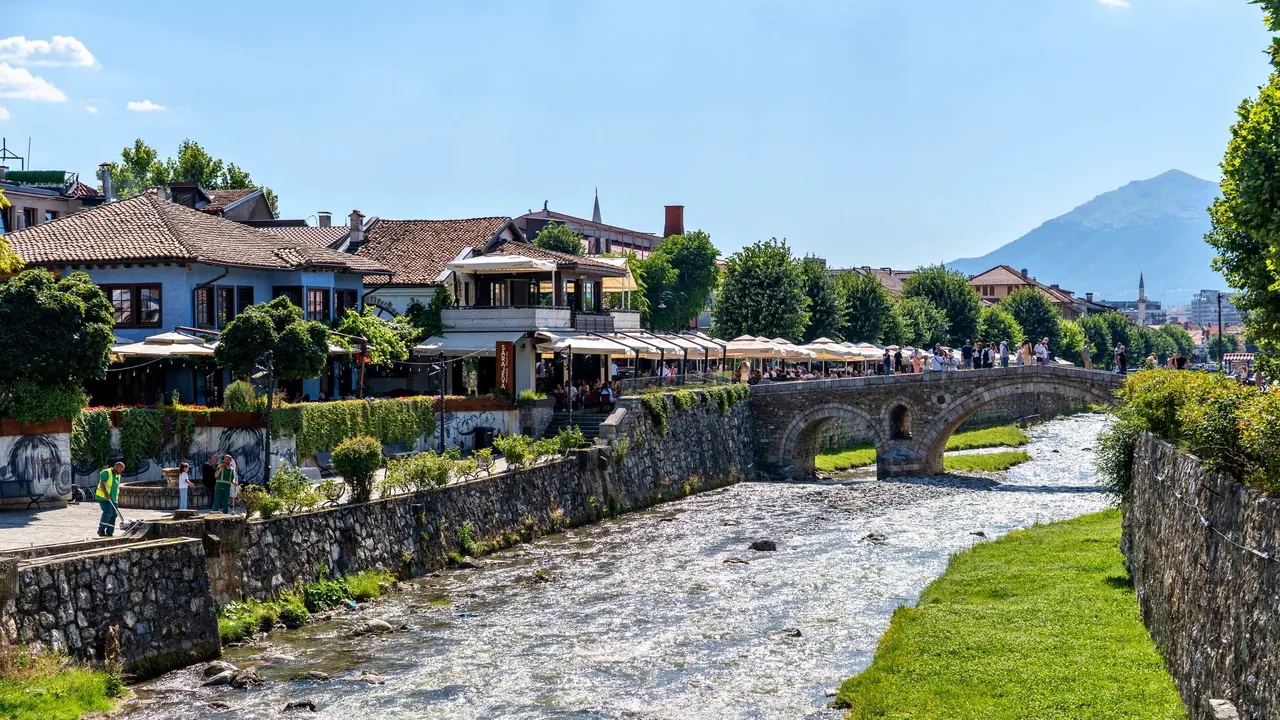
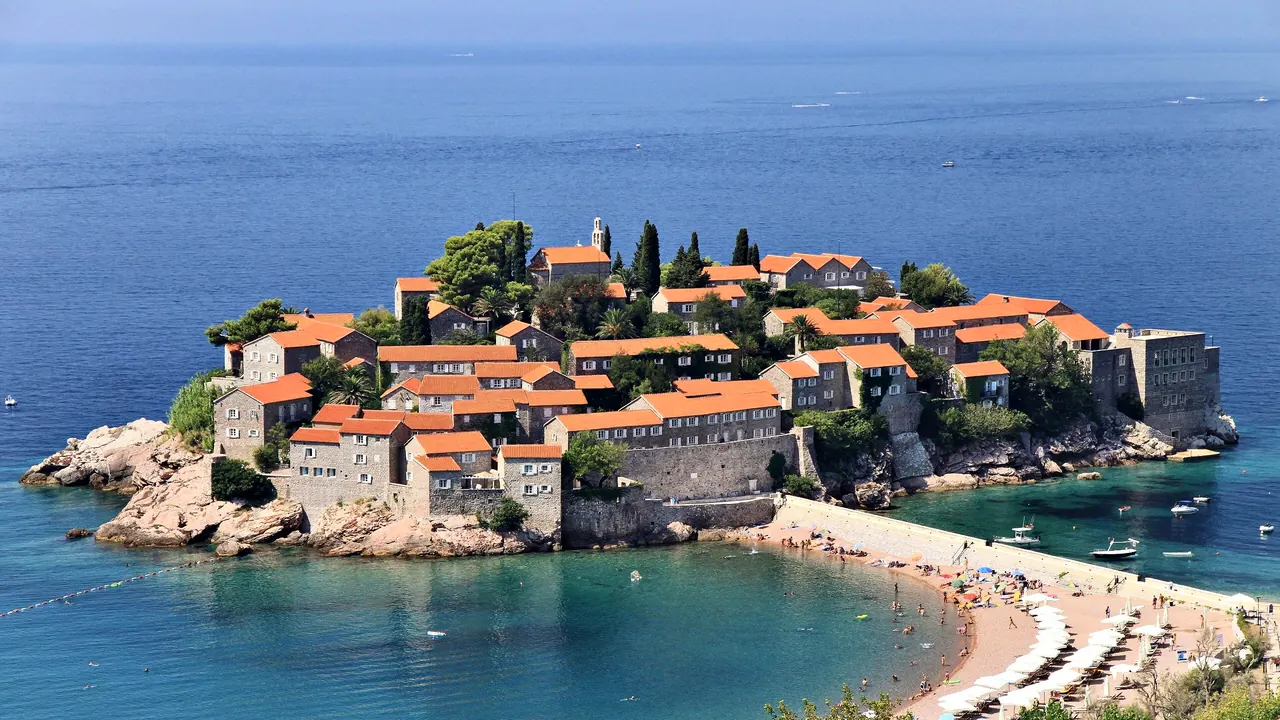
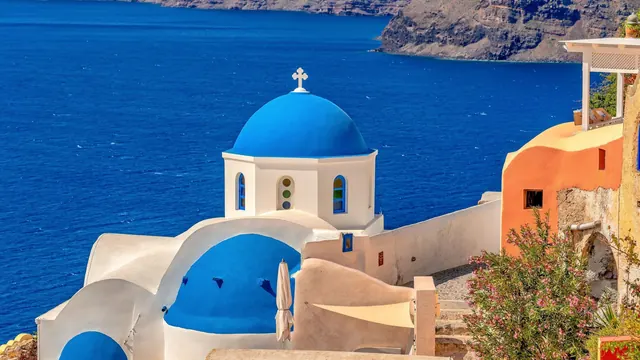
Photos: Kosovo by Filip Chmielecki, Pexels License; Montenegro by Marcin Konsek, CC BY-SA 4.0, cropped.
Kosovo or Montenegro?
Our verdict in twelve categories, each scored against the same fixed benchmark cities, and the climate month by month, so you can choose for your trip.
Choose Kosovo for
- prices
- getting around
- shopping
Kosovo suits a traveller who wants a cheap, easy inland trip built around Ottoman towns, frescoed monasteries and mountain walking. Prizren, Peja and Gjakova are a short bus ride from Prishtina, and a car or taxi takes you on to Dečani and up into the Rugova valley. Rooms and meals cost very little, and the café culture sets the pace of the day. It makes most sense for adults on a budget who don't need the sea.
Choose Montenegro for
- beaches
- families
- nature and the outdoors
When the coast is part of the plan, Montenegro is the stronger pick. The Budva Riviera, the Bay of Kotor and the sand at Ulcinj make a proper summer by the sea, and Durmitor and Lake Skadar add bigger landscapes than anything in Kosovo. Families do better here too, with shallow water and calm bays, though costs run higher and the mountain roads slow every move.
Scoreboard
Twelve categories on one fixed scale from 0 to 100. The shaded stretch is the gap between the two.
Your match
Pick a travel style or drag the sliders, and both match scores follow your weighting.
Wins on prices and getting around with your weighting.
Wins on beaches and families with your weighting.
What matters to you?
Category by category
What the scores mean for a trip.
Beaches & swimming
Kosovo has no coast. Swimming there means a summer afternoon at Lake Batllava outside Prishtina or in the pools below the Mirusha waterfalls. These are pleasant local outings, but not a reason to visit.
Montenegro's Adriatic coast is the centre of most trips. The Budva Riviera is a chain of pebble and coarse-sand coves from Mogren to Petrovac. In the Bay of Kotor you swim in calm water from the piers below Perast, and Ulcinj has the long sandy Velika Plaza. Visitors to Kosovo who want the sea usually drive west to this coast or Albania's.
Where in Kosovo: Lake Batllava
Where in Montenegro: Budva Riviera, Ulcinj, Bay of Kotor, Petrovac
Food & drink
You wouldn't travel to either country just to eat. Both serve hearty Balkan food, and fine dining is rare in each. What differs is the kind of cooking. Kosovo's food is inland and meaty: burek from the bakery, flija baked over embers in the Rugova hills and riverside grills in Prizren. Its real pleasure is a long macchiato in one of Prishtina's cafés.
Montenegro adds the sea, with Bay of Kotor mussels, grilled fish and black risotto, and inland there's Njegusi ham and eel from Lake Skadar. Its wine is also more distinctive: dark Vranac from family wineries in the Crmnica valley, against Rahovec's simple reds. The menus along the resort promenades, though, are repetitive and aimed at tourists.
Where in Kosovo: Prishtina, Prizren, Rugova Valley, Rahovec
Where in Montenegro: Bay of Kotor, Crmnica valley, Njegusi
Culture & sights
The two are close in depth, and each fills about a week of sightseeing. Kosovo's heritage is medieval and Ottoman. The highlights are the frescoed monasteries of Visoki Dečani, the Patriarchate of Peć and Gračanica, and Prizren's stone bridges, mosques and hilltop fortress. Gjakova's bazaar street is a quieter version of the same Ottoman past.
Montenegro's heritage is Venetian and coastal. It centres on walled Kotor and the baroque palaces of Perast, with the island church of Our Lady of the Rocks just offshore. Inland are the old royal capital of Cetinje and Ostrog monastery, built into a cliff. Kosovo's sights are spread across several towns, while Montenegro's mostly cluster around one bay.
Where in Kosovo: Prizren, Peja, Prishtina, Gjakova
Where in Montenegro: Kotor, Perast, Cetinje, Ostrog
Nightlife
Both offer modest nights out, but at different times of year. Prishtina has a café-bar scene all year with a very young crowd: coffee places turn into packed bars at night, and a few DJ bars keep weekends going late. Prizren's riverside terraces add lively summer evenings.
Going out in Montenegro is seasonal and bigger in scale. In July and August, Budva's open-air clubs on the hills and beaches run until dawn, and Kotor's old town has small bars. Outside the summer, Prishtina is the livelier of the two.
Where in Kosovo: Prishtina, Prizren
Nature & outdoors
Kosovo has serious mountains. Behind Peja, the Rugova gorge leads into the Accursed Mountains, with via ferrata, paragliding and stages of the Peaks of the Balkans trail, and the Sharr range rises above Prizren. Waymarking and mountain huts are basic, so the higher routes call for a guide.
Montenegro has more variety and bigger scenery. The Bay of Kotor's limestone walls rise straight from the water, and on Lake Skadar you can see pelicans and reed beds from a boat. Durmitor adds glacial lakes and rafting through the Tara canyon. The two countries share the Prokletije range along their borders, but only Montenegro combines mountains with the sea.
Where in Kosovo: Rugova Valley, Accursed Mountains, Sharr Mountains, Mirusha Waterfalls
Where in Montenegro: Durmitor National Park, Bay of Kotor, Lake Skadar, Prokletije
Day trips
From Prishtina you can reach most of Kosovo in a day. Gračanica and Ulpiana are close by, Prizren is about an hour and a half away, Peja pairs with Dečani, and Skopje is across the border. These are pleasant outings, but several places work better as overnight stops.
From a single coastal base, Montenegro offers a richer choice. You can visit Perast, Cetinje and Njegusi up the Lovcen road, Ostrog, Stari Bar, and the wineries around Lake Skadar. Dubrovnik is about two hours from Kotor, and Shkoder is easy to reach from Ulcinj. Expect slow, winding roads on every trip.
Where in Kosovo: Prizren, Peja, Gjakova, Gračanica
Good for families
In both countries, children are welcome in cafés and restaurants late into the evening. Neither has zoos, aquariums or science museums worth the name. Montenegro pulls ahead on the water, with calm bay swimming and gentle lake trips for older children.
Kosovo offers Germia Park's playgrounds and summer pool, waterfall walks for children who can manage them, and inexpensive ski lessons at Brezovica. Rough pavements make pushchairs hard work in Kosovo's towns. In Montenegro the difficulties are the steep old-town steps, the summer heat and the hairpin drives.
Where in Kosovo: Prishtina, Rugova Valley, Brezovica
Getting around
Kosovo is the easier country to travel around. The main towns are within about two hours of one another, private buses run often between Prishtina, Prizren, Peja and Gjakova, and each town centre can be walked. A car or taxi still helps for the Rugova valley and the more remote monasteries, and local driving is erratic.
In Montenegro, distances look shorter on the map than they feel on the road. The coastal road jams in summer and the road round the bay is narrow. Durmitor and the inland monasteries really need a hire car and confident mountain driving. For hopping between beaches, the buses along the Budva Riviera work well enough.
Where in Kosovo: Prishtina, Prizren, Peja
Shopping & style
Neither country is a shopping destination, but the souvenirs differ. Kosovo's are crafts: silver filigree from Prizren's workshops, and woodcarving and white felt qeleshe caps from Gjakova's bazaar. Montenegro's are mostly food and drink: Njegusi ham, olive oil, honey and Vranac. The boutiques at the Tivat marina add a touch of luxury that Kosovo doesn't have.
Where in Kosovo: Prizren, Gjakova, Prishtina
Where in Montenegro: Kotor, Tivat
Affordability
Kosovo is clearly the cheaper of the two. Grill-house meals, intercity buses and comfortable hotels in Prishtina all cost little, and guesthouses in the Rugova valley include home cooking. Prices go up only slightly, in Prizren's old town in July and August.
Montenegro is good value for the Adriatic, but in peak season Kotor, Budva, Tivat and the Sveti Stefan resorts push prices up. To keep costs down there, spend more of your time in Ulcinj, the villages around Lake Skadar and Zabljak in Durmitor.
Where in Kosovo: Prishtina, Peja, Prizren
Where in Montenegro: Ulcinj, Lake Skadar, Durmitor National Park
Live music & performing arts
Prishtina keeps a small stage life going through the year: a National Theatre performing in Albanian, a modest philharmonic, short opera and ballet seasons and a jazz festival in autumn. Beyond the capital, Kosovo's main draw is summer concerts in Prizren's fortress and squares.
Montenegro's performances move outdoors and follow the season, with theatre and music on open-air stages in the old-town squares of Kotor and Budva, and Kotor's long-standing carnival. Its theatre in Podgorica sees few visitors. Neither offers enough to plan a trip around, but a summer beach stay is more likely to coincide with a show.
Where in Kosovo: Prishtina, Prizren
Wellness & relaxation
Montenegro has more to offer if you want to unwind. Igalo, near Herceg Novi, has a long-established medical spa that uses sea mud and mineral springs, and the resort hotels around Budva and Tivat have their own spas. Perast, Prcanj and the vineyards around Lake Skadar are quiet outside high summer.
Kosovo's thermal resorts at Banja e Pejës and Kllokot are Yugoslav-era treatment centres rather than places to relax, and Prizren's hammams are historic buildings to look at, not to bathe in. The most restful option is simpler: a few slow days in a Rugova valley guesthouse.
Where in Kosovo: Banja e Pejës, Kllokot, Rugova Valley
Where in Montenegro: Igalo, Bay of Kotor, Lake Skadar
When should you go?
Pick your month, and for a country the place in it. The climate figures are measured averages, not a forecast.
Pristina (Kosovo) in July
Kotor (Montenegro) in July
Daytime high, °C
Rainfall in the month, mm
Where the figures come from
Pristina (Kosovo) has no weather station within reach, so its figures come from a gridded climate model rather than a measured record, and read a broad area rather than one spot.
Kotor (Montenegro) has no rain gauge within 25 km of the centre, so its rainfall comes from a gridded climate dataset read at the destination rather than from a gauge further away.
Kotor (Montenegro)'s sunshine is measured 42 km from the centre, at Podgorica-Grad.
Temperature and rainfall are climate normals, averaged over the years shown. Pristina (Kosovo): 2001-2020 normals, NASA POWER reanalysis grid, no weather station within 90 km. Kotor (Montenegro): 1991-2020 normals, Tivat (4.2 km from centre).
Kosovo is inland and continental. Daytime highs in Prishtina are around 2°C in January, so winter suits skiing at Brezovica better than walking the towns. Summer brings highs near 29°C in July and August, which is warm but still fine for sightseeing. Rain is spread fairly evenly through the year, with no real dry season. May, June and September are the most comfortable months for both towns and mountains, and June to September is the hiking season in the Rugova valley and the Accursed Mountains.
Montenegro's coast is milder in winter and hotter in summer. At Kotor the sea is around 23°C in June and reaches 26°C in August, so the swimming season runs from June to September, and July is the sunniest month. In midsummer, climbing Kotor's walls around midday is hard work. Heavy rain arrives in the autumn and peaks at 202mm in November. For a mix of beach and sightseeing, June and September are Montenegro's best months.
Which traveller are you?
On a family trip with young children, Montenegro works better. Small children can paddle safely on the shallow sand of Velika Plaza and in the sheltered water of the bay, and Budva has a water park. Kosovo welcomes children warmly but offers little beyond Germia Park and walks for older ones.
More comparisons
Each shares a side with Kosovo or Montenegro.
Where else could you go?
Set Kosovo or Montenegro against any other country.