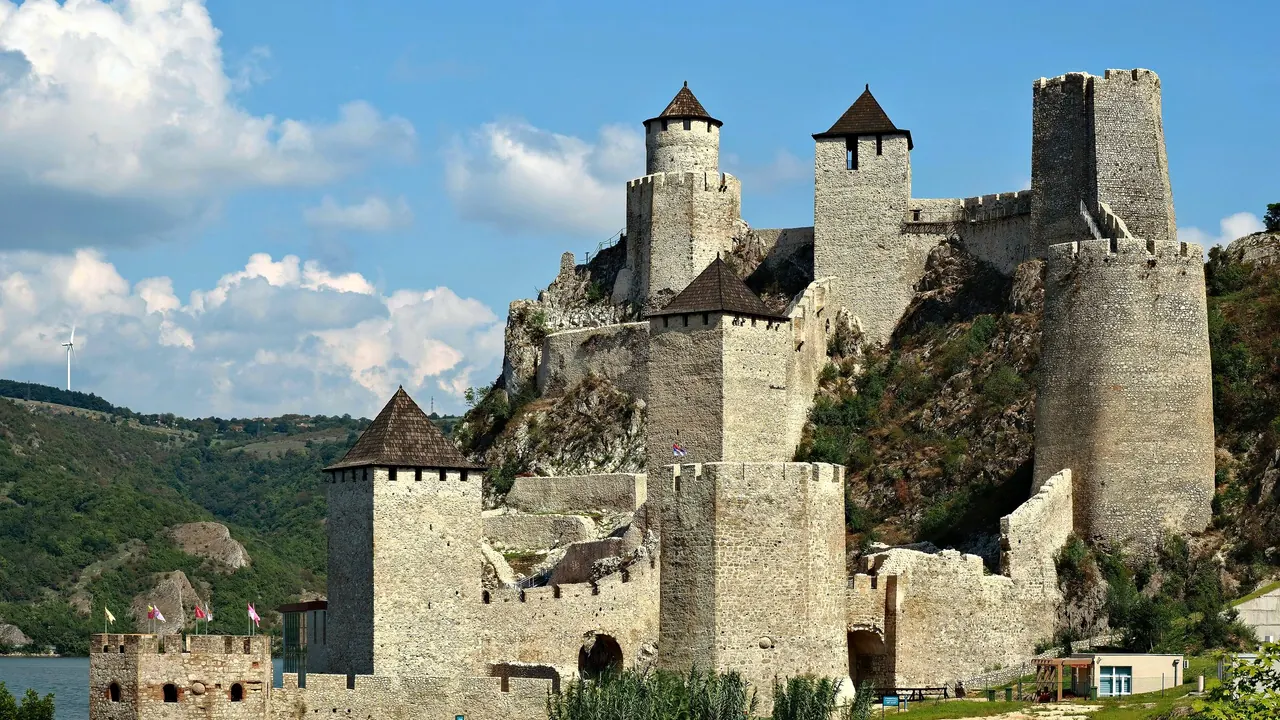
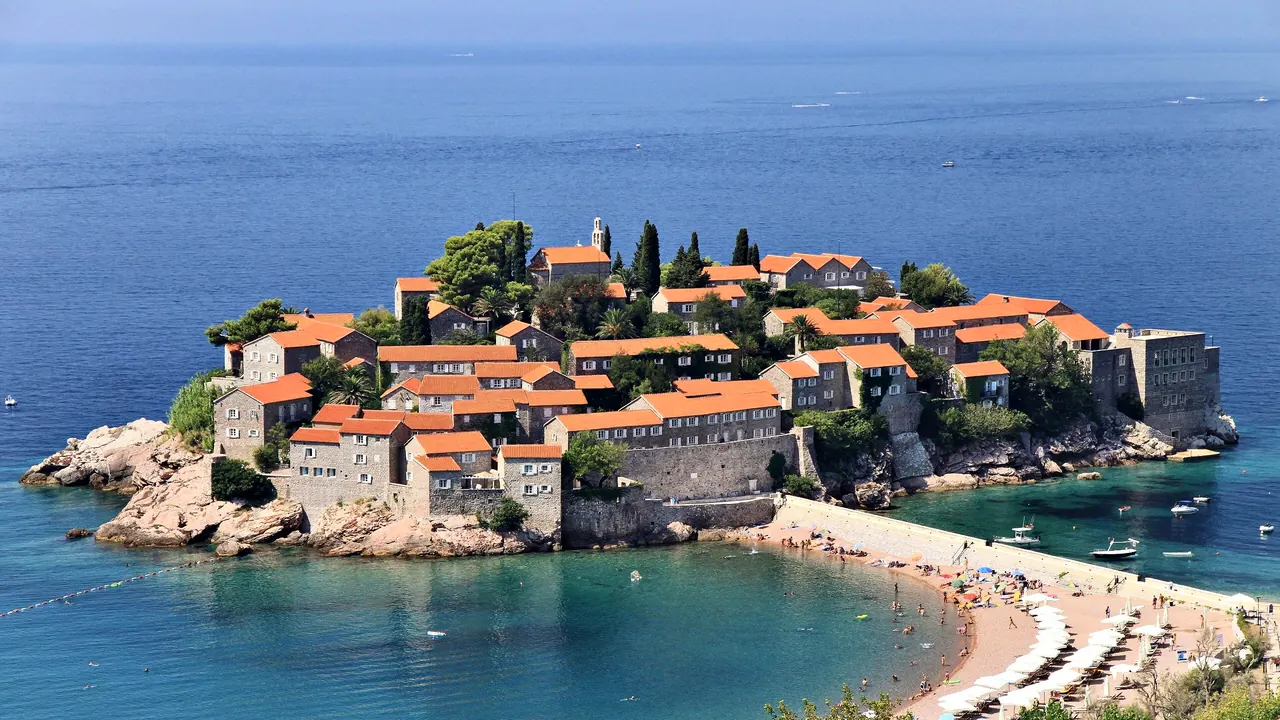
Photos: Serbia by Petar Milošević, CC BY-SA 4.0, cropped; Montenegro by Marcin Konsek, CC BY-SA 4.0, cropped.
Serbia or Montenegro?
Our verdict in twelve categories, each scored against the same fixed benchmark cities, and the climate month by month, so you can choose for your trip.
Choose Serbia for
- nightlife
- live music and the arts
- food and drink
Serbia suits travellers who care more about cities, food and late nights than about a beach. Belgrade is where the two countries differ most after dark. The kafana grills and the Fruška Gora wines make for better eating, and the frescoed monasteries and quiet spa towns reward a slower, cheaper trip by road. The drawback is simple: there is no sea, only river and lake swimming.
Choose Montenegro for
- beaches
- nature and the outdoors
- families
Montenegro is the choice for a summer on the Adriatic with mountains behind it. The Budva Riviera and the Bay of Kotor offer the beach days Serbia can't. Durmitor and the Tara canyon make it the stronger country for hiking and rafting. It is also small enough that Kotor, Cetinje and even Dubrovnik are within a day of one base. Families with small children do better here on the shallow sand at Ulcinj. Expect simpler food, and nights that go quiet once the season ends.
Scoreboard
Twelve categories on one fixed scale from 0 to 100. The shaded stretch is the gap between the two.
Your match
Pick a travel style or drag the sliders, and both match scores follow your weighting.
Too close to call, 1 point apart
Wins on nightlife and live music and the arts with your weighting.
Wins on beaches and nature and the outdoors with your weighting.
What matters to you?
Category by category
What the scores mean for a trip.
Beaches & swimming
This is the widest gap between the two. Serbia has no coast. Its swimming comes down to the gravel lake shore of Ada Ciganlija in Belgrade and the cottages and beach bars of Srebrno jezero. Both are fine for cooling off in July and August, but neither is a reason to go.
Montenegro's trips are built around its beaches. The Budva Riviera has a chain of pebble and coarse-sand coves from Mogren to Petrovac, the Bay of Kotor has calm swimming off piers below the mountains, and Velika Plaza at Ulcinj is long and shallow. Sunbeds fill up in high summer, and the water is quieter in June and September.
Where in Serbia: Belgrade (Ada Ciganlija), Srebrno jezero
Where in Montenegro: Budva Riviera, Ulcinj, Bay of Kotor, Petrovac
Food & drink
Serbia has the better food. Its grill culture of ćevapi, pljeskavica and kajmak runs from Belgrade's old kafanas to the famous grills of Niš and Leskovac, and the Fruška Gora wineries are just above Novi Sad. The weak point is variety, and vegetarians struggle outside Belgrade.
Montenegro's cooking is simpler: mussels from the bay, black risotto and grilled fish on the coast, and Njegusi ham and lamb cooked under an iron bell inland. Eat in the konobas in the hills and at the wineries of the Crmnica valley rather than on the promenades, where the menus repeat each other.
Where in Serbia: Belgrade, Novi Sad and Fruška Gora, Niš, Sremski Karlovci
Where in Montenegro: Bay of Kotor, Crmnica valley, Njegusi
Culture & sights
The two are evenly matched for culture, but their heritage takes different forms. Serbia's is spread across the country. It includes frescoed medieval monasteries such as Studenica and Sopoćani, Roman sites at Gamzigrad and Viminacium, Kalemegdan fortress in Belgrade and the Art Nouveau buildings of Subotica, and seeing it means a lot of driving.
Montenegro's heritage is compact and easier to take in. Walled Kotor with its Romanesque churches, baroque Perast and the islet church offshore, the old royal capital of Cetinje and the cliff monastery of Ostrog all fit into a week from one base on the coast.
Where in Serbia: Belgrade, Studenica and Raška monasteries, Novi Sad and Petrovaradin, Subotica
Where in Montenegro: Kotor, Perast, Cetinje, Ostrog
Nightlife
Serbia is much the better place to go out, and nearly all of that is Belgrade. In summer the splavovi, the floating clubs on the rivers, run until dawn, and in winter the bars of Dorćol and Savamala keep going late. Novi Sad's student bars are a smaller alternative.
Montenegro's nightlife is mostly a summer affair on the Budva Riviera, with open-air clubs around Budva in July and August and a few late bars in Kotor's old town. Away from Budva, or out of season, evenings end early.
Where in Serbia: Belgrade, Novi Sad, Niš
Nature & outdoors
Montenegro has the more dramatic outdoors. A small country holds the fjord-like Bay of Kotor, the climb to Lovcen, the pelicans of Lake Skadar and, in the north, Durmitor's glacial lakes and rafting in the Tara canyon.
Serbia's landscapes are gentler and more wooded. Tara National Park looks over the Drina canyon, griffon vultures nest above the Uvac meanders, and the Danube cuts through the Iron Gates in Đerdap. In winter, Kopaonik and Zlatibor are better set up for skiing than Durmitor's simple slopes.
Where in Serbia: Tara National Park and the Drina, Uvac canyon, Đerdap National Park (Iron Gates), Kopaonik and Zlatibor
Where in Montenegro: Durmitor National Park, Bay of Kotor, Lake Skadar, Prokletije
Day trips
Montenegro is the easier base for day trips because the country is so small. From Kotor or Budva you can reach Perast, Cetinje and Njegusi, Ostrog, Lake Skadar and the southern coast. Dubrovnik is about two hours away across the border, though winding roads slow every trip.
Serbia has good outings from Belgrade and Novi Sad, which are linked by a fast train. Within reach are Petrovaradin, the Danube fortresses at Smederevo and Golubac, the Oplenac mausoleum and the Fruška Gora monasteries. Sights further south, such as Felix Romuliana, are easiest from a second base in Niš.
Where in Serbia: Novi Sad, Sremski Karlovci and Fruška Gora, Subotica and Palić, Smederevo and Golubac
Good for families
Montenegro suits children better, mainly because of the sea. The sheltered water of the Bay of Kotor and the shallow sand of Velika Plaza are safe for paddling, and Budva has a water park. The steep old-town steps and hairpin drives take patience.
Serbia welcomes children just as warmly but has less for them to do. Belgrade has the zoo at Kalemegdan and the lake shore at Ada Ciganlija, and Zlatibor, with its gondola and adventure park, is the easiest family base. The long drives to monasteries and canyons are hard going with young children.
Where in Serbia: Zlatibor, Belgrade, Kopaonik
Getting around
Neither country is easy to travel beyond its main area, but the difficulties are different. Serbia's north works well without a car: a fast railway joins Belgrade, Novi Sad and Subotica, and all three are walkable, though Belgrade has no metro. Elsewhere you need buses, or a car for Tara, Uvac and the monasteries.
Montenegro depends on coastal buses along the Budva Riviera and on the walkable old towns of Kotor and Perast. The single coast road jams in summer, the railway is of little use to most visitors, and reaching Durmitor means hiring a car and being confident on mountain roads.
Where in Serbia: Belgrade, Novi Sad, Subotica
Shopping & style
Neither country is a shopping destination, but Serbia offers a little more. Belgrade has Knez Mihailova, a few designers in Dorćol and the food markets of Kalenić and Zeleni venac, and for crafts there are Pirot kilims and Zlakusa pottery. In Montenegro the best buys are edible, such as Njegusi ham, olive oil and Vranac wine, and beyond that there are only souvenir stalls in Kotor and Budva and a few boutiques at the Tivat marina.
Where in Serbia: Belgrade, Pirot
Where in Montenegro: Kotor, Tivat
Affordability
Serbia goes further on a budget. Kafana lunches, street grills and taxis are cheap even in Belgrade, and Novi Sad and Niš cost less again. The spa towns and Zlatibor suit a long, slow stay at country prices, with Kopaonik in the ski season the exception.
Montenegro is good value for the Adriatic, but the busiest places cost more in peak season, especially Kotor, Budva, Tivat and Sveti Stefan. Ulcinj, the villages around Lake Skadar and Zabljak in Durmitor are where costs stay low.
Where in Serbia: Niš, Novi Sad, Vrnjačka Banja, Zlatibor
Where in Montenegro: Ulcinj, Lake Skadar, Durmitor National Park
Live music & performing arts
Serbia has far more live performance. Belgrade's National Theatre stages opera, ballet and drama, the Belgrade Philharmonic plays a full season, and BITEF brings experimental theatre every autumn. The informal side is just as distinctive, with tamburica players in the kafanas and the brass bands of the Guča trumpet festival.
Montenegro's stage life is mostly summer festivals on the old-town squares of Kotor and Budva, plus Kotor's long-running carnival. The rest of the year, live music usually means a band on a terrace.
Where in Serbia: Belgrade, Guča, Novi Sad
Wellness & relaxation
Serbia has the deeper spa tradition, with dozens of banje, towns built around mineral springs. Vrnjačka Banja has its long park and villas, Sokobanja has an Ottoman-era hammam, and Banja Koviljača is an elegant resort near the Drina. Many lean towards medical treatment, though, and the hotels vary.
Montenegro has one real spa, the sea-mud resort at Igalo, and otherwise hotel spas around Budva and Tivat. For rest, it relies on its quiet places: the bay villages of Perast and Prcanj and the vineyards by Lake Skadar, which are best outside July and August.
Where in Serbia: Vrnjačka Banja, Sokobanja, Banja Koviljača, Zlatibor
Where in Montenegro: Igalo, Bay of Kotor, Lake Skadar
When should you go?
Pick your month, and for a country the place in it. The climate figures are measured averages, not a forecast.
Belgrade (Serbia) in July
Kotor (Montenegro) in July
Daytime high, °C
Rainfall in the month, mm
Where the figures come from
Kotor (Montenegro) has no rain gauge within 25 km of the centre, so its rainfall comes from a gridded climate dataset read at the destination rather than from a gauge further away.
Kotor (Montenegro)'s sunshine is measured 42 km from the centre, at Podgorica-Grad.
Temperature and rainfall are climate normals, averaged over the years shown. Belgrade (Serbia): 1991-2020 normals, Beograd (2.1 km from centre). Kotor (Montenegro): 1991-2020 normals, Tivat (4.2 km from centre).
Serbia has a continental climate. In Belgrade, daytime highs run from about 5°C in January to 30°C in August. May, June and September are the best months for walking the city and touring the monasteries, because they are warm without the midsummer heat, though June is Belgrade's wettest month. July and August are hot and very sunny. That suits Ada Ciganlija and the river clubs but makes long days on foot tiring. Winter is grey and cold, and is mainly for the ski slopes of Kopaonik and Zlatibor.
Kotor, on the Montenegrin coast, is much milder in winter but far wetter. Rain returns in September and peaks at around 202mm in November. The sea is warm enough to swim from June, at about 23°C, and stays warm through September. July and August bring highs near 32°C and more sunshine than Belgrade gets. June and September are the easiest months to combine beach days with exploring the old towns. Summer is also the season for hiking and rafting in the mountains of the north.
Which traveller are you?
For a beach and sun trip, Montenegro is the only real option. The Budva Riviera has its pebble coves and Sveti Stefan, Ulcinj has the long sand of Velika Plaza, and the sea stays warm from June to September. Serbia has only lakes and rivers.
For an outdoors trip, Montenegro has the bigger landscapes. You can raft the Tara canyon in Durmitor, climb the old path from Kotor to Lovcen and trek in the wild Prokletije. Serbia's Tara and Uvac are gentler, wooded hill country.
More comparisons
Each shares a side with Serbia or Montenegro.
Where else could you go?
Set Serbia or Montenegro against any other country.