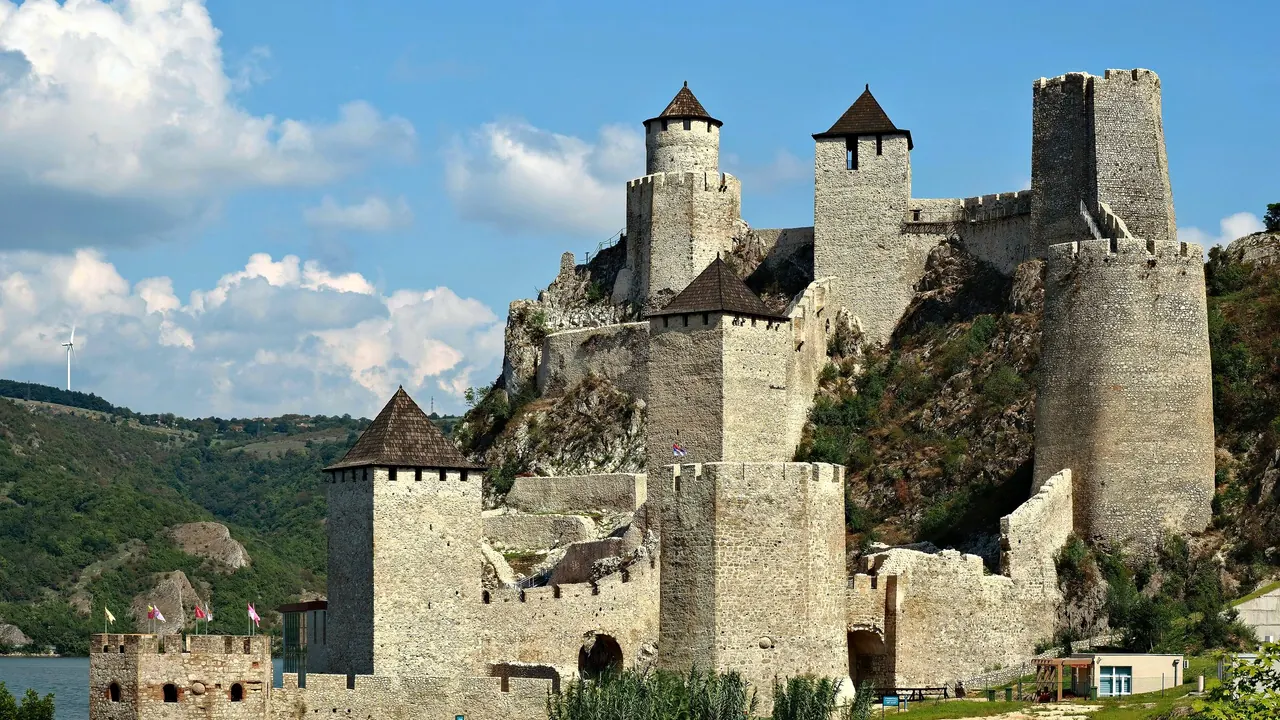
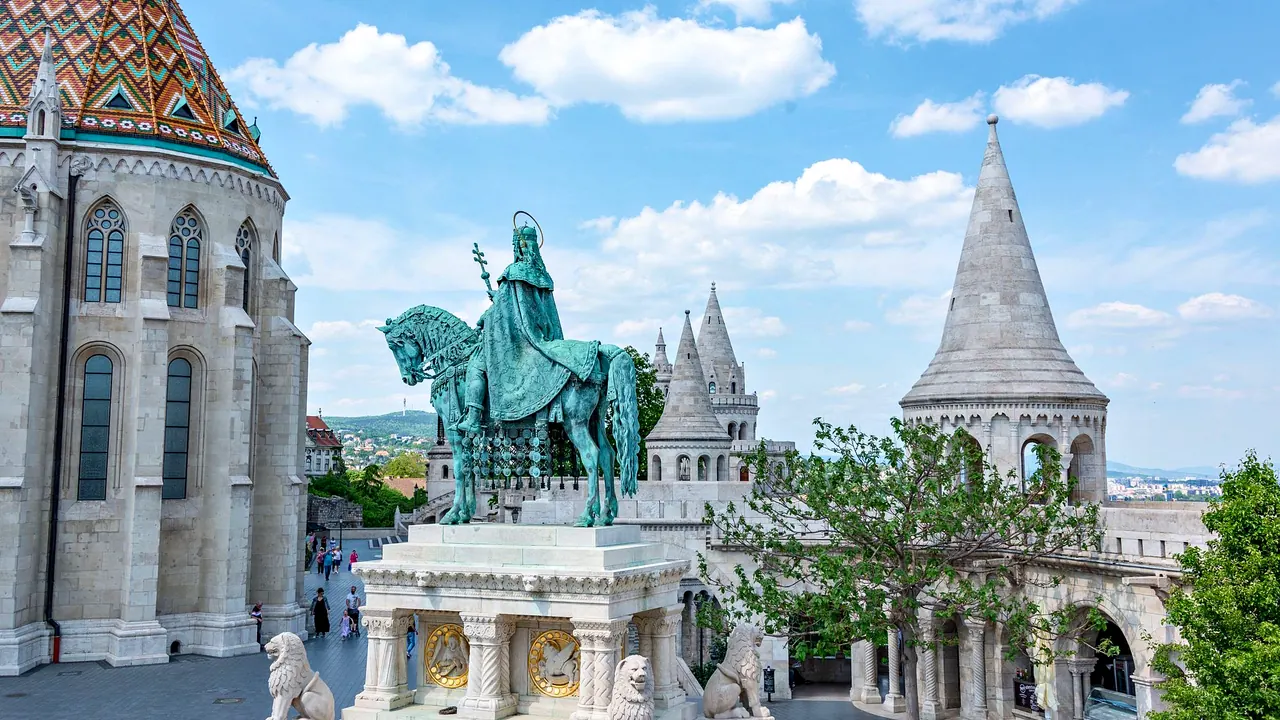
Photos: Serbia by Petar Milošević, CC BY-SA 4.0, cropped; Hungary by Diego F. Parra, Pexels License.
Serbia or Hungary?
Our verdict in twelve categories, each scored against the same fixed benchmark cities, and the climate month by month, so you can choose for your trip.
Choose Serbia for
- nature and the outdoors
- prices
- nightlife
Serbia suits a traveller who wants wilder country and a smaller bill more than polish. The forests of Tara above the Drina, the Uvac meanders and the Iron Gates gorge outdo Hungary's gentler landscapes, and a road trip through the south takes in frescoed monasteries and Roman ruins. Belgrade's river clubs take care of the nights. Beyond the northern rail line you will need a car or the buses. Swimming is limited to cooling off at river and lake beaches. The banje, such as Vrnjačka Banja, offer cheap, unhurried stays, but they lean towards medical treatment and plainer hotels.
Choose Hungary for
- wellness
- beaches
- families
For an easier, more rounded trip, and above all for slowing down, Hungary is the better pick. Its thermal baths, from Budapest's Széchenyi and Rudas to the lily-covered lake at Hévíz, are reason enough to go. Budapest adds grand architecture, serious museums and a full season of opera and concerts. Lake Balaton gives families a proper summer of swimming, and trains make day trips from the capital simple.
Scoreboard
Twelve categories on one fixed scale from 0 to 100. The shaded stretch is the gap between the two.
Your match
Pick a travel style or drag the sliders, and both match scores follow your weighting.
Wins on nature and the outdoors and prices with your weighting.
Wins on wellness and beaches with your weighting.
What matters to you?
Category by category
What the scores mean for a trip.
Beaches & swimming
Neither country has a coast, but Hungary takes lake bathing far more seriously. Balaton's south shore stays shallow for hundreds of metres, the water reaches about 25°C in high summer, and the grassy public strands fill up at weekends. The deeper north shore below Tihany and Badacsony is prettier, with reeds and wooden piers.
In Serbia, swimming means cooling off on a hot day. Ada Ciganlija in Belgrade has kilometres of gravel shore, and Srebrno jezero on the Danube is a quieter alternative lined with cottages. Neither is worth planning a vacation around.
Where in Serbia: Belgrade (Ada Ciganlija), Srebrno jezero
Where in Hungary: Lake Balaton, Lake Velence, Lake Tisza
Food & drink
The two are evenly matched, and the difference is in what is on the plate. Serbia cooks over charcoal: ćevapi and pljeskavica with kajmak and ajvar, eaten slowly in Belgrade's Skadarlija kafanas or at the famous grills of Niš and Leskovac, with plum rakija at every turn.
Hungary relies more on the stockpot and the pastry case: goulash, fisherman's soup, paprikash, and walnut and cream cakes in Budapest's gilded coffee houses. Its wine is the stronger draw, with Tokaj's sweet whites, Eger's cellar valley and Villány's reds. Serbia's Fruška Gora vineyards above Novi Sad are pleasant but less known. In both countries, the menus in smaller towns get repetitive after a few days.
Where in Serbia: Belgrade, Novi Sad and Fruška Gora, Niš, Sremski Karlovci
Where in Hungary: Budapest, Tokaj, Eger, Villány
Culture & sights
Hungary has more for the sightseer, and much of it sits in one city. Budapest's river panorama joins Parliament, Buda Castle, Matthias Church and the Fishermen's Bastion. The Museum of Fine Arts and the National Gallery add real depth. Pécs, Eger, Esztergom's basilica and the abbey at Pannonhalma spread the heritage well across the country.
Serbia's best sights are out in the countryside and take effort to reach. They include the frescoes of Studenica and Sopoćani, the fortified monasteries of the Morava valley, the imperial palace of Felix Romuliana and prehistoric Lepenski Vir. Belgrade itself, with Kalemegdan and Saint Sava, needs only two or three days.
Where in Serbia: Belgrade, Studenica and Raška monasteries, Novi Sad and Petrovaradin, Subotica
Where in Hungary: Budapest, Pécs, Eger, Esztergom
Nightlife
The two are level here, but the nights out feel different. Belgrade is the late, loud one. In summer people dance until dawn on the splavovi moored along the Sava and Danube, to turbo-folk as often as house. In winter the crowd moves into the bars of Dorćol and Savamala.
Budapest is more about bar-hopping. The ruin bars fill the crumbling courtyards of District VII, cocktail and wine bars line the streets around them, and stag groups make the weekends rowdier. Hungary also has a lakeside party season at Siófok, which Serbia has no match for. Serbia's student towns of Novi Sad and Niš are its answer to Szeged and Pécs.
Where in Serbia: Belgrade, Novi Sad, Niš
Where in Hungary: Budapest, Siófok, Szeged, Pécs
Nature & outdoors
Serbia has the bigger landscapes. Tara National Park offers dense forest and viewpoints over the Drina canyon. The Uvac loops below griffon vulture cliffs, the Danube squeezes through the Iron Gates, and Stara Planina stays wild and little visited. Zlatibor and Kopaonik add summer walking and the country's skiing.
Hungary is softer country, at its best on the north shore of Balaton, where volcanic buttes rise above the vineyards and a cycle path circles the lake. The Danube Bend hills, the Bükk, Aggtelek's caves and the crane flocks of the Hortobágy add variety rather than drama.
Where in Serbia: Tara National Park and the Drina, Uvac canyon, Đerdap National Park (Iron Gates), Kopaonik and Zlatibor
Where in Hungary: Balaton Uplands, Danube Bend, Bükk, Hortobágy National Park
Day trips
Hungary makes outings easier and gives more of them. From Budapest, Szentendre is about forty minutes by suburban train, and Visegrád and Esztergom can be joined by river boat in summer. Gödöllő, Eger and even Bratislava are within a day. Bases at Balaton, Eger or Pécs bring Keszthely, Tokaj, Hollókő and Villány within reach.
Serbia's outings centre on Belgrade and Novi Sad, which are well under an hour apart by fast train. Smederevo's fortress and the mosaics at Oplenac are close. Golubac and Viminacium need a long drive east, while Fruška Gora's monasteries and Subotica with Lake Palić are easy from Novi Sad.
Where in Serbia: Novi Sad, Sremski Karlovci and Fruška Gora, Subotica and Palić, Smederevo and Golubac
Where in Hungary: Danube Bend, Lake Balaton, Eger, Tokaj
Good for families
Hungary is clearly the better place to bring children. Summer at Balaton is built around them, with playgrounds, pedal boats and slides on the strands, and water parks at the thermal resorts. Budapest adds the City Zoo, the Children's Railway run by young staff, and bike carts on Margaret Island.
Serbia is just as warm towards children in kafanas and on the street late into the evening, but there is little made for them. Zlatibor's gondola and adventure park are the easiest option. Long drives and uneven pavements make touring the rest of the country harder.
Where in Serbia: Zlatibor, Belgrade, Kopaonik
Where in Hungary: Lake Balaton, Budapest, Hajdúszoboszló
Getting around
Hungary is simpler to travel without a car. Budapest has a metro whose first line is the oldest on the continent, riverside trams and a cogwheel railway. Trains, buses, ferries and summer boats all reach the Danube Bend, and rail lines run out to Balaton, Eger, Pécs and Szeged, although cross-country journeys usually mean changing in the capital.
In Serbia, only the fast line between Belgrade, Novi Sad and Subotica is easy. Belgrade relies on trams and buses, and the rest of the country means intercity buses or winding two-lane roads to the monasteries, Tara and Uvac.
Where in Serbia: Belgrade, Novi Sad, Subotica
Where in Hungary: Budapest, Danube Bend, Lake Balaton south shore
Shopping & style
Neither country is a shopping destination, but Hungary has more worth taking home. Budapest offers luxury labels on Andrássy Avenue, Hungarian designers in Pest, and antiques at the Ecseri flea market. Regional crafts include Herend porcelain, Zsolnay ceramics from Pécs and Kalocsa embroidery, and a bottle of Tokaji travels well.
Serbia's best buys come from the markets: cheese, honey and rakija at Kalenić and Zeleni venac in Belgrade. Beyond those, look for Pirot kilims and Zlakusa clay pots, since Knez Mihailova is mostly chain stores.
Where in Serbia: Belgrade, Pirot
Where in Hungary: Budapest, Herend, Pécs, Kalocsa
Affordability
Serbia is the cheaper of the two, and the gap shows most outside the capitals. Even in Belgrade, kafana lunches, street grills and taxis are kind to the budget. Niš, Novi Sad, the spa town of Vrnjačka Banja and Zlatibor are cheaper again, so long, slow stays are easy to afford. Kopaonik in the ski season is the exception.
Hungary is moderate rather than cheap. Central Budapest hotels cost the most, while Eger, Pécs and Szeged ease the bill. Balaton gets expensive in July and August, so June and September are the better-value months there.
Where in Serbia: Niš, Novi Sad, Vrnjačka Banja, Zlatibor
Where in Hungary: Pécs, Eger, Szeged, Budapest
Live music & performing arts
Hungary has much the richer stage life. Budapest's State Opera on Andrássy Avenue, the Liszt Academy's Art Nouveau hall and the Palace of Arts host a full classical season. Operetta, jazz and táncház dance evenings fill the gaps. In summer there is the Sziget festival and open-air opera in front of Szeged cathedral.
Serbia's formal programme is concentrated at Belgrade's National Theatre, the Philharmonic and the BITEF festival. Its real strength is informal music: tamburica bands playing at your table in a kafana, and the Roma brass bands that take over Guča every summer.
Where in Serbia: Belgrade, Guča, Novi Sad
Where in Hungary: Budapest, Szeged, Pécs, Miskolc
Wellness & relaxation
This is Hungary's strongest card, and Serbia cannot match it. You can soak outdoors at Széchenyi in the snow, swim under the Ottoman dome of the Rudas, or join the regulars at the Lukács. Further out are Hévíz's warm lily lake, the cave bath at Miskolctapolca and Egerszalók's pools beside a white limestone terrace. Whole spa towns invite a quiet week.
Serbia has its own spa tradition in the banje, such as Vrnjačka Banja's long park and Sokobanja's Ottoman hammam. These resorts lean towards medical treatment, though, and many of the hotels feel dated. Its calmest stays are often in the Zlatibor villages.
Where in Serbia: Vrnjačka Banja, Sokobanja, Banja Koviljača, Zlatibor
Where in Hungary: Budapest, Hévíz, Hajdúszoboszló, Bük and Sárvár
When should you go?
Pick your month, and for a country the place in it. The climate figures are measured averages, not a forecast.
Belgrade (Serbia) in July
Budapest (Hungary) in July
Daytime high, °C
Rainfall in the month, mm
Temperature and rainfall are climate normals, averaged over the years shown. Belgrade (Serbia): 1991-2020 normals, Beograd (2.1 km from centre). Budapest (Hungary): 1991-2020 (sunshine 1981-2010, rainfall 1981-2010) normals, Budapest Met Center (2.1 km from centre).
Both countries have hot summers and cold winters, and they follow the same calendar. Belgrade runs a degree or two warmer than Budapest, reaching 30°C in August against 28°C. It also gets more sun in high summer and more rain, with June the wettest month at 95mm. Swimming in either country is a summer affair: Serbia's river and lake beaches are warm enough by July, and Balaton's season runs from June to early September.
For walking cities, May and September are the best months in both, with Belgrade around 24°C and Budapest a little cooler. July and August can be tiring on the pavements, especially in Belgrade. Winter highs are near freezing, around 4°C in Budapest in January and December, so Serbia offers little then except skiing at Kopaonik. Hungary has the stronger winter case, because its outdoor thermal pools stay steaming in the cold.
Which traveller are you?
On a relaxing and wellness trip, Hungary wins by a long way. Thermal bathing is an everyday habit there, from Budapest's historic baths to whole resort towns like Hévíz and Bük. Serbia's spa towns lean towards medical treatment and dated hotels.
For an outdoors trip, Serbia is the better choice. Tara's forested trails above the Drina canyon, the vulture cliffs of Uvac, the Iron Gates and wild Stara Planina all have more drama than Hungary's low hills, plains and lake shores.
On a family trip with children, Hungary is far easier. Balaton's shallow south shore, big water parks such as Hajdúszoboszló and Budapest's zoo and Children's Railway are built for young visitors. Serbia welcomes children warmly but has few places designed for them.
More comparisons
Each shares a side with Serbia or Hungary.
Where else could you go?
Set Serbia or Hungary against any other country.