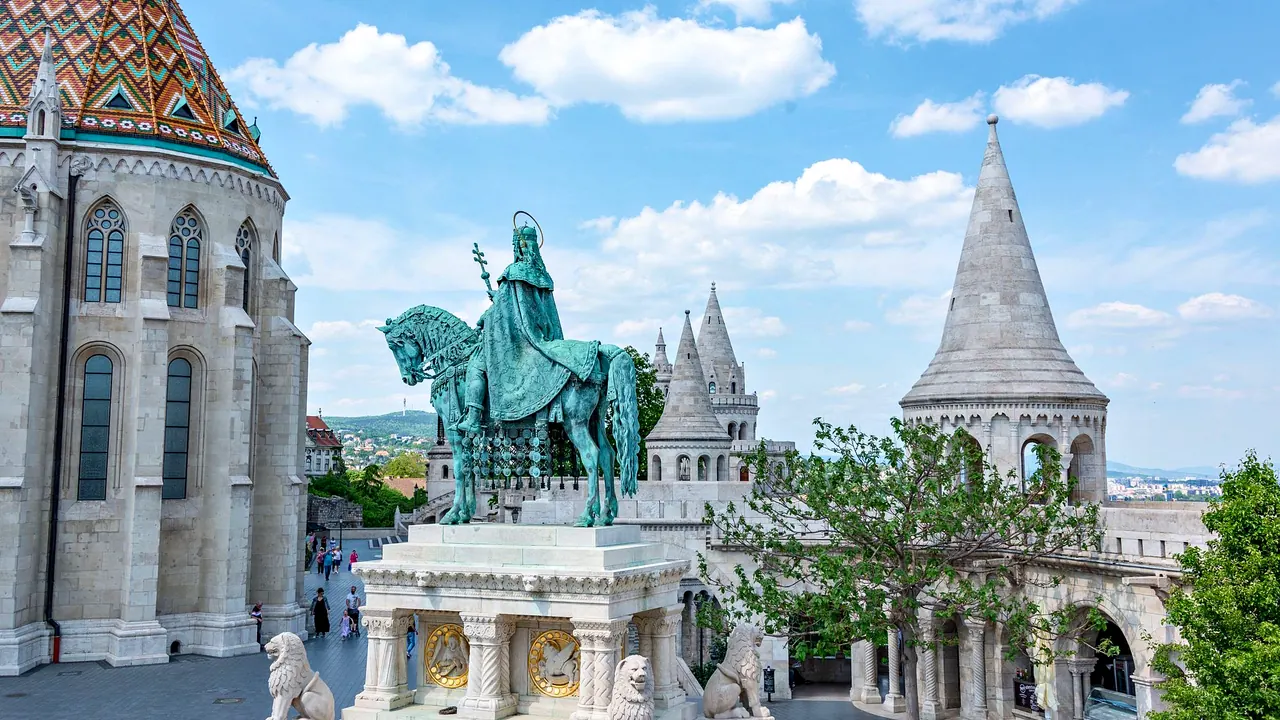
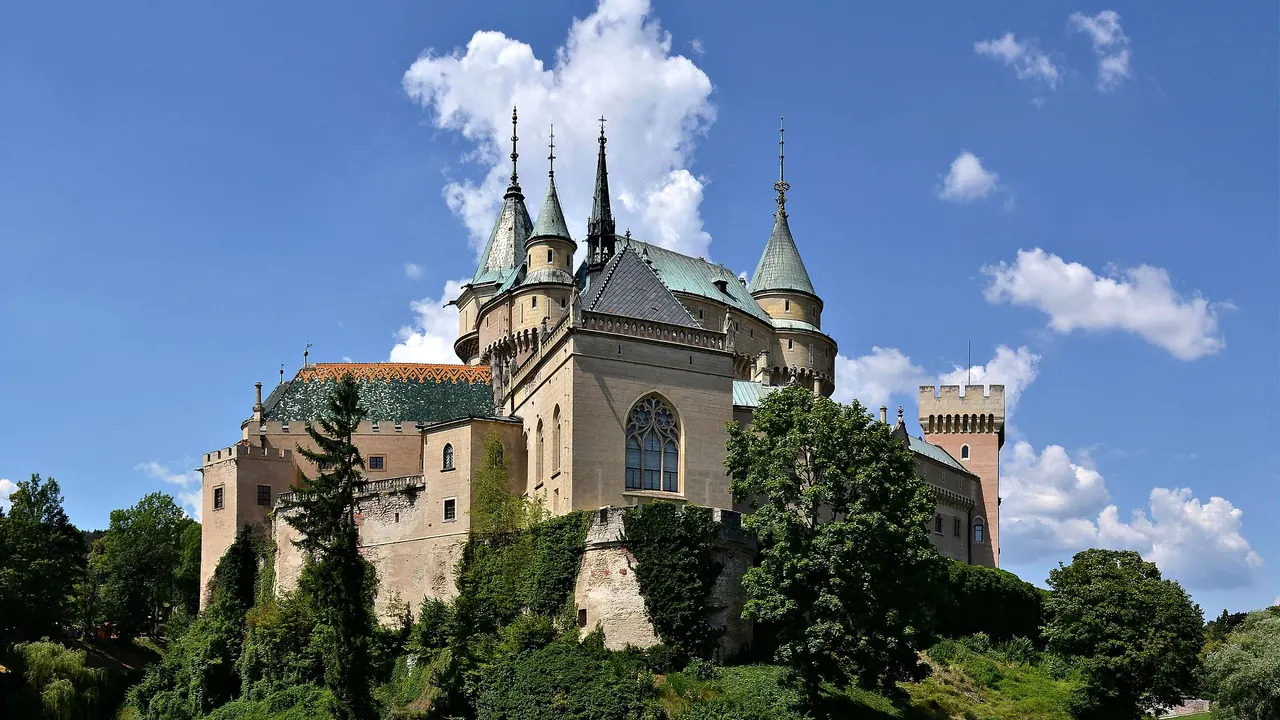
Photos: Hungary by Diego F. Parra, Pexels License; Slovakia by Pudelek, CC BY-SA 3.0, cropped.
Hungary or Slovakia?
Our verdict in twelve categories, each scored against the same fixed benchmark cities, and the climate month by month, so you can choose for your trip.
Choose Hungary for
- beaches
- nightlife
- live music and the arts
Hungary suits a trip with one strong city at its heart. Budapest puts grand sights, opera, ruin bars and the thermal baths in a single base. Lake Balaton adds summer swimming and volcanic wine slopes. Choose it if you want to soak, eat well, see a great capital and go out at night, mostly by train rather than by car.
Choose Slovakia for
- nature and the outdoors
Pick Slovakia if the mountains are the point. The High Tatras, Slovak Paradise and Malá Fatra give real hiking and winter skiing within short distances. The castle and mining towns of Spiš and Banská Štiavnica reward a slow road trip. Expect quieter evenings, simpler food and a car that earns its keep.
Scoreboard
Twelve categories on one fixed scale from 0 to 100. The shaded stretch is the gap between the two.
Your match
Pick a travel style or drag the sliders, and both match scores follow your weighting.
Wins on beaches and nightlife with your weighting.
Wins on nature and the outdoors with your weighting.
What matters to you?
Category by category
What the scores mean for a trip.
Beaches & swimming
Neither country has a coast, but Hungary has Lake Balaton, a real summer bathing destination. The shallow south shore at Siófok and Fonyód lets children wade a long way out in water of about 25°C, while the north shore below Tihany is deeper and more scenic.
Swimming in Slovakia is a local pastime: the big reservoir at Zemplínska šírava, the cooler mountain water of Liptovská Mara and the Senec lakes near Bratislava. They are pleasant on a hot afternoon but not something to plan a trip around.
Where in Hungary: Lake Balaton, Lake Velence, Lake Tisza
Where in Slovakia: Zemplínska šírava, Senec, Liptov
Food & drink
Hungary gives keen eaters more to work with. Budapest has the Great Market Hall, old coffee houses and a fine-dining tier, and the wine regions of Tokaj, Eger and Villány are worth a journey in themselves.
Slovak food is mountain fare: bryndzové halušky and smoked sheep's cheese from the farms of Liptov and Orava, eaten in log-built inns. It is filling rather than varied. The most rewarding glass is a crisp white from the Small Carpathian villages or a sweet wine from Slovakia's own corner of Tokaj.
Where in Hungary: Budapest, Tokaj, Eger, Villány
Where in Slovakia: Bratislava, Small Carpathians wine route, Liptov, Slovak Tokaj
Culture & sights
Hungary has the grand capital. The Parliament, Buda Castle and Andrássy Avenue form one UNESCO-listed riverside panorama, backed by serious national museums, and Pécs, Eger and Pannonhalma Abbey carry the heritage well beyond Budapest.
Slovakia's sights are smaller in scale and spread through the countryside: Spiš Castle on its hilltop, the Gothic wooden altar at Levoča, Bardejov's ringed square and the steep mining streets of Banská Štiavnica. They are charming on a slow drive, but nothing there carries the weight of Budapest.
Where in Hungary: Budapest, Pécs, Eger, Esztergom
Where in Slovakia: Spiš and Levoča, Banská Štiavnica, Bardejov, Bratislava
Nightlife
Budapest gives Hungary a proper night out. There are ruin bars in the half-derelict courtyards of District VII, cocktail and wine bars that run late, and open-air summer venues on Margaret Island. Siófok on Balaton adds a lakeside party season.
In Slovakia, going out means a weekend in Bratislava's old-town pubs or a summer terrace on Košice's main street. The Tatra and spa resorts are early-to-bed places.
Where in Hungary: Budapest, Siófok, Szeged, Pécs
Where in Slovakia: Bratislava, Košice
Nature & outdoors
This is where Slovakia pulls well ahead. The High Tatras rise to summits over 2,500m, with trails to tarns and mountain huts. The Low Tatras add ridge walks and skiing, and the gorges of Malá Fatra and Slovak Paradise, Pieniny rafting and the Dobšinská ice cave fill a week easily.
Hungary's landscapes are low and gentle: the volcanic buttes and vineyards of the Balaton Uplands, the forested hills around the Danube Bend and the open Hortobágy grassland with its autumn cranes. They are better for cycling and birdwatching than for mountain days.
Where in Hungary: Balaton Uplands, Danube Bend, Bükk, Hortobágy National Park
Where in Slovakia: High Tatras, Slovak Paradise, Malá Fatra, Low Tatras
Day trips
Both countries work well from a base, and Hungary has a slight edge. From Budapest, Szentendre, Visegrád and Esztergom line the Danube Bend. A second base at Balaton or Eger opens up Tihany, Keszthely and the Tokaj villages.
Slovakia's outings are strongest in the east, where Poprad reaches Levoča, Spiš Castle and Bardejov, but the good towns run out sooner. Bratislava makes up for it with its position, a short ride from Vienna and the Small Carpathian wine villages.
Where in Hungary: Danube Bend, Lake Balaton, Eger, Tokaj
Where in Slovakia: Bratislava, Poprad and Spiš, Banská Bystrica
Good for families
Hungary is the easier choice for families, mostly because of Balaton's shallow strands with lawns, playgrounds and pedal boats, and big water parks such as Hajdúszoboszló. Budapest adds the City Zoo and the child-staffed Children's Railway in the Buda Hills.
In Slovakia, family days are spent outdoors: Liptov's thermal water parks, cable cars up to Tatra lakes and the castle and old zoo at Bojnice. Children who like walking will be happy there. Those hoping for a beach day will not.
Where in Hungary: Lake Balaton, Budapest, Hajdúszoboszló
Where in Slovakia: Liptov, High Tatras, Bojnice, Košice
Getting around
Hungary is easier to get around without a car. Budapest has a walkable centre, the historic metro under Andrássy Avenue and riverside trams, and trains, buses and summer boats link the Danube Bend towns. Rail lines reach Balaton, Eger and Pécs, though trains are slow and most journeys between regions go through the capital.
Slovakia has one good spine, the scenic Váh valley line to Žilina, Poprad and Košice, plus a little electric railway in the Tatras. Away from it, buses thin out, and you will need a car for the castles, wooden churches and mountain valleys.
Where in Hungary: Budapest, Danube Bend, Lake Balaton south shore
Where in Slovakia: Bratislava, Váh valley rail line, High Tatras
Shopping & style
Neither country is a shopping destination, but Hungary gives you more to browse. Budapest has the labels on Andrássy Avenue, paprika and salami in the Great Market Hall and antiques at the Ecseri flea market. Herend porcelain and Zsolnay ceramics are the classic things to bring home.
Slovakia's best buys come straight from the source: blue-and-yellow majolica in Modra, Čičmany patterns on textiles and braided cheese from the Liptov dairies. Clothes shopping barely figures.
Where in Hungary: Budapest, Herend, Pécs, Kalocsa
Where in Slovakia: Modra, Bratislava, Čičmany, Liptov
Affordability
Overall the two cost much the same, but the savings fall in different places. In Hungary, central Budapest is the dearest place to stay and Balaton gets expensive in July and August. Eger, Pécs and Szeged are cheaper, and spa packages at Hévíz or Bük are good value outside summer.
Slovakia's cheapest corners are in the east, in Košice and the villages around Bardejov, and in the historic guesthouses of Banská Štiavnica. Costs climb in Bratislava's old town and at the best-known Tatra resorts in high summer and the ski season.
Where in Hungary: Pécs, Eger, Szeged, Budapest
Where in Slovakia: Košice, Bardejov, Banská Štiavnica, Liptov
Live music & performing arts
Opera lovers and concert-goers will find far more in Hungary. The State Opera on Andrássy Avenue and the Art Nouveau Great Hall of the Liszt Academy are superb places to spend an evening. Budapest also keeps operetta, jazz and táncház dance evenings alive, and the Sziget festival fills a Danube island in August. Outside the capital, Szeged stages open-air opera in front of its cathedral in summer.
Slovakia's formal scene is small. It is centred on the Slovak National Theatre and the Philharmonic in Bratislava, where tickets are easy to get. Its real strength is folk music that is still part of village life, best seen at the summer festival in Východná.
Where in Hungary: Budapest, Szeged, Pécs, Miskolc
Where in Slovakia: Bratislava, Košice, Východná
Wellness & relaxation
Both countries have spa traditions, but Hungary's is in a different league. Thermal bathing is part of everyday life there: the outdoor pools of the Széchenyi, the Ottoman dome of the Rudas, the warm lily lake at Hévíz and whole resort towns such as Hajdúszoboszló, Bük and Sárvár.
Slovakia has fine spa towns too, such as Piešťany with its spa island and mud treatments, and Trenčianske Teplice with its Moorish bathhouse, but the tone is more medical. Liptov's thermal pools under the Tatra peaks are the more relaxed option.
Where in Hungary: Budapest, Hévíz, Hajdúszoboszló, Bük and Sárvár
Where in Slovakia: Piešťany, Trenčianske Teplice, Liptov, Bardejovské Kúpele
When should you go?
Pick your month, and for a country the place in it. The climate figures are measured averages, not a forecast.
Where in Slovakia
Budapest (Hungary) in July
Bratislava (Slovakia) in July
Daytime high, °C
Rainfall in the month, mm
Where the figures come from
Bratislava (Slovakia) has no rain gauge within 25 km of the centre, so its rainfall comes from a gridded climate dataset read at the destination rather than from a gauge further away.
Bratislava (Slovakia)'s sunshine is measured 56 km from the centre, at Wien / Hohe Warte.
Temperature and rainfall are climate normals, averaged over the years shown. Budapest (Hungary): 1991-2020 (sunshine 1981-2010, rainfall 1981-2010) normals, Budapest Met Center (2.1 km from centre). Bratislava (Slovakia): 1991-2020 normals, Bratislava Ivanka (8.6 km from centre).
Both countries have the same continental year, with cold, grey winters and warm summers. May, June and September are the most comfortable months for walking around towns. Budapest reaches about 28°C in August and stays fairly dry through high summer. That suits Lake Balaton, where swimming runs from June to early September. From November to March the days are short and chilly, and they are better spent in a steaming thermal pool than on the streets.
The lowlands around Bratislava follow Budapest closely, though summer there is a little wetter. The High Tatras follow a different pattern. July highs of around 23°C make them pleasant when the plains are hot, but July is also their wettest month, at about 101mm, so expect some walking days to be rained off. August and September are steadier on the trails. By December highs drop to around 1°C, and the mountains turn to snow and skiing.
Which traveller are you?
For an outdoors trip, Slovakia is the clear choice. The High Tatras have marked trails to glacial tarns and rocky summits, Slovak Paradise has ladders bolted up its waterfalls, and winter brings skiing at Jasná. Hungary's Danube Bend and Bükk hills are gentle by comparison.
On a food and nightlife trip, Hungary wins comfortably. Budapest pairs paprika cooking, gilded coffee houses and Hungarian wine bars with the late ruin bars of the old Jewish Quarter, and Tokaj and Eger add wine country. Outside Bratislava, Slovak evenings end early.
For a relaxing and wellness trip, Hungary is hard to beat. The Széchenyi and Rudas baths in Budapest, the warm lily-covered lake at Hévíz and whole spa towns such as Bük make soaking the purpose of the trip. Slovakia's spas, led by Piešťany, lean more medical.
More comparisons
Each shares a side with Hungary or Slovakia.
Where else could you go?
Set Hungary or Slovakia against any other country.