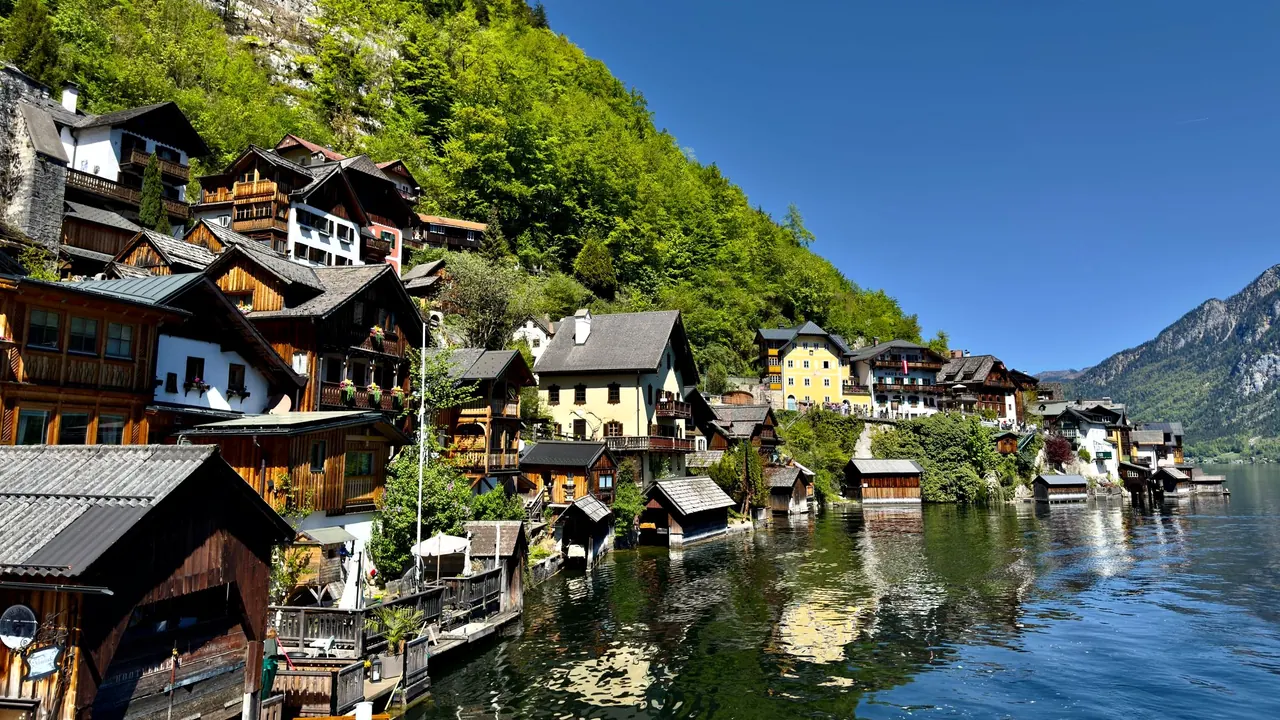
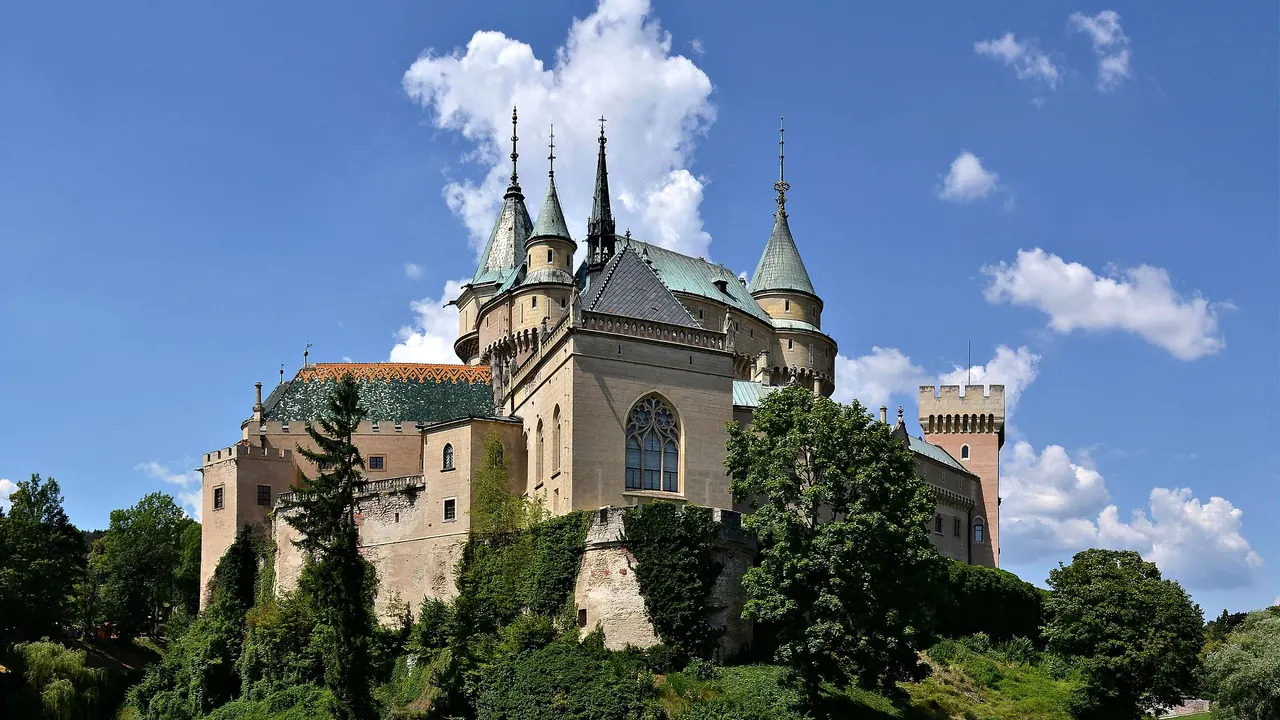
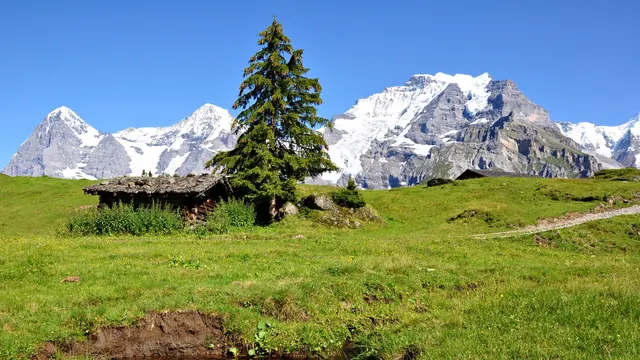
Photos: Austria by Marlon Castor, Pexels License; Slovakia by Pudelek, CC BY-SA 3.0, cropped.
Austria or Slovakia?
Our verdict in twelve categories, each scored against the same fixed benchmark cities, and the climate month by month, so you can choose for your trip.
Choose Austria for
- live music and the arts
- beaches
- food and drink
Austria is the better choice for almost any trip built around a city. Vienna has its palaces, painting collections, opera houses and coffee houses, Salzburg has its festival summers, and the Tyrolean Alps, imperial spa towns and fast trains tie the rest of the country together. It suits travellers who want depth and polish and are prepared to pay for them.
Choose Slovakia for
- prices
For a slower and cheaper road trip through mountains and small towns, Slovakia makes sense. The High Tatras, Slovak Paradise and the castle country around Spiš are worth the trip, guesthouses and lunch menus cost far less, and Liptov's thermal pools are a good way to end a day of walking. It suits hikers on a budget and travellers who are happy to drive and don't mind quiet evenings.
Scoreboard
Twelve categories on one fixed scale from 0 to 100. The shaded stretch is the gap between the two.
Your match
Pick a travel style or drag the sliders, and both match scores follow your weighting.
Wins on live music and the arts and beaches with your weighting.
Wins on prices with your weighting.
What matters to you?
Category by category
What the scores mean for a trip.
Beaches & swimming
Neither country has a coast, but Austria's lakes give you a proper summer swim. Carinthia's Wörthersee and Millstätter See get warm enough for long afternoons on the wooden lidos at Velden or Pörtschach, and the clearer, colder Salzkammergut lakes come with mountain scenery.
In Slovakia, swimming means reservoirs and small lakes such as Zemplínska šírava and the Senec lakes. They are fine on a hot day but no reason to plan a trip. In both countries a swim is a summer extra, not a beach vacation.
Where in Austria: Carinthian lakes, Wörthersee, Salzkammergut
Where in Slovakia: Zemplínska šírava, Senec, Liptov
Food & drink
You will eat and drink much better in Austria. Vienna's coffee houses, cake counters and Naschmarkt are reasons to visit in their own right. Beyond the capital, Grüner Veltliner and Riesling from the Wachau, South Styria's wine taverns and Bregenzerwald mountain cheese mean good food across the country.
Slovak cooking is heavier and has less range. The highlights are bryndzové halušky and smoked sheep's cheese bought from farms in Liptov. Wine is Slovakia's stronger side, with crisp whites from the Small Carpathians and sweet Tokaj from the south-east.
Where in Austria: Vienna, Wachau, South Styria, Bregenzerwald
Where in Slovakia: Bratislava, Small Carpathians wine route, Liptov, Slovak Tokaj
Culture & sights
Austria has by far the grander heritage. In Vienna you have the Hofburg, the Belvedere, the Kunsthistorisches Museum and the Klimt and Schiele collections, and Salzburg adds its baroque old town. Melk abbey and Hallstatt make good extra stops.
Slovakia's sights are smaller and more rural: Spiš Castle on its hilltop, the Gothic wooden altar at Levoča, Bardejov's square, the wooden churches of the east and the steep old mining town of Banská Štiavnica. They are best seen on a slow drive from one to the next, not over long days in museums.
Where in Austria: Vienna, Salzburg, Graz, Innsbruck
Where in Slovakia: Spiš and Levoča, Banská Štiavnica, Bardejov, Bratislava
Nightlife
Austria has more choice after dark, though neither is a party country. Vienna has bars under the Gürtel railway arches, cocktail bars, electronic clubs and summer drinking along the Danube Canal. In winter, Ischgl and St Anton have loud après-ski that starts in the late afternoon.
In Slovakia, evenings out centre on the pubs and wine bars of Bratislava's old town, which fill with students and stag groups at weekends, and on the summer terraces of Košice. Away from those two cities, nights end early in a village pub.
Where in Austria: Vienna, Ischgl, St Anton am Arlberg, Graz
Where in Slovakia: Bratislava, Košice
Nature & outdoors
Both are mountain countries, but Austria's Alps are bigger and easier to get into. Cable cars from the Zillertal, Ötztal and Stubai valleys climb to glaciers, staffed huts make hiking over several days simple, and the Hohe Tauern and hundreds of ski resorts give you plenty of choice in every season.
Slovakia's High Tatras are sharp and dramatic in a small area. The ladders of Slovak Paradise, rafting on the Dunajec through the Pieniny and the Dobšinská ice cave add variety. Distances are short enough to cover several ranges from one base, but the mountains and lift network are on a smaller scale.
Where in Austria: Tyrol, Hohe Tauern National Park, Salzkammergut, Vorarlberg
Where in Slovakia: High Tatras, Slovak Paradise, Malá Fatra, Low Tatras
Day trips
Austria gives you good outings from four different bases: the Wachau and Melk from Vienna, Hallstatt and Bad Ischl from Salzburg, Hall and Kitzbühel from Innsbruck, and the South Styrian vineyards from Graz.
Slovakia's best day out may well be Vienna itself, an hour from Bratislava. The wine village of Modra and Červený Kameň castle are closer. Poprad is a good base for Levoča, Spiš and Kežmarok, but in each region you run out of first-rate outings sooner.
Where in Austria: Vienna, Salzburg, Innsbruck, Graz
Where in Slovakia: Bratislava, Poprad and Spiš, Banská Bystrica
Good for families
Austria is better set up for children. In Tyrol and Salzburgerland there are family hotels with kids' clubs, summer lifts up to adventure playgrounds and toboggan runs, and ski schools in almost every resort. Vienna adds the Prater, Schönbrunn Zoo and the dinosaurs at the Natural History Museum.
A family trip to Slovakia is built on outdoor days and water parks. The thermal parks of Liptov stay warm all year, Bojnice has both a castle and a zoo, and short walks in the Tatras suit small legs. The country is safe and relaxed, but there is less organised for children.
Where in Austria: Tyrol, Salzburgerland, Carinthia, Vienna
Where in Slovakia: Liptov, High Tatras, Bojnice, Košice
Getting around
Austria is much easier without a car. Fast trains link Vienna, Salzburg, Innsbruck and Graz in a few hours, Vienna has a full underground and tram network, and yellow postbuses reach most Alpine valleys.
Slovakia has one good main line up the Váh valley to Žilina, Poprad and Košice, plus the little electric railway in the Tatras. Away from these, buses are slow and infrequent, and the castles and wooden churches are much easier to reach with a hire car.
Where in Austria: Vienna, Salzburg, Innsbruck, Graz
Where in Slovakia: Bratislava, Váh valley rail line, High Tatras
Shopping & style
Vienna is a real shopping city. It has the luxury labels of the Kohlmarkt and Graben, the long Mariahilfer Strasse, design shops around Neubau and Augarten porcelain, and Salzburg's Getreidegasse adds dirndls and loden jackets.
In Slovakia you shop for crafts rather than clothes. Look for Modra's blue-and-yellow majolica pottery, Čičmany patterns, bobbin lace and smoked cheese from the Liptov dairies. Bratislava has malls but nothing worth a special trip.
Where in Austria: Vienna, Salzburg, Innsbruck, Graz
Where in Slovakia: Modra, Bratislava, Čičmany, Liptov
Affordability
Slovakia costs noticeably less. Village guesthouses, lunch menus and train fares are cheap, Košice and Bardejov in the east are cheaper still, and in Banská Štiavnica you can sleep in a historic house for less than a city hotel. Only Bratislava's old town and the Tatra resorts at peak times push prices up.
Austria is mid-to-high priced. Salzburg in summer and the Tyrol and Arlberg ski resorts in winter are the hardest on a budget. Styria, Burgenland and the Carinthian lakes outside high summer bring costs down to a more comfortable level.
Where in Austria: Styria, Burgenland, Carinthia, Vienna
Where in Slovakia: Košice, Bardejov, Banská Štiavnica, Liptov
Live music & performing arts
This is the widest gap between the two. Austria has the Vienna State Opera, with performances most nights of its season, the Vienna Philharmonic at the Musikverein, the Salzburg Festival every summer and opera on the floating stage at Bregenz.
In Slovakia, the formal stage means the Slovak National Theatre and the Philharmonic in Bratislava and the State Theatre in Košice, and tickets are usually easy to get. What Slovakia has that is its own is living folk music and dance, best seen at the summer festival in Východná.
Where in Austria: Vienna, Salzburg, Bregenz, Graz
Where in Slovakia: Bratislava, Košice, Východná
Wellness & relaxation
Both countries have old spa traditions, but Austria's spas are more varied and more polished. Bad Gastein's thermal springs and healing gallery inside an old mine, the imperial spa towns of Bad Ischl and Baden, the Styrian thermal resorts and the saunas in nearly every mountain hotel make it easy to unwind almost anywhere.
Slovakia's spas lean towards medical treatment, with doctors and treatment plans in Piešťany and a Moorish-style bathhouse at Trenčianske Teplice. For a more relaxed soak, Liptov's large thermal pools below the Tatras make a good rest day between hikes.
Where in Austria: Bad Gastein, Styrian thermal region, Bad Ischl, Baden bei Wien
Where in Slovakia: Piešťany, Trenčianske Teplice, Liptov, Bardejovské Kúpele
When should you go?
Pick your month, and for a country the place in it. The climate figures are measured averages, not a forecast.
Where in Austria
Where in Slovakia
Vienna (Austria) in July
Bratislava (Slovakia) in July
Daytime high, °C
Rainfall in the month, mm
Where the figures come from
Bratislava (Slovakia) has no rain gauge within 25 km of the centre, so its rainfall comes from a gridded climate dataset read at the destination rather than from a gauge further away.
Bratislava (Slovakia)'s sunshine is measured 56 km from the centre, at Wien / Hohe Warte.
Temperature and rainfall are climate normals, averaged over the years shown. Vienna (Austria): 1991-2020 normals, Wien / Hohe Warte (4.7 km from centre). Bratislava (Slovakia): 1991-2020 normals, Bratislava Ivanka (8.6 km from centre).
The two capitals have almost the same climate. Vienna and Bratislava both reach about 27°C in July and August, and walking the streets is pleasant from May to September, though late spring and September are the easiest months for long sightseeing days. Winters in both are cold and grey with little sunshine, so December to February is better spent at Christmas markets, in concert halls or on the ski slopes than strolling outdoors.
The mountains are where the two differ. Salzburg and the Austrian Alps are much wetter in summer: Salzburg gets about 168mm of rain in June, so plan some indoor days there. The High Tatras stay cooler, at around 23°C in July, and are drier than the Austrian Alps, which makes late summer and September good months for hiking. Neither country has a sea. Carinthia's warmer lakes in Austria are best for swimming in July and August.
Which traveller are you?
On a trip on a tight budget, your money goes much further in Slovakia. Historic guesthouses in Banská Štiavnica, lunch menus, local beer and cheap trains keep costs low, especially around Košice and Bardejov in the east. Salzburg and the Tyrolean resorts eat through a budget quickly.
For a food and nightlife trip, Austria has more to offer. Vienna's coffee houses, Heurigen and Wachau wines lead on to evenings in the bars under the Gürtel arches and along the Danube Canal. Slovakia's dumplings and Small Carpathian whites are good and simple, but a night out mostly means Bratislava's old town.
More comparisons
Each shares a side with Austria or Slovakia.
Where else could you go?
Set Austria or Slovakia against any other country.