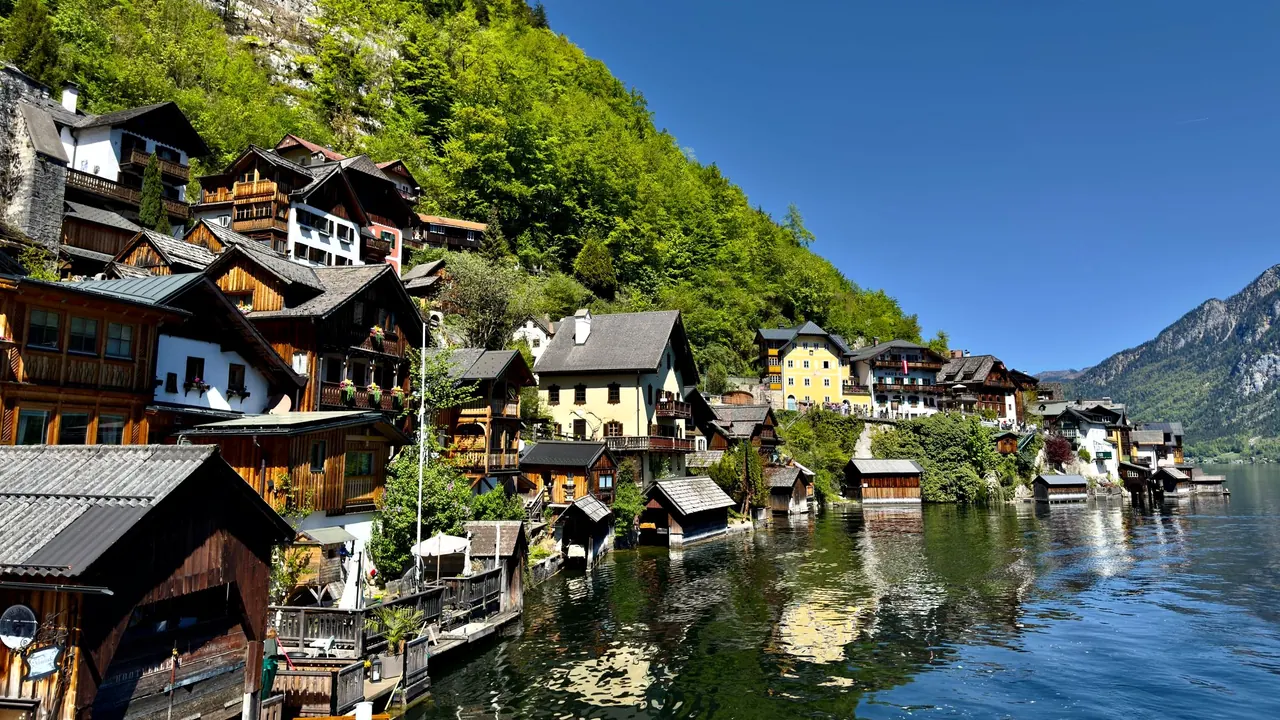
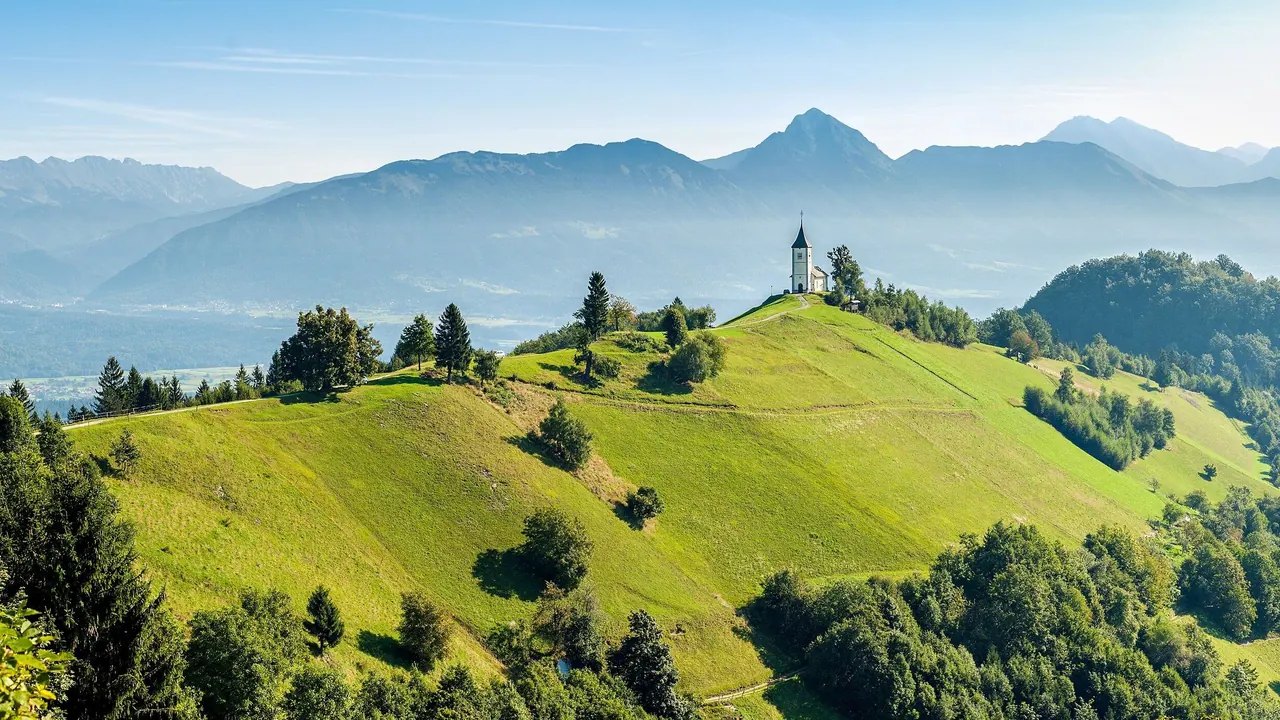
Photos: Austria by Marlon Castor, Pexels License; Slovenia by Mihael Grmek, CC BY-SA 4.0, cropped.
Austria or Slovenia?
Our verdict in twelve categories, each scored against the same fixed benchmark cities, and the climate month by month, so you can choose for your trip.
Choose Austria for
- live music and the arts
- culture and sights
- shopping
Austria suits travellers who want the big set pieces of Central European culture: imperial Vienna, an evening at the opera or the Musikverein, Salzburg's baroque streets, and the Alps reached by fast trains and cable cars. It is also the stronger choice for a family vacation in the mountains, for serious skiing and for a long stay in a traditional spa. Expect to pay for it, especially in Salzburg and the famous ski resorts.
Choose Slovenia for
- prices
Slovenia is the better pick if the outdoors matters more than palaces and concert halls, and you would rather pack mountains, caves, wine hills and a stretch of Adriatic coast into one compact week. Ljubljana is a pleasant, low-key base, the Soča valley and the Karst caves have no real equivalent across the border, and the bills are gentler. Hire a car, because the best of it lies away from the bus routes.
Scoreboard
Twelve categories on one fixed scale from 0 to 100. The shaded stretch is the gap between the two.
Your match
Pick a travel style or drag the sliders, and both match scores follow your weighting.
Wins on live music and the arts and culture and sights with your weighting.
Wins on prices with your weighting.
What matters to you?
Category by category
What the scores mean for a trip.
Beaches & swimming
Neither country is a beach destination, and they reach the water in different ways. Austria's swimming is all freshwater: Carinthia's Wörthersee and its neighbours warm up in high summer and are built around wooden lidos and lawns at Velden and Pörtschach, while the Salzkammergut lakes are colder and more dramatic.
Slovenia offers both lake and sea. Bled and Bohinj give Alpine lake swims and the Kolpa river suits lazy bathing, and Slovenia also has a short Adriatic shore where you can swim in salt water off the concrete platforms and pebbles of Piran, Izola and Portorož, or below the Strunjan cliffs. Neither has much sand.
Where in Austria: Carinthian lakes, Wörthersee, Salzkammergut
Where in Slovenia: Piran and the Slovenian coast, Lake Bled, Lake Bohinj, Kolpa valley
Food & drink
Austria eats better, mostly thanks to Vienna: the coffee houses, pastry counters, Naschmarkt and Heurigen make the capital a destination in itself, and the Wachau's Grüner Veltliner and Riesling are among Europe's finest whites. The cooking is hearty and traditional rather than varied.
Slovenia has more variety than depth, mixing Alpine, Italian and Balkan influences: Karst pršut and teran, Istrian truffles on the coast, Prekmurje gibanica in the northeast. Its wine is the highlight, notably the orange wines of Goriška Brda and Vipava, and the Soča valley's country restaurants reward a detour.
Where in Austria: Vienna, Wachau, South Styria, Bregenzerwald
Where in Slovenia: Ljubljana, Goriška Brda, Vipava valley and the Karst, Soča valley
Culture & sights
Austria is far ahead for sightseeing. Vienna alone could fill a week: the Hofburg, Schönbrunn, the Belvedere and the Kunsthistorisches Museum, with Klimt and the Secession on top. Beyond the capital come Salzburg's UNESCO old town, Innsbruck's Golden Roof and Melk Abbey above the Danube.
Slovenia's heritage is smaller and more intimate. Ljubljana's riverbanks, reshaped by Plečnik, Venetian Piran and old Ptuj are lovely to wander, and Predjama Castle in its cave mouth is memorable. What you won't find are major museums or famous monuments on the Austrian scale.
Nightlife
Austria offers more, in two very different forms. Vienna has bars in the Gürtel railway arches, summer drinking on the Danube Canal and a decent electronic club scene, while in winter Ischgl and St Anton are known for loud après-ski that suits groups.
Slovenia's evenings are gentler and centre on Ljubljana's riverside terraces and the alternative clubs of Metelkova, with Portorož busier in summer. Elsewhere a night out usually ends after dinner.
Where in Austria: Vienna, Ischgl, St Anton am Arlberg, Graz
Where in Slovenia: Ljubljana, Maribor, Portorož
Nature & outdoors
Both countries are made for the outdoors, and the difference is one of scale and character. Austria's Alps are bigger and more developed: cable cars from the Zillertal, Ötztal and Stubai valley lift you to glaciers, the huts of Tyrol and the Hohe Tauern make multi-day treks easy, and its hundreds of ski resorts put it far ahead for winter sports.
Slovenia packs more contrast into less space. The emerald Soča is a magnet for rafting and canyoning, Triglav National Park and the Logar valley offer quieter mountain walking, and the Karst adds the vast underground halls of Postojna and Škocjan, with bears in the Kočevje forests. You can cover mountains, caves and coast in a week.
Where in Austria: Tyrol, Hohe Tauern National Park, Salzkammergut, Vorarlberg
Where in Slovenia: Julian Alps and Triglav National Park, Soča valley, Kamnik-Savinja Alps and Logar valley, Karst caves
Day trips
Austria gives you several strong bases. From Vienna you can take a boat through the Wachau past Dürnstein to Melk, from Salzburg you can reach Hallstatt and Bad Ischl, and from Innsbruck Hall and Kitzbühel are easy outings, so the excursions match the grandeur of the cities.
Slovenia works almost entirely from Ljubljana, with Bled under an hour away and Piran or Goriška Brda within two hours. Its trump card is the borders: Trieste, Zagreb and Roman Aquileia are within reach, though the places at home are charming rather than grand.
Good for families
Austria is better set up for children. Alpine resorts in Tyrol, Salzburgerland and Carinthia have dedicated family hotels, kids' clubs and summer lifts to adventure playgrounds and toboggan runs, while Vienna adds the Prater, Schönbrunn Zoo and an aquarium inside a wartime flak tower.
Slovenia is just as safe and easy, with shorter drives and some real highlights: the little train into Postojna Cave, rowing boats on Bled, and thermal resorts like Čatež that double as water parks. It simply has less purpose-built attractions, with no big aquarium or theme park.
Where in Austria: Tyrol, Salzburgerland, Carinthia, Vienna
Where in Slovenia: Postojna and the Karst, Lake Bled and Bohinj, Terme Čatež, Ljubljana
Getting around
Austria is much easier without a car. Fast intercity trains link Vienna, Salzburg, Innsbruck and Graz in a few hours, the cities are compact or well served by Vienna's underground and trams, and postbuses reach most Alpine valleys.
Slovenia's distances are tiny, and Ljubljana, Bled and the coast all work by bus, but the railway is slow and the best outdoor areas, such as the Soča and Logar valleys and the Karst villages, really need a hire car. Parking at Bled and the trailheads is a summer nuisance.
Shopping & style
Vienna gives Austria a proper shopping city, with luxury labels on the Kohlmarkt and Graben, the long Mariahilfer Strasse, design shops in Neubau and court-supplier porcelain and glass. Salzburg's Getreidegasse adds traditional dress.
Slovenia's shopping is small-scale and about crafts and produce: boutiques and the Plečnik market in Ljubljana, bobbin lace from Idrija, Sečovlje sea salt and painted beehive panels. There is no luxury street.
Affordability
Slovenia is the gentler on the wallet, though neither is cheap. Ljubljana costs about as much as a mid-sized Western European city, Bled and the coast cost more in July and August, and the northeast around Ptuj and in Prekmurje is the cheapest part of the country.
Austria's costs climb faster in its famous places, with Salzburg in summer and the Tyrolean and Arlberg ski resorts in winter. Its cheaper corners are Styria, Burgenland and the Carinthian lakes outside the peak weeks.
Where in Austria: Styria, Burgenland, Carinthia, Vienna
Where in Slovenia: Štajerska, Prekmurje, Ljubljana
Live music & performing arts
For live music Austria is one of the world's great destinations. The State Opera, the Musikverein with the Vienna Philharmonic and the Konzerthaus fill Vienna's calendar, the Salzburg Festival is among the most prestigious anywhere, and Bregenz stages opera on a floating stage on Lake Constance.
Slovenia's offer is modest and centred on Ljubljana: the Slovenian Philharmonic, the national opera and ballet, and the summer Ljubljana Festival in the Križanke courtyard. Theatre is mostly in Slovenian.
Where in Austria: Vienna, Salzburg, Bregenz, Graz
Where in Slovenia: Ljubljana, Maribor
Wellness & relaxation
Both countries take spas seriously, but Austria's are more atmospheric. Belle époque Bad Gastein with its waterfall and healing gallery in an old mine, imperial Bad Ischl and Baden, and the thermal region of eastern Styria are destinations in their own right, and nearly every Alpine hotel has a sauna.
Slovenia's spa towns are pleasant and restful hotel resorts. Elegant Rogaška Slatina, Laško and the dark mineral springs of Prekmurje are the main ones, and Portorož adds seaside thalassotherapy with Sečovlje salt and mud, which Austria cannot offer.
Where in Austria: Bad Gastein, Styrian thermal region, Bad Ischl, Baden bei Wien
Where in Slovenia: Rogaška Slatina, Prekmurje, Laško, Portorož
When should you go?
Pick your month, and for a country the place in it. The climate figures are measured averages, not a forecast.
Where in Austria
Where in Slovenia
Vienna (Austria) in July
Ljubljana (Slovenia) in July
Daytime high, °C
Rainfall in the month, mm
Temperature and rainfall are climate normals, averaged over the years shown. Vienna (Austria): 1991-2020 normals, Wien / Hohe Warte (4.7 km from centre). Ljubljana (Slovenia): 1991-2020 (sunshine 1981-2010, rainfall 1981-2010) normals, Ljubljana / Bezigrad (1.9 km from centre).
Both countries have cold winters. From December to February, daytime highs in Vienna, Salzburg, Innsbruck and Ljubljana reach only a few degrees, which makes long days on foot hard going. In Austria, Vienna is the driest and sunniest of the three cities measured, reaching about 27°C in July and August. That is warm but rarely too hot for walking, and May, June and September are the most comfortable months for the streets. Salzburg and Innsbruck are much wetter through the summer. Salzburg's rain peaks at around 168mm in June, so leave room in your plans for showers.
Slovenia's rain falls unevenly through the year. Ljubljana is as warm as Vienna in summer, but July is its dry spell, with about 80mm and the most sunshine of the year. June, August, September and October are far wetter, and October brings around 176mm. For the capital, July is the surest month, and May is a cooler, less wet choice than June. Piran on the coast is the warmest place measured in either country. The Adriatic reaches 25°C in July and August and is still warm enough to swim in June and September. Winters there are much milder than inland, but the rain picks up from September.
Which traveller are you?
For a relaxing and wellness trip, Austria has the edge. Baden is an easy outing from Vienna and Bad Ischl sits among the Salzkammergut lakes, so spa days mix with concerts or lakeside walks. In Slovenia, Portorož lets you combine treatments with swims in the Adriatic.
More comparisons
Each shares a side with Austria or Slovenia.
Where else could you go?
Set Austria or Slovenia against any other country.