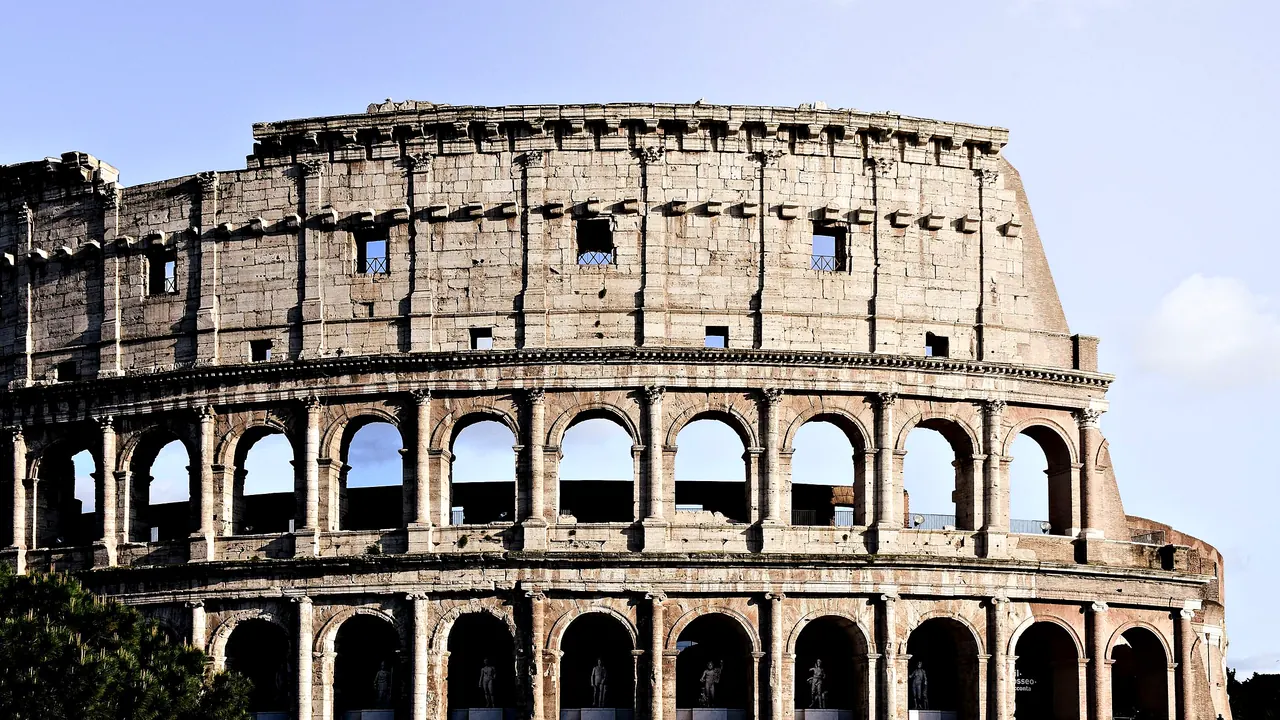
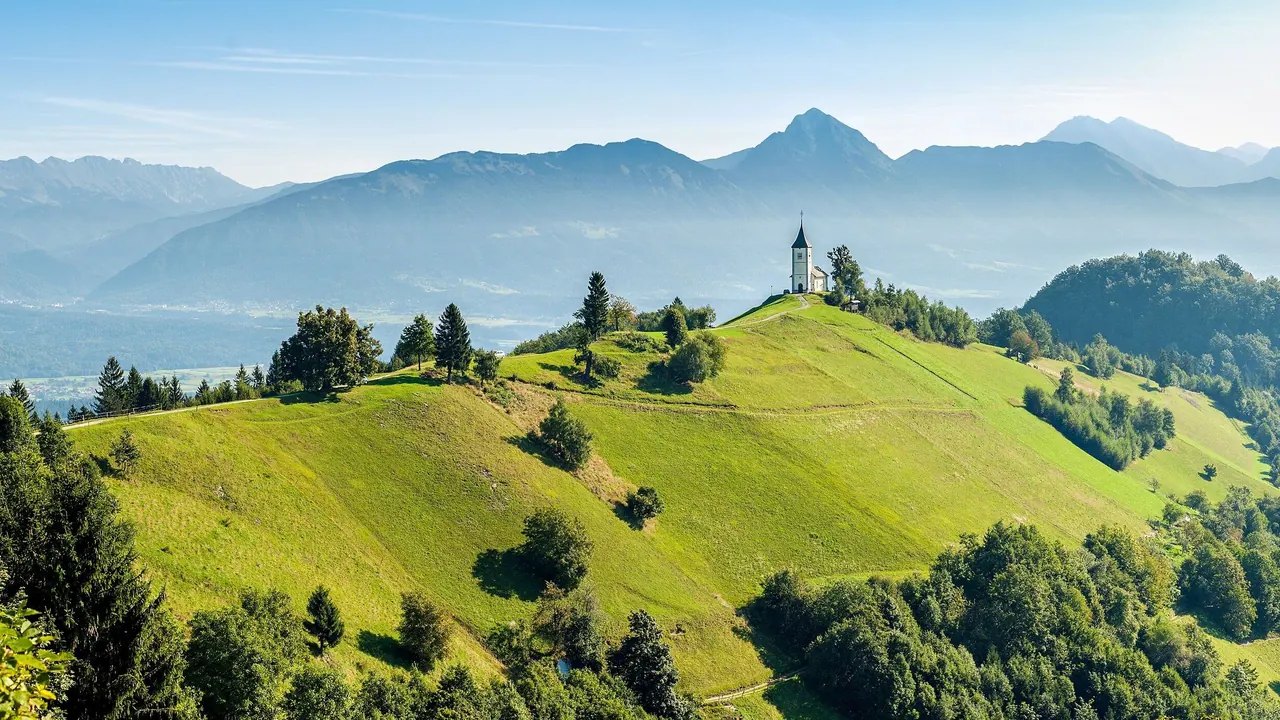
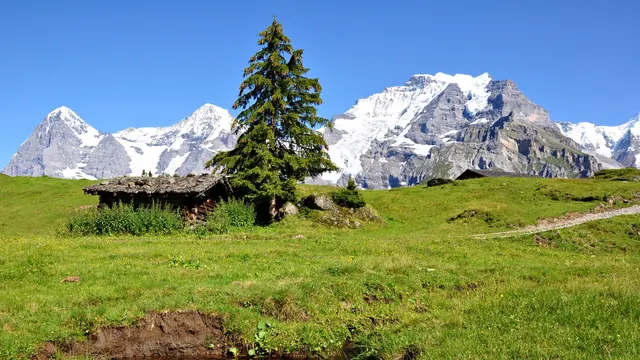
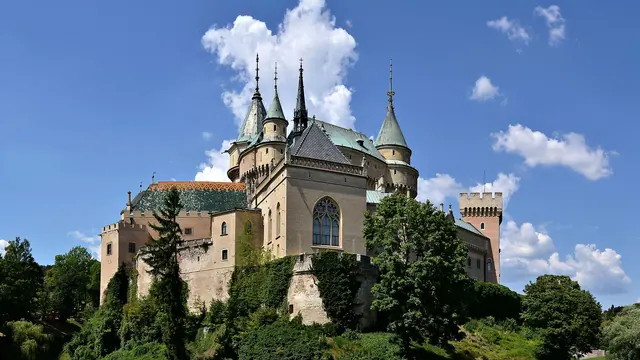
Photos: Italy by AXP Photography, Pexels License; Slovenia by Mihael Grmek, CC BY-SA 4.0, cropped.
Italy or Slovenia?
Our verdict in twelve categories, each scored against the same fixed benchmark cities, and the climate month by month, so you can choose for your trip.
Choose Italy for
- shopping
- culture and sights
- beaches
Italy is the choice for a trip built around great things to see and eat. Rome, Florence and Venice, the cooking of Emilia-Romagna and Naples, the sandy coves of Sardinia and Sicily and the opera houses of Milan and Verona give it far more depth in almost every category. It suits first visits and return visits alike, since each region can carry a whole trip of its own.
Choose Slovenia for
- prices
Slovenia suits travellers who want mountains, lakes and caves close together, at a gentler pace and on a smaller scale. From one base in Ljubljana you can reach the Julian Alps, the emerald Soča, the Karst caves and a short stretch of Adriatic within a week. Few of its sights are famous, and its charm comes from how easily one day of outdoors leads into the next.
Scoreboard
Twelve categories on one fixed scale from 0 to 100. The shaded stretch is the gap between the two.
Your match
Pick a travel style or drag the sliders, and both match scores follow your weighting.
Wins on shopping and culture and sights with your weighting.
Wins on prices with your weighting.
What matters to you?
Category by category
What the scores mean for a trip.
Beaches & swimming
Italy is one of the Mediterranean's great beach countries. Sardinia's Costa Smeralda and the Maddalena islands, San Vito Lo Capo and the Egadi in Sicily, the sandy Ionian bays of Salento and the clear water off Tropea give a choice of coastlines that Slovenia cannot approach. Its one real drawback is the rows of paid lidos along much of the mainland.
Slovenia has only a short Adriatic strip between Ankaran and Piran, where you swim from concrete platforms and pebbles, and the cliffs at Strunjan are the most natural stretch. Its better swimming is inland, in Lake Bled, the cooler and clearer Bohinj, and the warm Kolpa river, which makes a pleasant summer break between hikes rather than a reason to come.
Where in Italy: Sardinia, Sicily, Salento, Tropea coast
Where in Slovenia: Piran and the Slovenian coast, Lake Bled, Lake Bohinj, Kolpa valley
Food & drink
Eating is one of the main reasons to choose Italy. Its regional kitchens have real depth: egg pasta and Parmigiano in Emilia-Romagna, pizza and fried snacks in Naples, carbonara and Jewish-Roman artichokes in Rome, and Palermo's street markets. Wine comes from every region, from the Langhe to Etna.
Slovenia eats well but has a much narrower range. Karst pršut and teran, Prekmurje's gibanica and home cooking on tourist farms are rewarding, and its strongest card is the orange and white wine of Goriška Brda and the Vipava valley. The Soča valley's celebrated country dining is worth a detour, but a food-led trip has far more to work with in Italy.
Where in Italy: Emilia-Romagna, Naples, Rome, Sicily
Where in Slovenia: Ljubljana, Goriška Brda, Vipava valley and the Karst, Soča valley
Culture & sights
Italy's heritage is world-famous and found all over the country. It has the Colosseum and the Sistine Chapel, Renaissance Florence, Venice on its lagoon and buried Pompeii. Behind them comes a second tier that could fill trips of its own: Ravenna's mosaics, Agrigento's temples and the Baroque of Noto and Lecce.
Slovenia works on a much smaller scale. Ljubljana's Plečnik bridges and market colonnades, Venetian Piran and old Ptuj make good days out, and Predjama Castle, built into the mouth of a cave, is memorable. Few of these places would draw a visitor by themselves, though.
Nightlife
Italy offers much more choice after dark, though its evenings are mostly social: aperitivo, a long dinner and a piazza. Milan's Navigli canals and Brera, Rome's Trastevere and Pigneto, and the big summer clubs of Rimini, Riccione and Gallipoli cover most tastes.
In Slovenia, going out mostly means Ljubljana: terraces along the Ljubljanica on summer nights, a few student bars, and the graffiti-covered clubs of Metelkova for something alternative. Portorož has beach bars in summer, but in the Alps and small towns the evening ends with dinner.
Where in Italy: Milan, Rome, Adriatic Riviera, Costa Smeralda
Where in Slovenia: Ljubljana, Maribor, Portorož
Nature & outdoors
Both are excellent for the outdoors, and the difference is one of scale. Italy has range: the pale towers of the Dolomites, Mont Blanc and Gran Paradiso, the lakes of Como and Garda, the Path of the Gods above Amalfi, and volcanoes to climb on Etna and the Aeolian islands. Its large ski areas also go well beyond Slovenia's modest slopes at Kranjska Gora and on Pohorje.
Slovenia's strength is how much fits into a small space. Triglav National Park, rafting and canyoning on the emerald Soča, the underground halls of Škocjan and Postojna, and the bear forests of Kočevje are all within a short drive of each other.
Where in Italy: Dolomites, Aosta Valley, Italian Lakes, Amalfi Coast
Where in Slovenia: Julian Alps and Triglav National Park, Soča valley, Kamnik-Savinja Alps and Logar valley, Karst caves
Day trips
Almost any Italian base gives you a week of outings. Florence reaches Siena, Lucca and Chianti, Naples has Pompeii, Capri and the Amalfi Coast, and from Bologna or Venice fast trains run to Ravenna, Parma, Padua and Verona in about an hour.
Slovenia works differently. The whole country is a day out from Ljubljana, with Bled, Piran, Ptuj and Brda all easy, and the borders add Habsburg Trieste, Zagreb and Roman Aquileia. There is plenty of variety, but the stops are smaller and less famous than Italy's.
Good for families
Italy has the bigger attractions for children: the shallow sandy water and organised beaches of the Adriatic Riviera, Gardaland on Lake Garda and Genoa's large aquarium. The culture also welcomes children at the dinner table. The hot, crowded art cities are the hard part.
Slovenia is easier to manage but has less to fill the days. The little train into Postojna Cave, rowing boats on Bled and the water slides at Čatež are real highlights, and the drives are short. It has no theme park or aquarium, though, so children who want a big day out will find more in Italy.
Where in Italy: Adriatic Riviera, Lake Garda, Dolomites, Genoa
Where in Slovenia: Postojna and the Karst, Lake Bled and Bohinj, Terme Čatež, Ljubljana
Getting around
Italy's high-speed trains make its main route simple: Milan, Venice, Bologna, Florence, Rome and Naples link up quickly without a car. Away from that line, in Puglia, the Tuscan hills, Sicily and Sardinia, a car or a domestic flight becomes necessary.
Slovenia's distances are tiny, with the coast and the Alps about an hour from Ljubljana, and buses handle Bled and the Piran coast well. The railway is slow, though, and the Soča, Logar valley and Karst villages really need a hire car. In high summer, parking around Bled and the trailheads becomes the main problem.
Shopping & style
Italy is a serious shopping destination. Milan's Quadrilatero and the Galleria hold the flagship stores of the great fashion houses, Florence is known for its leather and the Ponte Vecchio's gold, and regional crafts run from Murano glass to Vietri ceramics.
Slovenia has no luxury street at all. The best buys are small and local: produce and honey from Ljubljana's market, Idrija bobbin lace, salt from the Sečovlje pans and western wine and olive oil. That makes good gifts, but it will not fill a day.
Affordability
Overall the two cost about the same, but Italy's prices range much more widely. Venice, Capri, Lake Como and the Costa Smeralda are among the dearest places in Europe in summer, while Sicily, Calabria and inland Puglia and Umbria cost noticeably less.
Slovenia's prices are more even. Ljubljana charges what a mid-sized Western European city would, and Bled and the coast cost more in July and August. Štajerska and the farm stays and spas of Prekmurje are the best value, and in both countries spring and autumn are cheaper.
Where in Italy: Sicily, Puglia, Calabria, Umbria
Where in Slovenia: Štajerska, Prekmurje, Ljubljana
Live music & performing arts
Italy gave the world opera, and its stages show it: La Scala in Milan, San Carlo in Naples and La Fenice in Venice, with summer productions in Verona's Roman Arena and at the Baths of Caracalla. Umbria Jazz in Perugia adds a well-known July festival.
Slovenia's offer is concentrated in Ljubljana, with the long-established Philharmonic, the national opera and ballet, and summer concerts in the Križanke courtyard during the Ljubljana Festival. Beyond that and Maribor's Lent festival, there is little to plan a trip around.
Where in Italy: Milan, Verona, Naples, Venice
Where in Slovenia: Ljubljana, Maribor
Wellness & relaxation
Both countries have a long habit of taking the waters, but Italy's spas are more distinctive places to stay. Ischia's terraced thermal gardens above the sea, the mud traditions of Abano and Montegrotto and the open-air cascades of Saturnia are destinations in their own right, and Merano and Bormio bring the baths into the Alps.
Slovenia's spas are mostly hotel resorts in the east, with elegant nineteenth-century Rogaška Slatina the grandest, alongside Laško and the dark mineral springs of Prekmurje. Portorož adds thalassotherapy with salt from the Sečovlje pans. They suit a quiet few days well, though few people travel to Slovenia for them alone.
Where in Italy: Ischia, Euganean Hills, Tuscany, Merano
Where in Slovenia: Rogaška Slatina, Prekmurje, Laško, Portorož
When should you go?
Pick your month, and for a country the place in it. The climate figures are measured averages, not a forecast.
Where in Italy
Where in Slovenia
Rome (Italy) in July
Ljubljana (Slovenia) in July
Daytime high, °C
Rainfall in the month, mm
Where the figures come from
Rome (Italy)'s sunshine is measured 31 km from the centre, at Vigna Di Valle.
Temperature and rainfall are climate normals, averaged over the years shown. Rome (Italy): 1991-2020 normals, Roma / Ciampino (15.1 km from centre). Ljubljana (Slovenia): 1991-2020 (sunshine 1981-2010, rainfall 1981-2010) normals, Ljubljana / Bezigrad (1.9 km from centre).
For Italy's beaches, June to September is the season, and the south stays warm longest: Sicily's sea reaches about 27°C in August and is still pleasant for swimming in October. The art cities are best in spring and early autumn. Florence climbs to around 33°C in August, too hot for long days of museums and cobbles, and from October the rain picks up in Rome, Florence and Naples. Winter stays mild and fairly sunny in Sicily and Naples, but Venice turns grey and cool.
Slovenia has a shorter year. Ljubljana is cold in winter, around 4°C in January, and wet through much of the warm season, with about 171mm in June and heavy rain again in August, September and October. July is the driest and sunniest summer month there, so it is the safest choice for hiking in the Alps. Piran's sea warms to about 25°C in July and August, much like the northern Italian Adriatic, and swimming there runs from June to September. By October it has cooled noticeably, while Sicily is still warm enough to swim.
Which traveller are you?
For an outdoors trip, the two are close and the choice is about scale. Italy offers the Dolomites, the high Alps, the lakes and coastal paths spread over long distances. Slovenia packs the Julian Alps, Soča rafting and Karst caves into a week with very little driving.
More comparisons
Each shares a side with Italy or Slovenia.
Where else could you go?
Set Italy or Slovenia against any other country.