Italy
Naples
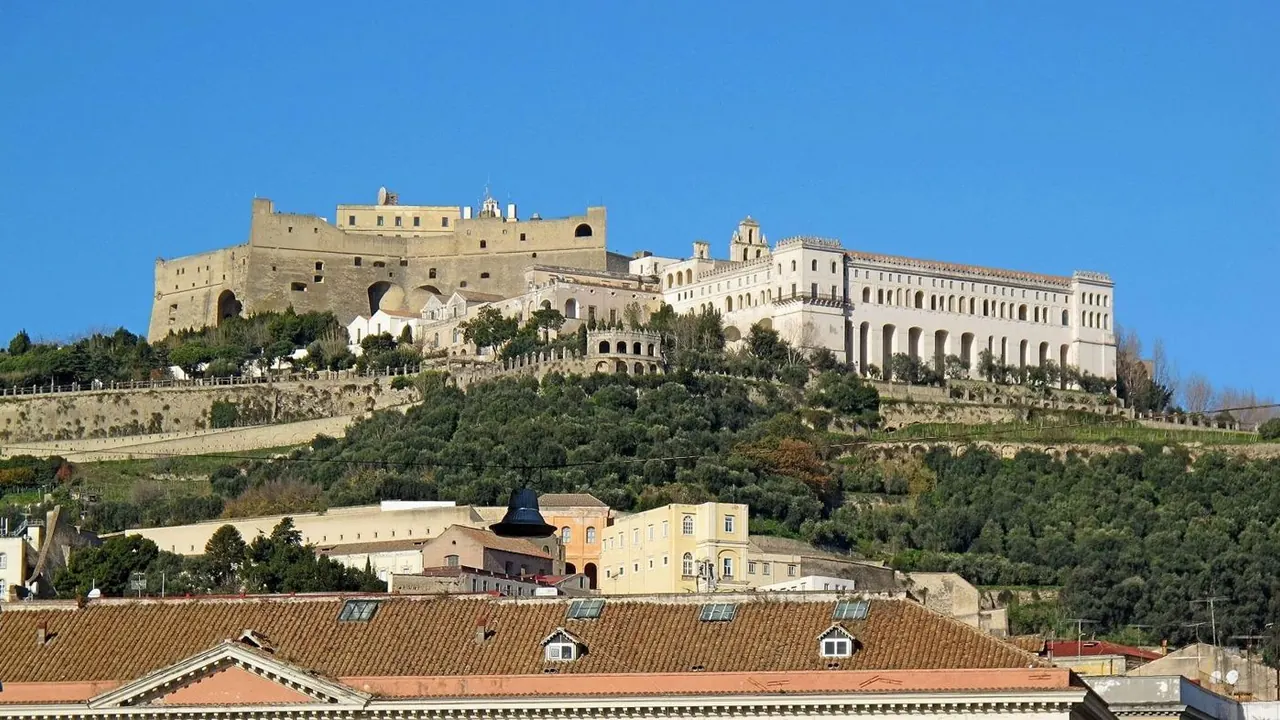
Castel Sant'Elmo and the Certosa di San Martino
- Day trips96
- Culture & sights87
- Food & drink83
Photo: pietro scerrato, CC BY 3.0, cropped
Match
65
Every category weighted equally
- Beach & sun63
- Culture & arts70
- Food & nightlife67
- Family trip64
- Outdoors70
- Relax & unwind64
- Shopping & style66
- On a budget65
Naples in twelve categories
Our verdict on each, scored 0 to 100 against the same fixed benchmark cities, so a score means the same thing on every page.
Beaches & swimming. Scores 50 out of 100.
Food & drink. Scores 83 out of 100.
Culture & sights. Scores 87 out of 100.
Nightlife. Scores 60 out of 100.
Nature & outdoors. Scores 77 out of 100.
Day trips. Scores 96 out of 100.
Good for families. Scores 45 out of 100.
Getting around. Scores 54 out of 100.
Shopping & style. Scores 60 out of 100.
Affordability. Scores 63 out of 100.
Live music & performing arts. Scores 66 out of 100.
Wellness & relaxation. Scores 44 out of 100.
Naples category by category
Beaches & swimming
50The sea is everywhere in Naples, but beach life is something you go out for, not something on your doorstep. Along the city front, people swim and sunbathe on the rocks below the Lungomare and at small lidos in Posillipo, and the bay warms to about 25°C in late summer. The water by the port and the busy waterfront is not always clean, though, and the sandy stretches near the city are crowded, paid beach clubs.
The better swimming is a boat ride away, on Procida, Ischia and Capri, or along the Sorrento peninsula, where the water is clear and the coves are rocky. These make a good day out, but most visitors to Naples spend their time in the streets rather than on the sand.
Food & drink
83Naples eats with real conviction. This is where pizza comes from, and the soft, blistered Neapolitan kind is made in plain, loud rooms all over the historic centre, where queues and shared tables are normal. Street food is just as rooted here: fried pizza, paper cones of fried seafood, frittatine of pasta, and sfogliatelle and babà from the pastry shops. Espresso is short, strong and drunk standing at the bar, and offering a 'suspended coffee' to a stranger is a local custom.
The Pignasecca and Porta Nolana markets show what the city cooks with: buffalo mozzarella, fish, lemons and San Marzano tomatoes. Trattorias serve ragù, genovese and pasta with seafood, alongside Campanian wines like Falanghina and Aglianico. What it lacks is range. International food is scarce, and the most ambitious restaurants are mostly out on the coast.
Culture & sights
87The historic centre of Naples is one of the largest in Europe. It is a grid of narrow streets laid out by the Greeks, with Gothic and Baroque churches packed into almost every block along Spaccanapoli and Via dei Tribunali. The National Archaeological Museum holds the finest Roman finds anywhere, including the frescoes, mosaics and sculpture from Pompeii and Herculaneum. In the Cappella Sansevero you can see the Veiled Christ, a marble figure that seems to lie under a sheet of cloth.
There is also a whole city underground, with Greco-Roman tunnels, cisterns and the catacombs of San Gennaro. Above ground are the Royal Palace, the Castel Nuovo, the Certosa di San Martino with Castel Sant'Elmo above it, and the Capodimonte picture gallery in its hilltop park. There is enough to fill a week, and the streets themselves are worth seeing.
Nightlife
60A night out in Naples happens mostly outdoors. Students and locals fill Piazza Bellini and the lanes around it, drinking on the steps and next to the old Greek walls. In Chiaia, the small bars on the slopes behind Piazza dei Martiri draw a better-dressed crowd that spills into the alleys until well past midnight, especially at weekends and all through summer.
The nights are loud and sociable and run late, but the scene is about gathering in the street rather than about venues. There are few clubs of note, and in summer much of the dancing moves out to beach clubs along the coast. Visitors who want serious club culture will find little of it here.
Nature & outdoors
77Naples sits on a volcanic bay, and the landscape around it is remarkable. Vesuvius rises behind the city, and a short trail climbs to its crater rim, with views across the whole gulf. To the west lie the Phlegraean Fields, a land of old craters. Astroni is an extinct crater filled with oak woods and small lakes, kept as a nature reserve. Monte Nuovo is a young volcanic cone with paths to its rim, and Lake Avernus lies in a crater that the Romans thought was the entrance to the underworld. The cliffs of Posillipo end at the Gaiola underwater park, a good place for snorkelling and kayaking.
The Sorrento peninsula and the Amalfi Coast are within reach for a long day. There, the Path of the Gods runs high above the sea through lemon terraces. On Capri and Ischia you can hike up Monte Solaro and Monte Epomeo. In the city, green space is limited to the Capodimonte woods and the Virgiliano park, and summer heat makes walking in the middle of the day hard work.
Day trips
96Few cities have as many famous places within a short trip. Pompeii and Herculaneum are each under an hour away on the local Circumvesuviana train. Herculaneum is smaller and better preserved, and Pompeii is the vast ruined town everyone has heard of. The quieter Roman villas at Oplontis and Stabiae are on the same line. Inland, the Bourbon palace at Caserta and its long gardens are about forty minutes away by train.
Ferries and hydrofoils from Molo Beverello reach Capri, Ischia and pastel-coloured Procida. Sorrento is at the end of the train line, and from there buses and boats run along the Amalfi Coast to Positano, Amalfi and Ravello. Further south lie the Greek temples of Paestum, and in the other direction the ancient Roman sites of Pozzuoli and Cuma.
Good for families
45Neapolitans make a fuss of children, and a family is welcome in any pizzeria at any hour. The city is still hard work with small ones. Scooters weave through the narrow lanes of the centre, pavements are uneven or missing, and pushchairs struggle on the steps and cobbles. Summer is hot and crowded.
There are few attractions made for children. There is the Edenlandia amusement park and the zoo in Fuorigrotta, plus the science museum at Bagnoli. Older children usually enjoy the underground tunnels, the funiculars, a ferry to the islands and the ruins of Pompeii. Families tend to do best basing themselves somewhere calmer, such as Sorrento or one of the islands, and visiting the city for the day.
Getting around
54The historic centre is compact enough to see on foot, and walking is the best way to get around it, though you share the lanes with scooters. Metro Line 1 links the station, the centre, the hills of Vomero and the area around the museums, and several of its stations are decorated as art galleries. Four funiculars climb from the lower city up to Vomero and Posillipo.
Beyond those, things get harder. Buses are slow in heavy traffic and the timetables are not dependable. The Circumvesuviana train to Pompeii and Sorrento is old, often packed and prone to delays. Crossing the road takes some nerve. Still, you never need a car, and driving in the city is best avoided altogether.
Shopping & style
60Naples is known for its tailoring, with handmade suits, shirts and silk ties from workshops in Chiaia that have dressed men for generations. Via Toledo is the main high street, the Galleria Umberto I is a grand iron-and-glass arcade, and Via Chiaia and Via dei Mille have the smarter fashion boutiques and a few luxury labels.
Some of the best buys are crafts. On Via San Gregorio Armeno, workshops make nativity figures all year round, from shepherds to caricatures of famous people. Coral jewellery and shell cameos come from nearby Torre del Greco, and you can find lemon goods and ceramics too. Street markets such as the Pignasecca are mostly for food and everyday goods. The shopping is distinctive, but it is not deep.
Affordability
63Naples is one of the cheaper big cities in Western Europe for everyday things. Pizza, street food, coffee at the bar and simple trattoria meals cost noticeably less than in the north of Italy. Public transport and the funiculars are cheap too, and there are plenty of modest guesthouses and B&Bs in the historic centre.
The costs go up once you leave the city. Ferries to the islands, hotels on Capri or the Amalfi Coast and beach clubs in summer all cost resort prices. Entry fees for the big archaeological sites add up as well. If you base yourself in the city and eat like a local, your money goes a long way.
Live music & performing arts
66The Teatro di San Carlo was built for the Bourbon kings and is the oldest opera house in Europe still in use. Its red-and-gold horseshoe auditorium is one of the most beautiful anywhere, and its season of opera, ballet and concerts is the centre of the city's musical life. The San Pietro a Majella conservatory, where generations of Neapolitan composers trained, puts on concerts, and churches in the historic centre host chamber music.
Neapolitan song is a living tradition. You can hear it at small concerts and theatre shows, and from musicians who go from table to table in the trattorias. There is plenty of spoken theatre, but nearly all of it is in Italian or the local dialect. Jazz and live music clubs are few, so outside the opera house there is not much to choose from.
Wellness & relaxation
44Naples itself is loud, intense and crowded, not a place for slowing down. The volcanic ground around the bay does produce real thermal water, though. On the edge of the city, the spa at Agnano draws on springs that have been used since Roman times. Across the water, Ischia is a true spa island, about an hour away by hydrofoil, with dozens of thermal parks where pools of different temperatures are terraced through gardens above the sea.
In the city, rest comes from long lunches, a slow evening walk along the seafront Lungomare and the quiet cloisters of Santa Chiara. Visitors who mainly want to unwind tend to stay on Ischia and come into the city for the day.
When should you go?
Pick a month to see what it is like. The climate figures are measured averages, not a forecast.
Naples in July
Daytime high, °C
Rainfall in the month, mm
The whole year
Shaded against this city’s own year: the deepest cell is its best month for that figure and the palest its weakest.
Where the figures come from
Naples has no rain gauge within 25 km of the centre, so its rainfall comes from a gridded climate dataset read at the city rather than from a gauge further away.
Naples's sunshine is measured 28 km from the centre, at Grazzanise.
Temperature and rainfall are climate normals, averaged over the years shown. Naples: 2005-2020 (sunshine 1991-2020, rainfall 1991-2020) normals, Napoli / Capodichino (4.6 km from centre).
Before you go
| Measure | Naples |
|---|---|
| Official language | Italian |
| Currency | Euro (EUR) |
| Sockets | CFL230 V, 50 Hz |
| Driving side | Right |
| Time zone | UTC+1, UTC+2 in summer |
| Emergency number | 112 |
| Elevation | 17 m |
| Main airport | Naples International Airport (NAP)7 km from centre131 non-stop destinations |
| Public holidays this year | 13 days |
By the numbers
| Measure | Naples |
|---|---|
| City population | 913,462 |
| People per km² | 7,676 |
| Museums within 10 km | 65 |
| UNESCO World Heritage sites within 50 km | 5 |
| Swim season, months above 21 °C | 5 months |
Compare Naples with
Every comparison with a written verdict behind it.