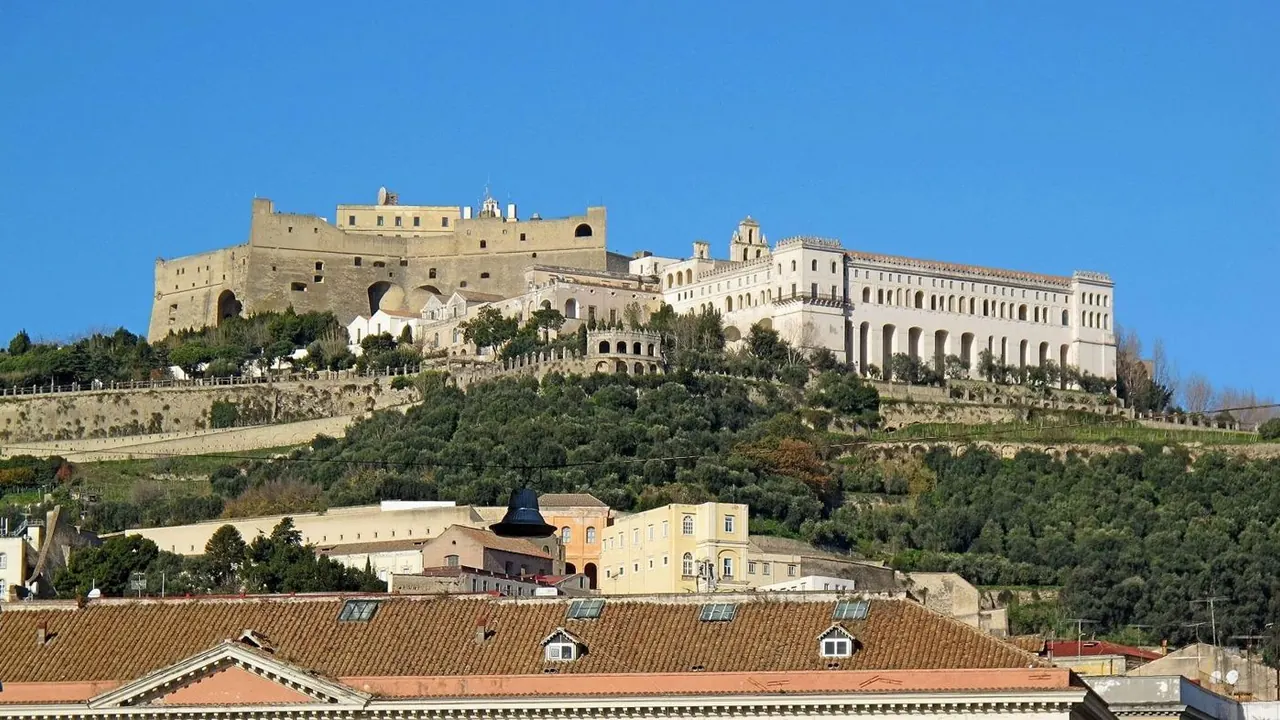
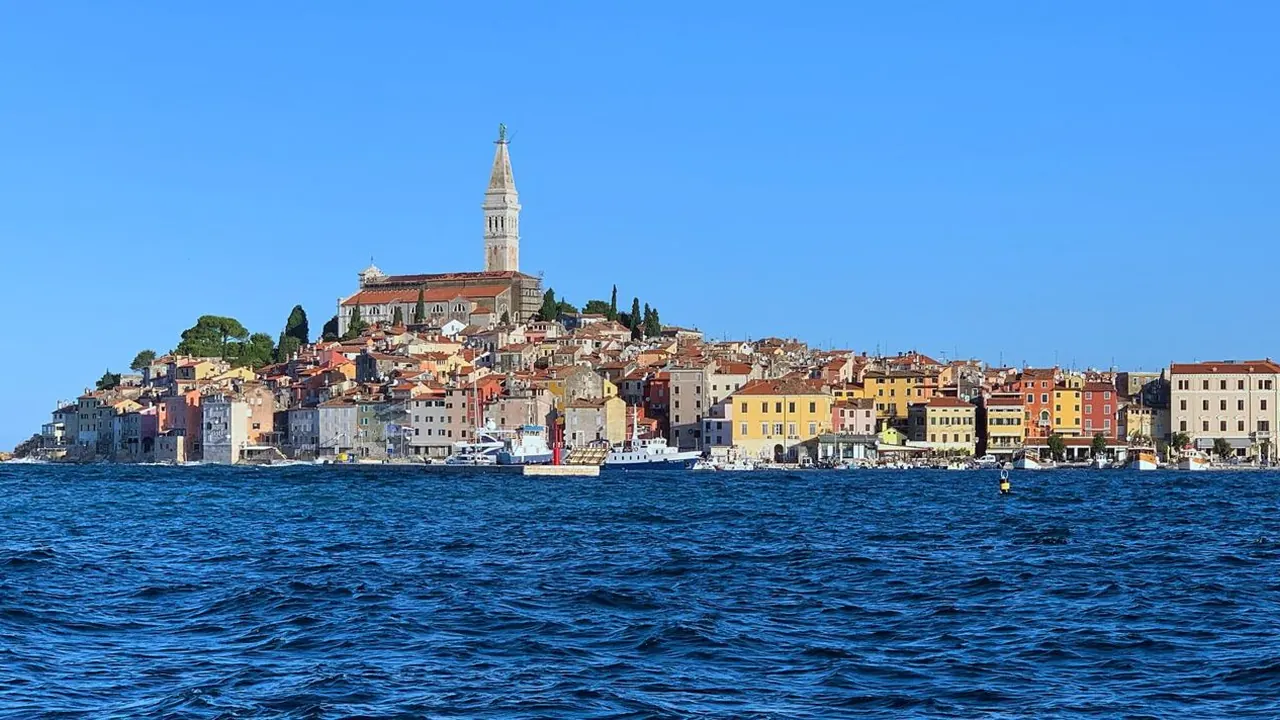
Photos: Naples by pietro scerrato, CC BY 3.0, cropped; Rovinj by Vyacheslav Bukharov, CC BY-SA 4.0, cropped.
Naples or Rovinj?
Our verdict in twelve categories, each scored against the same fixed benchmark cities, and the climate month by month, so you can choose for your trip.
Choose Naples for
- live music and the arts
- culture and sights
- nightlife
Naples suits travellers who want a great deal to see and eat in one stay. The Greek street grid, the archaeological museum, the opera house and the underground city could fill a week, and Pompeii, Herculaneum and the islands are all within easy reach without a car. It is loud, crowded and sometimes tiring, but it costs less day to day and gives far more back to a curious visitor.
Choose Rovinj for
- beaches
- families
- getting around
Rovinj is the better choice for a slower seaside week. You swim off clear rocks below a pastel old town, walk or cycle in the pines of the Golden Cape and spend the evenings over long dinners by the harbour. There is little to tick off and not much going on after midnight, which is exactly the appeal for couples and families. Expect to pay resort prices in high summer, and hire a car to see the rest of Istria.
Scoreboard
Twelve categories on one fixed scale from 0 to 100. The shaded stretch is the gap between the two.
Your match
Pick a travel style or drag the sliders, and both match scores follow your weighting.
Wins on live music and the arts and culture and sights with your weighting.
Wins on beaches and families with your weighting.
What matters to you?
Category by category
What the scores mean for a trip.
Beaches & swimming
Rovinj is the place to come for swimming. The water is very clear, and you can get in off the limestone ledges right below the old town walls or along kilometres of shaded rock in the Golden Cape. Taxi boats run to quieter coves on St Catherine and Red Island.
In Naples the sea is close but takes more effort. Locals swim from the rocks below the Lungomare and at small Posillipo lidos, but the water near the port is not always clean. The clear coves are a boat ride away on Procida, Ischia or Capri. Neither place has much soft sand, so pack water shoes for both.
Food & drink
Naples is the stronger food city by a wide margin. It is where pizza comes from, and you can eat on the move from the fried seafood and frittatine to sfogliatelle from the pastry shops. The Pignasecca and Porta Nolana markets are full of buffalo mozzarella and San Marzano tomatoes, and trattoria ragù comes with Falanghina or Aglianico.
Rovinj eats well in a narrower way: scampi buzara, truffled fuži, Istrian olive oil and Malvazija, with the best meals often at konobas inland. Its harbour menus are aimed at passing visitors, and it has none of the cheap street eating that makes Naples so easy to graze through.
Culture & sights
There is a great gap here. Naples has a historic centre laid out by the Greeks, with churches on almost every block of Spaccanapoli, along with the National Archaeological Museum's Pompeii frescoes, the Cappella Sansevero, the catacombs of San Gennaro and the Capodimonte gallery. It is enough for a week.
Rovinj's main sight is the town itself: the Venetian houses climbing to St Euphemia, the bell tower to climb, the Balbi Arch and Grisia. Add the town museum and the Batana House, and an unhurried afternoon covers it all.
Nightlife
Naples has far more going on after dark, though it happens in the street rather than in clubs. Students crowd the steps of Piazza Bellini beside the Greek walls, and the bars behind Piazza dei Martiri in Chiaia stay busy well past midnight.
In Rovinj the evening means a long dinner and then a drink on the rocks at sunset. A few waterfront bars and a couple of dance venues come alive in high season, but the old town is mostly quiet by midnight. Out of season it is quieter still.
Nature & outdoors
Naples has the more dramatic landscape: you can walk up to the crater rim of Vesuvius, explore the old craters of the Phlegraean Fields with the oak woods of Astroni and Lake Avernus, and take the Path of the Gods above the Amalfi Coast. Snorkelling at Gaiola adds the sea.
Rovinj's outdoors is gentler and starts at the edge of town. There are flat paths through the cedars of the Golden Cape, kayaking and diving among the archipelago's islets and reefs, and boat trips up the green Lim Fjord. It is easier walking than the volcanic slopes of Naples, but there are no peaks.
Day trips
Naples has one of the strongest sets of day trips in Europe. Pompeii, Herculaneum, Oplontis and Stabiae are all on one local train line, and Caserta's palace is about forty minutes away. Ferries leave from Molo Beverello for Capri, Ischia and Procida, and Sorrento opens the way to Positano and Amalfi.
Rovinj has a good range nearby, from Pula's amphitheatre and Poreč's Euphrasian mosaics to the hill towns of Motovun and Grožnjan and the Brijuni islands. The difference is that most of it needs a car, while from Naples you can get almost anywhere by train or boat.
Good for families
Rovinj is the easier of the two with children, though not by much. It is small and safe, and the flat Golden Cape paths suit pushchairs and bikes. The campsites and resorts around town have pools and playgrounds. Against that, the shore is rock and concrete and the steep cobbles of the old town are hard going.
Naples welcomes children in every pizzeria, but scooters in the lanes and broken pavements wear parents out. Older children will love Pompeii, the tunnels under the city and the funiculars, and many families stay in Sorrento and come into the city for the day.
Getting around
Getting around is about as easy, or as awkward, in both places, but in different ways. Naples is a big city with transport: Metro Line 1, with stations decorated like galleries, and four funiculars up to Vomero and Posillipo. On the other hand, the buses are slow and the Circumvesuviana is crowded and often late.
Rovinj needs no transport within the town at all. The old town is closed to cars, and a promenade leads straight to the swimming rocks. Outside the town there is no railway, so the hill towns and wineries are effectively reached only by car.
Shopping & style
Naples offers much more. There are handmade suits, shirts and ties from long-established Chiaia tailors, Via Toledo and the Galleria Umberto I for everyday shopping, and the nativity-figure workshops of San Gregorio Armeno. Coral and cameos come from Torre del Greco nearby.
Rovinj is mainly for taking the region home with you: truffle products, olive oil, Teran and local brandies. Add to that the small galleries and studios along Grisia. There are no fashion streets, and outside summer the choice is thin.
Affordability
Naples is clearly the cheaper stay. Pizza, coffee at the bar, trattoria meals and public transport all cost little, and modest B&Bs are easy to find in the historic centre. Your spending rises mainly once you head out to Capri or the Amalfi Coast.
Rovinj is one of the dearer towns on the Croatian coast. Old town rooms in July and August cost resort prices, and harbour restaurants charge for the view, with fish sold by weight. You can save with private apartments, campsites, market lunches and a trip in late spring or September.
Live music & performing arts
For an evening at the opera, the Teatro di San Carlo puts Naples far ahead. It is the oldest opera house in Europe still in use, with a red-and-gold horseshoe auditorium and a full season of opera, ballet and concerts. The San Pietro a Majella conservatory and the churches of the historic centre add concerts, and Neapolitan song turns up in small theatres and from musicians moving between trattoria tables.
Rovinj's live music is mostly a summer affair: occasional classical concerts in St Euphemia, music on the squares and the harbour, and now and then the bitinada, the local unaccompanied singing. Out of season there is almost nothing, and for big concerts people go to Pula's Roman arena.
Wellness & relaxation
Neither place is a natural retreat, and they fall short in opposite ways. Naples has the real thing for bathing, with volcanic hot water at the old spa of Agnano on the city's edge and, above all, on Ischia, where gardens of thermal pools step down towards the bay. What it can't give you is quiet in town, beyond an unhurried lunch or the cloisters of Santa Chiara. A restful trip there usually means sleeping on the island and visiting the city by day.
Rovinj works the other way round. There are no hot springs, and for treatments you rely on the pools and saunas of the bigger hotels. The town itself does the relaxing for you, though: it is small enough that a day drifts between a swim, a meal and a stroll with nothing pulling at you. That ease belongs to May, June and September, because in July and August the crowds around the harbour take much of it away.
When should you go?
Pick your month. The climate figures are measured averages, not a forecast.
Naples in July
Rovinj in July
Daytime high, °C
Rainfall in the month, mm
Where the figures come from
Naples has no rain gauge within 25 km of the centre, so its rainfall comes from a gridded climate dataset read at the city rather than from a gauge further away.
Naples's sunshine is measured 28 km from the centre, at Grazzanise.
Rovinj's temperatures are measured 64 km from the centre, at Trieste.
Rovinj has no rain gauge within 25 km of the centre, so its rainfall comes from a gridded climate dataset read at the city rather than from a gauge further away.
Temperature and rainfall are climate normals, averaged over the years shown. Naples: 2005-2020 (sunshine 1991-2020, rainfall 1991-2020) normals, Napoli / Capodichino (4.6 km from centre). Rovinj: 1991-2020 normals, Trieste (63.7 km from centre).
Both towns are at their best for swimming from June to September, and by August the sea reaches about 26°C in both. Naples is the hotter and drier of the two in high summer. July is close to rainless at 23mm, with daytime highs of 30°C, which makes midday sightseeing hard going. Rovinj stays a little cooler and gets more summer thunderstorms, so a showery afternoon in August is more likely there. Naples also has noticeably more sunshine through the year.
For walking the streets, Naples is pleasant in spring and October, and its winters stay mild enough for sightseeing, though the rain peaks in November at 148mm. Rovinj's autumn turns wet from September, and its winters are colder, with highs around 9°C. In that season much of the town is shut, so May, June and September are its best months.
Which traveller are you?
For a beach and sun trip, Rovinj is the better pick. The water is clear and you can get into it from the rocks just below the old town or along the Golden Cape, whereas in Naples the good swimming means a ferry to the islands or the Sorrento coast.
On a culture and arts trip, Naples wins easily. Between the Pompeii finds in the archaeological museum, the Veiled Christ, the catacombs and the opera at San Carlo, it offers more than Rovinj's photogenic old town and two small museums could in many visits.
On a tight budget, Naples goes further. Pizza, street food, standing espresso and cheap funiculars keep the daily cost low, while Rovinj's harbour restaurants, fish sold by weight and summer room rates make it one of the pricier stops on the coast.
Before you go
| Measure | Naples | Rovinj |
|---|---|---|
| Official language | Italian | Croatian |
| Currency | Euro (EUR) | Euro (EUR) |
| Sockets | CFL230 V, 50 Hz | CF230 V, 50 Hz |
| Driving side | Right | Right |
| Time zone | UTC+1, UTC+2 in summer | UTC+1, UTC+2 in summer |
| Emergency number | 112 | 112 |
| Elevation | 17 m | 0 m |
| Main airport | Naples International Airport (NAP)7 km from centre131 non-stop destinations | Pula Airport (PUY)31 km from centre34 non-stop destinations |
| Public holidays this year | 13 days | 14 days |
By the numbers
| Measure | Naples | Rovinj |
|---|---|---|
| City population | 913,462 | 12,968 |
| People per km² | 7,676 | - |
| Museums within 10 km | 65 | 1 |
| UNESCO World Heritage sites within 50 km | 5 | 1 |
| Swim season, months above 21 °C | 5 months | 4 months |
Where else could you go?
Every comparison below shares a destination with this one, so you can follow Naples or Rovinj somewhere new.