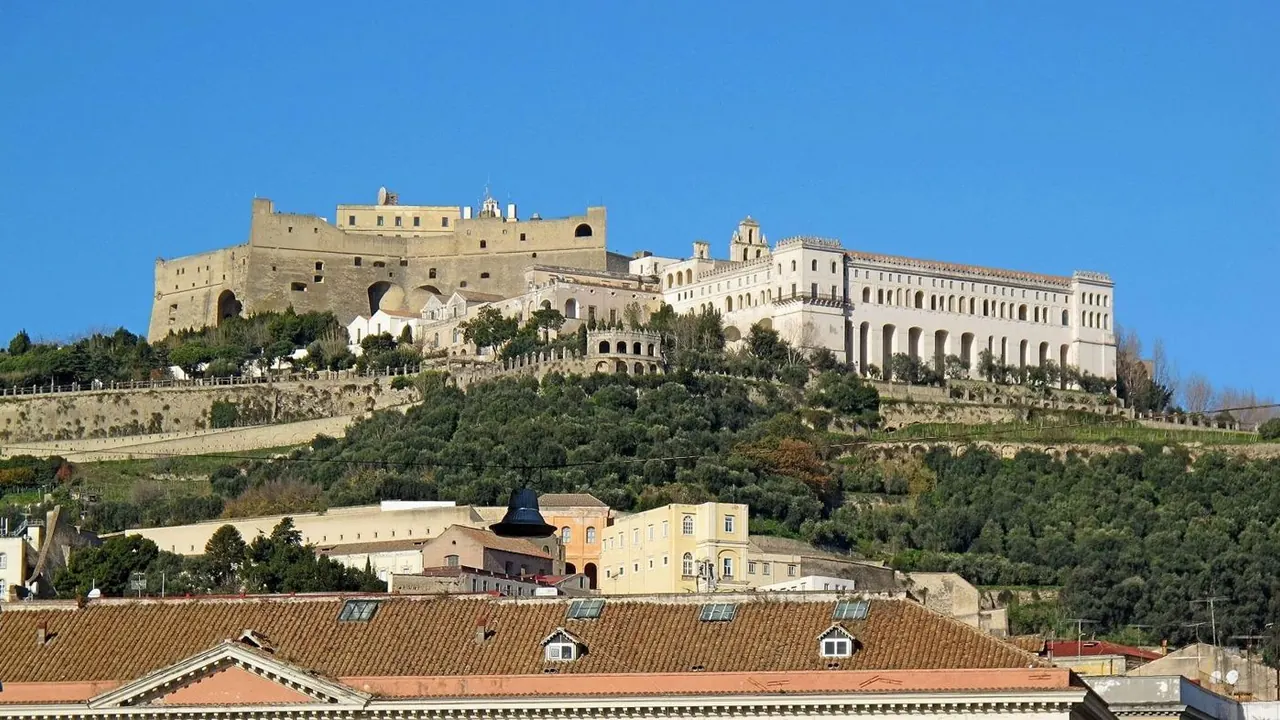
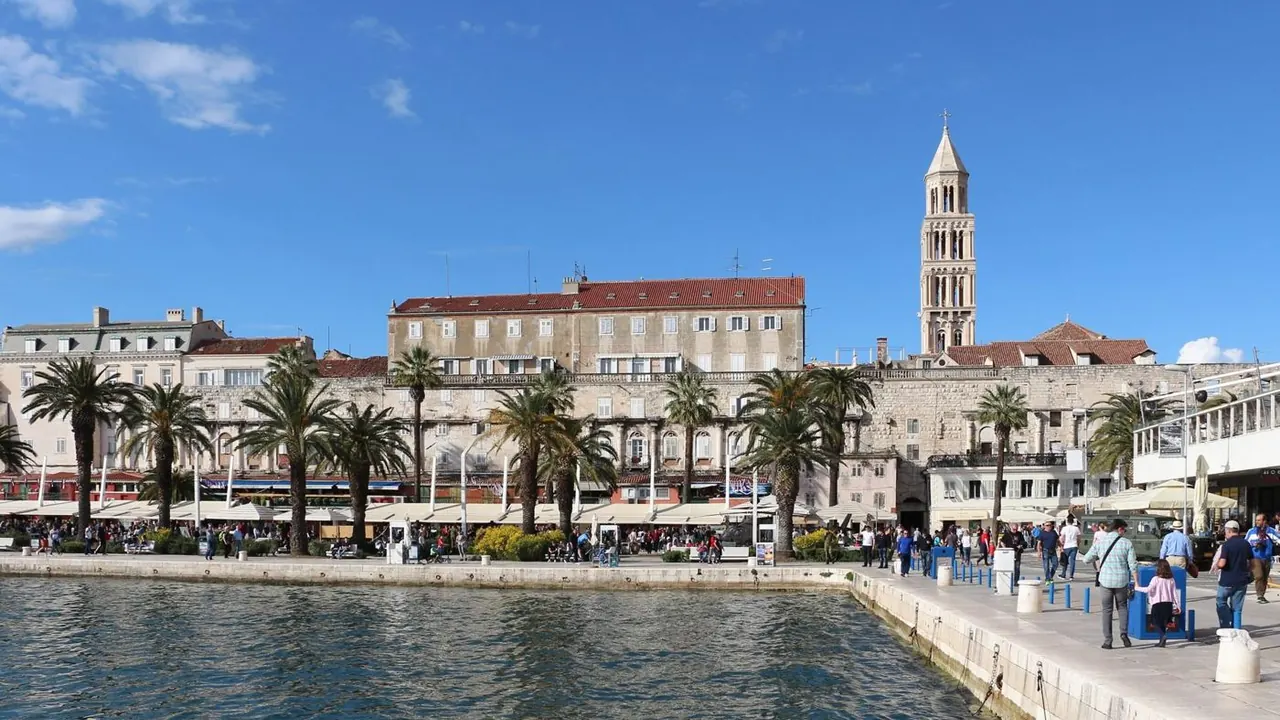
Photos: Naples by pietro scerrato, CC BY 3.0, cropped; Split by Bernard Gagnon, CC BY-SA 4.0, cropped.
Naples or Split?
Our verdict in twelve categories, each scored against the same fixed benchmark cities, and the climate month by month, so you can choose for your trip.
Choose Naples for
- live music and the arts
- shopping
- food and drink
Naples is the choice for a traveller who wants a city with real depth. Its historic centre, its archaeological treasures and its opera house take a week to get through, and it has some of Italy's most rooted cooking. On top of that, Pompeii, Herculaneum, Capri and the Amalfi Coast are all close enough for a day out. It is also cheaper day to day. The price is noise, traffic and hard work with a pushchair, and the swimming is better on the islands than in town.
Choose Split for
- beaches
- getting around
- families
Split suits someone who wants the sea within walking distance and a small, easy place to come back to in the evening. One extraordinary sight, Diocletian's Palace, sits at its heart, and around it are clear Adriatic coves, Marjan's pine woods and ferries out to Hvar and Brač. Families and beach-minded couples will find it simpler than Naples. Anyone who wants great museums, serious food or a full cultural calendar will run out of things to do after a couple of days.
Scoreboard
Twelve categories on one fixed scale from 0 to 100. The shaded stretch is the gap between the two.
Your match
Pick a travel style or drag the sliders, and both match scores follow your weighting.
Wins on live music and the arts and shopping with your weighting.
Wins on beaches and getting around with your weighting.
What matters to you?
Category by category
What the scores mean for a trip.
Beaches & swimming
Split has the better swimming in town. A short walk from the palace brings you to Bačvice, a shallow sandy bay where locals play picigin in knee-deep water, or to the quieter coves under Marjan with pine shade and deeper water. Most of the shore is pebble or concrete, though, and it fills up in high summer.
In Naples, swimming in the city means the rocks below the Lungomare or a small lido in Posillipo, and the water near the port is not always clean. The clear coves are a ferry ride away on Procida, Ischia and Capri, so the beach becomes a day out rather than part of every afternoon.
Food & drink
Food is one of the strongest reasons to pick Naples. Pizza was born here, and the city adds fried street snacks, sfogliatelle and babà, espresso drunk standing at the bar, and markets like the Pignasecca full of buffalo mozzarella and San Marzano tomatoes. Eating well takes no planning.
Split's Dalmatian cooking is good but narrower: grilled fish, black risotto, pašticada and peka baked under an iron bell. The best meals are in family konobas in Varoš, while many menus inside the palace walls are aimed at the summer crowd. Neither city offers much international food.
Culture & sights
Naples has far more to see. The Greek street grid of Spaccanapoli is lined with Gothic and Baroque churches, and the National Archaeological Museum holds the finds from Pompeii and Herculaneum. Then there are the Cappella Sansevero, the catacombs of San Gennaro and the Capodimonte gallery, enough for a week.
Split's great sight is Diocletian's Palace, a Roman emperor's retirement home that people still live in. Its cathedral was once his mausoleum. The Meštrović Gallery is a fine addition, but beyond the palace and its Venetian lanes the list runs out quickly.
Nightlife
Naples has the livelier evenings, and they don't depend on the season. A night out there means gathering in squares rather than going to venues. Students drink on the steps of Piazza Bellini beside the old Greek walls, while a smarter crowd fills the small bars on the slopes of Chiaia and stays out in the lanes long after midnight. Where Naples falls short is dancing. It has few clubs worth the name, and in summer the dancing moves out to beach clubs along the coast.
Split has a smaller scene that comes and goes with the summer. On warm nights people drink along the Riva and on the stone stairways inside the palace, and unlike central Naples, Split has a few clubs near Bačvice that keep going into the early hours. Even so, much of the party crowd takes the boat to Hvar. In winter only a few bars stay busy, and an evening out is a quiet drink with locals rather than a night in the streets.
Nature & outdoors
The outdoors is equally strong in both cities, but the landscapes are very different. Naples sits among volcanoes. You can walk to the crater rim of Vesuvius, explore the oak-filled crater of Astroni and the cone of Monte Nuovo in the Phlegraean Fields, or snorkel at Gaiola, and the Path of the Gods above the Amalfi Coast is within reach. Green space inside the city is scarce, though.
Split is limestone and open sea. Marjan's forest trails start on foot from the old town, Mosor and Biokovo offer real ridge hikes, and the Cetina canyon at Omiš is used for rafting and canyoning. Add sea kayaking and sailing among the islands, and Split leans more towards active sport.
Day trips
Naples is one of the best day-trip bases anywhere. Pompeii and Herculaneum are each under an hour away by local train, and Oplontis, Stabiae and the royal palace at Caserta are close by. Hydrofoils run to Capri and Ischia, Sorrento leads on to Positano and Amalfi, and Paestum's Greek temples lie further south.
Split also has a good spread of trips, including medieval Trogir, Šibenik's cathedral, the ruins of Salona and the islands of Hvar and Brač. None of them has the fame of Naples' list, though, and outside summer the ferries need more planning.
Good for families
Neapolitans are warm towards children, but the city itself wears families out. Scooters cut through narrow lanes, pavements are uneven or missing, and pushchairs struggle on cobbles. Older children do get a lot from the tunnels, the funiculars and Pompeii.
Split is easier in a plain way: a compact, safe centre, shallow water at Bačvice and shade on Marjan. Neither city has much built for children, and in both places many families stay just outside and come in for the day.
Getting around
Split is simpler to manage. The palace, Varoš, the markets and Bačvice are all within about fifteen minutes' walk, and the ferry port, bus station and railway station sit together on the harbour. That makes island and coast trips very easy to start. Only the polished stone steps inside the palace slow you down.
Naples has more transport but less reliability. Metro Line 1, with its art-filled stations, and four funiculars work well, but buses crawl through traffic and the Circumvesuviana is old and crowded. Crossing the road takes nerve.
Shopping & style
Naples gives you far more reason to shop. Chiaia's tailoring workshops make suits, shirts and silk ties by hand. Via Toledo and the Galleria Umberto I arcade cover the high street, and the workshops on Via San Gregorio Armeno carve nativity figures all year. Cameos and coral from Torre del Greco are also on sale.
In Split, shopping is mostly palace souvenirs and the chains on Marmontova. The Pazar green market, with its figs, honey and local brandies, is the most enjoyable stop, and Dalmatian wine and olive oil make the best things to take home.
Affordability
Naples stretches a budget further. Pizza, street food, coffee at the bar and the funiculars all cost little, and the historic centre is full of modest B&Bs. Prices only climb when you head out to Capri, the Amalfi Coast or a summer beach club.
In July and August, rooms near Split's old town cost about what a big Western European city charges, and waterfront fish is sold by weight at high prices. Bakeries, the market and buses stay cheap all year, and in May, June and late September rooms cost far less.
Live music & performing arts
Naples has the far richer stage. The Teatro di San Carlo, built for the Bourbon kings, is the oldest working opera house in Europe and holds a full season of opera, ballet and concerts. Concerts at the San Pietro a Majella conservatory, chamber music in churches and Neapolitan song in small venues add to it.
Split's Croatian National Theatre stages opera and ballet, and the Split Summer Festival performs in the palace's Peristyle courtyard. Klapa singing echoes in the palace vestibule. Outside summer, though, there is little on.
Wellness & relaxation
Neither city is restful in itself, and the escape is different in each. Naples sits on volcanic ground with genuine thermal water: the Roman-era springs at Agnano on the city's edge, and Ischia, a true spa island of terraced thermal pools about an hour away by hydrofoil.
Split has no bathing tradition, so spa time means hotel spas. What it offers instead is fjaka, the Dalmatian habit of idling over long coffees on the Riva, and that calm is easiest to find in the pine woods around Marjan.
When should you go?
Pick your month. The climate figures are measured averages, not a forecast.
Naples in July
Split in July
Daytime high, °C
Rainfall in the month, mm
Where the figures come from
Naples has no rain gauge within 25 km of the centre, so its rainfall comes from a gridded climate dataset read at the city rather than from a gauge further away.
Naples's sunshine is measured 28 km from the centre, at Grazzanise.
Temperature and rainfall are climate normals, averaged over the years shown. Naples: 2005-2020 (sunshine 1991-2020, rainfall 1991-2020) normals, Napoli / Capodichino (4.6 km from centre). Split: 1991-2020 normals, Split / Marjan (0.9 km from centre).
Naples and Split share almost the same summer. July and August reach about 31°C in both, which is good for the sea but tiring for walking stone streets in the middle of the day. In either city the sea is warm enough for a proper swim from June to September. Naples' bay is slightly the warmer, at around 26°C in August, while Split gets more sunshine through the summer months.
Outside summer the two differ more. Naples turns wet from September, and October and November are among its rainiest months, with November reaching 148mm, so autumn there often means wet streets. Its best months for sightseeing are May and early June, when days are warm at about 23°C and rain is light. April is pleasant too, though a little wetter. Split is at its best in May, June and September. September brings showers there as well, but the sea stays warm into early October. Its winter days are a degree or two cooler than in Naples, and its heaviest rain falls in November and December.
Which traveller are you?
For a beach and sun trip, Split is the better base. You can walk from the old town to Bačvice's shallow sand or to the pine-shaded coves of Marjan. In Naples, swimming mostly means rocks, paid lidos or a boat to the islands.
On a culture and arts trip, Naples wins clearly. It has the National Archaeological Museum, the Veiled Christ, a city of tunnels underground, the San Carlo opera house and Pompeii nearby. Split's Roman palace is remarkable, but you will have seen most of the city's sights in two days.
On a family trip with children, Split is the gentler choice. Its centre is compact, car-free and safe, with shallow water for paddling and woods to run in. In Naples, scooters, broken pavements and steps make most days hard going with small children.
Before you go
| Measure | Naples | Split |
|---|---|---|
| Official language | Italian | Croatian |
| Currency | Euro (EUR) | Euro (EUR) |
| Sockets | CFL230 V, 50 Hz | CF230 V, 50 Hz |
| Driving side | Right | Right |
| Time zone | UTC+1, UTC+2 in summer | UTC+1, UTC+2 in summer |
| Emergency number | 112 | 112 |
| Elevation | 17 m | 0 m |
| Main airport | Naples International Airport (NAP)7 km from centre131 non-stop destinations | Split Saint Jerome Airport (SPU)12 km from centre69 non-stop destinations |
| Public holidays this year | 13 days | 14 days |
By the numbers
| Measure | Naples | Split |
|---|---|---|
| City population | 913,462 | 160,577 |
| People per km² | 7,676 | - |
| Museums within 10 km | 65 | 11 |
| UNESCO World Heritage sites within 50 km | 5 | 4 |
| Swim season, months above 21 °C | 5 months | 4 months |
Where else could you go?
Every comparison below shares a destination with this one, so you can follow Naples or Split somewhere new.