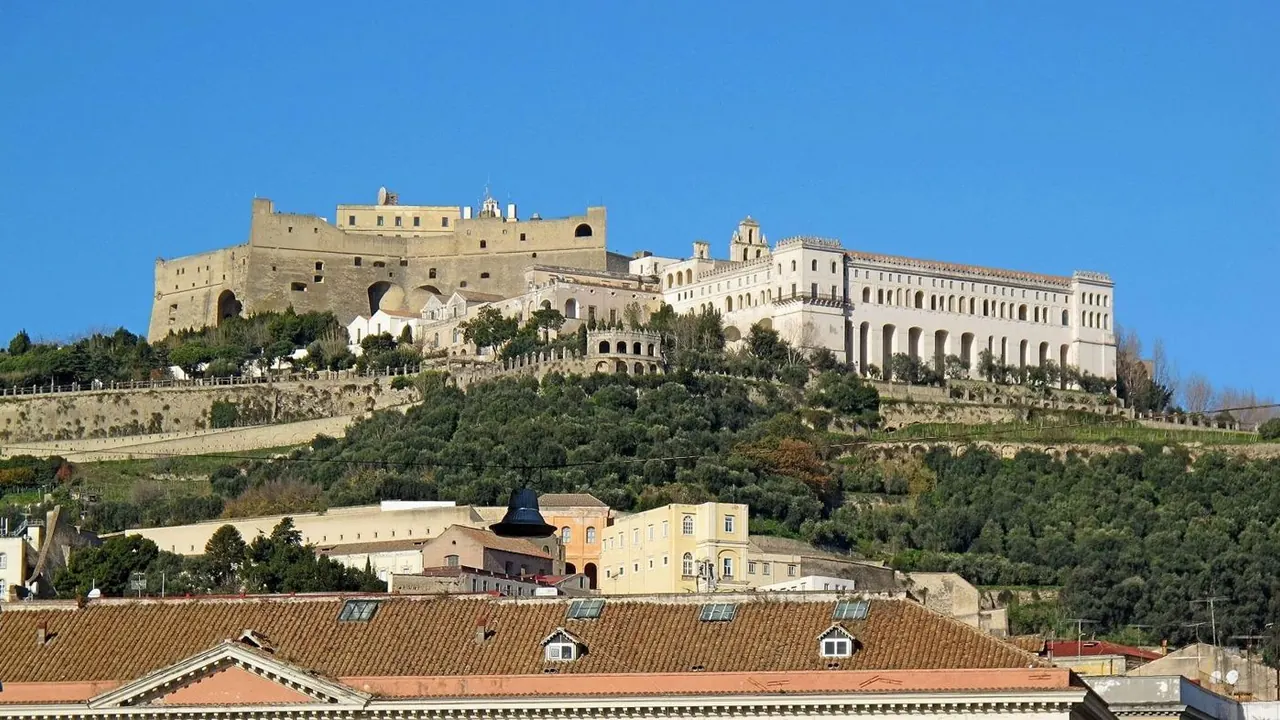
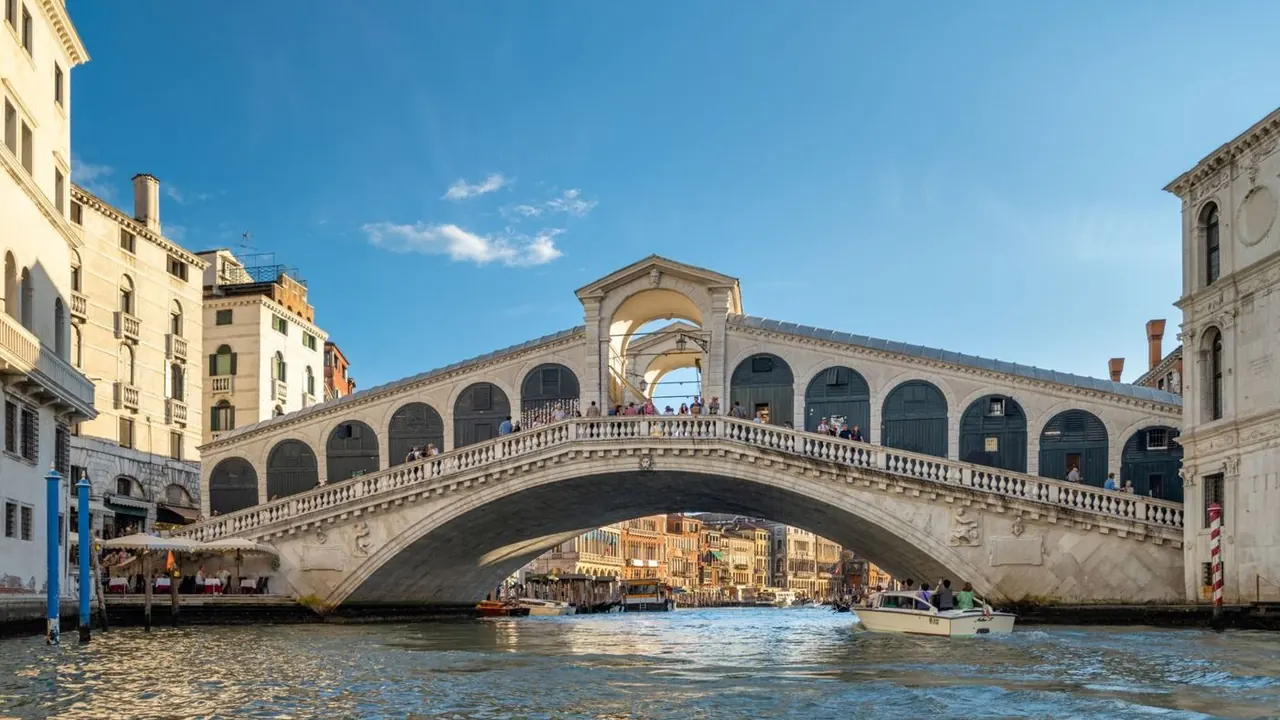
Photos: Naples by pietro scerrato, CC BY 3.0, cropped; Venice by David Vives, Pexels License.
Naples or Venice?
Our verdict in twelve categories, each scored against the same fixed benchmark cities, and the climate month by month, so you can choose for your trip.
Choose Naples for
- prices
- nightlife
- nature and the outdoors
Naples suits travellers who want to eat well, spend little and see a lot of the surrounding region. Its pizza and street food have more conviction than anything Venice serves, its evenings run later and louder, and Vesuvius, Pompeii, the islands and the Amalfi Coast are all within easy reach. In return you get noise, scooters and some grit.
Choose Venice for
- getting around
- culture and sights
- beaches
Choose Venice for the setting itself and a slower, quieter kind of sightseeing. The art goes deeper, from the Accademia to Tintoretto at San Rocco, the car-free centre is easier to cross on foot, and the hushed canals at night are reason enough to stay. It costs far more, though, and goes to bed early.
Scoreboard
Twelve categories on one fixed scale from 0 to 100. The shaded stretch is the gap between the two.
Your match
Pick a travel style or drag the sliders, and both match scores follow your weighting.
Wins on prices and nightlife with your weighting.
Wins on getting around and culture and sights with your weighting.
What matters to you?
Category by category
What the scores mean for a trip.
Beaches & swimming
Venice has the easier beach. The Lido is a short vaporetto ride away, with kilometres of fine, shallow sand facing the Adriatic that suit children and waders, even if the water is greenish.
Naples has warm sea all around it but little sand near the centre. People swim off the rocks below the Lungomare and at small lidos in Posillipo, and the clear coves are a ferry ride away on Procida, Ischia and Capri. If clear water matters more to you than convenience, those islands are worth the trip.
Food & drink
Naples eats with more conviction. Neapolitan pizza in loud rooms with shared tables, fried pizza, cones of fried seafood, sfogliatelle and the produce at the Pignasecca and Porta Nolana markets make almost every meal worth having.
Venice does well in a narrower way: cicchetti with a glass of wine at the bacari around the Rialto, and lagoon dishes such as cuttlefish risotto. So many tourist restaurants crowd San Marco that a good sit-down meal takes some searching. Neither city offers much beyond its own regional cooking.
Culture & sights
Both are first-rate, but Venice comes out ahead because the city itself is the sight. It has palaces standing on water, San Marco and the Doge's Palace, and painting that runs from Titian in the Frari to Tintoretto at San Rocco and modern art at the Guggenheim.
Naples answers with the ancient world. The National Archaeological Museum holds the Pompeii frescoes, the Greek street grid along Spaccanapoli is packed with churches, and beneath it lie tunnels and the catacombs of San Gennaro. Venice is the choice for painting and setting, Naples for antiquity and life on the street.
Nightlife
Naples is the place for a late night. Crowds drink on the steps of Piazza Bellini and in the alleys of Chiaia until well past midnight, though people gather in the streets rather than going to clubs.
Venice is liveliest at the aperitivo hour, with spritzes along the Fondamenta della Misericordia. Apart from the students in Campo Santa Margherita, the city is dark and silent by midnight.
Nature & outdoors
Naples has far more to offer outdoors. Vesuvius rises behind the city with a trail to its crater rim, and the Phlegraean Fields hold crater lakes and the oak woods of Astroni. Gaiola is good for snorkelling, and the Path of the Gods on the Amalfi Coast is within reach for a long day.
In Venice the outdoors means the flat lagoon: salt marshes around Torcello with herons and flamingos, kayaking, and cycling along the sea walls of the Lido and Pellestrina. For real hills you have to travel out to the Euganean or Prosecco hills.
Day trips
Both make superb bases, and Naples is the stronger. Pompeii and Herculaneum are each under an hour away on the Circumvesuviana, the palace at Caserta is close, and ferries run to Capri, Ischia and Procida, with the Amalfi Coast and Paestum further on.
From Venice the trips are to art cities instead of ruins: Padua, Vicenza and Verona by fast train, and the Palladian villas along the Brenta. Across the lagoon are Murano, Burano and Torcello.
Good for families
Neither city is easy with small children, but the problems differ. Naples welcomes children warmly in its pizzerias but has scooters, broken pavements and few attractions made for them, and many families stay in Sorrento instead.
Venice has no traffic, boat rides that children love and the shallow Lido beach, but its stepped bridges defeat pushchairs. In both cities, short stays with older children work best.
Getting around
Venice is easier to get around. There is no traffic, almost everything is within a forty-minute walk, and the vaporetti cover longer distances, though the stepped bridges are hard going with wheeled luggage.
Naples has a walkable centre, a useful Metro Line 1 and four funiculars. Slow buses, a crowded and delay-prone Circumvesuviana and scooters in the lanes make it more tiring.
Shopping & style
Both are better for crafts than for shopping in general. Naples is strongest on men's tailoring in Chiaia, the nativity figures of Via San Gregorio Armeno and coral cameos from Torre del Greco. In Venice the crafts are Murano glass, Burano lace, masks and marbled paper, and the real workshops are worth seeking out among the imitations on the main routes.
Affordability
Naples is far kinder to the wallet, as long as you sleep in the city itself. A room in the historic centre costs much less than one on Capri or along the Amalfi Coast, where hotels charge resort prices, so the cheapest way to see the region is to stay in town and visit the islands and Sorrento for the day. The spending then comes from the outings: hydrofoil fares, summer beach clubs and the entry tickets at Pompeii, Herculaneum and the other sites, which add up over a week.
Venice works the other way round. The bed is the biggest cost, especially around San Marco in summer and during carnival, and visitors also pay more than residents for the vaporetto and pay to enter most churches. You save by staying on the mainland at Mestre or in a quieter sestiere, travelling in late autumn or winter, and eating at a bacaro counter rather than at a table on the piazza.
Live music & performing arts
Each city's musical life centres on a great historic opera house: the San Carlo in Naples, the oldest in Europe still in use, and La Fenice in Venice, where works by Verdi and Rossini were first performed. The difference lies in what else there is. Naples has Neapolitan song in small venues and trattorias, while Venice has Vivaldi concerts in its churches and the Biennale's festivals of contemporary music, theatre and dance.
Wellness & relaxation
For thermal water, both cities send you elsewhere. From Naples, Ischia's terraced thermal parks are about an hour away by hydrofoil, and the old springs at Agnano are on the edge of the city. From Venice, Abano and Montegrotto near Padua take about an hour, and in town there are only hotel spas.
The cities themselves differ more. Naples stays loud and crowded, so rest there means long lunches and an evening walk on the Lungomare. Venice has no traffic and is truly calm in its hushed early mornings and in Castello, Cannaregio and Giudecca, as long as you stay away from San Marco by day.
When should you go?
Pick your month. The climate figures are measured averages, not a forecast.
Naples in July
Venice in July
Daytime high, °C
Rainfall in the month, mm
Where the figures come from
Naples has no rain gauge within 25 km of the centre, so its rainfall comes from a gridded climate dataset read at the city rather than from a gauge further away.
Naples's sunshine is measured 28 km from the centre, at Grazzanise.
Venice has no rain gauge within 25 km of the centre, so its rainfall comes from a gridded climate dataset read at the city rather than from a gauge further away.
Venice's sunshine is measured 26 km from the centre, at Treviso / S. Angelo.
Temperature and rainfall are climate normals, averaged over the years shown. Naples: 2005-2020 (sunshine 1991-2020, rainfall 1991-2020) normals, Napoli / Capodichino (4.6 km from centre). Venice: 1991-2020 normals, Venezia / Tessera (6.7 km from centre).
Naples has the longer warm season. Daytime highs reach the mid-20s by May and stay warm into October. July and August are hot, around 31°C, and almost dry, which makes walking at midday hard work. The sea is warm enough for swimming from June to September, and the city gets clearly more sunshine than Venice all year. Rain returns in autumn and peaks in November at 148mm, so late spring and early autumn are best for combining streets and swimming.
Venice has colder winters, with highs of only 8°C in December and January, and its rain is spread more evenly through the year, with September the wettest month rather than part of a dry late summer. The Lido is good for swimming in July and August, when the Adriatic reaches 26°C, though high summer is humid. May, June and early October are the most comfortable months for walking.
Which traveller are you?
On a trip on a tight budget, Naples is the clear choice. Pizza, street food, coffee at the bar and funicular rides all cost little, and the historic centre is full of B&Bs. Venice charges heavily for rooms, water transport and church entry.
For a food and nightlife trip, Naples wins on both. It is the home of pizza, with fried street snacks and serious pastry shops, and evenings around Piazza Bellini and in Chiaia go on past midnight. Venice falls quiet soon after the aperitivo hour.
On a culture and arts trip, Venice comes out ahead. The whole city is the monument, and its painting goes deeper, from the Accademia and the Frari to the Guggenheim and the Biennale. Naples answers with its Archaeological Museum and an underground city.
Before you go
| Measure | Naples | Venice |
|---|---|---|
| Official language | Italian | Italian |
| Currency | Euro (EUR) | Euro (EUR) |
| Sockets | CFL230 V, 50 Hz | CFL230 V, 50 Hz |
| Driving side | Right | Right |
| Time zone | UTC+1, UTC+2 in summer | UTC+1, UTC+2 in summer |
| Emergency number | 112 | 112 |
| Elevation | 17 m | 2 m |
| Main airport | Naples International Airport (NAP)7 km from centre131 non-stop destinations | Venice Marco Polo Airport (VCE)7 km from centre103 non-stop destinations |
| Public holidays this year | 13 days | 13 days |
By the numbers
| Measure | Naples | Venice |
|---|---|---|
| City population | 913,462 | 250,369 |
| People per km² | 7,676 | 602 |
| Museums within 10 km | 65 | 52 |
| UNESCO World Heritage sites within 50 km | 5 | 5 |
| Swim season, months above 21 °C | 5 months | 4 months |
Where else could you go?
Every comparison below shares a destination with this one, so you can follow Naples or Venice somewhere new.